
Quick Answer
Spring 2026 AIWB holsters now ship with factory-integrated claws, foam wedges, and optic-ready cuts as standard, even in the mid-range tier. The best appendix carry holster is the one you wear daily. Start with comfort and compliance. Once you are carrying consistently, optimize for draw speed.
Related: AIWB Appendix Carry Holster Setup: The 2026 Guide to Comfort, Speed, and Safety
Summer is when appendix carry holster designs get stress-tested. The heat, the sweat, and twelve straight hours of movement reveal everything a square-range session never will. Spring 2026 brought a wave of new AIWB designs built to solve exactly those problems before they start.
One phrase from the carry community captures the design challenge well: “Appendix carry lives or dies on three small pieces of plastic: the claw, the wedge, and the mod-wing.” The hardware that determines whether an AIWB setup works used to require aftermarket sourcing and research. In 2026, the best new appendix carry holster designs have integrated all three at the factory level, across a wider range of price points than before.
This guide covers what changed in the new designs, which options are worth buying across three price tiers, how to configure any new AIWB holster correctly, and the safety requirements that apply regardless of design.
What Makes 2026 Appendix Carry Holster Designs Different From Previous Generations?
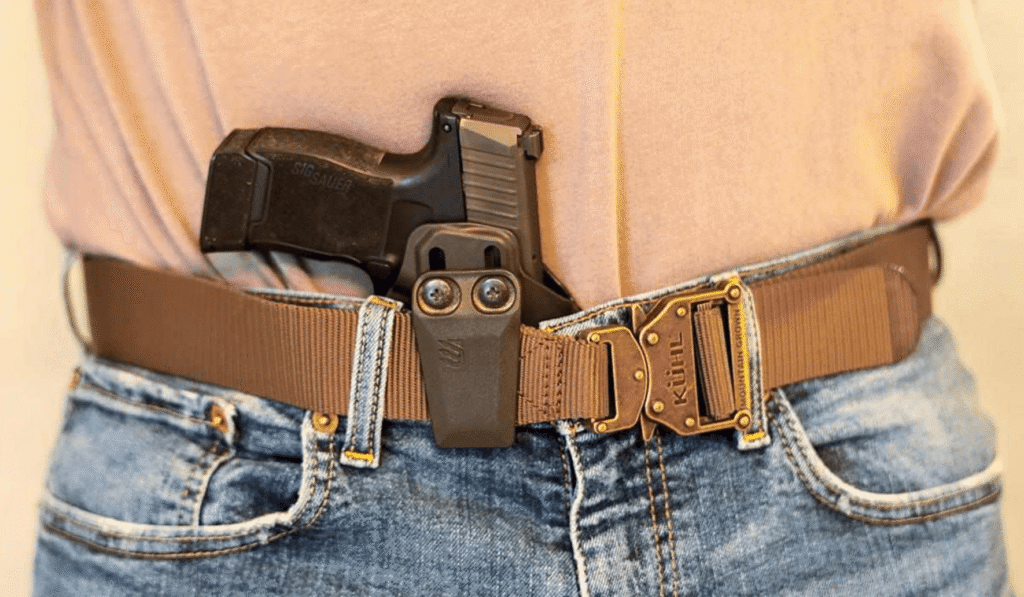
The material has not changed. Kydex remains the standard for AIWB carry because it holds its shape, resists sweat, and provides consistent trigger guard coverage through thousands of draw and re-holster cycles. What changed is what comes standard in the box.
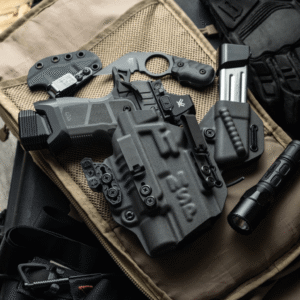
Factory-integrated claws, adjustable foam wedges, and optic-ready cuts are now common across the mid-tier price range. Budget options that previously shipped as bare Kydex shells now include at least one concealment attachment. Premium designs have moved to modular wing systems that allow claw tension to be adjusted independently of cant angle, which solves a real fit problem for body types that could not get a standard claw to sit correctly.
Adjustable cant systems, once limited to premium builds, now appear in the $50 to $75 range. Smoother edge finishing on new appendix carry holster designs has reduced the pressure-point complaints that dominated carry forums for years. These are refinements rather than breakthroughs, but they make a meaningful difference for the carrier who wears the same holster every day from May through September.

Last update on 2026-06-04 / Affiliate links / Images from Amazon Product Advertising API
Does Your AIWB Holster Choice Actually Affect Draw Speed, and Does It Matter?
Yes on both counts, but the second question matters more.
Close-range defensive encounters, which represent the majority of documented civilian defensive situations, favor a carry position that requires less shoulder rotation and puts the gun closer to the natural hand path. Appendix carry delivers both. The draw speed advantage of well-configured AIWB appendix carry holster designs is real and supported by incident data.
But there is a prior question: are you actually wearing the holster every day?
The carry community is genuinely split here. One camp argues for measuring draw performance against a documented personal baseline and treating any consistent regression as a defect worth fixing. The other camp argues that carry compliance is the primary variable, and that a holster producing a slightly slower draw worn every day is a better defensive system than one you optimize for speed and then leave in the car because it digs in by noon.
The resolution is a sequence, not a competition. If you are not yet carrying consistently, comfort and compliance come first. Select the holster you will actually wear. Once compliance is established, draw performance becomes the meaningful next optimization. Video your draw from concealment at three and seven yards and compare it to your personal baseline. A consistent regression of more than 15 to 20% is usually a ride height or cant problem, not a holster replacement.
Disclosure: GunCarrier earns a commission on qualifying purchases made through links in this article at no additional cost to you.
What Are the Best New Appendix Carry Holsters of Spring 2026 by Price Tier?
These picks are organized by price tier. Each addresses the comfort, concealment, and draw access problems that define modern appendix carry holster designs differently. Start with the tier that matches your current carry experience, not your aspirational one.
- Budget Tier ($45 to $75)
The Vedder LightTuck AIWB remains the strongest entry point for carriers who want quality Kydex without custom pricing. Adjustable cant, three ride height positions, and an optional claw attachment cover the fundamentals across more than 100 supported firearm models. The spring-steel clip holds position through a full day of movement. Add the optional claw before your first carry day.
CYA Supply AIWB holsters are a solid first Kydex option for carriers testing appendix carry before committing to a higher-priced setup. Adjustable retention and wide gun fitment make them a low-risk starting point. - Mid-Range Tier ($75 to $125)
JM Custom Kydex builds with an integrated foam wedge as a standard feature, addressing the most common AIWB comfort complaint out of the box. Community endorsement across multiple carry forums reflects years of consistent performance. Gun-fit variants require confirming the specific model for your firearm before ordering.
The Comp-Tac Infidel offers four-position adjustability and strong retention, making it a capable option for full-size carry guns that do not fit well in minimalist AIWB shells.
Alien Gear’s ShapeShift AIWB provides a leather-backed hybrid option for carriers who find rigid appendix carry holster designs uncomfortable, regardless of wedge configuration. The leather backing conforms to body curves in ways Kydex does not. - Premium Tier ($100 and up) — Editorial Mention Only
The Tenicor Velo5 and Tier 1 Concealed Axis Elite are the reference points in community carry discussions, both featuring integrated claws, refined cant systems, and multi-position adjustment as standard. The PHLster Floodlight serves carriers who need a beltless chassis for configurations where a conventional belt is not practical. All three are direct-to-consumer products not currently available through standard retail channels. Affiliate links are not active for these options at this time.


Last update on 2026-06-04 / Affiliate links / Images from Amazon Product Advertising API
How Do You Configure a New AIWB Holster for All-Day Comfort and Concealment?
“Comfort is king with AIWB, and different positions, cants, and ride height can provide that sweet spot with a little effort.” That observation from the GlockTalk carry community is accurate, but it requires knowing the correct sequence.
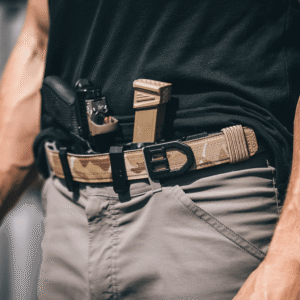
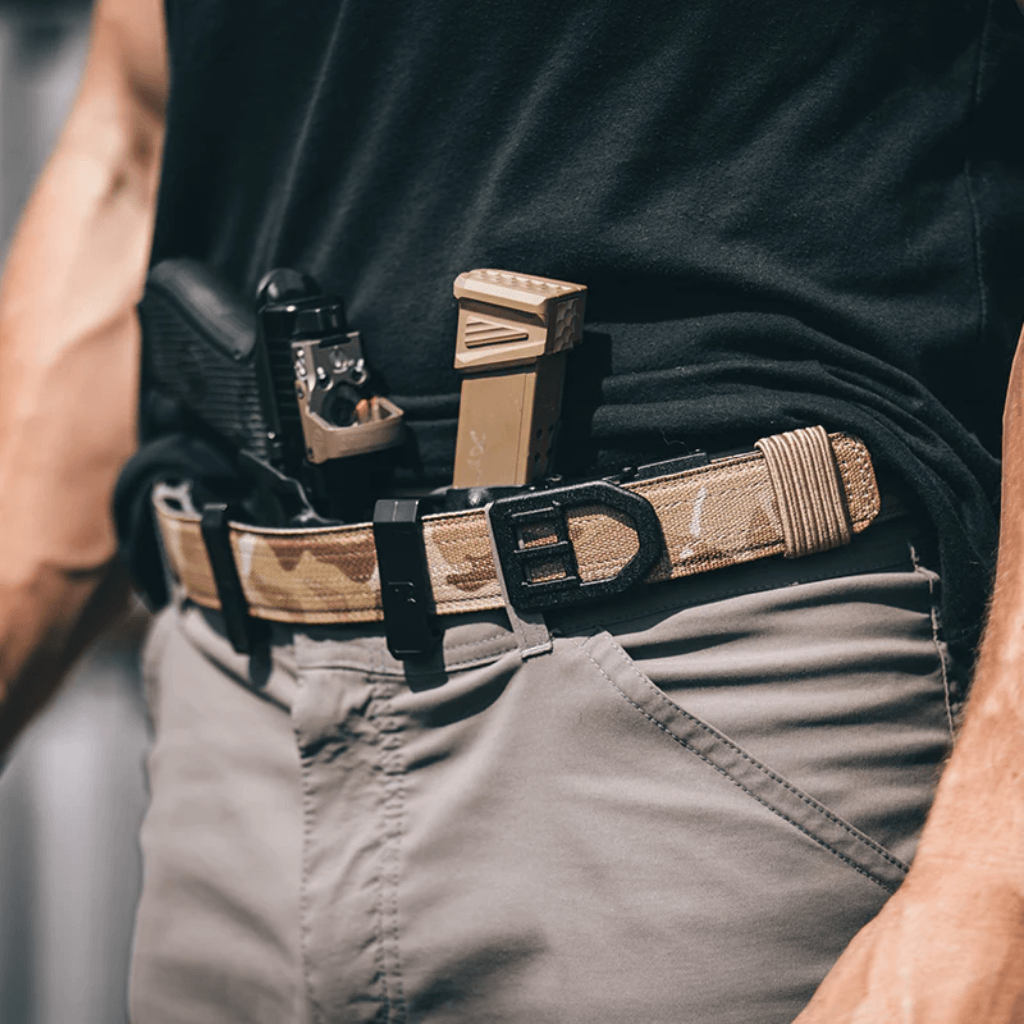
The claw and the wedge do different jobs, and both are required. The claw presses against the inside of your belt to rotate the grip inward. The wedge pushes the muzzle end away from your body, tilting the grip toward it and distributing holster pressure across a wider surface area. Using one without the other solves only half the problem.
Ride height is the most common setup error in new appendix-carry holster designs. If the holster digs into your thigh crease when seated, the ride height is too low. Raise it before adjusting anything else.
Set the belt, position, and ride height first. Then adjust the cant. Then install and tension the claw. Then position the wedge. Run 20 dry draws from concealment in your actual daily clothing before committing to the setup. The 8-step checklist at the end of this article walks through every adjustment in the correct order.
Is Appendix Carry Safe With New Holster Designs?
AIWB carry positions the muzzle toward the femoral artery. That fact does not argue against appendix carry. It is a reason to hold three safety requirements as non-negotiable regardless of which appendix carry holster design you choose.
Full trigger guard coverage with no gap: every holster reviewed here meets that standard. Do not use any holster that does not. Deliberate, slow re-holstering on every occasion, with the trigger guard area visually confirmed clear before seating the firearm. No finger inside the trigger guard during any re-holster, under any circumstance.
The USCCA and certified defensive training programs treat all three as baseline requirements for inside-the-waistband carry. They apply equally to every new appendix carry holster design on this list.
The holster does not control the re-holster. The carrier does.
The Right Appendix Carry Holster Is the One You Actually Wear
Spring 2026 appendix carry holster designs have solved more problems at the factory than any previous generation. The claw, wedge, and optic-ready cut that once required research and separate sourcing now ship standard on mid-range options.
The setup work is still yours to do. Use the tier framework above to find a starting point matched to your experience and budget. Use the checklist below to configure it correctly before your first full day of carry. For deeper carry system guidance, see our Best IWB Holster for Concealed Carry 2026, AIWB Carry Holster Setup Guide, OWB Holster Concealment, and Best Concealed Carry Handgun for Women 2026.
The holster that stays on your body through a full summer day is worth more than any holster that performs better on the range but comes off before lunch.
Check this TOP 6 Appendix Carry MISTAKES In 2026 out of PHLster.
Frequently Asked Questions
-
What is the most comfortable appendix carry holster for all-day wear in 2026?
The most comfortable appendix carry holster designs in 2026 combine adjustable ride height, a foam wedge at the muzzle end, and smooth Kydex edges. No single model fits every body type. The Vedder LightTuck and Tenicor Velo5 receive the most consistent community endorsement among daily carriers, but both require individual tuning to reach that result.
-
What is the difference between a holster claw and a holster wedge?
A claw presses against the inside of your belt to rotate the grip inward, reducing printing through your shirt. A wedge pushes the muzzle end away from your body, tilting the holster and distributing pressure across a wider surface. They solve different problems. Most experienced AIWB carriers run both. Using one without the other addresses only half the concealment equation.
-
Do I need a separate optic-cut holster for my red dot-equipped carry gun?
Yes. A standard Kydex shell will not clear most red dot housings. Most 2026 mid-range and premium appendix carry holster designs offer optic-ready cuts as standard, but confirm your specific optic footprint against the holster’s compatibility list before purchasing. Ordering the wrong model means the holster will not seat the firearm correctly.
-
Can you appendix carry with a larger build?
Yes, with the right setup. Ride height adjustment and correct wedge placement matter more for larger builds than for slimmer ones. Leather-backed hybrid options, such as the Alien Gear ShapeShift AIWB, provide greater body conformity and may be more comfortable for carriers who find all-Kydex designs uncomfortable, regardless of wedge thickness.
-
What is the correct order to adjust an AIWB holster?
Set ride height first, then cant, then claw tension, then wedge position. Adjusting out of sequence means each step can undo the previous one. Ride height resolves most seated discomfort. Cant resolve most standing print problems. Claw tension and wedge position are the final concealment refinements, not the starting point.
-
Can you append carry while seated or driving?
Yes, with the correct setup. The most common seated complaint, muzzle pressure into the thigh crease, is a ride height problem. Raising the holster one position typically resolves it. Run the 8-step setup checklist with at least 30 minutes of seated movement before finalising any new appendix carry holster configuration.
-
How do you stop an AIWB holster from printing?
The claw is the primary solution. It leverages the grip inward using belt pressure. A properly adjusted claw on a rigid belt eliminates most grip printing under a fitted shirt. A wedge at the muzzle end reinforces the tuck. If printing persists after both are correctly adjusted, the issue is typically ride height, cant angle, or belt stiffness, in that order.
-
What belt do you need for appendix carry to work correctly?
A rigid gun belt is required. The claw depends on belt stiffness to generate the leverage that rotates the grip inward. A soft dress belt or stretchy fabric belt cannot provide that resistance. A reinforced nylon or leather belt of at least 1.25 inches wide is the minimum. No claw system works correctly without it. This is not optional equipment.
-
What is re-holstering discipline and why does it matter for appendix carry?
Re-holstering discipline means returning the firearm to the holster slowly and deliberately, with visual confirmation that the trigger guard area is clear before seating the gun. AIWB positions the muzzle toward the femoral artery. Negligent discharge during re-holstering is the primary injury mechanism in AIWB incidents; no holster design substitutes for a trained, deliberate re-holster on every occasion.
-
Is a $100 AIWB holster better than a $50 one?
Not automatically. A correctly configured budget Kydex holster with a properly adjusted claw and wedge will outperform an expensive holster worn at factory defaults. The shell establishes trigger guard coverage and retention. The claw, wedge, and belt establish concealment and comfort. Investing in belt quality and setup hardware often returns more than doubling the holster cost.
What’s the logic behind your loadout? Break down your choice in the comments.