
Key Points
Switching your EDC carry gun is as much a training decision as a gear decision. Confirm a quality holster exists before you buy. Verify your carry wardrobe can conceal the new platform across your real daily environments. Reset your drawstroke reps deliberately on the new gun. Check your state permit covers the change. Gear upgrades in a day. Muscle memory takes longer.
Related: The Concealment Test: Which Holster Problems Show Up in Week One?
“The 26 romance is over.”
That line from a recent r/CCW thread captured something a lot of experienced carriers are feeling heading into 2026. The gear available to concealed carriers right now is genuinely better than what existed five years ago, and the case for reconsidering a compact-only setup is real. A wave of carry-optimized pistols has given experienced carriers more high-quality options than they have ever had.
But the question here is not whether to upgrade. The question is what you need to check before a new EDC carry gun replaces the one you have been carrying for years. Skipping those checks does not make the upgrade faster. It makes it incomplete. As one TheArmoryLife.com forum member put it: “I wasted a lot of money on cheap nylon holsters.” That regret usually starts with buying the gun before confirming everything around it.
There are five gates every carrier should clear before a new gun takes over daily carry duties.
Does a Quality Holster Already Exist for Your New EDC Carry Gun?
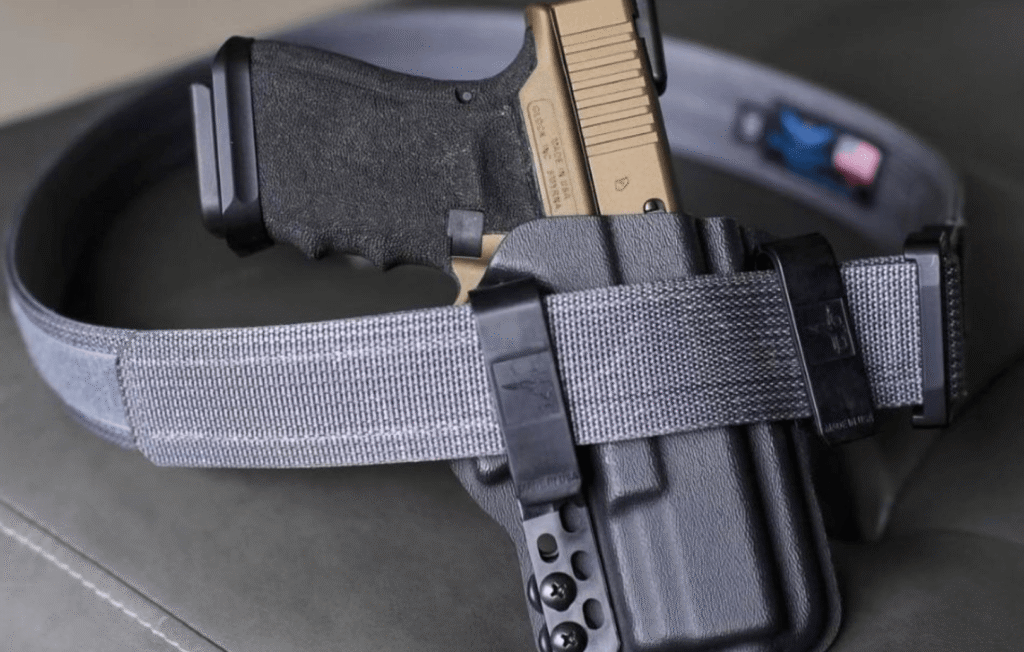
Confirm the holster before you confirm the purchase. This is the step carriers skip most often, and it carries the highest financial and safety cost when it goes wrong.
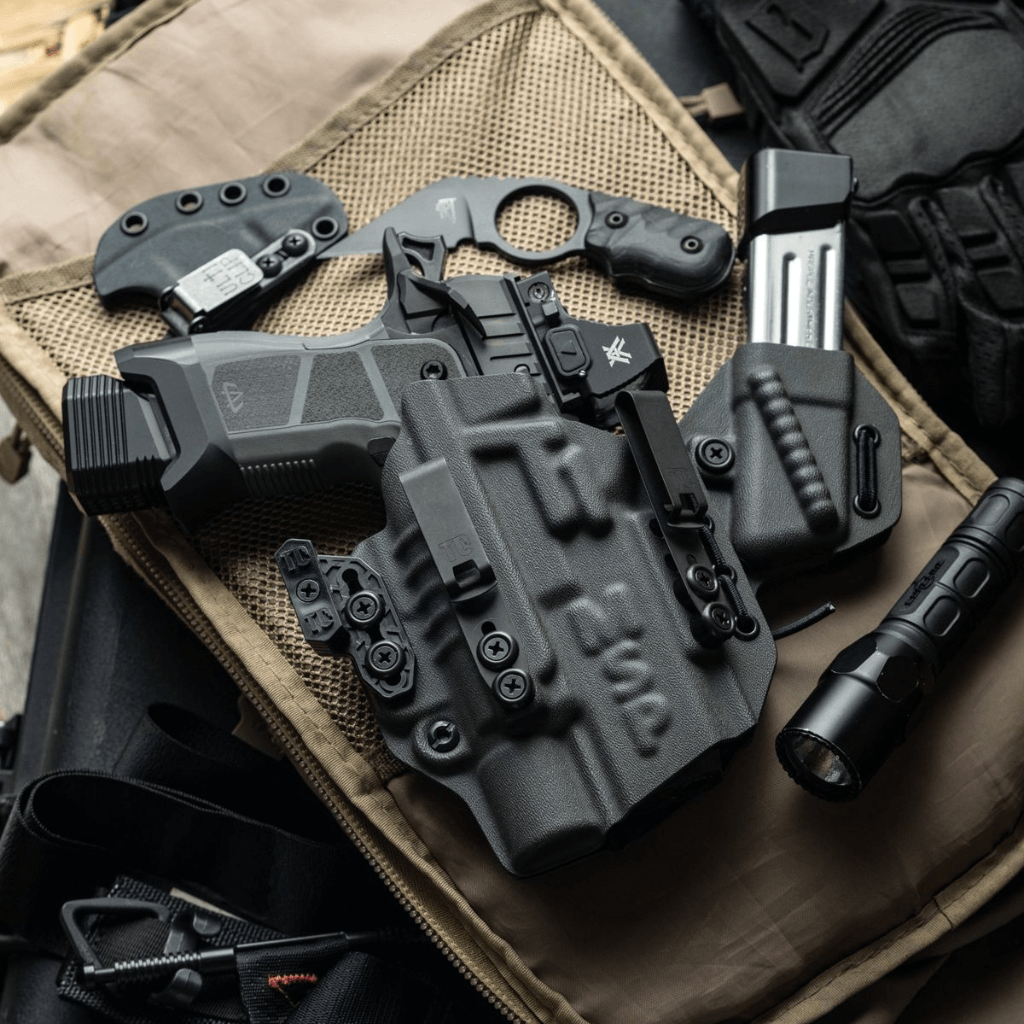
A quality carry holster means passive retention, full trigger guard coverage, consistent one-handed re-holstering without the shell collapsing, and a reputable manufacturer with a documented user base. Soft-sided sleeves and generic nylon options do not meet that standard for a daily carry gun.
A new EDC carry gun without a confirmed holster is a liability, not an upgrade.
Search your target model in r/CCW and DefensiveCarry.com before you buy. Experienced carriers on those forums are direct about which holster ecosystems are thin, backordered for months, or dominated by budget-tier options. The gun may be excellent. It still is not ready to carry until the support infrastructure around it catches up.
Will Your Carry Wardrobe Actually Conceal a Different EDC Carry Gun?
The range does not tell you this. Your actual daily environments do.
Carriers moving from a compact to a full-size or higher-capacity platform consistently underestimate the concealment difference. Grip length drives print risk far more than barrel length does. A gun that disappears under a range shirt can telegraph its position through a tucked dress shirt, a fitted jacket, or the layered clothing most people wear through a real workday.
The concealment audit happens in real clothes, in real environments, not at the range.
Run this drill before you commit: carry a blue gun or snap caps in the new holster through one complete weekday. Workplace, vehicle, grocery store, whatever your actual daily movement looks like. What that single day reveals is more useful than three range sessions with fresh targets.
Wardrobe modification is a legitimate carry system investment. Building your clothing around the carry setup rather than against it is not a compromise. It is how experienced carriers solve this problem without accumulating a shelf of gear that never gets used.
No products found.
How Much Training Do You Actually Need After Switching Your EDC Carry Gun?
More than you think, and less than you fear. Here is why both halves of that are true.
Some things transfer between modern striker-fired pistols: basic grip mechanics, sight alignment principles, and fundamental trigger press technique at a general level. Some things do not: the specific trigger reset point, the grip angle, and the exact motor sequence of the draw from your carry holster. That last category is where carriers get into trouble.
The field is genuinely split on how to handle this. One position holds that switching your EDC carry gun requires a complete training reset. Run a documented qualification at three, five, and seven yards before the gun goes on your hip in a public environment. No pass, no carry. Platform-specific motor patterns are the first thing to degrade under stress, and stress is exactly when it matters.
The other position holds that if your fundamentals are solid, the rebuild is targeted rather than total. Fifteen minutes of deliberate dry-fire per day for two weeks, focused specifically on what does not transfer, is the efficient path. The fundamentals are already in place. Build only what the new platform changes.
The benchmark is the objective answer to the subjective question: Am I ready to carry this gun?
Both positions agree on the exit gate. Pass a published performance standard with the new firearm before you carry it. KR Training publishes free assessment drills at KRTraining that work for exactly this purpose. Run the drill. Record the score. If you do not pass, keep training. If you do, carry.
The practical split works like this: carriers with fewer than two years and fewer than 500 documented drawstroke reps should run the full reset. Experienced carriers with a consistent training log should identify what specifically does not transfer and build only those elements.
Does Switching Your EDC Carry Gun Affect Your Legal Carry Status?
In most states, your permit covers any legal handgun, not a specific model. But “most states” is not a complete answer, and this is not the place to assume.
If you carry across state lines under reciprocity agreements, verify that your destination states allow the specific configuration of your new gun. Threaded barrels, extended magazines, and high-capacity configurations are restricted or prohibited in certain jurisdictions. Confirming this before you cross a state line is not overcaution. It is the minimum responsible check for any carrier whose EDC carries a gun.

- Teaches safe gun handling, thousands of dry fires without damage
- Functions just like real ammo - without the noise
- Offers versatility: training, storage, testing, practice

Last update on 2026-10-10 / Affiliate links / Images from Amazon Product Advertising API
Your permit likely covers any legal handgun. Confirm it before you carry the new one.
There is also a training documentation dimension that most carriers overlook. A carrier who has a documented qualification record with the specific firearm they were carrying at the time of an incident is in a substantially stronger legal position than one who cannot demonstrate that competency. Treat your training log as a legal file from day one, not just a range habit.
The USCCA maintains a state-by-state carry law reference covering permit reciprocity, magazine capacity limits, and carry restrictions by jurisdiction. The NSSF also maintains firearms safety and compliance resources worth reviewing when adding a new firearm to your carry rotation.
This section is for informational purposes only and does not constitute legal advice. Carry laws vary by state and change without notice. Consult your state’s official statutes or a qualified attorney before carrying in any jurisdiction where you are uncertain of your legal status.
How Do You Test a New EDC Carry Gun Before You Commit to Carrying It?
Run these six steps before the new gun leaves the house loaded.
- First, dry-fire at home with the new platform for at least one week before any live fire. Focus on trigger reset and draw clearance from your carry holster. Speed comes later.
- Second, run 100 rounds through the gun, and make sure that count includes your actual defensive hollow-point load, not just range FMJ. Ball ammo feeds reliably through almost anything. Your specific defensive load is what needs to cycle without issue. Run 100 rounds of your defensive ammunition through the new EDC carry gun before it leaves the range with you. Any failure to feed, eject, or return to battery is a disqualifying event until you resolve it directly with the manufacturer.
- Third, run a published benchmark drill and record the score. Use that score as your carry authorization, not your gut feel about how comfortable the new grip feels.
- Fourth, complete the wardrobe and concealment audit described above. One full weekday minimum, in the clothes you actually wear.
- Fifth, confirm holster retention and re-holstering under mild time pressure. One-handed re-holstering should be smooth and consistent across the carry positions you actually use, not just the one that feels easiest at a bench.
- Sixth, carry the unloaded gun in the holster through a full day before going live. Let your body learn the new profile, the new weight, and the new draw clearance before the stakes are real.
None of these steps requires an expensive training course or a long weekend away. Most can be completed over two weeks at minimal additional cost beyond your standard range budget.

- IMPROVE SHOOTING ACCURACY - 94% of shooters improve after using Mantis X dry fire training system for just 20 mins...
- DATA DRIVEN TRAINING - With the Mantis X3, you can trace the movement of every shot, score and analyze your target...
- SAVE MONEY ON AMMO - Sharpen your shooting skills without breaking the bank on firearm rounds! The Mantis X3 allows you...
Last update on 2026-10-09 / Affiliate links / Images from Amazon Product Advertising API
The Switch Is Worth Making When the Work Is Done
The gear available to concealed carriers right now is genuinely better than the options that existed when many of us started. Experienced carriers reconsidering compact-only setups are not wrong to look at what is out there. They are only wrong if they look without running the checks.
An EDC carry gun switch is a system decision. The holster, the wardrobe, the training log, and the legal file all move with the firearm. A new gun that fails the concealment audit, has no confirmed quality holster, or has not been trained to a documented standard, is not an upgrade to your defensive capability. It is a replacement for one gap with a different one.
Run the checklist. Make the switch. Carry with confidence.
For current IWB holster options for popular carry pistols, see GunCarrier’s IWB Holster Guide. For training resources and state-by-state carry law reference, see the USCCA Membership Review.
Check this video out from Blackstone Shooting Sports.
Frequently Asked Questions
-
What should I consider before switching my everyday carry gun?
Before switching your EDC carry gun, confirm a quality holster exists for the new platform, verify your carry wardrobe can conceal it across all daily environments, complete a training reset with documented benchmarks, and review your state’s carry laws for the new configuration. Run at least 100 rounds of your defensive load through the firearm before relying on it for carry.
-
Is a full-size pistol or compact better for concealed carry?
Neither is universally better. A compact is easier to conceal but typically harder to control under stress. A full-size platform often shoots better but demands more from your carry wardrobe and holster setup. The right answer depends on your specific carry context, body type, and the daily environments you actually move through, not on category defaults or forum consensus.
-
How do I rebuild muscle memory when I switch my EDC carry gun?
Focus dry-fire practice on the elements that do not transfer from your old platform: trigger reset point, grip angle, and draw clearance. Run 15 minutes of deliberate dry-fire daily for at least two weeks before live fire. Pass a published benchmark drill with the new gun before carrying it. Document the qualification date and score in your training log.
-
Do I need a new holster when I switch carry guns?
Yes, always. A holster is firearm-specific. No carry gun should ride in a holster not designed for that exact model. Confirm holster availability, passive retention quality, and full trigger guard coverage before purchasing the new firearm. Discovering a holster gap after purchase is expensive and leaves you without a viable carry solution until you resolve it.
-
Does switching carry guns affect my concealed carry permit?
In most states, a carry permit covers any legal handgun, not a specific firearm. However, if you carry across state lines under reciprocity agreements, verify that your destination states allow the specific configuration of your new gun, including any threaded barrel, extended magazine, or capacity considerations. Confirm carry compliance before you travel, not after. This is informational only, not legal advice.
-
How many rounds should I fire through a new carry gun before trusting it?
Run a minimum of 100 rounds through the new firearm before relying on it for daily carry, and include your specific defensive hollow-point load in that count, not just range ball ammo. Any failure to feed, eject, or return to battery is a disqualifying event until resolved with the manufacturer. Reliability with your actual carry load is the only test that matters.
-
What is the right way to test concealment on a new carry gun?
Skip the range shirt test. Carry a blue gun or snap caps in the new holster through one complete weekday in the clothing you actually wear: workplace, vehicle, grocery store, and social environments. Grip length drives print risk more than barrel length does. What that single day reveals about concealment in your real wardrobe is worth more than any range session.
How does this fit into your EDC rotation? We want to hear your reasoning.👇