
Key Facts
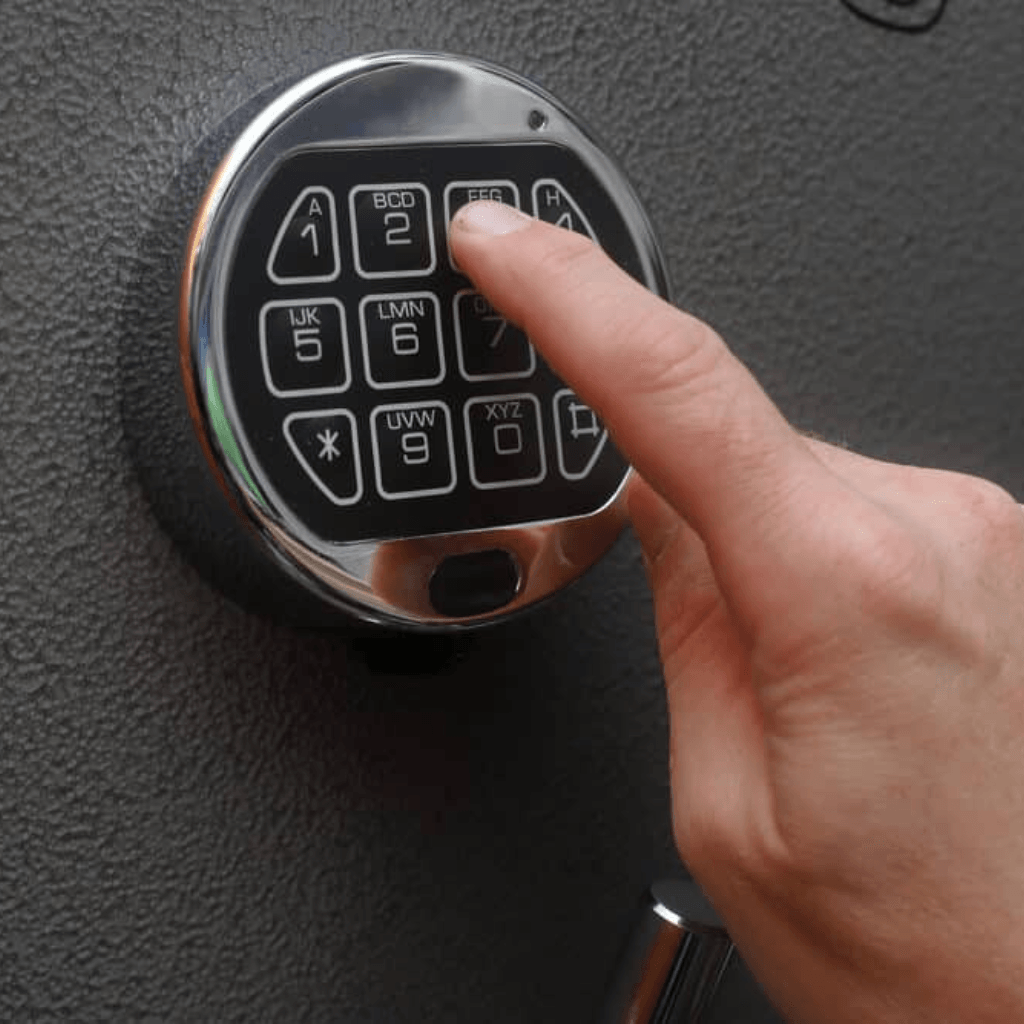
Child access prevention (CAP) laws require gun owners to secure firearms so minors cannot access them. In 2026, California and Illinois enacted major storage updates mandating locked containers for most gun owners. Penalties for violations can reach $10,000. To offset costs, states including Virginia, Colorado, and Georgia offer tax credits up to $300 for qualifying gun safes, lockboxes, and trigger locks. There is no federal mandate. Your legal obligation depends entirely on your state.
WHAT IS IN THIS GUIDE
- What Are Child Access Prevention Laws and Which States Have Them?
- How Did These Laws Develop and Why Are More States Expanding Them?
- What Penalties Can Gun Owners Face Under 2026 Storage Laws?
- Which States Offer Tax Credits for Gun Safes in 2026?
- What Safe Storage Options Meet Legal Requirements?
- What Do Safe Storage Laws Require When Transporting Firearms?
- How Do You Keep a Home Defense Gun Accessible While Staying Compliant?
- How Do You Find Your State’s Current Law?
Most gun owners know they should store their firearms safely. Far fewer know that in 2026, two of the most consequential storage law updates in recent memory took effect simultaneously in California and Illinois, and that several states now offset the cost of compliance with real tax credits.
“I didn’t realize there was a new law.” That line came from a gun owner in a Rhode Island forum thread the summer their own state updated its storage requirements. It was not an unusual response. As of January 2025, 35 states and the District of Columbia have some form of CAP or safe storage law on the books, according to the RAND Corporation. The legislative trend in 2026 points in one direction: stronger requirements, broader applicability, and higher penalties for non-compliance. This guide covers what the law now requires, what it costs to ignore, and how to claim the money available to help you comply.
What Are Child Access Prevention Laws and Which States Have Them Right Now?
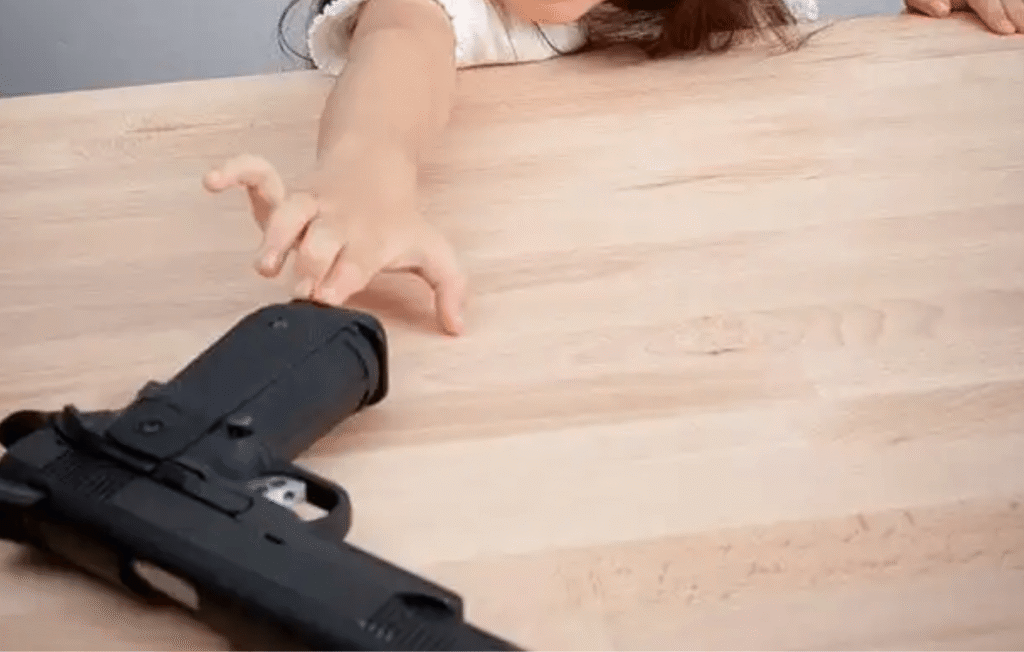
Child access prevention laws are state statutes that impose criminal or civil penalties on adults when a minor gains access to an unsecured firearm. The general principle is straightforward: if a child can reach a loaded, unsecured gun in your home, you bear legal responsibility for what happens next. There is no federal version of this law. What exists is a state-by-state patchwork with substantially different triggering conditions, age thresholds, storage definitions, and penalty structures.
As of 2026, states with active CAP or mandatory safe storage laws include California, Illinois, Massachusetts, Connecticut, Colorado, New York, New Jersey, Virginia, Hawaii, Maine, Maryland, Minnesota, and others. Two significant changes took effect on January 1, 2026.
California’s Senate Bill 53 requires all gun owners to store firearms securely in their residences whenever the firearm is not being carried or in the owner’s direct control. A firearm is considered securely stored when kept inside a California DOJ-certified firearm safety device or a qualifying gun safe. Fines reach up to $250 for a first violation and up to $500 for a second. A third or subsequent offense becomes a misdemeanor. [Source: Cal. Penal Code § 25145; giffords.org]
Illinois’s Safe Gun Storage Act (Public Act 104-0031) requires firearm owners to secure guns in a locked container at any time a minor, at-risk person, or prohibited individual could gain access. The mandate covers both homes and vehicles. [Source: giffords.org]
In states without a criminal statute, civil liability still applies when an unsecured firearm is accessed and causes harm. The absence of a law does not close the courthouse.
Related: 2026 State Firearm Laws: What CCW Holders Must Know Before July 1
2026 State CAP and Safe Storage Law Snapshot
| State | Law Type | Storage Trigger | Penalty Range | Tax Credit Available |
| California | Mandatory storage (SB53, eff. Jan 1, 2026) | Any time not carried or in direct control | Up to $250 (1st), $500 (2nd), misdemeanor (3rd+) | No (sales tax exemptions may apply to safety devices) |
| Illinois | Mandatory locked container (Public Act 104-0031, eff. Jan 1, 2026) | Minor, at-risk, or prohibited person could gain access | Civil fine up to $10,000 depending on outcome | No |
| Massachusetts | All firearms with locking device | Whenever not in use or immediate control | Criminal penalty (up to $5,000 and/or 2.5 years) | No |
| Virginia | CAP law plus state credit program | Minor likely to gain access | Criminal liability | Yes, up to $300 nonrefundable |
| Colorado | Storage mandate plus tax credit bill (HB25-1128) | Minors present | Statute-defined | Up to $200 (tax years 2027-2028) |
| Georgia | CAP law plus proposed credit (HB2, 2026-2030) | Minor access likely | Criminal liability | Up to $300 proposed, preapproval required |
| No mandate states | No criminal statute | N/A | Civil negligence exposure only | Varies |
Verify your state’s current statute at giffords.org/lawcenter before drawing legal conclusions. This table is informational and does not constitute legal advice. Laws change; always confirm at the primary source.

- ✅HOLDS UP TO 10 LONG GUNS – Securely stores rifles or shotguns up to 52 inches tall with room for accessories.
- ✅DURABLE WELDED STEEL CONSTRUCTION – Built with all-steel body and reinforced door for dependable firearm security.
- ✅3-POINT LOCKING SYSTEM – Locks door at top, bottom, and center to help prevent forced entry.
Last update on 2026-10-09 / Affiliate links / Images from Amazon Product Advertising API
How Did Child Access Prevention Laws Develop and Why Are More States Expanding Them in 2026?
State-level child access prevention laws first appeared in the early 1980s. The wave of modern CAP legislation was built through the late 1980s and 1990s, with most of the foundational framework enacted before 2000. Over the following two decades, the laws sat largely unchanged in many states. What changed in the 2020s was the evidence base.
A peer-reviewed study published in Preventive Medicine in January 2026 examined data from 2,264 firearm owners across a nationally representative sample collected in 2023. The finding: firearm-owning adults in states with the most stringent child access prevention laws were significantly less likely to store a firearm loaded and unlocked compared to those in states with no such laws, even after controlling for other variables. Overall, 7.0 percent of households in CAP law states stored at least one firearm loaded and unlocked, compared to 11.8 percent in non-CAP law states. [Source: Preventive Medicine, doi: 10.1016/j.ypmed.2026.108516]
Earlier research reinforced those findings. A 2020 study published in JAMA Pediatrics, drawing on 26 years of data, found that states with negligence-based CAP laws experienced a 13 percent reduction in firearm fatalities among children under 15 compared to states with no such laws. States with the most stringent versions of those laws saw a 59 percent reduction in unintentional firearm fatalities among the same age group. [Source: JAMA Pediatrics, Boston Children’s Hospital, March 2020]
A Johns Hopkins Center for Gun Violence Solutions study found CAP storage policies lowered youth suicide rates by up to 14 percent. The researchers noted that the most effective laws required parents or guardians to store firearms unloaded and locked in a secure device when children aged 16 and younger were in the home. [Source: Johns Hopkins Bloomberg School of Public Health, 2025]
As of January 2025, 35 states and the District of Columbia have some form of CAP law, up from 27 states a decade earlier, according to RAND Corporation. The 2026 legislative cycle reflects both that accumulating evidence base and a broader trend toward mandatory locked-container requirements in states where CAP laws previously imposed liability only after a child was harmed.
Nearly one-third of U.S. firearm owners report storing at least one firearm loaded and unlocked, according to the same 2026 Preventive Medicine study. That storage gap is the problem these laws are designed to close.
What Penalties Can Gun Owners Face Under the 2026 Storage Laws?
In Illinois, the penalty structure has teeth. A general violation of the Safe Gun Storage Act carries a civil fine of up to $500. If a minor, at-risk individual, or prohibited person actually gains access to an improperly stored firearm, that fine rises to $1,000. If that person causes injury, death, or commits a crime using the firearm, the maximum penalty is $10,000. A violation also constitutes prima facie evidence of negligence per se in any civil lawsuit that follows. The law shortened the lost-or-stolen reporting window to 48 hours. [Source: Illinois Public Act 104-0031; giffords.org]
In California, under SB53, fines run up to $250 for a first violation and up to $500 for a second. A third or subsequent offense becomes a misdemeanor. California law also imposes strict civil liability for a period of two years from the date of the violation if the firearm is obtained by an unauthorized user and subsequently used to injure a person or damage property. [Source: Cal. Penal Code § 25145; giffords.org]
In Massachusetts, allowing a child unsupervised access to a handgun can result in a fine up to $5,000 and up to two and a half years of imprisonment. [Source: Mass. Gen. Laws ch. 140 § 131L; Wikipedia confirmed against primary statute reference]
Beyond criminal penalties, civil negligence exposure applies in every state, including those without CAP criminal statutes. A gun owner whose unsecured firearm is accessed by a child faces potential civil liability regardless of where they live. The absence of a criminal law does not close the courthouse.
Documentation matters at every stage. A gun owner with a dated receipt, an installation photo, and a locked device in active use is in a substantially different legal position than one who stores safely but has no record of doing so. Keep the receipt. Take a photo. Build the paper trail.
Which States Are Offering Tax Credits for Gun Safes and Lockboxes in 2026?
The financial barrier to compliance is lower now than it has ever been.
Virginia offers a nonrefundable income tax credit of up to $300 for qualifying firearm safety devices, active since tax year 2023. Qualifying devices include safes, lockboxes, and trigger locks that meet state guidelines. [Source: Virginia Tax, tax.virginia.gov/news/firearm-safety-device-credit]
Colorado enacted House Bill 25-1128, which creates an income tax credit of up to $200 for safe storage devices purchased through a federally licensed dealer. The credit applies to tax years 2027 and 2028, with a five-year carry-forward provision if the credit exceeds your tax liability. [Source: Colorado General Assembly, leg.colorado.gov/bills/hb25-1128]
Georgia has introduced a credit of up to $300 running from 2026 through 2030 under HB2, subject to a $5 million annual aggregate cap. Applications are processed on a first-come, first-served basis, and preapproval through the state department is required. Taxpayers must retain receipts for three years and may claim a lifetime maximum of $300. [Source: BillTrack50, GA HB2]
Louisiana offers a tax credit for qualifying safe storage device purchases. Current terms and eligibility should be confirmed directly with the Louisiana Department of Revenue.
Before purchasing, verify your state’s current credit status through your state’s department of revenue website. Credit programs change annually. The amount you receive depends on your state, the device purchased, and your individual tax situation.
State Safe Storage Tax Credits at a Glance
| State | Credit Amount | Refundable? | Active Tax Year | Application Required? | Source |
| Virginia | Up to $300 | No | 2023 and forward | No preapproval | tax.virginia.gov |
| Colorado | Up to $200 | No | 2027-2028 | No (carry forward 5 years) | leg.colorado.gov/bills/hb25-1128 |
| Georgia (proposed HB2) | Up to $300 | No | 2026-2030 (proposed) | Yes, preapproval required | State Dept. application |
| Louisiana | Varies | Confirm with state | Current | Confirm with state | State revenue dept. |
Verify current eligibility with your state department of revenue before making a purchase decision. The table is informational only and does not constitute tax or legal advice.

- Dimensions: 4-1/4"h (5-1/4"h with buttons and knob) x 12-1/2"w x 10-3/8"d
- 10 gauge steel body
- Gas-strut-assisted heavyweight door
Last update on 2026-10-09 / Affiliate links / Images from Amazon Product Advertising API
What Safe Storage Options Actually Meet Legal Requirements?
Before choosing a product, one distinction matters above all others. A gun cabinet is not a gun safe. A thin sheet-metal enclosure with a key lock will stop a curious young child. It will not stop a determined teenager, a pry bar, or a house fire. Most gun cabinets are built from 20-gauge steel or thinner. States with CAP laws requiring a “locked container” or qualifying “firearm safety device” generally do not consider a standard gun cabinet sufficient. Confirm your state’s specific statutory language before relying on it.
The practical options fall into three tiers.
Tier 1, the minimum floor: trigger locks and cable locks. Inexpensive and available in the $10 to $40 range, these satisfy the deterrence standard in lower-regulation states and will stop a young child from operating a firearm. They do not solve the home defense access problem and may not meet the locked-container standard in California, Illinois, or Massachusetts. Use them as a supplement, not a replacement.
Tier 2, the standard compliant setup: a quick-access biometric or keypad lockbox. These meet the locked-container standard in most CAP law states, open in under three seconds with a reliable mechanism, and are available in the $80 to $200 range. This is where most responsible carriers should land. Best Bedside Gun Safes 2026
Related: Firearm Safe Storage for Home: Choosing the Right Gun Safe in 2026
Tier 3, the complete system: a full-size steel safe combined with a staged quick-access unit. This covers long-gun storage, the home defense staging problem, theft protection, and optional fire resistance simultaneously. The starting price for a quality full-size steel safe runs $300 to $400 and up.
One line from the 1911Forum captures the objection most owners raise: “I tend to think that ‘safe storage’ and ‘immediate use’ are opposites with no middle ground.” That was a defensible position in 2005. It is not accurate today. A quality biometric safe opens faster than most people can locate and recognize a threat. The tradeoff that once justified leaving a gun in a nightstand drawer no longer exists in any practical sense.
Safe Storage Device Comparison
| Device Type | CAP Law Compliant | Access Speed | Theft Deterrent | Fire Protection | Price Range | Best For |
| Trigger lock | Low-penalty states only | Manual, slow | Minimal | None | $15-$40 | Supplement only |
| Cable lock | Low-penalty states only | Manual, slow | Minimal | None | $10-$30 | Supplement only |
| Quick-access keypad safe | Yes (most states) | 3-5 seconds | Moderate | None | $80-$160 | Bedside staging |
| Biometric quick-access safe | Yes (most states) | Under 3 seconds | Moderate | None | $100-$200 | Primary carry gun, bedside |
| Full-size steel safe | Yes (all states) | 10-30 seconds | Strong | Optional | $300-$800+ | Long guns, full collection |
| Full-size fireproof safe | Yes (all states) | 10-30 seconds | Strong | Yes | $500-$2,000+ | Comprehensive protection |
Confirm that your specific device meets your state’s statutory definition of “locked container” or “firearm safety device.” Definitions vary by state and are not uniform across all CAP law jurisdictions.

- Biometric gun safe features a new fingerprint scanner for advanced protection; New interior light for visibility in any...
- Gun safe is equipped with an improved gas strut for long-lasting performance; Instantly open safe door for single-handed...
- Gun safe is constructed with solid steel and a pry resistant door for strength and handgun security; Digital keypad and...
Last update on 2026-10-09 / Affiliate links / Images from Amazon Product Advertising API
What Do Safe Storage Laws Require When Transporting Firearms?
Most discussions of safe storage focus on the home, but the 2026 legislative changes extend further in some states.
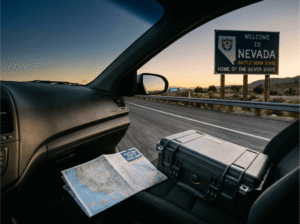
Illinois’s Safe Gun Storage Act explicitly includes vehicles. The locked-container requirement applies any time a minor, at-risk person, or prohibited person could gain access to the firearm, whether the firearm is in the home or in a car. A firearm left in an unlocked vehicle where a child or a prohibited person could access it triggers the same penalty structure as an unsecured firearm in a home setting. [Source: Illinois Public Act 104-0031; giffords.org]
For transport in general, most states follow a base standard: the firearm should be unloaded and in a locked case or container during transport, separate from ammunition, when not being actively carried on the person. This applies to firearms in vehicles, even in many states without specific mandatory storage laws.
There are important exceptions. In states that recognize your carry permit, a loaded firearm on your person or secured in a vehicle holster under your direct control typically satisfies the transport standard. What varies is what happens when you leave the vehicle.
The practical guidance:
In any state with a mandatory storage law, a firearm left in a vehicle when you exit the vehicle must be in a locked container. A car console with a push-button lid does not satisfy this requirement in Illinois or California.
In permissive transport states, a locked case or lockbox in the vehicle meets the standard and also reduces theft exposure. Hundreds of thousands of firearms are stolen from vehicles annually. A lockbox mounted to the vehicle interior eliminates that risk.
For state-specific transport rules, HandgunLaw.us maintains one of the most comprehensive and regularly updated state-by-state transport guides available.
How Do You Keep a Home Defense Gun Accessible While Staying Compliant?
This is the practical question behind every storage decision, and the answer depends on your state and your household, not on a single universal rule.
If you are in a state with a mandatory CAP or safe storage law and children or prohibited persons are present in your home, a locked quick-access safe is both legally required and practically sufficient. It is not a compromise between security and access. A biometric unit opens in under three seconds. That is faster than reaching a nightstand drawer in the dark and getting oriented. The problem is solved.
If you are in a state without a mandatory storage law but with children, regular guests, or anyone who should not access the firearm in your home, civil liability creates the equivalent obligation without needing a statute to enforce it. The storage decision should be the same.
If you are in a permissive state, living alone, without regular visitors, no criminal mandate exists. The argument for a quick-access safe still rests on protection against burglary when you are not home, against law changes, and against guests you did not anticipate. The cost is under $150. The risk you mitigate is not trivial.
In all three cases, build a habit rather than a rule. Each time the composition of your household changes, whether a grandchild visits for the weekend, a service worker enters the house, or a guest stays over, confirm your current storage setup matches the access profile of whoever is now in the building. This is not a complex process. It is a repeatable one.
Document everything: purchase receipt, installation date, and a photo showing the device secured. In any legal proceeding, that record is not supplemental. It is your first line of defense.
How Do You Find Your State’s Current Child Access Prevention Law?
The two most reliable sources covering the full state-by-state picture are giffords.org/lawcenter and everytownresearch.org. Both are searchable by state, updated when laws change, and carry statutory references so you can go directly to the source text. Use them instead of gun forums or secondhand summaries.
RAND Corporation also maintains the State Firearm Law Database, which is used extensively by academic researchers and tracks CAP law stringency by state. It is publicly accessible and useful for understanding how your state’s law compares to others in terms of what triggers liability.
For tax credit eligibility, go directly to your state’s department of revenue website. Credit terms change with each legislative session, and what was current last year may not be current this year.
Action checklist before you carry or store:
- Look up your state’s CAP law status at giffords.org/lawcenter
- Confirm your current storage device meets your state’s statutory definition of “locked container” or “firearm safety device.”
- Check your state revenue agency’s website for safe storage, credit availability, and application requirements
- Purchase your storage device from a federally licensed dealer if your state’s credit requires it
- Keep the receipt and photograph the installed device with a date stamp
- Revisit this checklist annually
Is Your Storage Setup Legal, Documented, and Ready for the Law That Exists Right Now?
Child access prevention laws do not wait for gun owners to catch up. California and Illinois both updated their storage requirements for 2026, and the broader legislative trend points toward stronger enforcement, broader applicability, and higher penalties. The gun owner who is not certain what their state currently requires has an action item today, not next year.
The case for acting now is stronger than it has ever been. Multiple states offset the cost of a compliant setup with credits reaching $300. The biometric technology that makes quick access real is affordable and reliable. And the evidence base confirming that storage laws improve actual storage behavior, not just legal exposure, grew substantially in 2026.
Verify your state’s current law at giffords.org/lawcenter. If you are shopping for a compliant quick-access setup, it covers the top-rated options at every price point.
Related: Gun Safe Storage Laws 2026: What Owners Must Know Now
Check this video and leave a comment below: Experts stress secure firearm storage during holiday visits with children from Click On Detroit | Local 4 | WDIV
Frequently Asked Questions
-
What are child access prevention laws?
Child access prevention laws are state statutes that hold adults criminally or civilly liable when an unsecured firearm is accessed by a minor. There is no federal version. As of January 2025, 35 states and the District of Columbia have some form of CAP or safe storage law. Requirements vary significantly by state in storage definitions, age thresholds, and penalty structures.
-
Which states have child access prevention laws in 2026?
As of 2026, states with active CAP or mandatory safe storage laws include California, Illinois, Massachusetts, Connecticut, Colorado, New York, New Jersey, Virginia, Hawaii, Maryland, Minnesota, and others. Illinois and California both strengthened their requirements effective January 1, 2026. Verify your current state status at giffords.org/lawcenter before assuming your setup is compliant.
-
What are the penalties for violating a child access prevention law?
Penalties vary by state and outcome. In Illinois, a general violation carries a civil fine of up to $500. If a minor or prohibited person accesses the firearm, the fine rises to $1,000. If the person causes injury, death, or commits a crime using the firearm, penalties can reach $10,000. In Massachusetts, a violation can result in a fine of up to $5,000 and up to two and a half years imprisonment. Civil liability applies in every state regardless of criminal statute.
-
Can I get a tax credit for buying a gun safe in 2026?
Yes, in several states. Virginia offers a nonrefundable income tax credit up to $300 for qualifying firearm safety devices. Colorado enacted a credit up to $200 for tax years 2027 and 2028. Georgia has proposed a similar credit of up to $300 through 2030. Louisiana also offers a storage credit. Verify current eligibility with your state’s department of revenue before purchasing.
-
Does a trigger lock satisfy child access prevention laws?
In some lower-penalty states, a trigger lock meets the minimum standard. In states requiring a “locked container” or DOJ-certified firearm safety device, a trigger lock alone may not satisfy the statute. California and Illinois both specify locked-container or certified safety device requirements. Verify your state’s specific statutory definition before relying on a trigger lock as your only storage measure.
-
Can I keep a loaded gun in my nightstand if I have children in the house?
In states with mandatory storage laws, keeping an unsecured loaded firearm accessible to a child violates the statute. In states without a criminal CAP law, civil negligence liability still applies if a child accesses the gun and causes harm. A quick-access biometric or keypad safe keeps the firearm accessible to you in under three seconds while securing it from unauthorized users around the clock.
-
What is the difference between a gun cabinet and a gun safe for legal compliance?
A gun cabinet is typically thin sheet metal with a basic key lock. It deters a curious young child. It does not stop a determined teenager, a pry bar, or a house fire. Most strong CAP law states require a container that genuinely prevents unauthorized access. A gun safe with a steel body, pry-resistant construction, and a reliable locking mechanism meets the “locked container” standard in most jurisdictions. Confirm your state’s specific definition.
-
What do safe storage laws require when I transport a firearm in my vehicle?
In Illinois, the Safe Gun Storage Act explicitly covers vehicles. A firearm left in a vehicle where a minor or prohibited person could access it triggers the same penalty structure as improper home storage. In most states, the general transport standard requires an unloaded firearm in a locked case or container when not being actively carried on your person. Consult HandgunLaw.us for state-specific transport requirements.
-
How do I find my state’s current child access prevention law?
The most reliable sources are giffords.org/lawcenter and everytownresearch.org, both of which maintain regularly updated state-by-state databases with statutory references. The RAND State Firearm Law Database is also publicly accessible for comparative research. For tax credit eligibility, go directly to your state’s department of revenue. Social media and gun shop employees are not reliable sources for current legal requirements.
Make the case: Why did you vote that way?👇