
Quick Look
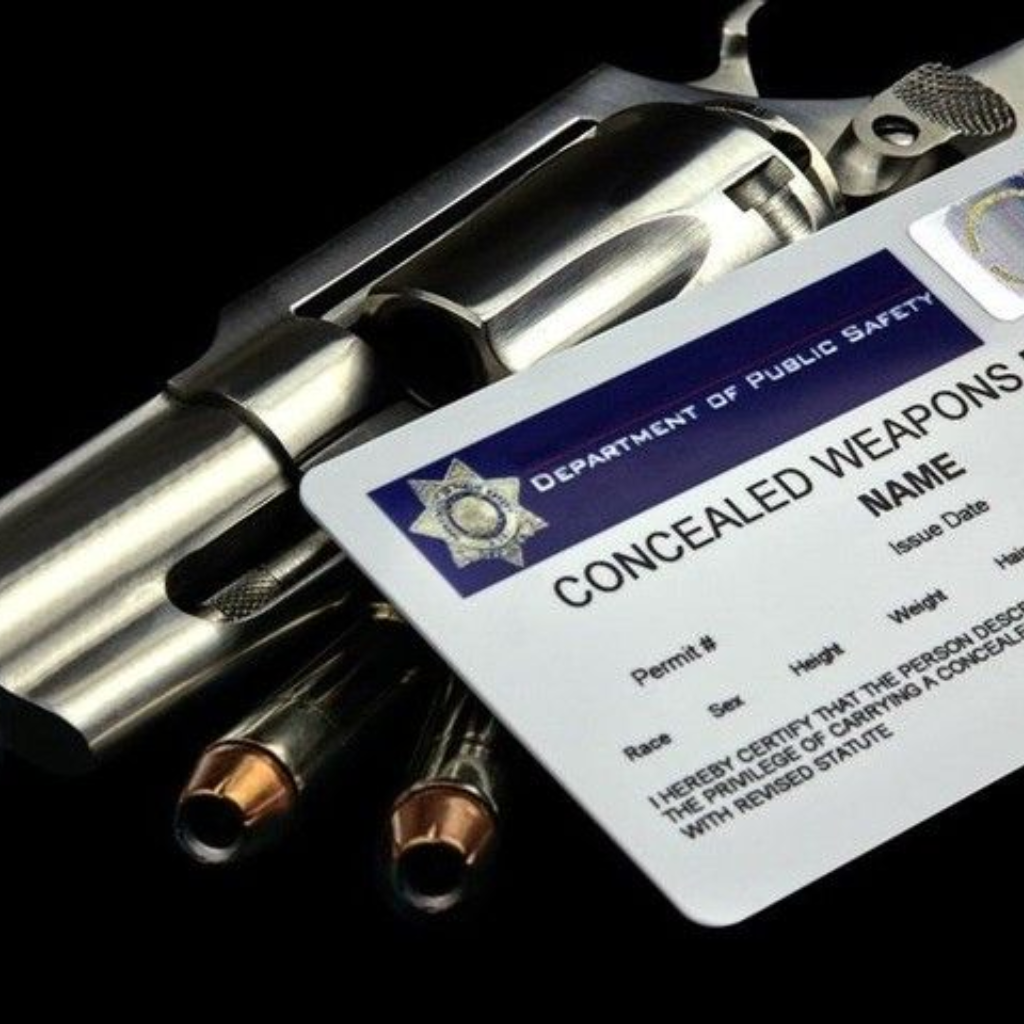
Getting a CCW permit clears a legal threshold, not a competency one. New carriers need four things in year one: a holster that works in real clothes, a minimum daily practice standard, working knowledge of your state’s use-of-force law, and a daily awareness habit. This guide covers all four in plain language.
The permit is in your wallet, the gun is in the safe, and the internet is full of people who all seem to contradict each other. Here is what almost no CCW course tells you: the license proves you met your state’s legal standard, and nothing more. Year one is where you close the gap between legal permission and real preparedness.
What Should You Do in the First Week After Getting Your CCW Permit?
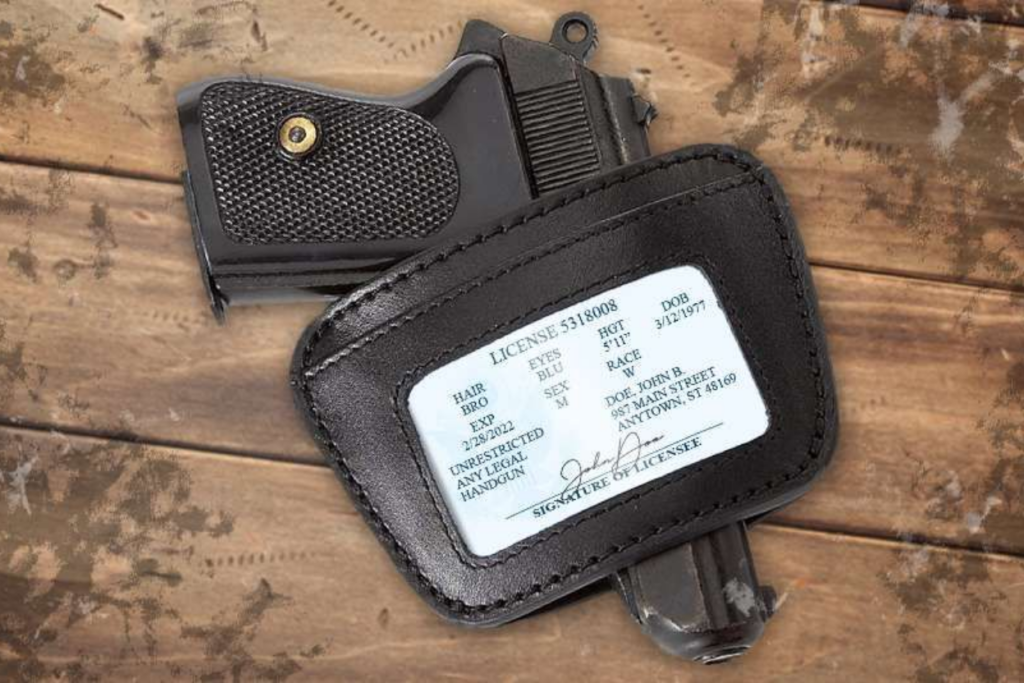
The most productive first week has three moves. None of them requires a range trip.
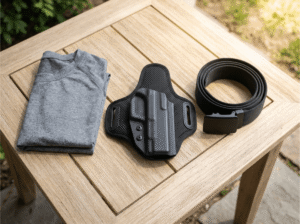
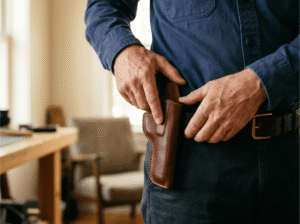
- Verify your CCW setup in everyday clothes. Put the holster on in the outfit you wear on a typical Tuesday, not your range gear. Button your shirt. Draw. If that motion is slow, awkward, or blocked, you have found your first training problem.
- Start dry-fire that same day. Clear the firearm completely, remove all live ammunition from the room, verify the chamber three times, and practice the draw from concealment. Watch for muzzle sweep across your own body. Ten clean repetitions take under five minutes. Do it again the next morning.
- Lock down your state’s carry laws. Go to your official state government website and read the statute directly. Know where you cannot carry. Know whether your state requires you to notify law enforcement of your CCW permit during a traffic stop. Know your home’s safe storage requirements. These are not questions to answer from a forum thread or a comment section.
A permit proves you passed a legal test. A clean drawstroke proves you are ready to use what you are carrying.
How Do You Choose a Holster That Actually Works for Everyday Carry?
“I wasted a lot of money on cheap nylon holsters.” That sentence appears in some version in nearly every new-carrier thread on every major firearms forum. It is the most avoidable first-year mistake in CCW.
A holster has three non-negotiable requirements. It must fully cover the trigger guard without flex or collapse. It must hold the gun in the same indexed position on every draw so you always start from the same point. And it must be accessible from the clothes you wear on a normal day, not your range day outfit.
Strong-side IWB at the 3 o’clock position is the most common starting point for new CCW carriers, and it works well for most builds and body types. No carry position is correct unless you can draw from it consistently, quickly, and without contortion. As one forum thread puts it: “Just get something you are comfortable with. A gun sitting in the safe defeats the purpose.”
Soft nylon holsters fail the trigger guard requirement. They collapse during re-holstering and create a pathway for trigger contact. A quality Kydex or leather IWB holster from a reputable maker runs between $50 and $120. It is the most important piece of gear you own after the firearm itself.
Related: Best IWB Holster for Summer Concealed Carry 2026
How Much Practice Does a New CCW Holder Actually Need?
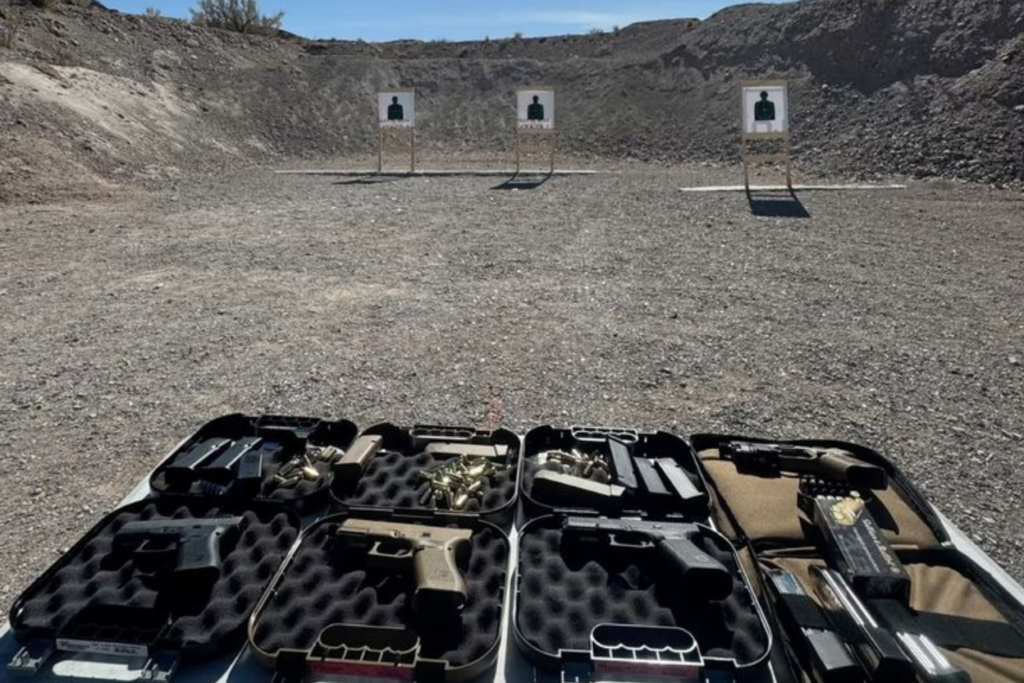
“CCW classes are NOT firearms training.” That is a blunt statement from the training community, and it is accurate. A licensing course teaches you enough to clear a legal threshold. It does not teach you to perform under stress in the conditions where most defensive encounters actually happen.
Experienced instructors are split on this question. One camp argues that most carriers are dangerously below any defensible skill standard and that the bar needs to be raised across the board. The other camp argues the same incident data shows most defensive situations are resolved at under five feet with one to three rounds, and that a correctly defined minimum is both achievable and appropriate for most people’s actual risk profile. Both positions are supported by the same data. They describe different parts of the same problem.
The answer for a new CCW carrier is a three-phase standard across year one.
- Phase 1 (Months 1 to 3): Build the Daily Habit
Ten dry-fire drawstrokes per day in your actual carry rig. One live-fire session per month at a minimum. Learn and practice a basic malfunction clearance. Three hundred dry-fire repetitions per month costs ten minutes a day and produces more measurable skill development than most single-day courses.
- Phase 2 (Months 3 to 6): Test Against a Benchmark
Test yourself against a published qualification standard. KR Training publishes free drills at krtraining.com that any carrier can run at a local range. The target is a first-shot hit on a man-sized target at five to seven yards, from concealment, in under three seconds. If you cannot pass it, that specific gap is your next training problem.
- Phase 3 (Months 6 to 12): Add One Structured Course
Attend one course with defined performance standards. Document it. Keep the certificate and the date. That record is more than proof of skill. It is part of your legal preparedness file.
Three hundred dry-fire repetitions per month costs nothing but ten minutes a day. That investment produces more first-year improvement than most one-day courses.
- Built-in directional microphones amplify range commands and other ambient sounds to a safe 82 dB, providing more natural...
- Actively listens and automatically shuts off amplification when ambient sound reaches 82 dB; Noise Reduction Rating...
- Features low profile earcups for firearm stock clearance; adjustable headband for secure fit; compact folding design for...

Last update on 2026-10-22 / Affiliate links / Images from Amazon Product Advertising API
What Use-of-Force Laws Does Every New CCW Holder Need to Know?
“This is what they don’t tell you in the CCW course, the training videos, anything.” That quote comes from a carrier who found out after a defensive gun use that surviving the physical encounter is only the first part of the problem.
Your state’s use-of-force law reduces to five conditions. All five must be present for a defensive use of force to be legally defensible.
The Five Legal Conditions for Defensive Force
- Innocence. You did not initiate or escalate the confrontation.
- Imminence. The threat was happening now, not hypothetical or future.
- Proportionality. Your level of force matched the specific threat you faced.
- Avoidance. In states that require it, you attempted to retreat if you safely could.
- Reasonableness. A reasonable person in your exact situation would have made the same decision.
Every new CCW carrier must also know whether their state requires retreat before using force or allows them to stand their ground. These are not the same standard, and the difference can determine the outcome of a prosecution. Look this up at your official state government website before you carry anywhere.
One more legal obligation most new carriers overlook: CCW permit reciprocity is not automatic. Most states do not honor all other states’ permits. Check your state attorney general’s website for current reciprocity agreements before crossing a state line while carrying.
Self-defense legal insurance is not optional coverage. Defensive shooting triggers both criminal and civil legal exposure. Attorney fees alone routinely reach six figures before a case resolves. USCCA membership is one of the most widely used options for new carriers and covers both criminal defense and civil liability.
Related: 2026 State Firearm Laws: What CCW Holders Must Know Before July 1

- Teaches safe gun handling, thousands of dry fires without damage
- Functions just like real ammo - without the noise
- Offers versatility: training, storage, testing, practice
Last update on 2026-10-22 / Affiliate links / Images from Amazon Product Advertising API
How Do You Build the Awareness Habit That Makes Every Other Skill More Effective?
The most valuable defensive skill in year one does not require a range, ammunition, or an instructor. It requires paying attention.
The standard is called Condition Yellow: a relaxed state of alertness with no specific threat identified. It is not paranoia. It is the default posture of anyone who has thought clearly about personal protection. The practical goal is to never be fully absorbed in a screen or a conversation to the point where your environment disappears.
The daily practice is simple. When you enter any room or public space, note the two nearest exits, one position that offers cover if you need to move quickly, and one thing that seems out of place. This takes under ten seconds. It builds a habit that runs every day, costs nothing, and operates in parallel with every other first-year CCW investment you make.
A carrier who is present and attentive is a harder target. A carrier who is present, attentive, and has cleared the minimum competency floor is prepared in a way that the permit alone never certifies.
You Got the Permit. Now Build What It Proves You Need.
Year one has four parallel tracks: a carry rig that works in your real wardrobe, a minimum daily practice habit, a legal baseline you can state from memory, and an awareness habit you run in every public space.
None of these requires a significant budget. All of them require consistent effort. The CCW carriers who finish year one genuinely prepared are not the ones who bought the most gear. They are the ones who showed up every day.
Download the free New Carrier Checklist for a printable summary of every step covered in this guide.
Check this video from Modern Protector – Every concealed carrier needs to watch this
Frequently Asked Questions
-
What do I need to do after getting my CCW permit?
Your first moves are practical: verify your holster works in your actual everyday wardrobe, run ten dry-fire draw strokes that day, and look up your state’s carry statutes at your official state government website. The permit is legal permission. Competency requires consistent practice, and the best time to start is the day the permit arrives.
-
How often should I practice with my CCW firearm?
Ten dry-fire drawstrokes per day is the minimum floor most new carriers can actually sustain. One live-fire session per month reinforces that practice with real feedback. Three hundred dry-fire repetitions per month produces measurable drawstroke improvement within 60 to 90 days without requiring range access every week or a large ammunition budget.
-
What is the best holster for a new CCW carrier?
Start with a quality Kydex or leather IWB holster that fully covers the trigger guard, maintains consistent retention between draws, and works in the clothes you wear on a normal day. Test the drawstroke in your actual outfit before committing to any holster. Soft nylon holsters collapse under re-holstering and should be avoided regardless of price.
-
Do I need self-defense legal insurance for CCW?
Yes. Defensive shooting triggers both criminal and civil legal exposure. Attorney fees for a self-defense case routinely reach six figures before resolution. Self-defense legal insurance covering criminal defense is standard preparation for any carrier. USCCA membership is one of the most widely used options and covers both the criminal and civil tracks.
-
What CCW laws do I need to know in my state?
Every carrier must know the five conditions for legal self-defense: Innocence, Imminence, Proportionality, Avoidance, and Reasonableness. You must also know whether your state requires you to retreat before using force or allows you to stand your ground. Look this up at your official state government website. Consult a qualified attorney for advice specific to your situation.
-
Should I tell the police I have a CCW permit during a traffic stop?
Disclosure requirements vary by state. Some states require immediate notification; others do not. This is a legal obligation with a state-specific answer. Look it up at your state government website before you carry in public. Consult a qualified attorney if you have questions about your specific situation. Do not rely on forum posts for this answer.
-
What caliber is best for CCW?
9mm is the most widely recommended starting caliber for new CCW carriers based on controllability, broad ammunition availability, and current price per round for practice. Any modern defensive hollow point from a reputable manufacturer in a caliber you can control accurately under stress is a reasonable choice. Controllability outweighs caliber optimization at the new-carrier stage.
-
Does a CCW permit work in other states?
Most states do not automatically honor all other states’ permits. Reciprocity agreements vary by state and change over time. Check the current reciprocity map at your state attorney general’s official website before crossing a state line. This is not a question to answer from a forum summary or an app that may not reflect current law.
-
How do I build real confidence as a new CCW carrier?
Confidence follows documented competency. The carrier who has passed a benchmark drill, confirmed the drawstroke works in real-world clothes, learned the five legal conditions for their state, and built a daily awareness habit has earned a specific and defensible confidence. Consistent daily practice produces that outcome faster than any single course purchase or gear upgrade.
Make the case: Why did you vote that way?