
Quick Look
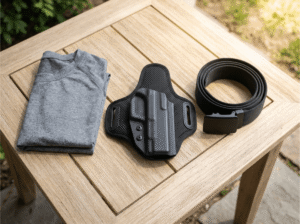
Successful IWB holster selection for slim builds requires a rigid Kydex shell for safety, a concealment claw to prevent printing, and a stiff gun belt to anchor the rig. For a 28–30″ waist, prioritize adjustable ride height and forward cant (5–10°) to mask the firearm’s grip against a flatter torso. Test the rig in real clothing during the return window, not after.
Related: Best IWB Holster for Summer Concealed Carry: Body-Type & Draw-Tested Guide
One forum carrier put it plainly: “I’ve got a drawer full of Kydex and wasted money as proof.” If you carry an appendix on a slim frame, that line probably stings a little. The same holster that works fine on a 36″ waist gap rotates, and prints on a 30″ waist, and the mainstream review sites rarely tell you why.
This guide walks the IWB holster selection process for slim builds, the way it actually works in the field: as a tuning system, not a shopping list. The right rig is the one that passes a drawstroke test and a full-day wear test in your actual clothes. Everything else is marketing.
Legal disclaimer: Concealed carry laws, permit requirements, and lawful carry locations vary by state and locality. This article does not provide legal advice. Carriers are responsible for understanding and complying with the laws applicable to their jurisdiction. Consult a licensed attorney for state-specific legal questions.
Why Does Standard IWB Holster Selection Fail Slim Builds?
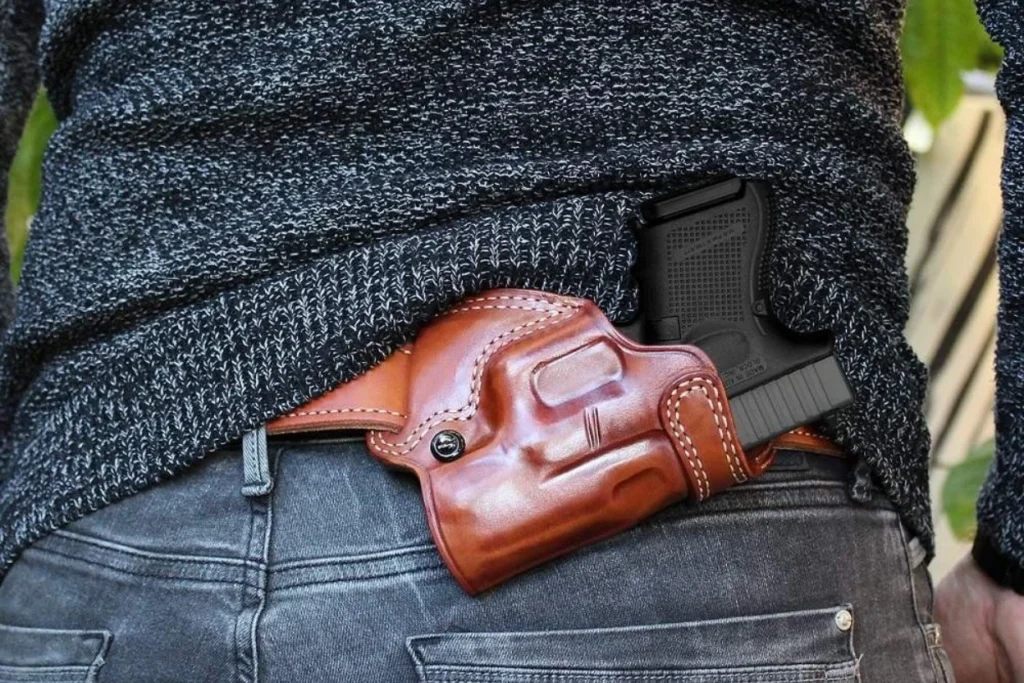
Slim carriers have less tissue mass to anchor a holster against the body. There are fewer surfaces for the rig to grip, which means small variations in cant, ride height, and belt stiffness produce big differences in how the holster sits and prints.
A published holster manufacturer’s guide states the geometry plainly: thin carriers have less natural curvature and body mass to help mask a firearm, making traditional inside-the-waistband setups more prone to exposure under fitted clothing. The flatter centerline of a slim waist also means that any bulge from the grip shows up sooner and more visibly than it would on an average build.
The result is a familiar pattern. A carrier reads reviews from average-build testers, buys what’s recommended, and discovers that the same product on their body gaps at the muzzle, rotates outboard at the grip, or pulls on the belt enough to be uncomfortable inside an hour. That isn’t a bad product. It’s a fit mismatch that the reviews never tested for.
This is a systems problem, not a product problem. The fix is a selection framework that accounts for it.
Medical and physical limitation disclaimer: This article provides general informational guidance on holster selection and adjustment. It does not account for individual physical limitations, prior injuries, or medical conditions that may affect carry posture, drawstroke mechanics, or appropriate carry position. Carriers with physical limitations should consult a qualified instructor for personalized fit guidance.
What Are the Non-Negotiables for Appendix Carry on a Slim Frame?
- Rigid Kydex Shell
Soft-sided holsters collapse on slim frames once the gun is drawn, which creates an unsafe re-holster condition. Kydex maintains its shape and protects the trigger guard through a full day of movement. - Full Trigger Guard Coverage
The appendix position points the muzzle at the femoral artery during re-holstering. This is a safety-critical requirement, not a feature. Any holster that exposes the trigger guard, even partially, is disqualified for AIWB use. - Adjustable Cant and Ride Height
Slim builds need finer adjustment than average builds. A holster that ships at fixed neutral cant rarely works at a 28–30″ waist without modification. Look for both ride height and cant adjustability built into the shell, not the clip alone. - Concealment Claw or Wing
This is the small leverage point that uses belt tension to rotate the grip toward the body. For slim carriers, the claw is often the difference between visible printing and clean concealment under a fitted t-shirt. - A Stiff Gun Belt Rated for IWB
The belt is the foundation of the rig. Weak belts amplify every fit failure on a slim frame, and most “this holster doesn’t work” complaints from slim carriers are actually belt failures in disguise.
For carriers buying their first dedicated AIWB Kydex holster, the Vedder LightTuck IWB is a defensible starting point. It offers adjustable cant and ride height, broad pistol compatibility, and a price that doesn’t punish you if it isn’t right for your body.

- Custom Precision Fit: Expertly handcrafted and molded specifically for the Glock 43x 9mm providing a secure 'click...
- Slim, Lightweight IWB Holster for Everyday Carry Comfort: Made from durable .080" KYDEX Sheet, this concealed carry...
- Fully Adjustable Retention, Cant & Ride Height: Customize your carry with adjustable retention, adjustable ride height...
Last update on 2026-10-09 / Affiliate links / Images from Amazon Product Advertising API
How Do You Test a New IWB Holster During the Return Window?
Most retailers offer a 30-day return policy. Treat the first 7–10 days as active testing. The protocol:
- Seated drive test. Take a 30-minute drive. Note any muzzle pressure on the thigh or grip dig into the ribs.
- Office/desk test. Wear it for a full 8-hour seated workday. Track how often you have to re-position it.
- Walking test. A 30-minute walk. Look for a shift in cant or ride height.
- Bend-and-reach test. Tying shoes, reaching overhead, picking something off the floor. Check for grip splay or holster rotation.
- Concealed drawstroke test. Ten reps from concealment in actual carry clothing, not range gear. The grip must be cleanly accessible on every rep.
The standard: zero adjustments needed during a normal 8-hour day. Any rig that requires re-tucking, belt re-tightening, or position-shifting through normal activity has failed the test. That’s a useful piece of data. It tells you what to return.
For carriers who want maximum modularity during the testing phase, the Alien Gear ShapeShift offers neoprene backing and a high range of cant and ride height adjustment, which makes it useful for figuring out what your body actually wants before you commit.
No products found.
Should Slim Carriers Choose OWB or IWB for Summer Concealment?
Honest answer: It depends on which problem you’re solving.
The case for IWB: the body anchors the rig. A properly tuned IWB on a slim frame is more stable than an OWB worn over a thin t-shirt, and it conceals better under fitted clothing, which is the actual summer carry problem most slim carriers face.
The case for OWB: less direct contact with the body, easier seated wear, and a lower break-in period. For carriers who aren’t yet wearing the gun every day, OWB with a proper cover garment can build the consistency that makes everything else matter.
The split:
- If you’re still building the daily carry habit, prioritize whatever you’ll actually wear. Carry consistency outranks carry optimization.
- If you’ve cleared that floor and you’re optimizing the rig, IWB at the appendix position gives faster access and better retention against contact-range threats, which is what the position exists for.
A carrier in this middle zone might still want a 3 o’clock IWB option to compare against the appendix. The CrossBreed SuperTuck is a hybrid leather/Kydex rig that’s earned long-running endorsement at the strong-side IWB position.
- Right Hand Draw
- Inside the Waistband; 3 to 5 O'clock Position
- Black Cowhide Leather Backer; Molded Kydex Retention Pocket
Last update on 2026-10-09 / Affiliate links / Images from Amazon Product Advertising API
How Do You Adjust an IWB Holster for a 28-30″ Waist?
Most “wrong holster” problems are wrong-setup problems. Before you replace, tune.
- Position: start at 12:30–1:00 (right-handed); 11:00–11:30 (left-handed). One forum carrier described finding the same range: “There’s a sweet spot for me right in between 12:30 and 2 that the butt tucks in and doesn’t hang off my side.” That’s the geometry talking.
- Cant: 5–10° forward. Pulls the grip toward the body and reduces visible printing.
- Ride height: mid-range. High enough that the muzzle doesn’t dig when seated; low enough that the grip doesn’t print above the belt line.
- Wedge: start thin. A folded sock works as a temporary test piece. Placement matters more than material at this stage. Position it near the muzzle for grip tuck.
- Belt tension: firm but not painful. If your belt has to be uncomfortably tight to anchor the rig, the belt is the failure point. One carrier described the trap directly: “I tightened the belt up to the point that it was uncomfortable BEFORE putting the holster on, and it was just crazy uncomfortable trying to carry.” That’s a belt problem masquerading as a holster problem.
When Should You Stop Adjusting and Start Over?
The cutoff conditions, after seven days of honest tuning:
- You cannot achieve a clean drawstroke from concealment in your normal clothing.
- The holster gaps or rotates more than about 15° during normal movement.
- You’re avoiding wearing it because of discomfort.
- The belt tension required to anchor the rig is painful.
If any one of these holds at the end of the testing week, return it. The wrong holster cannot be tuned into the right one, and the carry pattern you don’t follow is the carry pattern that fails you in an emergency.
Build the System, Don’t Buy the Hype
IWB holster selection for slim builds and appendix carry is not a single purchase. It’s a system: holster, belt, position, wardrobe, and adjustment. Change one variable, and you change the others. The carriers who solve this problem aren’t the ones who spend the most. They’re the ones who test methodically inside the return window and own their fit data.
Safety disclaimer: Appendix inside-the-waistband carry places the muzzle in proximity to major arteries and organs during re-holstering. Practice all draw and re-holster routines with an unloaded firearm under qualified supervision before live carry. The publisher assumes no responsibility for injuries resulting from improper holster fit, adjustment, or carry technique.
Skinny Guy CCW | 8 Considerations for Featherweight Concealment from Werkz Holsters.
Frequently Asked Questions
-
What is the best IWB holster for appendix carry on a slim build in 2026?
The best IWB holster for a slim build is the one that passes the drawstroke and full-day wear tests in your actual clothing. For first-time AIWB Kydex buyers, the Vedder LightTuck is a strong, adjustable starting point with broad pistol compatibility and a forgiving price for testing.
-
How do you carry concealed with a 28-30″ waist without printing?
Use a rigid Kydex IWB holster with a concealment claw, position it at 12:30–1:00, dial in 5–10° of forward cant, and add a small muzzle wedge to rotate the grip toward your body. Pair it with a stiff gun belt rated for IWB carry.
-
Is the appendix carry safe for all-day wear with the right holster?
Yes, when three conditions are met: full trigger guard coverage, retention through your full range of motion, and safe re-holstering technique. The holstered firearm is effectively stored. Risk only rises when you handle the gun to draw or re-holster, so never re-holster carelessly.
-
What holster do most CCW instructors recommend for consistent retention?
Most current CCW instructors recommend rigid Kydex holsters with adjustable retention screws, full trigger coverage, and a concealment claw. Specific brand recommendations vary, but the consensus criteria are consistent: no soft-sided collapse, no exposed trigger, and no retention failure under physical movement.
-
How does the OWB appendix holster compare to the IWB for summer carry?
OWB is generally cooler and more comfortable but harder to conceal under summer clothing. It requires a longer cover garment. IWB stays concealed under a fitted t-shirt when properly tuned. For slim-build summer carry, IWB with a wedge and claw typically wins on concealment.
-
Do slim-build carriers need a different holster than average-build carriers?
Slim carriers don’t need a different category of holster, but they need finer adjustment of the same components: ride height, cant, wedge, and belt stiffness. Mainstream “average build” recommendations often work, but they require more careful tuning to prevent gapping and rotation.
-
How long should I test a new IWB holster before deciding to keep it?
Test for at least one full week of normal wear, including seated work, walking, driving, and at least one period of fitted clothing. Most retailers offer 30-day returns; use the first 7–10 days for active testing so you have time to return if the rig fails.
-
Why does my IWB holster gap or rotate on my slim waist?
Three common causes: a belt too soft to anchor the rig, a holster shell sized for a thicker body geometry, or a missing concealment claw. Start by upgrading the belt. A stiff, IWB-rated gun belt fixes the majority of slim-build gapping issues without changing the holster.
-
Can I use a concealment wedge on any IWB holster?
Most modern Kydex IWB holsters accept aftermarket wedges, attached with adhesive or sewn-in foam. Test placement before committing. A folded sock works as a temporary test wedge. Position it near the muzzle for grip tuck; higher placement provides cushion fill instead.
-
What’s the fastest way to know if the appendix carry will work for my body?
Run the 5-test protocol over one week with a returnable holster: seated drive, full-day desk, 30-minute walk, bend-and-reach, and 10 concealed drawstroke reps. If you cannot achieve a clean draw or pain-free wear after 7 days of adjustment, the carry position or the holster is wrong for you.
Function or concealment? What was the deciding factor for you?