
Quick Look at Best IWB Holster
The best IWB holster for summer concealed carry must balance body geometry, a rigid trigger guard, and a sub-1.5-second draw from under a t-shirt. Appendix carry (AIWB) suits flatter torsos and sitting-heavy days, while 3 to 4 o’clock hip carry is best for athletic or wider builds and active movement. Always pair your CCW holster with a reinforced gun belt to prevent printing. For most concealed carriers, a mid-tier Kydex holster with an adjustable claw or wing ($70 to $100) solves printing under a t-shirt better than upgrading to premium gear.
Related: Best Concealment Holsters for Summer Carry (2026 Guide)
Winter carries forgive a lot. A jacket, a flannel, a sweatshirt: any of them hides a grip that would print through a single cotton layer. Then April hits, the jacket comes off, and the holster that worked for six months suddenly doesn’t.
One forum thread captured the pattern in a single line: “Expect plenty of trial and error, and a closet shelf of rejects.” That shelf is the summer carry tax. It is the cheap nylon holster that dug into your side by noon, the kydex shell that printed every time you bent over, the premium setup that looked perfect in the mirror and fouled the draw when you actually needed to move.
Why Does Every Holster Fail the Summer T-Shirt Test?

The single-layer cover garment changes everything. What disappeared under a flannel in February becomes a visible L-shape under a fitted tee in July. Most holster failures in summer concealed carry come down to three modes: the grip prints above the waistband, the holster rides up or digs in during normal movement, or the draw gets fouled by a short hem that catches the firing hand.
The industry sells holsters on the static mirror check. You strap it on, stand straight, look in the mirror, and nothing prints. You buy it. Then you sit in a car, twist to grab your coffee, and the grip tenses the shirt.
The real summer test is dynamic. Walk, sit, bend, reach overhead, and get in and out of a vehicle. A holster that passes those movements and still produces a clean draw is a summer carry system; a holster that only passes the mirror is a concealment prop.
This is the first rule to internalize: the draw is the holster test. A holster that hides beautifully but fails a clean presentation under your actual summer shirt is not a defensive tool. It is a prop that happens to contain a firearm.
How Do I Choose an IWB Holster for My Body Type?
Generic top-ten lists fail most CCW readers because body geometry determines carry position performance. A recommendation that works for a six-foot-two athletic build often fails on a five-foot-six shorter-torso frame. Before you pick a holster, pick a position that matches your build.
- Case Study: Flatter Torso: Why Is Appendix Carry (AIWB) Better for Short Torsos?
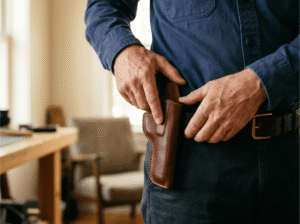
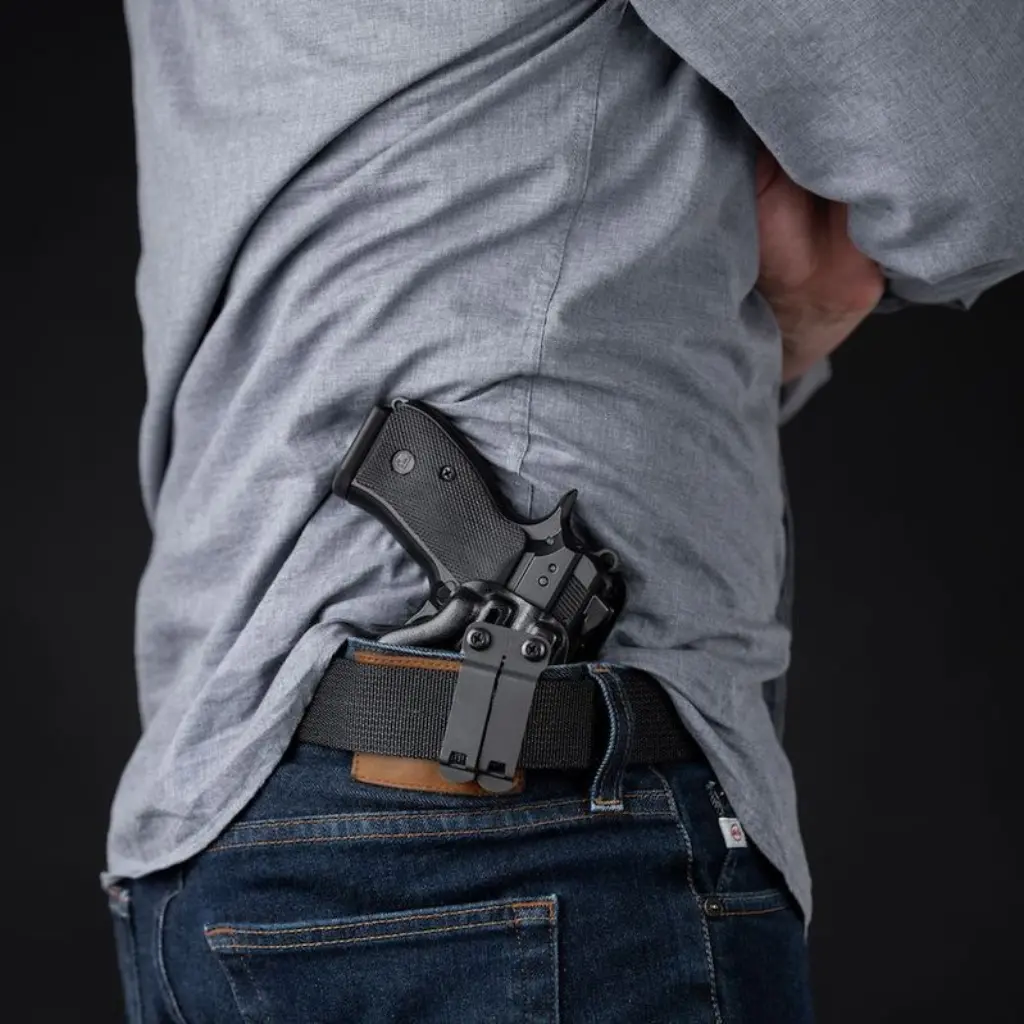
Appendix carry sits at the 1 o’clock position, tucked just inside the front of the waistband. It works best for flatter torsos, shorter carry guns, and days with significant sitting time. A proper AIWB holster uses an adjustable claw or wing that rotates the grip toward the body, which solves printing through geometry rather than fabric choice.
Appendix becomes problematic for carriers with a significant abdominal presence. The position forces the muzzle angle outward, and the grip tends to lever away from the body rather than tuck in. If you cannot get the grip to sit flush on a body scan in the mirror, the appendix is not the position for your build. - Case Study: Athletic or Longer Torso: What Is the Best 4 O’Clock Holster for Summer Concealment?
Strong-side hip carry (3 to 4 o’clock) is the most forgiving position for hidden carry across a range of body types. It works well for longer torsos, wider or athletic builds, and days with active movement. The position requires a claw or wedge to pull the grip into the body and prevent the back of the slide from printing against the shirt.
Draw time is slightly slower than appendix for most concealed carry weapon users, but the position conceals more consistently across varied summer wardrobes. If you only want to own one holster and you are not sure which position fits you, 3 to 4 o’clock strong-side is the safer default. - Case Study: When Neither Works: 5 O’Clock and Kidney Carry
Kidney Carry looks good in theory and underperforms in practice for most builds. The draw is slower and less clean, and concealment suffers during twisting movements like reaching across a car seat or turning to check traffic. Consider this position only after the appendix and 3 to 4 o’clock have been ruled out for your specific body.
No products found.
What Makes a Holster Worth Carrying Every Day?
The best IWB holster for daily summer use clears five non-negotiable criteria. Miss any one, and the holster will eventually end up on the shelf of rejects.
- Body-matched geometry. Claw, wing, or wedge-sized to your build and carry position
- Adjustable ride height and cant. You cannot dial in concealment without the ability to change how high the holster rides and how the grip angles
- Full trigger guard coverage. Safety floor, no exceptions, no soft-sided nylon that deforms into the trigger. For a technical breakdown of holster shell materials and why rigid polymer matters, see the Kydex material properties reference
- Retention through movement. Passes the shake test, the jog test, and the bend-over test without shifting
- Belt compatibility. Reinforced loops or clips sized for a real gun belt, not a dress belt
One carrier on a long-running forum thread said it plainly: “I wasted a lot of money on cheap nylon holsters.” The nylon failure mode is almost always the absence of criteria one, two, and five. The holster fits nothing specifically, adjusts to nothing specifically, and flexes every time the belt does.
For broader CCW safety and responsible carry standards, the National Shooting Sports Foundation’s Project ChildSafe provides free resources on firearm storage and handling that complement good holster selection.

Which Holsters Hit the Standard?
Three tiers cover the realistic buyer. Each tier solves a different problem.
- Entry Tier: Adequate, Consistent, Carried ($40 to $80)
At this tier, the features that matter are a rigid kydex shell, a basic claw attachment, and a simple single-clip design. This is the right starting point for first-year CCW carriers who are still confirming which position fits their build, and for budget-conscious carriers who need to nail daily consistency before upgrading.
The Vedder LightTuck and Concealment Express IWB are two reliable examples in this range. Both clear the adequate floor: trigger guard coverage, basic retention, adjustable cant, and a price point that leaves budget for a proper gun belt. - Mid Tier: Body-Matched Daily Driver ($80 to $140)
The mid-tier adds adjustability. Adjustable claw settings, multiple ride height options, and hybrid construction options become available. This is the sweet spot for most committed daily concealed carriers. You have picked your position, you have confirmed your build tolerates it, and you want the ceiling raised for concealment and comfort. - The Vedder ProTuck sits in this range and offers enough adjustability to dial in concealment across summer and winter wardrobes. Mid-tier kydex options from established makers solve most daily-carry problems at a price that does not require justification.
- Premium Tier: Engineered System ($140 and up)
Premium holsters solve problems most first-year carriers have not yet developed. Modular platforms, precision cuts for specific firearms, integrated wedges, and multiple belt routing options are features that reward trained draws and consistent daily carry. If you are hitting published draw benchmarks from your current mid-tier holster and you need gear that matches the skill, this tier is worth it.

- ULTRA COMFORTABLE ALL DAY CARRY at just 3 ounces. INSIDE THE WAISTBAND HOLSTER fits: S&W M&P SHIELD PLUS 3.1in - Our IWB...
- IWB HOLSTER Compatible with your S&W M&P SHIELD PLUS 3.1in FEATURES: Comfortable Enough to Forget You Have It On at only...
- ADJUSTABLE ‘POSI-CLICK’ RETENTION & CANT: When you holster your IWB Holster Compatible with your S&W M&P SHIELD PLUS...
Last update on 2026-10-15 / Affiliate links / Images from Amazon Product Advertising API
The Tier 1 Concealed Axis Elite and the Tenicor Velo 4 are two premium examples. Both are direct-to-consumer products, which means links to them route through their own sites rather than standard affiliate marketplaces.
How Do I Test My Holster for “Printing” Under a T-Shirt?
The 1.5-second draw from a t-shirt is the non-negotiable benchmark for a summer carry system. Here is the field test that works in any driveway and full-length mirror combination:
- Put the holster on with your actual summer wardrobe, including the shirt you wear most often
- Walk 100 yards, sit in a car for five minutes, bend to tie a shoe, reach overhead to the top shelf
- Check printing in a full-length mirror after each movement, front and side profile
- With a confirmed unloaded firearm in a safe backstop configuration, run 20 clean draws to first sight picture from under the t-shirt
- Time ten of those reps. Target first grip in under 1.5 seconds. Target the first sight picture on a 5-yard target in under 2.5 seconds
Safety note: All dry-fire practice follows standard protocols. Confirm the firearm is unloaded with a visual and physical chamber check. Keep ammunition in a separate room during practice. Use a safe backstop that will stop a round in the event of a loaded-gun error. Dry fire is a training tool, not a substitute for live-fire practice under qualified instruction. For comprehensive firearm safety standards, the NRA’s firearm safety rules remain the standard reference.

- ENGINEERED FOR ALL-DAY APPENDIX & CONCEALED CARRY: No more digging, poking, or sagging. This low-profile tactical...
- TRUE MICRO-ADJUSTABLE NO-HOLE FIT — 1/4" INCREMENTS: Hidden ratchet track gives perfect comfort in 1/4" steps. One...
- ULTRA-SECURE LOW-PROFILE TACTICAL BUCKLE: Powder-coated granite black buckle with dual stainless steel set screws for...
Last update on 2026-10-15 / Affiliate links / Images from Amazon Product Advertising API
Do I Really Need a Dedicated Gun Belt for Summer?
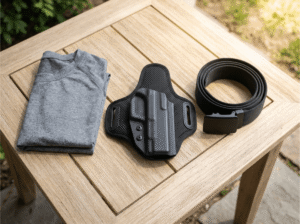
Yes, and this is the single most overlooked component in a summer CCW system. A purpose-built gun belt is a required part of any IWB carry configuration, not an optional upgrade. Regular dress belts flex under the weight of a holstered firearm, which causes the grip to angle outward and print. A reinforced gun belt keeps the holster stable, the grip tucked, and the draw consistent.
If your budget forces a choice between upgrading your holster or upgrading your belt, upgrade the belt first. A $60 belt under a $50 holster outperforms a $150 holster under a flexible dress belt every time.
The One Holster Rule for Summer
The best IWB holster for summer concealed carry is not the most expensive, the most popular, or the one with the highest review count. It is the one matched to your body, worn daily across your full summer wardrobe, and practiced with enough reps to produce a clean draw under pressure.
Adequate, consistent, and trained beats premium, occasional, and untested every time. Pick a position that fits your build. Pick a holster in the tier that matches your current commitment level. Pair it with a real gun belt. Put in the reps. Then upgrade when the gear, not the skill, becomes the ceiling.
Build Your Summer Carry System
Download the free Summer Carry Checklist PDF: the body-type decision tree, the draw-time benchmark worksheet, and the belt compatibility chart in one printable reference. Sign up below, and we will send it to your inbox.
Check this out from USCCA.
Frequently Asked Questions
-
What is the most comfortable IWB holster for summer concealed carry?
The most comfortable IWB holster for summer carry is a mid-tier kydex holster worn at the 3 to 4 o’clock position with a soft sweat shield, adjustable ride height, and a reinforced gun belt. This combination distributes pressure evenly, prevents hot spots during long wear, and keeps the grip pulled tight against the body throughout daily movement.
-
How do I carry concealed without printing in summer?
Prevent printing with four adjustments: use a holster with a claw or wing to rotate the grip toward your body, wear a reinforced gun belt to stabilize the system, choose a slightly looser t-shirt in a darker color or pattern, and adjust cant angle to match your torso. Printing is usually a system problem, not a shirt problem.
-
Is an appendix carry or a hip carry better for summer CCW?
Appendix carry conceals better for flatter torsos and draws faster from seated positions. Hip carry at 3 to 4 o’clock works better for longer torsos, wider builds, and active movement. Neither is universally better. Test both against your daily routine before committing, and expect one to clearly outperform the other for your specific build.
-
What’s the best IWB holster for a bigger body type?
Bigger body types typically carry more comfortably at 3 to 4 o’clock with a holster featuring a pronounced claw or wedge, adjustable ride height, and wide belt clips to distribute pressure. Appendix carry becomes viable only with specific wing-designed holsters and often performs worse than hip carry for longer daily wear.
-
Do I really need a gun belt for summer IWB carry?
Yes. A purpose-built gun belt is a required component of any IWB CCW system, not an optional upgrade. Regular belts flex under the weight of a holstered firearm, causing the grip to angle outward and print. A reinforced gun belt keeps the holster stable, the grip tucked, and the draw consistent across a full day of wear.
-
How much should a good summer holster cost?
Expect to spend $70 to $100 for a quality IWB holster and $50 to $80 for a proper gun belt. Cheaper nylon holsters almost always fail within a season and end up on the closet shelf of rejects. Premium holsters above $140 solve problems most first-year concealed carriers have not yet developed.
-
Can I use the same IWB holster year-round?
You can, but most dedicated carriers use two configurations: a winter setup optimized for layered cover garments and a summer setup optimized for single-layer concealment with a more aggressive claw or wedge. One holster works across seasons only if it is engineered with enough adjustability to change ride height and cant angle.
-
How do I know if my IWB holster is safe to carry?
A safe IWB holster has full, rigid trigger guard coverage, retains the firearm through aggressive movement without falling out, and reholsters cleanly without fabric intrusion. Test retention by shaking and jogging with an unloaded firearm. If the firearm shifts, rotates, or works loose, the holster is not safe for daily carry.
-
What is the fastest draw time I should expect from a summer IWB holster?
A trained carrier should draw from concealment under a t-shirt with first grip in under 1.5 seconds and first sight picture on a 5-yard target in under 2.5 seconds. These benchmarks are achievable with consistent dry-fire practice (500 reps minimum) and a properly fitted holster, belt, and cover garment combination.
-
Does printing mean I’m breaking concealed carry laws?
Printing laws vary by state and jurisdiction. Some states treat visible printing as a violation of concealed carry requirements, while others do not. Check your state’s specific CCW statutes and consult a qualified firearms attorney in your jurisdiction. This article provides general guidance, not legal advice. Always verify local laws before carrying.
Why did that setup get your vote? We want to hear the technical specs.