
Quick Look
The best low-recoil handguns for seniors are the S&W M&P Shield EZ .380, Ruger LCR .22 Magnum, Walther PDP F-Series, Sig P365-380, and Walther CCP M2. These models are selected for their reduced slide-rack effort and ergonomic grips, specifically designed to accommodate shooters with arthritis, weak grip strength, or limited hand dexterity. Jump to the comparison table or read the full breakdown below.
This guide is for informational purposes only and does not constitute medical advice. If pain or physical limitations affect your ability to safely handle a firearm, consult a licensed clinician before purchasing.
Related: Revolver vs. Semi-Auto: The Definitive Answer for Elderly Self-Defense
“The smaller and lighter the firearm, the more the shooter will feel the recoil regardless of caliber.”
Most seniors shopping for a handgun never hear that. They get pointed toward the lightest .380 pocket pistol on the shelf, told it’s easy to handle, and sent home with a gun that stings to shoot, stiffens the slide, and eventually stays in the drawer.
That’s the mistake this article is designed to prevent. These five low-recoil handguns were evaluated specifically for shooters dealing with arthritis, reduced grip strength, and joint pain, and we’re going to explain exactly why each one works before we tell you which one is right for you.
What Makes a Handgun “Low Recoil” for Senior Shooters?
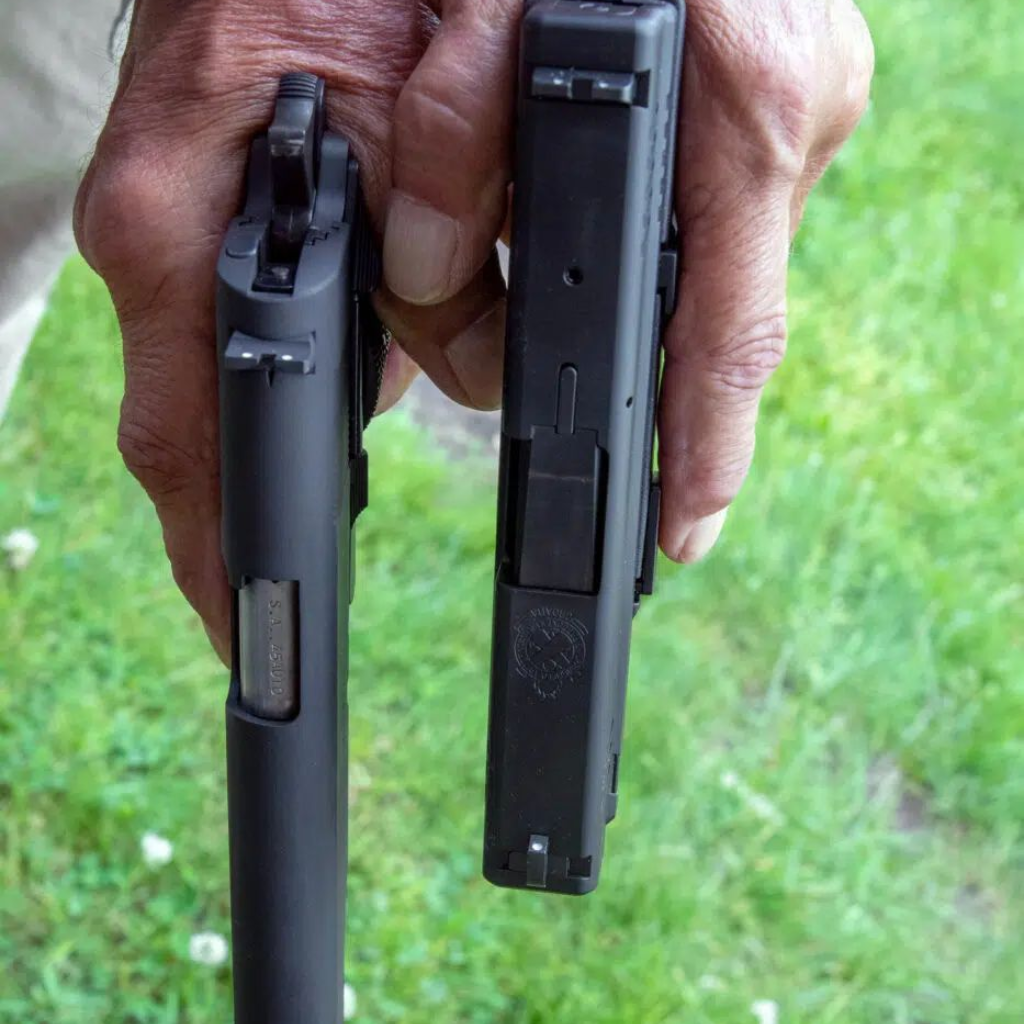
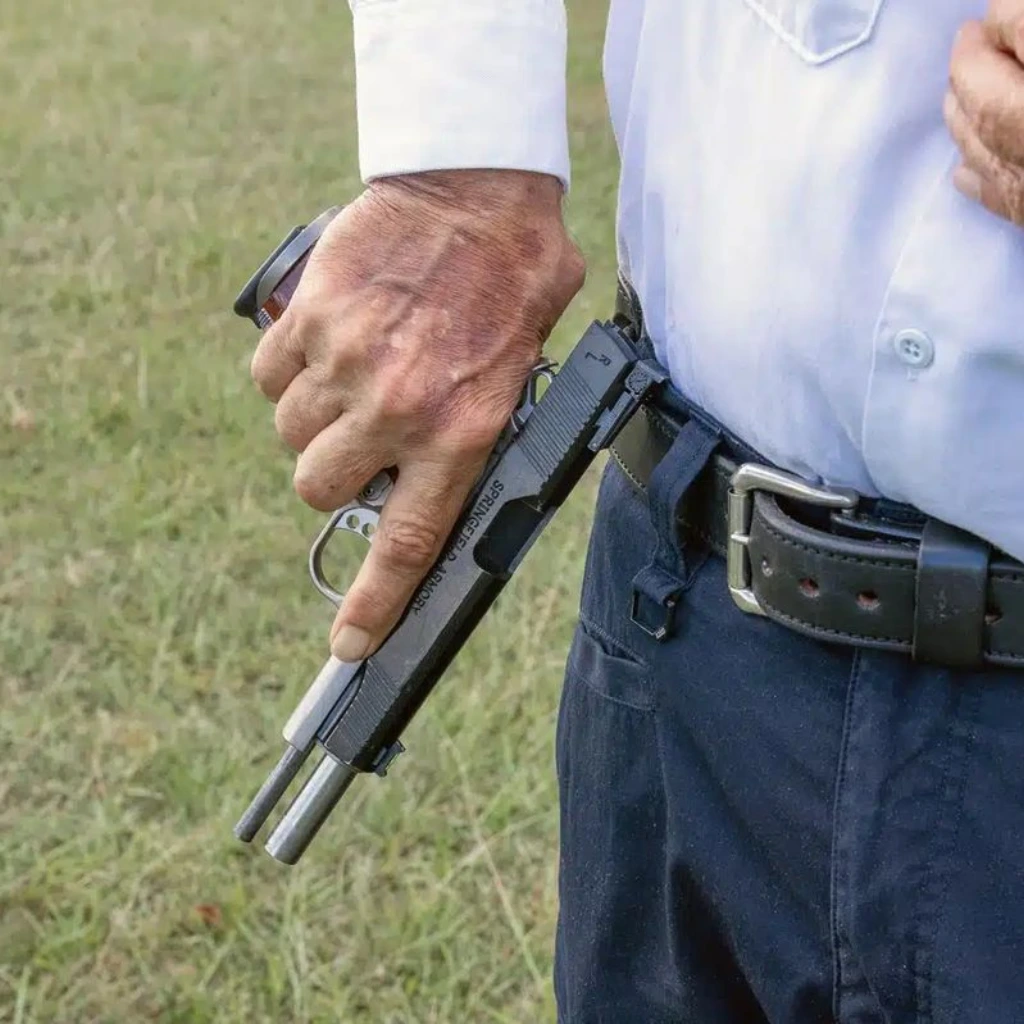
Felt recoil is not the same thing as free recoil. Free recoil is physics, the force a cartridge generates when fired. Felt recoil is what your hand actually experiences, and that’s shaped by three variables the spec sheet usually ignores: frame weight, bore axis height, and grip surface area.
A heavier, larger-frame pistol almost always feels softer to shoot than a compact or pocket pistol in the same caliber. More mass absorbs more impulse before it reaches your hand. Less grip surface means less bracing. A higher bore axis means more muzzle flip. Effective recoil management for seniors requires optimizing all three variables, not just caliber.
It’s a predictable tradeoff: smaller, lighter guns typically feel sharper in the hand, regardless of what the box says. That’s the reason pocket p
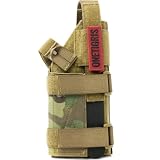
- Fully Customizable & Universal Fit: Crafted from reliable 500D nylon, this MOLLE gun holster features fully adjustable...
- Tactical Cross-Draw Design & Quick Access: Engineered for rapid response, the versatile cross-draw design accommodates...
- Secure Quick-Release & Heavy-Duty Construction: Built to last with high-strength 500D nylon and 100% polyester...
Last update on 2026-10-09 / Affiliate links / Images from Amazon Product Advertising API
How Do We Evaluate Handguns for Arthritis and Grip Strength?
Every gun on this list had to clear five criteria:
- Slide-rack effort in the lower range for its class: we looked for platforms consistently reported as easier to operate than standard semi-autos; the commonly cited 18-lb reference point is a useful benchmark, though actual force varies by sample and lubrication and is not a universal medical threshold
- Full-grip frame: four-finger contact minimum; no micro-compacts, which sacrifice recoil management for size
- Caliber-appropriate felt recoil: .380 ACP baseline; 9mm only where platform design justifies the trade-off
- Reliability record: manufacturer specs plus a commonly used baseline of 200 trouble-free rounds with your chosen ammo; track your own results after purchase
- Carry viability: wearable daily in a standard IWB or OWB holster; we also evaluated manual dexterity demands for magazine loading and slide operation with compromised hands
| Gun | Frame | Bore axis | Action | Key recoil mechanism |
|---|---|---|---|---|
| S&W Shield EZ .380Best overall for arthritis | Polymer | Standard | Hammer-fired | Below average for compact .380 |
| Ruger LCR .22 MagNo-rack option | Ruger LCR .22 Mag No-rack option | N/A | DAO revolver | No slide operation required; .22 WMR produces minimal impulse; Hogue grip insert absorbs the remainder; lightest DA trigger in its class |
| Walther PDP F-Series9mm full-capability option | Polymer | Low | Striker-fired | Low bore axis reduces muzzle flip; F-Series grip geometry shortens trigger reach and improves purchase for smaller hands; heavier frame mass absorbs 9mm impulse |
| Sig P365-380Conceal-first option | Polymer | Low | Striker-fired | Caliber step-down from 9mm P365 reduces impulse; low bore axis limits muzzle flip; modular grip system allows fit adjustment as hand strength changes over time |
| Walther CCP M2 .380Softest shooter on the list | Polymer | Standard | Hammer-fired | Reduced-weight recoil spring; external hammer lowers racking resistance; full-grip frame distributes impulse across a larger hand surface |
What Are the 5 Best Low-Recoil Handguns for Seniors in 2026?
Every gun below earned its place by passing the five criteria above. What separates them from each other is how they achieve low recoil. Through caliber, frame engineering, action type, or a combination of all three. The table maps those differences directly so you can match the right mechanism to your specific hands.
1. S&W M&P Shield EZ .380
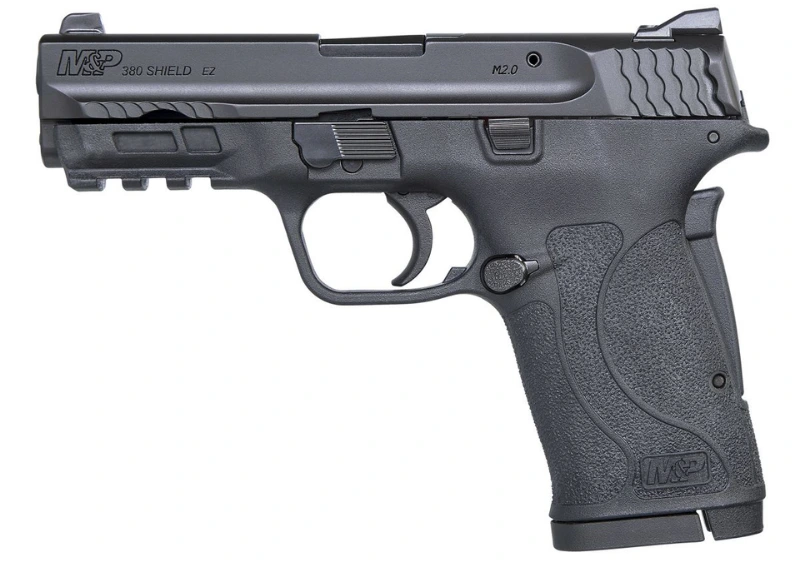
MSRP: ~$479 | Caliber: .380 ACP | Capacity: 8+1
The Shield EZ is the consensus recommendation across every serious firearms forum covering this topic, and it earned that position through engineering rather than marketing. Smith & Wesson built it from the ground up for shooters who cannot manage standard recoil spring tension: a lighter recoil spring, an external hammer that can be thumb-cocked to further reduce racking resistance, an easy-load magazine baseplate, and an 18-degree grip angle that positions the gun naturally in the hand.
The full-grip frame is the key variable most buyers miss. Because the Shield EZ is larger than typical .380 pistols, there’s more mass to absorb the impulse and more grip real estate to brace against, which is why it tends to feel softer than smaller guns chambered in the same caliber.
One real limitation: the grip safety requires consistent palm contact to fire. If arthritis affects the web of your dominant hand, test this before you buy. The Performance Center variant ships with a metal-finish grip safety that some users have found uncomfortable. Request the standard polymer version or contact S&W directly.
Best for: Seniors who cannot manage a standard 9mm slide but want the reliability and ergonomics of a semi-auto platform.
2. Ruger LCR .22 Magnum
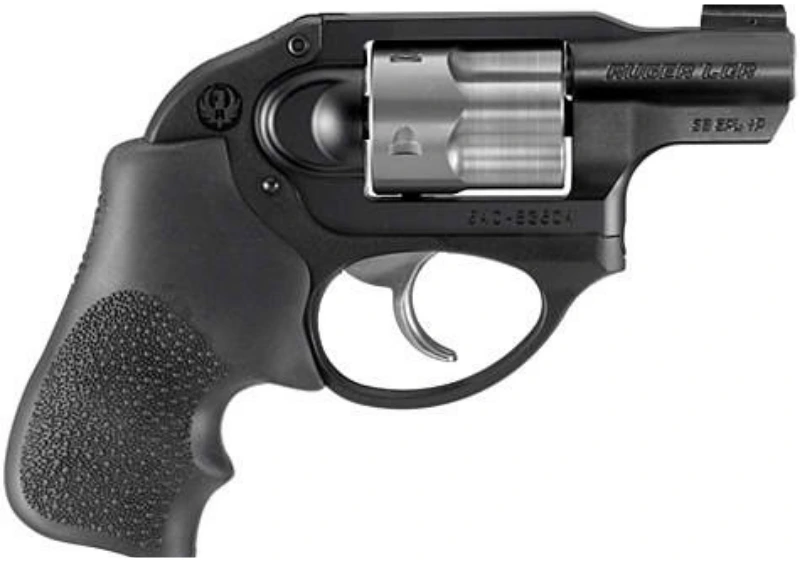
MSRP: ~$579 | Caliber: .22 WMR | Capacity: 6
The Ruger LCR solves a different problem than the rest of this list. If you genuinely cannot operate a semi-auto slide not sometimes, but reliably, this is where the conversation ends. No racking required. No magazine spring to fight. Just a trigger pull that, on the LCR, is one of the smoothest and lightest double-action pulls in its class, engineered to reduce the force required from a compromised trigger finger.
.22 Magnum is a meaningful step up from .22 LR ballistically while remaining genuinely mild to shoot. It’s not the most powerful defensive round on this list, but a gun you can actually fire is always more useful than one you can’t operate.
One honest limitation: 6-round capacity, and reloading a revolver under stress with arthritic hands is often challenging. A speed strip or pre-staged reload substantially improves this. If this is your primary carry option, practice the reload specifically.
Best for: Seniors with severe grip strength loss who cannot operate a semi-auto under any condition.
3. Walther PDP F-Series (9mm)

MSRP: ~$599 | Caliber: 9mm | Capacity: 15+1
The F-Series designation on the Walther PDP reflects a genuine ergonomic redesign: shorter trigger reach, lower bore axis, and a grip geometry engineered for smaller hand anatomy. The result is a 9mm that many shooters with smaller or weaker hands report as noticeably easier to control than standard PDP variants and one of the better factory triggers in this price range.
This is the full-capability option for seniors who retain reasonable hand strength but want a platform that won’t wear them out over a 50-round practice session. Gun Tests named it a top low-recoil carry handgun in an independent evaluation.
The trade-off is size and price. It’s heavier and larger than the other low-recoil handguns on this list, and the MSRP reflects its build quality.
Best for: Seniors with mild arthritis or hand fatigue who want maximum capability without sacrificing shootability.
4. Sig Sauer P365-380

MSRP: ~$679 | Caliber: .380 ACP | Capacity: 10+1
The P365-380 takes the proven P365 platform and steps the caliber down to .380 ACP, producing a noticeably softer-shooting gun without changing the footprint, capacity, or ergonomics. For seniors who want maximum concealability alongside genuine low-recoil performance, this is a strong option.
The FCU modularity is a long-term advantage worth noting: as grip preferences or hand dimensions change over time, you can swap grip modules rather than buy a new gun. For a buyer who may need to revisit this decision in a few years, that’s real value.
The limitation is grip size. The P365-380 is smaller than the Shield EZ, which means less recoil absorption. Users with very weak grips may experience feeding malfunctions if wrist control breaks down under recoil. Test specifically for this at a rental range before purchase.
Best for: Seniors who prioritize daily concealment and have sufficient grip strength to run a compact frame reliably.
5. Walther CCP M2 .380

MSRP: ~$499 | Caliber: .380 ACP | Capacity: 8+1
The CCP M2’s differentiator is the Softcoil gas-delayed blowback system, an engineering approach that bleeds off gas pressure to slow the slide’s rearward travel rather than letting the full recoil impulse drive the cycle. The result is one of the easiest-to-rack slides in the compact .380 segment, combined with a shooting experience that users across multiple senior-focused forums consistently describe as the softest they’ve tried in this category.
It’s the sleeper pick on this list. It appears in fewer roundups than it deserves, partly because the gas system requires a specific cleaning step that some users find inconvenient. Tool-free disassembly is a genuine consideration for hands that struggle with takedown pins.
Best for: Seniors whose primary priority is the softest possible shooting experience in a carry-viable platform.

- HIGH QUALTITY MATERIAL - Made of high-quality sturdy zippers, nylon material and polyester fiber,1200D Oxford fabric has...
- CONCEALED CARRY PISTOL POUCH - Works well subcompact-sized guns like the Ruger LCP and 380 or other similar sizes; The...
- WATER BOTTLE HOLDER - The bumbags of the pistol waist bag is equipped with a hidden water bottle holder (suitable for...
Last update on 2026-10-09 / Affiliate links / Images from Amazon Product Advertising API
How Do These Low-Recoil Pistols Compare in Slide-Rack Force?
| Gun | Caliber | Unloaded Weight | Slide-Rack Effort | Felt Recoil (1–5★, softest = 5) | Best For |
| S&W Shield EZ .380 | .380 ACP | 18.5 oz | Among lowest in class | ★★★★ | Arthritis, weak grip |
| Ruger LCR .22 Mag | .22 WMR | 14.9 oz | N/A (revolver) | ★★★★★ | Cannot rack slides |
| Walther PDP F-Series | 9mm | 25.4 oz | Lower than standard PDP | ★★★★ | Smaller hands, mild arthritis |
| Sig P365-380 | .380 ACP | 17.8 oz | Below average for compact .380 | ★★★★ | Conceal-first buyers |
| Walther CCP M2 .380 | .380 ACP | 22.3 oz | Among the lowest in class | ★★★★★ | Softest shoot possible |
Slide-rack effort reflects manufacturer design intent and widely reported user experience. Actual force varies by sample, lubrication, and condition. Confirm with hands-on testing before purchase; most rental ranges carry at least two of these models.
How to Try These Guns Before You Buy
Buying a handgun without handling it first is one of the most common mistakes in this category. Here’s a practical process for testing at a gun store or rental range:
-
At the gun store:
With permission and the firearm pointed in a safe direction, attempt to rack the unloaded slide using your actual grip, not your best-day grip, your average-day grip. If it causes discomfort or you can’t complete the motion reliably, that gun is not the right fit, regardless of the spec sheet. Also, try loading two or three dummy rounds into the magazine; a magazine loader tool makes this dramatically easier for arthritic hands, and many stores will let you test this at the counter.
-
At a rental range:
Shoot at least 20 rounds before deciding. Pay attention to whether the gun shifts in your hand on recoil grip slippage, which is a reliability risk with compromised grip strength, not just a comfort issue. Check your trigger-reach grip (how far your finger naturally extends to the trigger) across multiple models; a shorter trigger reach, as on the PDP F-Series, can make a meaningful difference for arthritic hands.
-
What to check specifically:
slide-rack comfort, trigger reach, grip safety engagement (Shield EZ), and magazine release accessibility. Take notes after each gun memory is unreliable when comparing multiple platforms in a single session.
Which Handgun Is Right for Your Specific Hand Strength?
The right gun depends on your actual hands, today, not the hands you had at 50 or the hands you hope to maintain.
- If you cannot reliably rack a semi-auto slide: Start with the Ruger LCR .22 Magnum. Before ruling out semi-autos entirely, ask your range about slide-assist devices. Some users find that they extend the useful life of a preferred platform by several years.
- If you can rack but have joint pain or limited grip strength: The Shield EZ .380 and Walther CCP M2 are the primary recommendations. Try both. The CCP M2 racks easier; the Shield EZ offers more grip surface. Your hands will tell you which one wins.
- If your hands are functional but tire quickly or have mild arthritis: The Walther PDP F-Series or Sig P365-380. Choose the PDP if shooting comfort is the priority. Choose the P365-380 if daily concealment is the priority.
- In every case: test-fire before you purchase. A rental range that carries even two of these guns is worth the cost of an afternoon.
One more thing the forums consistently get right: “Just make sure you carry.” The perfect gun on paper means nothing if it stops getting carried because it’s too uncomfortable, too snappy on bad days, or too heavy for daily use. The best low-recoil handgun for seniors is the one that actually gets worn.
- FREE-RANGE SHOOTING: Don’t let its compact size fool you, this re-setting target set is built tough. Constructed from...
- NO QUIT IN THESE TARGETS: 1.77” targets are made from 3mm thick heavy-duty steel meaning your targets will last longer...
- STURDY, STABLE, AND ABLE: 6mm thick wire stands keep your target stable no matter the weather conditions. Insert the...
Last update on 2026-10-09 / Affiliate links / Images from Amazon Product Advertising API
What Should You Know Before Buying Any Low-Recoil Handgun?
- Carry laws vary by state. These recommendations cover selection and fit, not legal authorization. Verify your jurisdiction’s concealed carry requirements before you carry any handgun in public.
- If pain limits your handling, consult a clinician. This guide is not medical advice. A licensed occupational therapist or hand specialist can assess your specific grip limitations and recommend adaptive techniques or assistive devices before you commit to a purchase.
- Holster investment is part of the recoil system. A heavier gun in a well-fitted holster carries more comfortably than a lighter gun poorly supported. Don’t evaluate carry comfort without evaluating the holster at the same time.
- This decision changes over time. The right gun at 65 may not be right at 75. Revisit these criteria every few years against your current grip strength and dexterity, not once and never again.
The Bottom Line on Low-Recoil Handguns for Seniors
Small doesn’t mean soft. The five low-recoil handguns on this list were evaluated because they get the physics right: frame weight, grip geometry, caliber, and mechanical design working together to reduce what your hand actually feels when you pull the trigger.
Pick the one that fits your hands today. Carry it every day. Practice drawing twice a week.
That’s the standard. Everything on this list can get you there.
Check out this video from Gun Time about Senior-Friendly Firearms With Lightweight and Low Recoil.
Frequently Asked Questions
-
Can I use a 9mm if I have arthritis?
Yes, with the right platform. The Walther PDP F-Series is built with a lower bore axis and a slide designed for smaller or weaker hands, making it a legitimate 9mm option for seniors with mild to moderate arthritis. Choose it if you can reliably operate the slide and maintain grip control through the recoil cycle.
-
Why is a heavier gun better for recoil management?
More mass absorbs more energy. A heavier frame absorbs the shot’s impulse before it reaches your wrist; a light pocket pistol transfers that energy directly to your joints. This is why the standard advice to “buy something small” produces the opposite of effective recoil management for arthritic hands.
-
Is .22 Magnum enough for self-defense?
While 9mm and .380 are generally preferred, .22 Magnum is a viable option for those who cannot reliably operate a semi-auto slide. It’s a step up from .22 LR, and a gun you can actually fire is more useful than one you can’t operate. Use quality defensive ammunition and practice the draw consistently.
-
What makes a handgun “low recoil” for seniors?
Low felt recoil means a caliber that produces a manageable impulse, typically .380 ACP or a well-designed 9mm in a frame heavy enough to absorb it before it reaches your hand. Larger grip surfaces and lower bore axes reduce muzzle flip and snap. Lighter guns in the same caliber typically feel sharper, not softer.
-
Is .380 ACP enough for self-defense?
Yes, with quality defensive hollow-point loads. Many modern .380 JHP options have shown consistent performance in calibrated gel testing, though results vary by barrel length and load. The caliber’s limitations matter most at distance; most civilian defensive encounters happen at close range. Consult dedicated ammo testing resources for load-specific performance data.
-
Why is the S&W Shield EZ recommended so often for seniors?
S&W built it specifically for users with weak or arthritic hands: lighter recoil spring, external hammer for easier cocking, easy-load magazine baseplate, and a grip safety that eliminates a thumb-safety step. It’s the most purpose-built solution in this segment and holds the broadest community endorsement across forums and independent reviews.
-
Can someone with severe arthritis still shoot a semi-auto?
Sometimes, with the right tool. The Shield EZ and Walther CCP M2 use mechanisms that meaningfully reduce slide-rack effort. Slide-assist devices can extend the useful life of a preferred platform. If manipulation is not reliably possible, a double-action revolver like the Ruger LCR is more appropriate than forcing a semi-auto that may malfunction under weak-grip conditions.
-
Are revolvers better than semi-autos for seniors?
Not categorically. Revolvers eliminate slide-racking, which is a real advantage for users with very weak grips. But double-action triggers require consistent finger pressure that severely arthritic fingers may not sustain reliably. The correct answer depends on which specific limitation is the binding constraint test, both before deciding
-
What accessories help seniors with recoil and operability?
Three options with broad community support: a magazine loading tool eliminates thumb pressure during loading; a rigid-mouth IWB holster allows one-handed re-holstering without awkward manipulation; and for users with diminished vision, an optics-ready model with a red dot sight removes the traditional focus-plane challenge entirely.
-
Should seniors avoid .38 Special revolvers?
Not as a blanket rule, but platform matters. Lightweight J-frame .38 Special revolvers are hard on arthritic hands. The Ruger LCR softens the experience considerably through its trigger design and grip geometry. If you go this route, pair it with a reduced-recoil load Hornady Critical Defense Lite 90gr is a widely recommended option worth confirming is still in production.
Lock in your vote and tell us: Why is this the right call?👇