
Fast Facts
As of April 2026, nearly 6 million suppressors are registered with the ATF, surpassing “common use” legal benchmarks. While the NFA tax stamp dropped to $0 on January 1, 2026, suppressors remain federally regulated and are banned in 8 states. Ownership is legal in 42 states pending federal approval.
Related: 2026 State Firearm Laws: What CCW Holders Must Know Before July 1
A note on terminology before we go further. Silencer is the legal term written into the National Firearms Act of 1934. Suppressor is the technical and industry-accurate term for the same device. Both refer to the same regulated item, and this article uses them interchangeably depending on context.
One forum commenter put the moment plainly when the latest registration numbers came out: “I’d love to have one (or more), but I’ll wait a bit and see which way the political winds blow over the next couple of years.”
That’s the question facing every law-aware owner right now. With nearly 6 million suppressors in civilian hands and a constitutional argument building behind them, are you buying into a stable legal regime, or one that’s about to change? And does your state’s law care either way?
This is what 6 million registered suppressors actually mean for the law, for the courts, and for the person filling out a Form 4 this month.
What Is the “Common Use” Doctrine for Suppressors?
The phrase comes from a 2008 Supreme Court decision, District of Columbia v. Heller. The court held that arms “in common use” by law-abiding citizens for lawful purposes are protected by the Second Amendment and cannot be banned outright.
The threshold matters. In 2016, the Caetano v. Massachusetts decision applied the standard to roughly 200,000 stun guns and ruled they qualified. Suppressors now outnumber that benchmark by a factor of thirty.
The 2022 New York State Rifle & Pistol Association v. Bruen decision added a second test. Modern firearm regulations have to point to a historical analogue from the founding era. Suppressors weren’t regulated at all until 1934, and there’s no clear pre-1934 tradition of restricting noise-reduction devices.
Stack the two doctrines and the legal argument writes itself. Six million owners. No founding-era analogue. A device that exists primarily to protect hearing.
What the doctrine doesn’t do is automatically remove suppressors from the National Firearms Act. It changes the burden of proof in court. That’s a meaningful shift, but a shift in argument is not a change in law.
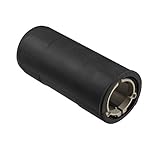
- Extreme temperature protection that mitigates internal temperatures to safe levels; Minimizes retained heat, allowing...
- Reduces thermal signature; Mitigates mirage effects in sight picture
- Two stainless steel clamps provide a strong, rigid and reliable interface capable of sustained firing sessions and rough...
Last update on 2026-09-24 / Affiliate links / Images from Amazon Product Advertising API
How Many Suppressors Are Registered in the U.S. in 2026?
The growth curve is steep. In 2000, only about 84,000 suppressors were registered nationwide. By 2010, that number had climbed to roughly 224,000. The ATF processed over 1.37 million NFA forms in 2024 alone, and the inflection point came on January 1, 2026.
That’s the date the One Big Beautiful Bill (H.R.1) reduced the $200 federal tax stamp to $0 for suppressors, short-barreled rifles, and short-barreled shotguns. NSSF reported roughly 150,000 eForm submissions on January 1 alone, against a typical daily volume of about 2,500 the year before. Q1 2026 cleared over 1 million NFA submissions on its own. The American Suppressor Association placed total civilian registrations at nearly 6 million by mid-April 2026.
If you already own a registered can, an Otis Technology Suppressor Cleaning Kit is the kind of low-friction maintenance investment that keeps the device functioning across thousands of rounds.
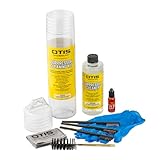
- Complete Cleaning System: Includes everything you need to clean your suppressor effectively
- Carbon Debris Removal: Removes most carbon debris and build up from suppressors
- Versatile Compatibility: Suitable for rimfire and centerfire suppressors

Last update on 2026-09-24 / Affiliate links / Images from Amazon Product Advertising API
How Does the NFA Registration Process Work With the $0 Tax Stamp?
The path hasn’t changed in structure, only in cost and speed. Here’s what it looks like today.
Form selection. ATF Form 4 covers commercial purchases through a licensed dealer. Form 1 covers manufacturing your own.
Paperwork. Fingerprints (electronic or FD-258 cards), a passport-style photo, and a NICS background check. If you file through a trust, the trust paperwork comes along with the application.
Tax stamp. $0 as of January 1, 2026. Registration is still mandatory.
Possession. The suppressor stays at the dealer until ATF approval lands. Picking it up before approval is a federal felony.
For aspirational shoppers already past the paperwork stage, a SureFire SOCOM Suppressor sits at the upper end of the duty-grade market.
What is the Current Wait Time for an eForm 4 Approval?
Wait times in 2026 are dramatically shorter than historical norms. As of early 2026, eForm 4 individual approvals are running 10 to 26 days. Trust applications take roughly 26 days. Paper Form 4s run about 21 to 24 days. Compare those numbers to the 6-to-12-month waits common a few years back, and to the forum reports from the prior cycle: “The whole process is BS. I’m at 168 days on my first suppressor.”
The improvement traces directly to the eForms system, which now handles roughly 98.7% of all NFA submissions. The tax stamp change accelerated volume, but the digital pipeline absorbed it.
Are Suppressors Legal in My State? (2026 List)
This is where federal compliance stops being the whole story. Suppressors are legal for civilian ownership in 42 states under federal NFA compliance. Eight states plus the District of Columbia ban civilian possession outright: California, Delaware, Hawaii, Illinois, Massachusetts, New Jersey, New York, and Rhode Island.
A few states allow ownership but restrict use. Connecticut permits possession but bans suppressor use for hunting. Other states layer their own rules on top of the federal framework. The principle is the same everywhere. Federal approval is a floor, not a ceiling. A Form 4 stamp gets you past the federal door. The state door is separate, and the state door has its own lock. As one Illinois owner put it on the Armory Life Forum: “Well, my wonderful state of Illinois doesn’t allow us to have these evil noise-reducing devices.”
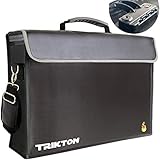
- MULTI-LAYER FIREPROOF & WATER-RESISTANT PROTECTION — This document safe bag helps shield important papers, photos, and...
- BUILT-IN TSA COMBINATION LOCK FOR PRIVACY — Our locking document bag features a TSA-approved lock—no keys to lose...
- FLEXIBLE DESIGN — FOLDS FLAT FOR EASY STORAGE — This soft-sided bag folds flat when empty (saves space in drawers...
Last update on 2026-09-24 / Affiliate links / Images from Amazon Product Advertising API
What Could Change for Suppressor Owners If Courts Apply the Common Use Doctrine?
The legal regime is being tested in real time. Silencer Shop v. ATF and SilencerCo v. ATF are both directly challenging the NFA’s application to suppressors. Two bills sit in Congress: the Hearing Protection Act (H.R. 404 / S. 364), which would treat suppressors as standard firearms, and the Constitutional Hearing Protection Act (H.R. 3228), which would remove them from the NFA entirely.
One advocacy organization summarised the constitutional argument: “The federal government is treating a safety device like a machine gun, and that simply doesn’t hold up under constitutional scrutiny.”
The realistic outcomes split three ways: full NFA removal, partial deregulation similar to the tax stamp change, or status quo. None has been resolved.
Here’s the practical decision tree for now.
- If you live in a state that allows suppressor ownership under federal NFA compliance: proceed under current rules. Document fully. The common-use legal argument is a tailwind, not a permission slip.
- If you live in a state that bans civilian possession: federal approval does not override the state ban. Wait for a state-level change or relocate. The common-use doctrine has not yet preempted state bans and may not.
- If you live in a state with partial restrictions: the compliance check has to cover every use you intend, not just the purchase.
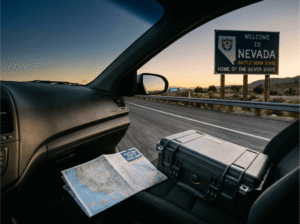
- If you transport across state lines: federal interstate transport rules for suppressors are looser than for short-barreled rifles, but the destination state’s law still controls. Plan the route legally, not just geographically.
Should You Buy a Suppressor Now or Wait?
Three honest categories.
- Buy now if: Your state allows ownership, you have a defined use case (hearing protection, hunting where state-legal, high training volume that’s eating your hearing), and you’re willing to enter the federal registry knowingly. The $0 tax stamp and the 10-to-26-day wait window are the friendliest conditions in NFA history.
- Wait if: Your state is in active litigation or pending reform, your use case is uncertain, or you’d rather see how Silencer Shop v. ATF resolves before committing. Some owners are taking exactly this position: “I am one who will most likely not purchase a suppressor. Till they are removed from the NFA registry and the prices drop considerably.”
- Skip entirely if: Your state bans possession outright. Federal change in your jurisdiction is not guaranteed, and acquiring through any informal channel is a federal felony with a 10-year sentence.
Whatever bucket you’re in, document the decision the way you’d document a training course. Approved Form 4, dealer paperwork, fingerprint receipts, serial numbers, all in one folder. Your acquisition trail is a legal artifact, not bureaucratic clutter.

Last update on 2026-09-24 / Affiliate links / Images from Amazon Product Advertising API
Compliance Now, Watch the Trajectory
The common use question is real and is moving through the courts. Six million owners have voted with their Form 4s, and the constitutional argument behind that number is stronger than it has ever been. But the legal regime they bought into is still the regime that controls today.
The responsible-owner posture: comply fully under current rules, document everything, track the cases, and let legal change come if it comes. Don’t anticipate it. Don’t bank on it. And don’t read a stamp as a state-level shield.
Stay Ahead of the Legal Changes
Disclaimer: This article is for informational purposes only and is not legal advice. Suppressor laws vary by state and change over time. Verify current federal and state law with the ATF and a qualified attorney in your jurisdiction before purchasing, transferring, or transporting an NFA item.
Check out this video from Armed Scholar
Frequently Asked Questions
Is the suppressor tax stamp still $200?
No. As of January 1, 2026, the federal tax stamp for suppressors, short-barreled rifles, and short-barreled shotguns was reduced to $0 under the One Big Beautiful Bill (H.R.1). Registration is still required. The financial barrier is gone, but the paperwork, fingerprints, photo, and NICS background check all remain in place.
What does “common use” mean under Second Amendment law?
“Common use” comes from the 2008 Supreme Court decision in District of Columbia v. Heller. It means arms commonly owned by law-abiding citizens for lawful purposes are protected from outright bans. The 2016 Caetano decision applied the standard to 200,000 stun guns, suggesting the threshold is far below 6 million suppressors.
Which states ban suppressor ownership?
Eight states plus the District of Columbia ban civilian possession entirely: California, Delaware, Hawaii, Illinois, Massachusetts, New Jersey, New York, and Rhode Island. Connecticut allows possession but bans suppressor use for hunting. Suppressors are legal for civilian ownership in the remaining 42 states under federal NFA compliance. Always verify current state law.
How does the NFA suppressor registration process work in 2026?
You file ATF Form 4 through a licensed dealer or Form 1 if you’re manufacturing your own. Submit fingerprints, a passport-style photo, and pass a NICS background check. The $200 tax stamp dropped to $0 on January 1, 2026. The suppressor stays at the dealer until your application is approved.
How long is the ATF wait time in 2026?
Wait times in 2026 are dramatically shorter than historical norms. eForm 4 individual approvals are running 10 to 26 days as of early 2026. Trust applications take roughly 26 days. Paper Form 4s run about 21 to 24 days. Compare this to the 6-to-12-month waits common in prior decades.
Could suppressors be removed from the NFA list?
It’s possible but not certain. Two pending bills, the Hearing Protection Act and the Constitutional Hearing Protection Act, would remove suppressors from NFA regulation entirely. Active litigation, including Silencer Shop v. ATF is also testing the question in court. None of these has been resolved as of April 2026.
What is the Bruen decision and how does it affect suppressor ownership?
The 2022 Bruen decision requires modern firearm regulations to have a historical analogue from the founding era. Suppressors weren’t regulated until 1934, with no clear pre-1934 tradition of suppressor restrictions. This creates a legal opening to challenge NFA suppressor regulation, though no court has ruled definitively yet.
Do suppressors actually make a firearm silent?
No. Suppressors typically reduce a firearm’s report by 20 to 35 decibels. A suppressed gunshot is still loud, comparable to a jackhammer or chainsaw at close range. The function is hearing protection, not Hollywood-style silence. The proper term is suppressor or muffler. “Silencer” is the legal term but not an accurate description.
Does owning a suppressor put me in a federal database?
Yes. Every registered suppressor is recorded in the National Firearms Registration and Transfer Record (NFRTR), a federal database. This is a known trade-off of legal ownership. Make this decision consciously, document your acquisition trail thoroughly, and treat the paperwork as a legal artifact alongside your training records.
Lock in your vote and tell us: Why is this the right call?👇