
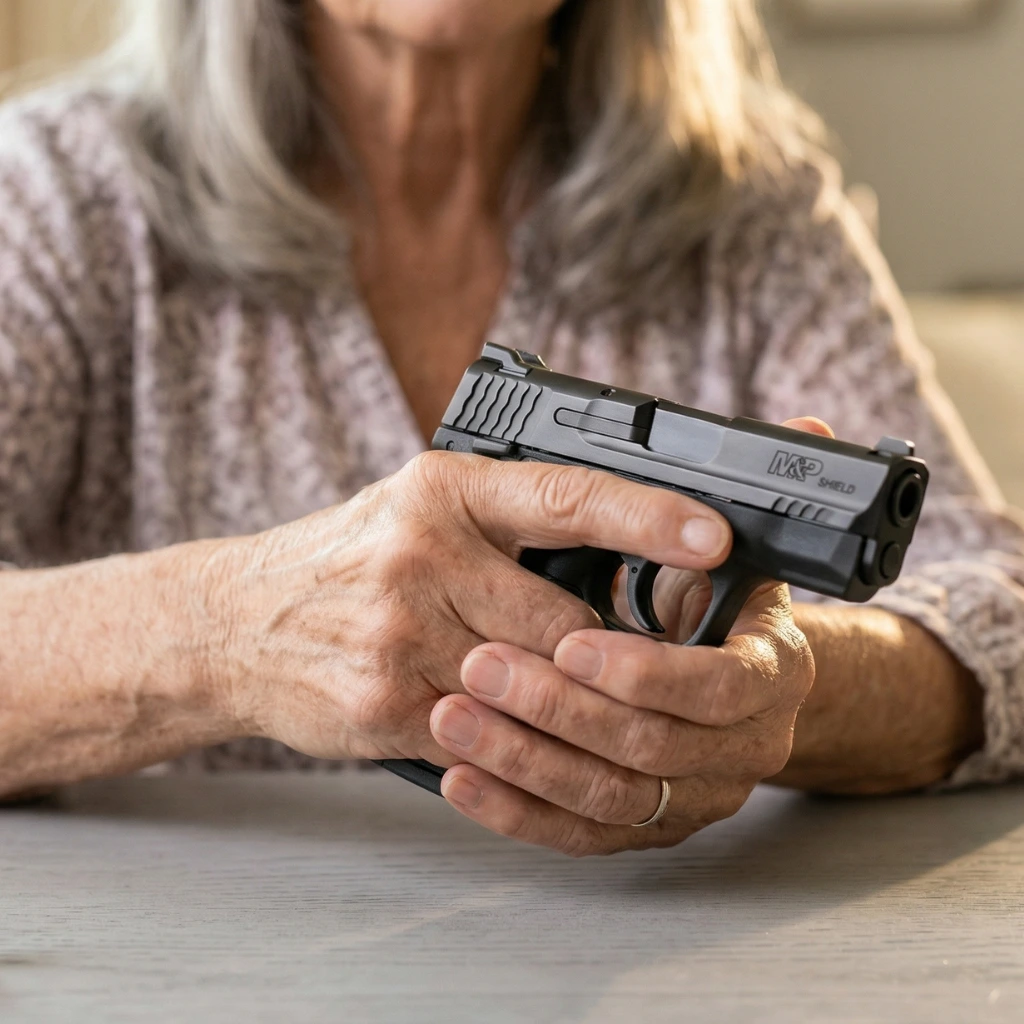

Quick Look
The best handguns for senior women prioritize reliable operation over small size, including the S&W M&P Shield EZ (.380 or 9mm), Ruger LCR (.38 Special), and S&W J-Frame 642. The right choice depends on grip strength, trigger-pull tolerance, and whether the primary use is home defense or concealed carry.
Related: 5 Best Low-Recoil Handguns For Seniors
Everyone Gives Different Advice, and Most of It Wasn’t Designed for Her Hands
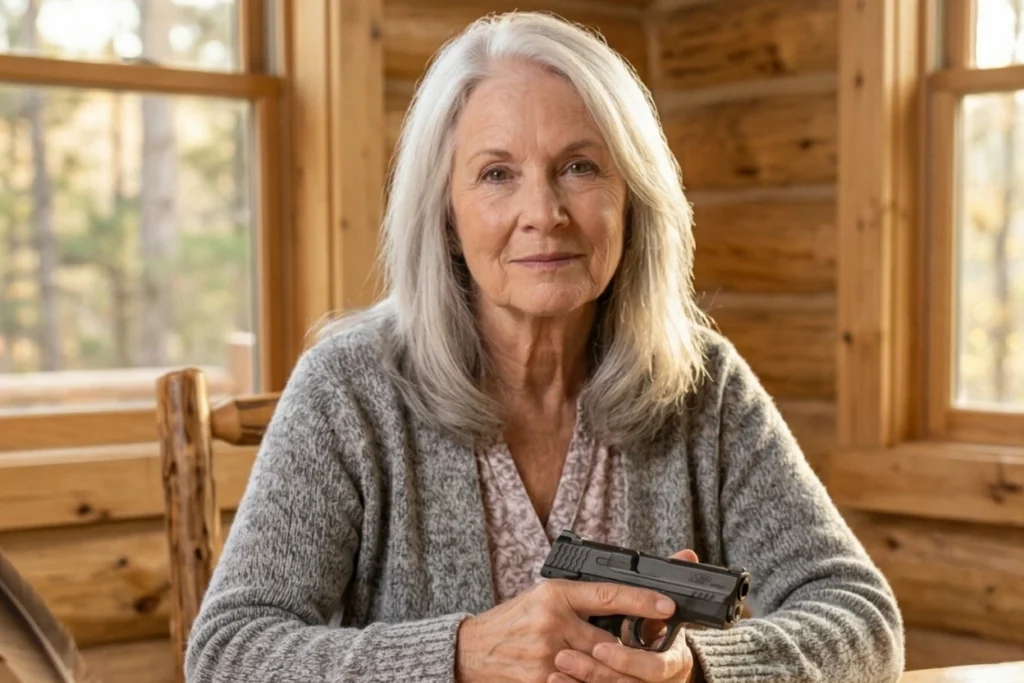
If you’re searching for handguns for senior women, either for yourself or for someone you love, you’ve already noticed the problem: most advice online contradicts itself, and almost none of it was written for hands that hurt.
This guide is different. Every recommendation here is filtered through one test before it makes the list: can she load it, chamber it, and fire it reliably, on her own, when it matters? If the answer is no, the gun doesn’t belong in her hands, regardless of what the reviews say.
We address two distinct situations: home defense and concealed carry, because the right gun for each is not always the same. We also take on the revolver vs. semi-auto debate with more honesty than most guides are willing to bring to it. The answer may surprise you.
What Makes a Handgun Right for a Senior Woman in the First Place?
Three variables drive the selection decision for handguns for senior women, and none of them is caliber.
- Grip strength and joint tolerance. Arthritis, reduced grip strength, and hand sensitivity affect two things: how hard it is to rack a slide, and how hard it is to pull a trigger. Both matter. Both need to be tested, not assumed.
- Recoil sensitivity. Here is the mistake most recommendations make: smaller and lighter does not mean less recoil. It means more. A lighter gun moves more in the hand because there is less mass absorbing the energy. For a senior woman with reduced grip strength or sensitive hands, a slightly heavier frame is often the kinder choice. As one DefensiveCarry.com member put it directly: “A small gun is gonna have a lot of felt recoil. Can you say ‘dropped gun’?”
- Administrative reliability. Can she load the magazine, seat it, chamber a round, and fire without help, under mild stress, in the dark if necessary? If any step in that sequence fails given her physical reality, the gun fails the test. Full stop.
The standard industry advice for senior women is “go small and light.” This guide rejects that default wherever the evidence rejects it, and the evidence rejects it often.
Revolver or Semi-Auto: Which Is Actually Easier for Senior Women?
The conventional answer is revolver, because there’s no slide to rack. That logic is valid as far as it goes. It just doesn’t go far enough.
A double-action revolver trigger, the kind used in almost every small revolver recommended for women, commonly runs between 12 and 15 pounds of pull weight. Most striker-fired semi-automatic pistols run 4 to 6 pounds. For a woman with arthritis in her trigger finger or reduced finger strength, that gap is not a minor inconvenience. It may be a harder barrier than a slide ever was.
This point has been made plainly in the training community for years: “Revolvers often end up in the hands of students who’ve concluded… that they don’t have the strength to operate the slide of an autoloader. In my experience, that’s exactly the opposite of the decision that should be made.” (Grant Cunningham, cited at DefensiveCarry.com)
That is not an argument against revolvers. It is an argument against choosing a platform before identifying which specific barrier is actually present.
Here is the decision framework this guide uses:
- If the primary barrier is slide-racking: test an EZ-platform semi-auto first (purpose-built for this problem) before defaulting to a revolver
- If the primary barrier is trigger-pull weight or finger arthritis: a heavy DA revolver may be contraindicated; test single-action or striker-fired options instead
- If both barriers are present: tip-up barrel pistols (Beretta Tomcat, Bobcat) eliminate the racking requirement, or consult a gunsmith about spring work
- If neither barrier is confirmed: let the operation test decide; neither platform has a categorical advantage
The right platform is the one she tests and can operate, not the one she was told was simpler.
Home Defense or Concealed Carry: Does It Change the Recommendation?
Yes. Significantly.
Home defense only: The gun doesn’t need to be concealed. It needs to be accessible quickly from one location a nightstand, a bedside safe, a kitchen drawer and operable reliably when reached for at 2 a.m. That context allows for a heavier, larger frame, which absorbs recoil better and is easier to grip with arthritic hands. As Primer Peak noted in their testing with an elderly grandmother: “Home defense is our strict context here, with no desire to conceal carry, which drives some of our requirements.”
Carry-intended: Concealability re-enters the equation, but it enters after operability. If she cannot reliably run a gun in a controlled range setting, she cannot run it under stress while drawing from a holster. Solve the operation problem first. Then solve the concealment problem.
The 7 Best Handguns for Senior Women (2026): Reviewed
S&W M&P Shield EZ .380 ACP
The Shield EZ exists specifically because standard semi-automatic slides are too hard for many people to rack. Smith & Wesson engineered it with a lighter recoil spring, oversized slide serrations, and an easy-load magazine that doesn’t require compressing a stiff follower spring. It is the most consistently recommended semi-auto in every senior-women firearms community consulted for this guide.
One PewPewTactical commenter described testing the gun with her arthritic mother in her 60s: “I let her test out both models, and she was able to rack the slides on both easily. The .380 was a bit easier for her to manage.”
Important caveat: the polymer frame on the .380 version delivers more felt recoil than users often expect, given the gun’s size. Community reports on long-term reliability are mixed. Test the specific gun before committing.
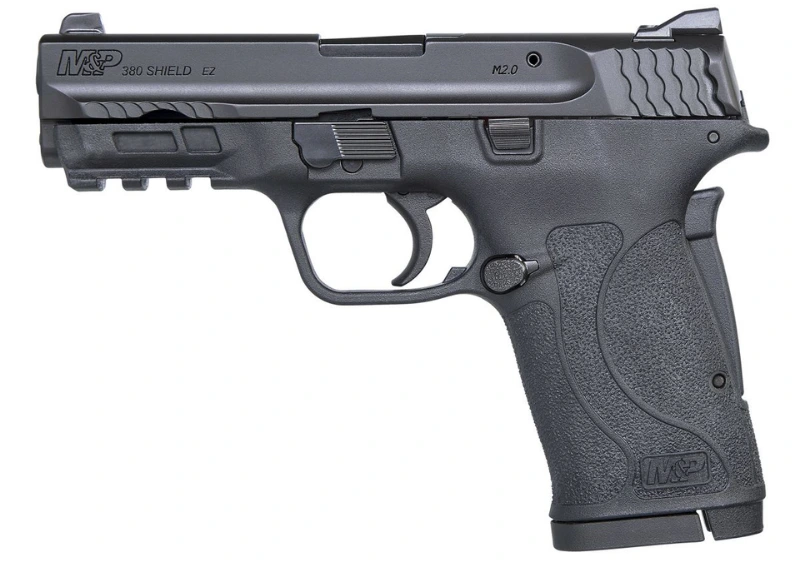
Pros: Lightest slide-racking effort of any popular semi-auto; external hammer; easy-load magazine; available in both .380 and 9mm
Cons: Grip safety adds one manual-of-arms element; polymer frame transmits more recoil than expected; mixed long-term reliability reports across multiple units
Best for: Women whose primary barrier is slide-racking, who prefer a semi-auto, and who test it in person before buying
Ruger LCR .38 Special
The LCR’s standout feature for senior women isn’t the lightweight frame; it’s the factory trigger. Ruger engineered the LCR with a friction-reducing cam that produces a notably smoother and more manageable pull than most J-frame competitors at similar or higher prices. For a senior woman whose specific barrier is slide-racking rather than trigger-pull weight, the LCR in .38 Special with standard-pressure loads is a legitimate and well-proven choice.
Load pairing matters here. With +P ammunition, recoil in the lightweight frame becomes punishing on arthritic hands. Standard-pressure Critical Defense, or an equivalent, is the appropriate pairing for this gun and this user.
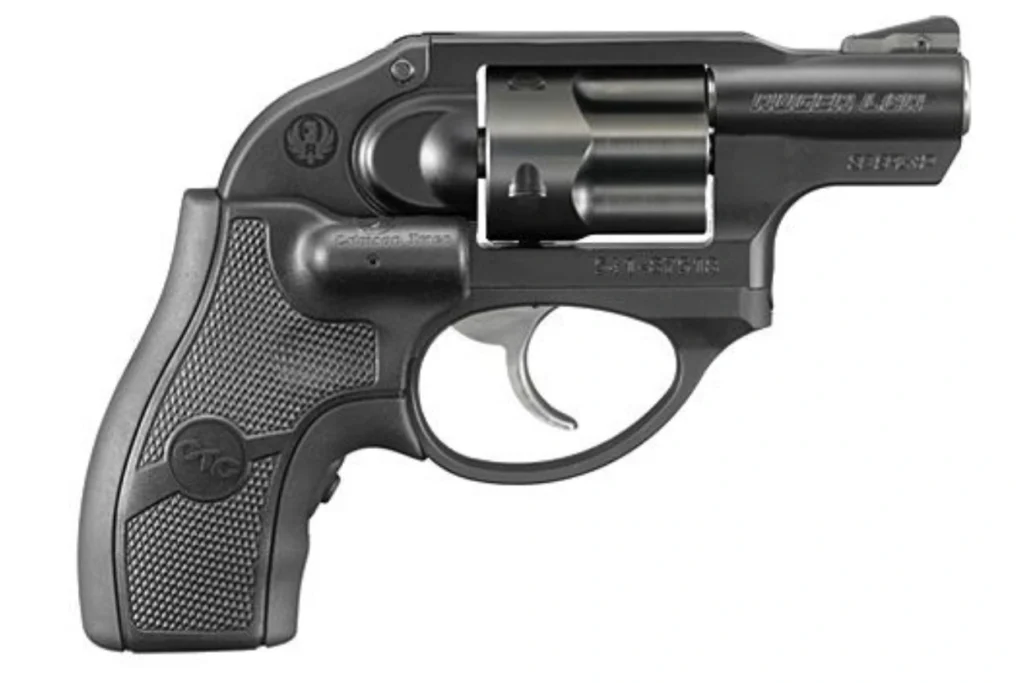
Pros: Smoothest factory double-action trigger in the small revolver class; snag-free profile; Hogue Tamer grip option absorbs recoil substantially; available in multiple calibers, including .327 Federal Magnum with a 7-round cylinder
Cons: Double-action pull still requires a meaningful finger strength test with her specific hands before buying; five-round capacity; reload requires speedloader practice
Best for: Women whose barrier is slide-racking, who want a simple point-and-fire manual of arms, and who have confirmed their trigger-pull strength on this specific gun
S&W J-Frame Model 642 (.38 Special)
The most cited revolver in senior-women discussions across every forum reviewed for this article. The 642 is an alloy-frame, stainless-cylinder, concealed-hammer five-shot that has been in continuous production for decades, carried by more women in this demographic than any other single revolver, which is meaningful data.
The concealed hammer means no single-action option, simplifying the manual of arms at the cost of trigger-pull flexibility. For home-defense primary use, the heavier steel-frame J-Frame variants, Models 60 and 640, are worth testing alongside the 642. Added weight meaningfully softens felt recoil for arthritic or sensitive hands, and the trade-off in carry weight is irrelevant if the gun is staying home.

Pros: Decades of proven reliability; no external controls to manage; Crimson Trace laser grips available as a direct drop-in upgrade; widely available and serviceable nationwide
Cons: Heavier double-action trigger than the LCR; .38 +P in an alloy frame is uncomfortable for sensitive hands; five-round capacity
Best for: Home defense primary; carry-possible secondary, where simplicity and track record are prioritized above all else
Ruger LCRx 3-Inch .38 Special
The LCRx adds one meaningful feature to the standard LCR: an exposed hammer, which enables single-action fire for a lighter, shorter trigger pull on deliberate shots. The 3-inch barrel contributes modest additional weight for recoil reduction and extends the sight radius for improved accuracy at home-defense distances.
If the gun is going to live in a bedside safe rather than a pocket or holster, the LCRx 3-inch is a more comfortable and more accurate platform than the standard LCR or J-Frame. It is the strongest revolver recommendation on this list for a senior woman whose primary context is home defense rather than daily carry.

Pros: Single-action option reduces trigger effort for deliberate shots; 3-inch barrel reduces recoil and improves accuracy over snub-nose options; same smooth Ruger trigger system; Hogue grip included from the factory
Cons: Larger profile than the standard LCR for concealed carry; single-action hammer requires awareness under stress
Best for: Home-defense-primary senior women who want the revolver platform with a genuine lighter-trigger option
S&W M&P Shield EZ 9mm
The 9mm Shield EZ shares the same easy-rack engineering as the .380 version, with one counterintuitive advantage: the heavier slide absorbs more felt recoil than the lighter .380 version. Several community users have noted the 9mm EZ is more comfortable to shoot for exactly this reason: the added mass does meaningful work. It also delivers more established terminal performance at defensive distances.
The same caveats apply as with the .380 version: the grip safety is present, long-term reliability reports from community users are mixed, and hands-on testing before purchase is strongly advised.

Pros: 9mm terminal performance in the easiest-to-rack semi-auto platform available; heavier slide reduces felt recoil versus the .380 version; easy-load magazine
Cons: Grip safety present; slightly heavier than the .380 version; mixed reliability reports from long-term community users
Best for: Senior women who clear the operation test on the EZ platform and want 9mm performance without giving up the easy-rack engineering
Taurus 856 .38 Special (Steel Frame)
The Taurus 856 offers something the Smith & Wesson J-Frame doesn’t at the same price point: a steel frame and a six-round cylinder. Steel absorbs recoil in a way that polymer and alloy frames cannot, and for a senior woman with arthritic or sensitive hands, that difference is felt on every shot. For home-defense, primary use on a constrained budget, the 856 earns a place on this list on those merits alone.
Taurus quality control has historically been inconsistent. Buy from a retailer with a solid return policy, inspect the action carefully before the first range trip, and run at least 50 rounds through it before trusting it for defense.
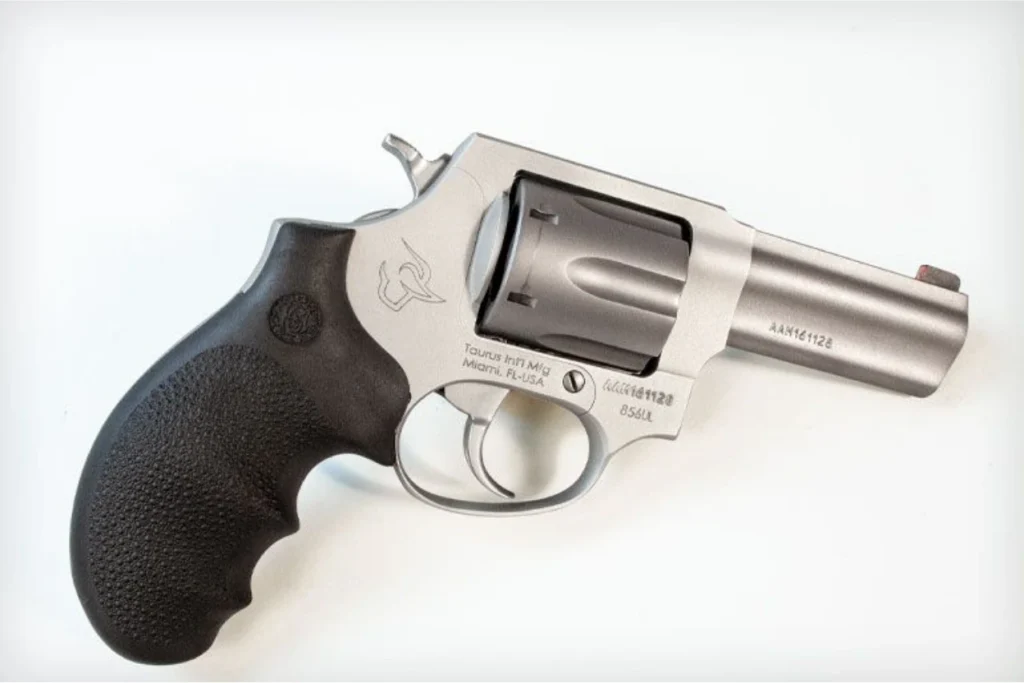
Pros: Steel frame absorbs recoil substantially; six-round capacity over the standard five-shot J-Frame; accessible price point; available with factory Crimson Trace laser
Cons: Heavier than alloy revolvers, less practical for carry; Taurus QC requires careful vetting of the individual unit
Best for: Home-defense-primary, budget-sensitive senior women for whom recoil absorption is the single highest priority
Beretta Tomcat .32 ACP (Tip-Up Barrel)
When both barriers are confirmed, the slide cannot be racked, and the double-action trigger is too heavy, Tomcat solves the problem that no other platform on this list addresses. Its tip-up barrel allows the user to load the chamber by pressing a lever, tipping the barrel forward, and placing a round directly into it by hand. No slide rack required. No spring tension to overcome.
The trade-off is caliber. The .32 ACP is a marginal defensive round by modern standards. But as one GlockTalk member stated plainly: “I gave my [Beretta] to my sister because her arthritis prevented her from racking the slide of a pistol.” A .32 ACP she can load and fire reliably is worth more in a real emergency than a .38 Special she cannot operate.
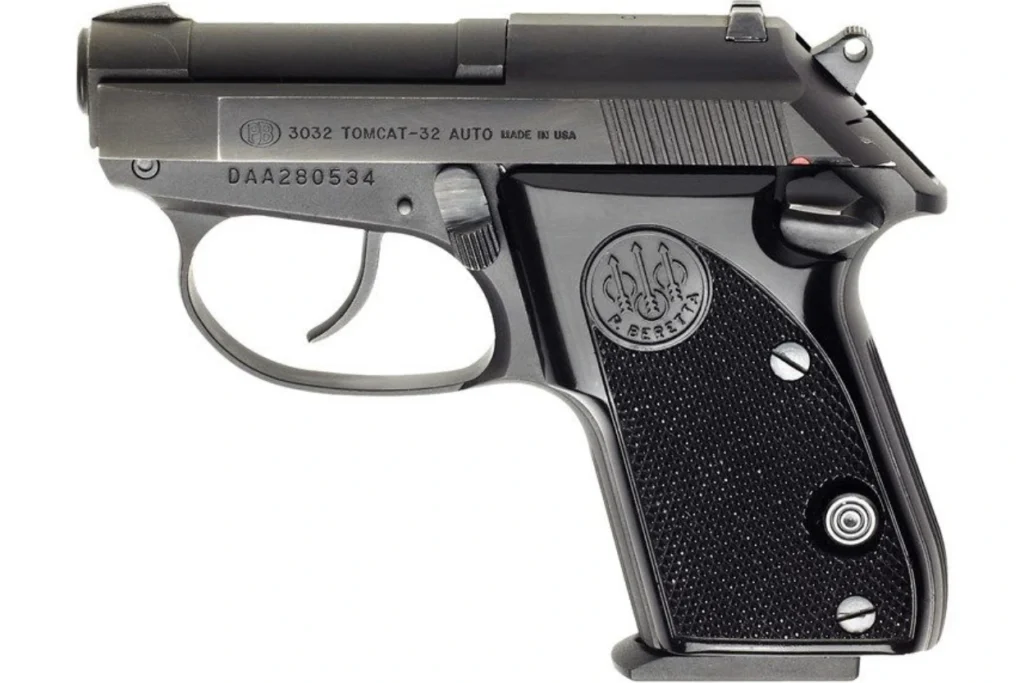
Pros: Eliminates the slide-racking step; can be carried cocked and locked in single-action mode for a lighter trigger pull; more compact than most revolvers in this category
Cons: .32 ACP is marginal for defensive use; older design with some documented reliability concerns; heavier for caliber than modern pocket pistols
Best for: Senior women with severe hand limitations where both slide-racking and heavy DA trigger pull are confirmed barriers. This is the “both barriers present” solution
What Accessories Actually Make a Difference for Senior Women?
Three categories consistently appear in community data as genuine functional upgrades, not range novelties.
- Laser sights. A Crimson Trace or similar laser grip allows accurate close-range shot placement even when the gun cannot be raised to eye level due to shoulder, neck, or mobility limitations. At home-defense distances of 3 to 7 yards, a laser compensates for a sight picture that physical limitations may make impossible to achieve. It is not a substitute for marksmanship practice; it is a capability extender for the specific conditions of a close-range defensive encounter.
- Rubber grip panels. Hogue and similar aftermarket grips increase friction for hands that grip less firmly and absorb the recoil that polymer and alloy frames transmit directly. This is frequently the least expensive upgrade on this list and one of the most immediately impactful for shooting comfort.
- Quick-access bedside safe. A gun that isn’t accessible in 5 seconds is not a home defense tool; it is a stored object. A large-button keypad safe closes the gap between “gun in the house” and “gun in hand.” The test: can she open it in the dark, with slightly unsteady hands, in under 5 seconds? Whatever passes that test is the right safe.
What Training Does a Senior Woman Actually Need and How Does She Find It?
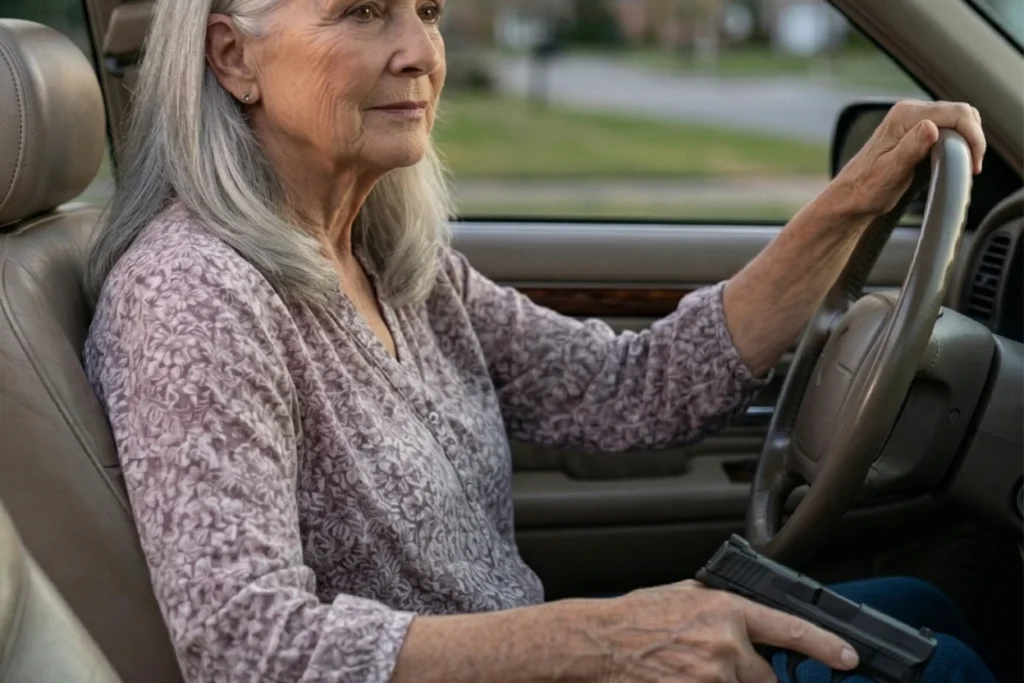
She does not need a 40-hour tactical course. She needs one qualified session with an instructor experienced in working with shooters who have physical limitations and a realistic maintenance routine afterward.
The minimum standard worth working toward: three out of five hits on an 8-inch plate at 5 yards from a loaded and ready condition, under mild time pressure. That standard covers the overwhelming majority of home defense scenarios documented in real incident data. It is achievable, it is specific enough to measure, and it gives both her and her family a concrete target to train toward.
The maintenance standard is less demanding than most people assume: 10 minutes of dry-fire practice monthly, grip and trigger press at home, no ammunition required, and a live-fire range session quarterly. That is enough to maintain the floor.
One forum member who took up carrying in her 70s put the urgency plainly: “At 77, I can tell you that you should begin that training before it becomes necessary. The progression of arthritis and lack of strength does not just happen today! Or tomorrow!!”
For finding instruction, the NRA Basic Pistol course, USCCA Women’s Courses, and the A Girl & A Gun network all offer training calibrated to newer and older women shooters. When contacting any instructor, ask directly whether they have experience teaching shooters with arthritis, reduced grip strength, or mobility limitations. A good instructor adjusts their curriculum accordingly. One who says it doesn’t matter is not the right instructor for this situation.
The Right Handgun for Her Is the One She Can Actually Use
Every gun on this list earned its place the same way: it passed the operation test for the physical constraints most common to senior women. Not because it was the smallest, the lightest, or the most searched on the internet.
If she is new to this decision and doesn’t know where to start, put the S&W Shield EZ in her hands first if she prefers a semi-auto. Put the Ruger LCR in her hands first if she prefers a revolver. Have her run the full operation test on both load, chamber, present, and fire before deciding. Whatever she can do reliably, on her own, under mild stress, is the right starting point.
The goal here is not a transaction. It is a senior woman who can protect herself, maintain her independence, and reach for a tool she trusts when she needs it.
Not sure which of these fits her specific situation? Drop a comment below describing her physical limitations and primary use case (home defense or carry), and we’ll point you to the right starting test.
Frequently Asked Questions
-
What is the best handgun for a senior woman with arthritis?
The S&W M&P Shield EZ was engineered specifically for reduced grip-strength users and is the most recommended semi-auto in this category. For revolvers, the Ruger LCR offers the smoothest factory trigger in its class. The right answer depends on whether arthritis primarily affects the trigger finger or the grip; those two barriers point to different platforms.
-
Are revolvers really easier for older women to operate than semi-autos?
Not automatically. Revolvers eliminate the slide-racking problem but introduce a double-action trigger that commonly runs 12–15 lbs compared to 4–6 lbs on most semi-autos. For arthritic hands, that trigger weight can be a harder barrier than a properly-taught slide rack on an EZ-platform pistol. Test both platforms before deciding.
-
What caliber works best for handguns for senior women?
For most senior women, .38 Special in a revolver or .380 ACP and 9mm in a semi-auto cover the practical range. The load matters as much as the caliber: standard-pressure ammunition is significantly more comfortable than +P for arthritic or sensitive hands. Match the load to both the platform and the user’s physical tolerance.
-
Is a .22 LR handgun a reasonable option for senior home defense?
It depends on the alternative. A .22 LR operated reliably and accurately beats a .38 Special that gets dropped or cannot be fired under stress. That said, .22 LR is genuinely marginal for reliable incapacitation. If it is the only platform she can manage, pair it with a close-range accuracy standard and test it thoroughly before relying on it.
-
Should a senior woman buy a gun with or without a manual safety?
Community experience consistently favors fewer manual controls under stress. As one DefensiveCarry.com member put it: “I try to make sure my wife can run whatever she is using with NO ‘special methods’ that when something goes bump in the night she may forget.” For home defense, a manual safety adds a potential failure point under duress that most experienced instructors recommend against.
-
How do I help my mother find the right handgun without choosing it for her?
Take her to a range with a rental program and let her handle and fire two or three rounds with a knowledgeable staff member or instructor present. Her hands-on experience tells you more than any online review. The community consensus is consistent: “You will be wrong no matter which one you choose. Take her to the gun shop and let her browse.”
-
What handgun safe should a senior woman use for home defense?
A quick-access bedside safe with a large-button keypad or RFID access. Biometric safes fail more often under stress and with cold or arthritic fingers. The practical test: can she open it in the dark, with slightly unsteady hands, in under 5 seconds? Whatever passes that test is the right safe.
-
Does a laser sight actually help a senior woman shoot more accurately?
Yes, specifically in close-range home defense scenarios where raising the gun to eye level may not be possible due to shoulder, neck, or mobility limitations. A laser allows accurate target acquisition at 3–7 yards, even from a low or unconventional position. It extends real capability for this persona without replacing marksmanship practice.
-
How often does a senior woman need to practice to stay competent?
The defensible minimum is 10 minutes of dry-fire practice monthly, grip and trigger press at home, no ammunition required, plus a live-fire range session quarterly. One session with a qualified instructor who has experience teaching shooters with physical limitations establishes the foundational technique. Maintenance from that point is achievable for almost any schedule.
-
What is the most common mistake when buying handguns for senior women?
Choosing based on size before testing operability. The most repeated pattern in community data: a well-meaning family member buys a small, light revolver or pocket pistol because it seems manageable, and it delivers the worst recoil she has ever felt. Smaller and lighter means more recoil, not less. Test first. Select the second. Every time.
Lock in your vote and tell us: Why is this the right call?




5 thoughts on “The Ultimate Guide to Handguns for Senior Women (2026 Edition): 7 Easiest-to-Use Models”
Question: does handedness make a difference? I’m left hand dominant, however, I have shot a 22 rifle and am slightly better right handed. I tend to bat left handed, and golf right handed. (I think, only did it once, with right hand clubs) So, I am semi- ambidextrous. Just wonder if shooting a handgun is it important to get one “left-handed”?
72 year old woman, 410 and 22R experience.
Hey Carol! Many modern handguns are designed with ambidextrous features, allowing both left- and right-handed shooters to operate them effectively. If you feel more comfortable using a particular hand for shooting, it may be worth exploring handguns that cater to that preference.
Handedness can definitely influence your experience with shooting handguns. Since you’re left-hand dominant but have experience shooting right-handed, you might find it comfortable to use either hand, especially if you’re semi-ambidextrous. But wait, choosing a left-handed handgun can provide certain advantages for you, such as easier access to controls and more comfortable handling, particularly if you plan on practicing regularly.
Since you have experience with a .410 and .22 rifles, I’ll say, it’s about what feels most natural and comfortable when shooting. Let us know how it turned out.
Thank you so much for the replies!
No worries, Carol. Stay safe!