
TL;DR: Concealed Carry Guide
- Concealed carry in 2025 requires staying updated on shifting state laws, training standards, and permit requirements.
- Prioritize safety fundamentals: responsible firearm handling, situational awareness, and consistent practice.
- Choose reliable gear, especially a quality holster, and ensure your setup supports secure, comfortable, and discreet carry.
- Understand where you can and can’t carry legally to avoid accidental violations.
- Continually reassess your skills, equipment, and legal obligations to stay compliant and prepared.
2025 Concealed Carry Guide: Start with Safety, Mindset, and Readiness
Concealed carry in 2025 demands more than choosing a firearm; it requires staying informed, trained, and legally compliant as laws and best practices evolve. This guide breaks down the essential requirements every responsible gun owner needs to know, from permits and safety fundamentals to holster selection and situational awareness. Whether you’re new to concealed carry or updating your skills, this overview ensures you stay confident, prepared, and within the law.

Gun Safety Rules
Gun laws across the United States can come and go. However, the Four Rules of Gun Safety will never change:
- Treat every gun like it’s loaded.
- Never point the muzzle at anything you don’t want destroyed.
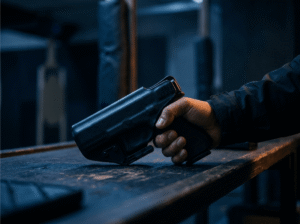
- Finger off the trigger until you’re ready to shoot.
- Know your target, foreground, and what’s beyond.
Pair that with situational awareness: scan, assess, decide. Notice accessible exits, watch other people’s hands, and trust your gut. Throughout your session, you should remain calm and not paranoid.
Here’s a dry-fire routine that can help you develop nerves of steel and only requires 10 quiet minutes 3×/week:
- First, unload your gun and double-check to make sure there are no bullets. Remove ammo from the room.
- Next, work your draw and trigger press without fear of discharging bullets.
Outcome target: by Week 4, hit a consistent 1.7–2.2s first shot from concealment at 7 yards on an A-zone (or 3×5 at 5 yards).
Choose the Right Carry Method
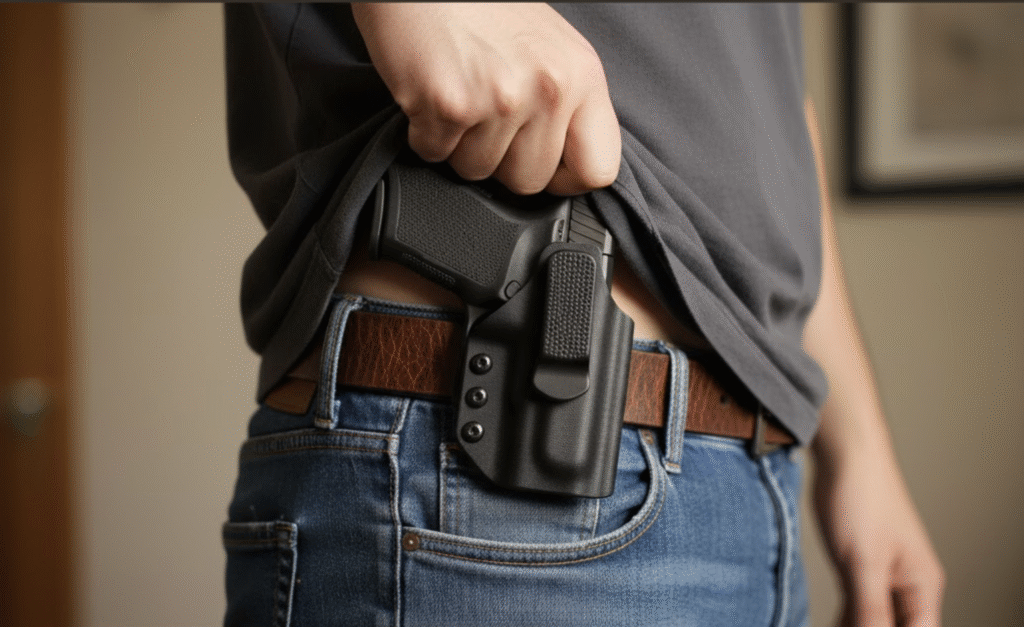
There’s no single “best” method in concealed carry. Instead, consider the right carry that best fits your body, wardrobe, and activity.
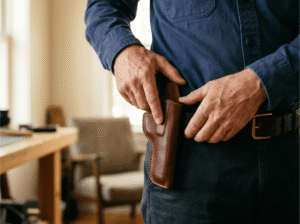
- IWB (Inside Waistband): Deep concealment, balanced access. Often best at 3–4 o’clock for average builds and jackets.
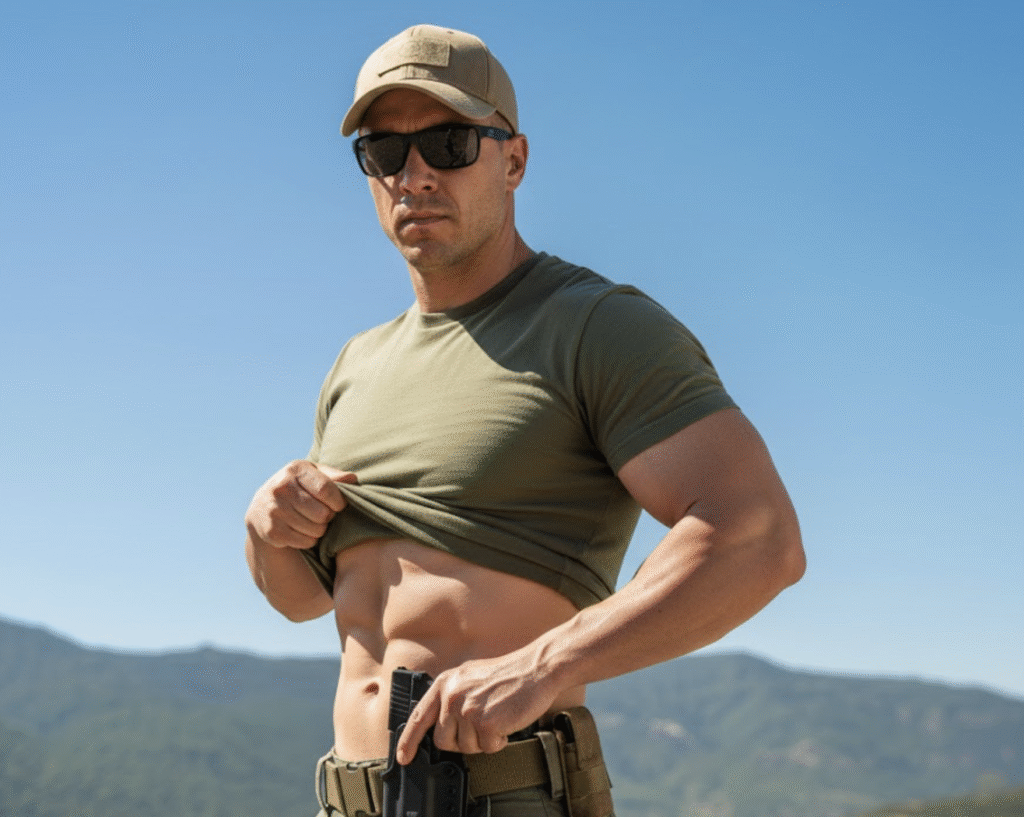
- AIWB (Appendix Inside Waistband): Fast draw, excellent concealment under a T-shirt. Demands discipline, quality holster, and careful reholstering.
- OWB (Outside Waistband): Super comfy and quick. Concealment improves with layers, so this one is great in colder months or range days.
Fit tip: Lean/tall often conceal AIWB well. Barrel length ~3.5–4.25″ balances comfort and shootability for most.
See our holster picks by carry position below.
Pick a Holster That Works with You
With the carry position selected, evaluate the interface: holster + belt. The right carry equipment can help optimize the following: retention, access to a full firing grip, stable ride, and repeatable concealment. Dial in these first; speed comes next.
Non-negotiables:
- Retention: Audible/tactile click. Pass the shake test.
- Ride height & cant: Support a full firing grip on the draw.
- Claw/wing (AIWB/IWB): Tucks the grip to the body.
- Mouth reinforcement: Allows safe, one-hand reholstering.
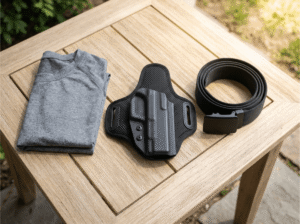
Don’t skip the belt. A purpose-built gun belt prevents sag, stabilizes the draw, and reduces printing.
Editor’s Picks 2025 (with fit guidance):
(As an Amazon Associate, we earn from qualifying purchases.)
- Budget: CYA Supply Co. IWB — Best for IWB 3–4 o’clock, compact pistols. “Just works” reliability. Shop Holster
- Mid-Tier: Tier 1 Concealed Axis Slim (AIWB) — Built-in mag carrier, adjustable ride/cant. Great for medium/athletic builds; excellent access.
- Premium: Tenicor Certum3 — Pro-grade comfort, precise fit. Excels AIWB or strong-side; all-day wear for larger frames.
Compare the various holsters above and pick your fit.
Dress Smart and Stay Concealed
Concealment is about blending in, not hiding it entirely. When carrying a weapon, always dress for context.
- Summer: Light, looser fabrics; patterns hide outlines; athletic tees with structure reduce printing.
- Winter: Layer with flannels/hoodies/jackets that allow a clean sweep.
- Office: Test your draw in work clothes—blazers, tucked shirts, belts.
Concealed Carry Guide: Master the Draw, and then Reholster Like a Pro
Practice makes perfect, and that includes your drawing and reholstering skills. So learn the basic four-step draw and keep practicing until it becomes natural.
Four-Step draw:
- Clear your garments.
- Build a full firing grip in the holster.
- Draw straight up, rotate, and meet support hand.
- Press out, sights confirm, smooth press.
Use a timer occasionally. When benchmarking yourself, chase consistency first, then go for speed once you master the basics.
Reholster Tips (safety first):
- Hard break after the string; scan.
- Clear the garment and visually confirm the holster mouth is clear.
- Muzzle averted from body; finger high on the frame.
- Go slow when reholstering; the fight is over.
Outcome target: Safe, eyes-on reholster under 3 seconds with no fishing.
2025 Concealed Carry Guide BONUS: Download the FREE Gun Carrier’s How-to Draw and Reholster Card for your quick reference.
Feed It Right: Ammo & Reliability
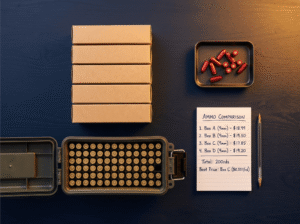
When it’s time to go live firing, don’t skimp on the hardware. Practice your shooting technique using full metal jacket ammo (FMJ). Carry a quality defensive jacketed hollow point (JHP) in your pistol.
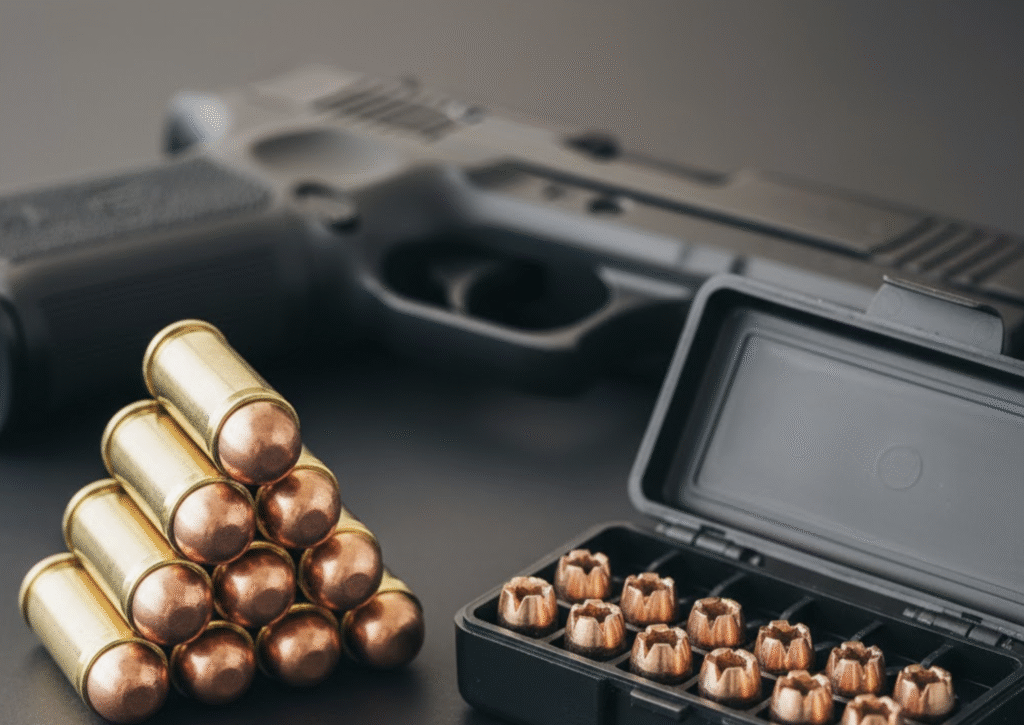
Reliability protocol (pre-carry):
- 200 rounds FMJ + 50 rounds of your carry JHP
- No stoppages attributable to the gun/ammo
- Confirm slide lock on empty and reliable reloads
- Log round count and parts maintenance intervals
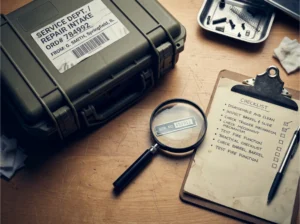
Need help memorizing the protocol? Grab our printable concealed carry reliability checklist here.
2025 Concealed Carry Guide’s Four Weeks to Confidence
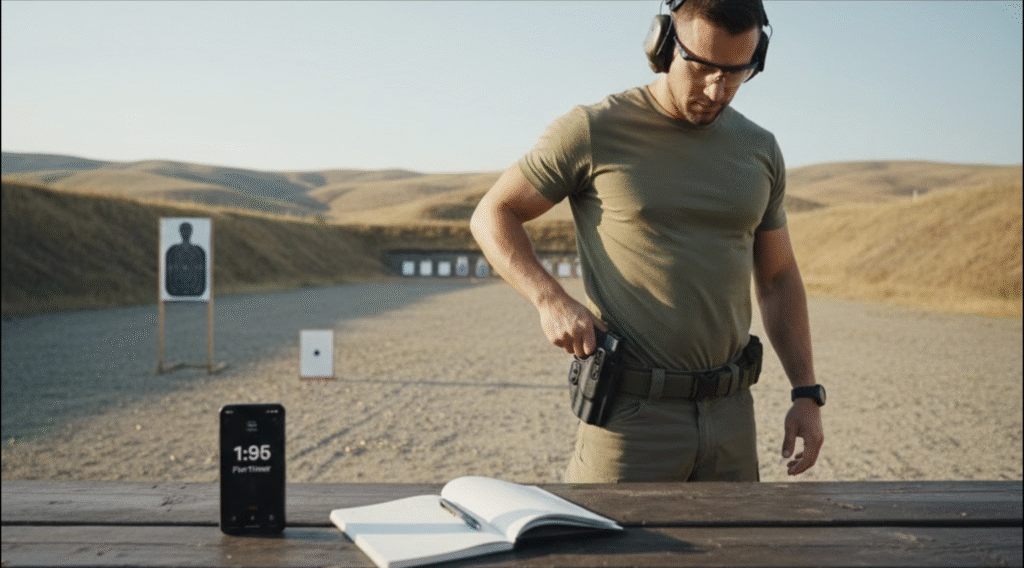
Before you touch a timer, set the guardrails. This plan builds consistency first and speed second. You’ll measure two things each session: hit quality and first-shot time from concealment. Use a simple par-timer app, a notebook, and realistic targets (A-zone at 7 yards, or a 3×5 at 5 yards). Dry-fire only in a cleared space with no live ammo present and a safe backstop; live-fire at a range with eye/ear protection and strict muzzle/trigger discipline. If control or safety slips at any point, slow down or stop—no time is worth a negligent shot. Adjust the goals to your current ability and progress them as you earn it.
Week 1 (Dry-Fire):
- Draw to sights, trigger control. 10 min × 3 sessions.
- Goal: clean press without sight dip; smooth garment clear.
Week 2 (Live-Fire):
- Draw → 1 accurate round → safe reholster.
- Goal: 2.2–2.5s first shot A-zone at 7 yards (consistent).
Week 3 (Add Movement):
- Step off line → controlled pair → reholster.
- Goal: Maintain hits within the A-zone at training speed.
Week 4 (Combine):
- Timed draws, reloads, movement, low-light reps.
- Goal: 1.7–2.2s first shot; sub-4.5s draw-reload-A-zone at 7 yards.
2025 Concealed Carry Guide BONUS: Download the free Printable 4-Week Plan here.
Quick Comparison: Tier 1 Concealed’s Axis Slim vs. Tenicor’s Certum3
- Concealment: Axis (AIWB + mag) minimizes grip print; Certum3 excels with claw/tuck options and varied ride.
- Comfort: Axis spreads load across appendix with flex; Certum3 shines for long days, especially with mid-size pistols.
- Draw speed: Axis is lightning for AIWB; Certum3 is versatile for AIWB or strong-side—consistent, repeatable presentations.
Editor’s Choice (Holster): Gun Carrier recommends Tier 1 Concealed Axis Slim for AIWB speed and access.
2025 Concealed Carry Guide Gear Refresh (Tried & Trusted)
- Belt: Kore Essentials Tactical Gun Belt: Ratchet micro-adjust, no sag. Shop Kore
- Light: Streamlight Wedge XT: Slim, pocketable, duty-use brightness. Shop Streamlight
- Mag Carrier: Esstac KYWI: Rugged, great retention. Shop Esstac
- Med Kit: Dark Angel D.A.R.K. Mini: Compact trauma essentials.
Know the law where you live and travel. Statutes change. Verify before you carry or print.
- ADVANCED TACTICAL GUN BELT: Engineered for a secure and comfortable fit, our...
Last update on 2026-09-03 / Affiliate links / Images from Amazon Product Advertising API
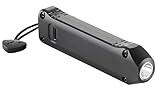
- Dual Mode Brightness: High mode delivers a powerful 500 Lumens and a...

Last update on 2026-09-03 / Affiliate links / Images from Amazon Product Advertising API

- COLOR: MULTICAM
Last update on 2026-09-03 / Affiliate links / Images from Amazon Product Advertising API
Here is Gun Carrier’s handy guide to every state’s carry laws.
What Are the Key Takeaways for Concealed Carry in 2025?
Concealed carry is more than choosing the right firearm; it’s a commitment to ongoing training, legal awareness, and a responsible mindset. As laws shift and defensive tactics evolve, staying informed ensures you can protect yourself and others while remaining within the bounds of the law. When you invest in education and preparedness, your everyday carry becomes a tool of safety, not uncertainty.\
Take the Next Step Toward Safer Carry
Now is the perfect time to review your gear, update your training routine, and familiarize yourself with your state’s 2025 legal requirements. Explore more guides, take a refresher class, and make sure your concealed carry approach is built on skill, awareness, and responsibility. Your safety, and the safety of those around you, depends on it.
Legal & Responsibility
Daily concealed carry is about preparedness and discipline, and not paranoia. This guide is training info, not legal advice. Train smart, stay aware, and invest in gear that earns your trust. Do the work now so you
get home later. Always follow local concealed carry laws. Train safely. Stay strong and stay free.
| Holster Type | Summary |
|---|---|
| IWB (Inside-the-Waistband) | Inside-the-waistband holsters provide better concealment and are commonly used for everyday concealed carry, though they can feel tighter or less comfortable when sitting for long periods. |
| OWB (Outside-the-Waistband) | Outside-the-waistband holsters are generally more comfortable and easier to draw from, but they require longer cover garments like jackets or hoodies to remain properly concealed. |
How to Get a Concealed Carry Permit
Getting a concealed carry permit typically involves confirming eligibility, completing required training, submitting an application, and passing background checks. While requirements vary by state, the overall process is similar nationwide. Always verify local laws before applying to ensure compliance with current regulations.
Confirm Your State’s Requirements
Check whether your state requires a concealed carry permit and review eligibility rules such as age, residency, and legal restrictions.
Complete Required Firearms Training
Some states mandate certified safety or proficiency training. Courses may be in-person or online, depending on local laws.
Gather Required Documentation
Prepare identification, proof of residency, training certificates, and any required photographs or fingerprints. Concealed Pistol Application and Instructions
Submit Your Application
Apply through your state or local issuing authority, often a sheriff’s office or state police department.
Pay Applicable Fees
Application and permit fees vary by state and may include fingerprinting or processing costs.
Undergo a Background Check
Most states conduct criminal history and eligibility checks before approving a permit.
Wait for Approval
Processing times range from days to several months, depending on jurisdiction and application volume.
Receive and Review Your Permit
Once approved, review permit terms, expiration dates, and any location-based restrictions.
Maintain Compliance
Renew your permit on time and stay informed about changes to state or reciprocity laws.
Disclaimer: All content on this site is for informational purposes only. Please read our full disclaimer here.
Frequently Asked Questions About Concealed Carry
What’s the best concealed carry position?
The best concealed carry position depends on body type, daily activity, and comfort. Common positions include appendix (front of the waistband), strong-side hip, and behind-the-hip. The ideal position allows safe access, good concealment, and all-day comfort without printing or restricting movement.
How do I choose a concealed carry gun?
Choose a concealed carry gun based on reliability, size, recoil control, and your ability to shoot it accurately. Smaller guns conceal easier but can be harder to control. Always select a firearm you can handle confidently, practice with regularly, and legally carry in your jurisdiction.
What holster works best for beginners?
For beginners, a quality inside-the-waistband (IWB) holster with strong retention and trigger guard coverage works best. Look for adjustable ride height and cant to improve comfort and concealment. Kydex or reinforced hybrid holsters are popular for consistency, safety, and ease of reholstering.
Is the appendix carry safe?
Appendix carry can be safe when done correctly with a proper holster and strict trigger discipline. A rigid holster that fully covers the trigger guard is essential. Safety depends more on equipment quality and user training than the carry position itself.
What should I wear for concealed carry?
Wear clothing that allows concealment without restricting access or movement. Slightly looser shirts, structured fabrics, and sturdy belts help reduce printing. Seasonal layering can improve concealment, but comfort and consistency matter most—your setup should support everyday wear, not just occasional carry.
Do I need a concealed carry permit?
Permit requirements vary by state. Some states allow permitless (constitutional) carry, while others require a license. Even in permitless states, a permit may provide benefits like interstate reciprocity or expanded carry locations. Always verify current laws before carrying.
How do I prevent printing while concealed carrying?
Prevent printing by choosing the right holster position, using a proper gun belt, and wearing suitable clothing. Adjusting cant and ride height can significantly reduce outline visibility. Body posture and movement awareness also help minimize printing during daily activities.
How often should I train with my concealed carry firearm?
Regular training is essential for safe and effective concealed carry. Dry-fire practice can be done weekly, while live-fire training should occur as often as practical. Training should include safe drawing, accuracy, and decision-making under stress, not just basic marksmanship.
Can I carry concealed while driving?
Yes, but comfort and access depend on your carry position and vehicle setup. Appendix and strong-side hip carry are commonly preferred for seated access. Always ensure your firearm remains secure and that you comply with state laws regarding vehicle carry and interactions with law enforcement.