
Start Here
Beginner Handguns with low enough recoil for a beginner to shoot comfortably, paired with the right grip fit, make the most realistic choice for home defense. The best starting points are full-size or compact 9mm pistols and medium-frame .38 Special revolvers, since size and felt recoil do not move together the way most first-time buyers assume.
Why Does Recoil Make or Break a Beginner’s Home Defense Handgun?
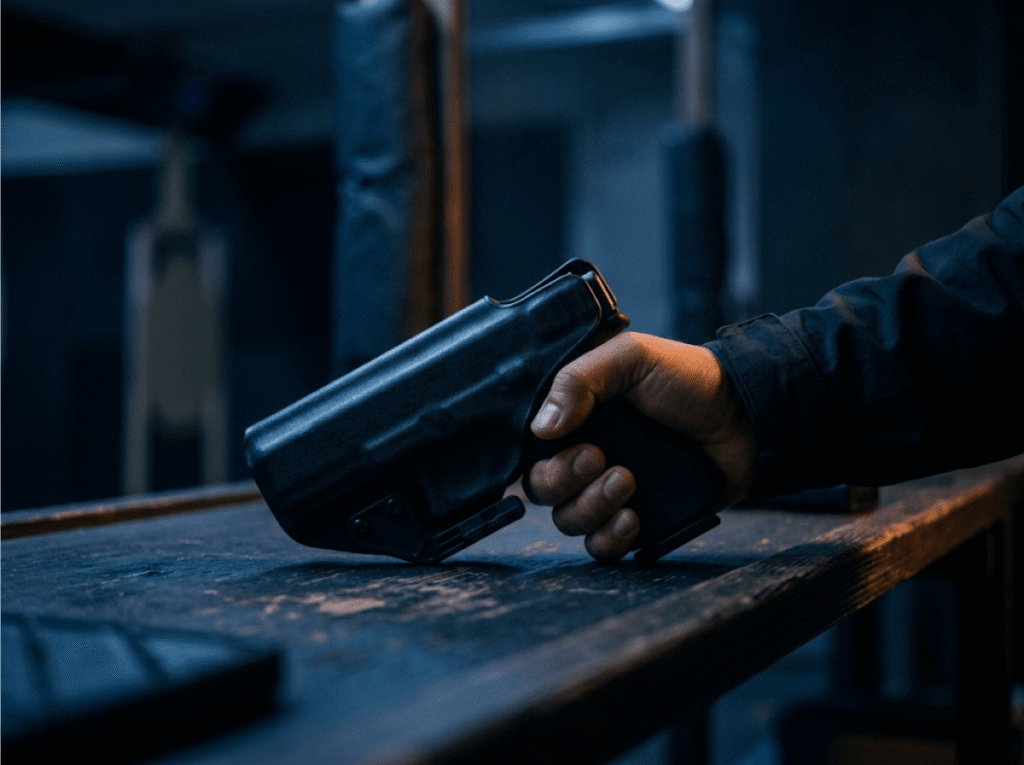
A gun that hurts to shoot gets left in the safe, and a gun that sits in the safe protects nobody. Most new gun owners do not shop with a spec sheet; they shop with the memory of one bad range day, a gun store clerk handing them something too big, too loud, or too punishing. On the forums, the pattern repeats: a beginner picks up a tiny pocket pistol because it looks manageable, then finds out the hard way that “small” and “soft shooting” are not the same thing.
One new shooter summed it up after a bad range day, calling out plainly that the recoil is hefty on a gun that looked easy to carry. That single sentence captures the real risk in handguns: low recoil enough to look approachable but too small to actually control. The wrong choice does not just feel unpleasant; it quietly ends the practice habit that home defense actually depends on.
What Makes Handguns Low Recoil vs. Just Small?
Felt recoil comes from weight, caliber, and grip fit working together, not from size alone. A heavier, mid-size handgun in 9mm frequently recoils softer than a featherweight pocket gun in the same caliber, because there is simply more mass to absorb the same amount of energy. A .38 Special revolver with a full-size grip can feel gentler than a subcompact 9mm that fits the hand poorly. Size and weight cut in opposite directions here, and beginners consistently guess wrong when they assume smaller automatically means easier.
The real test for handguns low recoil enough to build genuine confidence comes down to grip fit first and caliber second. Test before you decide: among handguns low recoil enough to look friendly on the shelf, some are still the hardest to control on the range.

- Teaches safe gun handling, thousands of dry fires without damage
- Functions just like real ammo - without the noise
- Offers versatility: training, storage, testing, practice

Last update on 2026-10-02 / Affiliate links / Images from Amazon Product Advertising API
Which Handguns Are Actually Manageable for a First-Time Owner?
Three categories consistently show up as manageable starting points for a first defensive handgun: a mid-size 9mm, a medium-frame .38 Special revolver, and a .22LR for training only. A full-size or compact 9mm pistol with a proper grip fit offers a workable balance of manageable recoil, high ammunition availability, and enough capacity to matter in a real encounter. A medium-frame .38 Special revolver trades some capacity for a simpler manual of arms, an easier learning curve, and typically softer recoil than a lightweight subcompact.
A .22LR handgun builds trigger control and confidence at minimal cost per round, but it belongs in the training rotation, not as the primary home defense gun, since it trades meaningful stopping performance for comfort. Shoppers hunting for handguns with low enough recoil to be forgiving on a first range trip should treat these three categories as the realistic short list. None of these is the automatic answer for every reader.
The right one depends on hand size, grip strength, and how much time the owner is realistically going to spend practicing; that last variable matters more than any caliber debate. For a closer look at specific current models in each category, see our picks for the best handguns for home defense.
How Do You Test Recoil and Fit Before You Buy?
Felt recoil has to be measured by hand, not read off a spec sheet. Handguns low enough in recoil to be marketed that way still need the same hands-on test as anything else.
- Rent or borrow two to three candidates at a range and fire at least twenty rounds through each during the same visit, so the comparison is fresh and direct.
- Check that all fingers wrap fully around the grip without straining, and that the trigger finger rests naturally on the trigger face.
- Confirm the slide racks, or the cylinder opens, without needing help or unusual effort.
- Then compare, gun to gun, which one lets you get back on target fastest after each shot.
That single test, felt recoil plus recovery speed, tells you more about real-world fit than any caliber chart.

- PROTECT YOUR HEARING - Walker's Razor Ear Muffs have an ultra low-profile design featuring extra slim ear cups, for a...
- SOUND AMPLIFICATION - Walker's Razor Ear Muffs amplify safe sounds using two hi-gain microphones to provide clear...
- RUGGED DESIGN - These muffs feature a rugged design with a rubberized coating, helping to prevent damage to the interior...
Last update on 2026-10-02 / Affiliate links / Images from Amazon Product Advertising API
Is a Milder Gun Enough for Real Home Defense?
Both sides of this debate are right, just for different readers, and the deciding factor is whether you have trained yet. Readers weighing handguns’ low recoil enough to shoot well today against a higher-capability option are both making a defensible call. One view says buy the gun you can shoot well today: the most detailed dataset available on real armed-citizen incidents, more than 65 documented alumni shootings compiled by a civilian defensive-training organization, found that 87 percent occurred between three and five yards (full breakdown here).
Separate analyses of civilian gunfights consistently put rounds fired in the two-to-four range rather than the double digits many new buyers picture (source). A manageable gun you will actually practice with, handguns low enough in recoil to get real repetitions in, beats a powerful one you will not. The other view says buy for a higher capability ceiling and train up to it, since a beginner who trains seriously can grow into more gun, and settling too low can leave a gap for the rare harder scenario.
If you have not trained yet, buy the floor: the most controllable option that fits your hand. If you already have range time and are ready to commit long term, test toward the higher standard and let measured performance make the call.
How Should You Store and Practice With Your Low-Recoil Handgun?
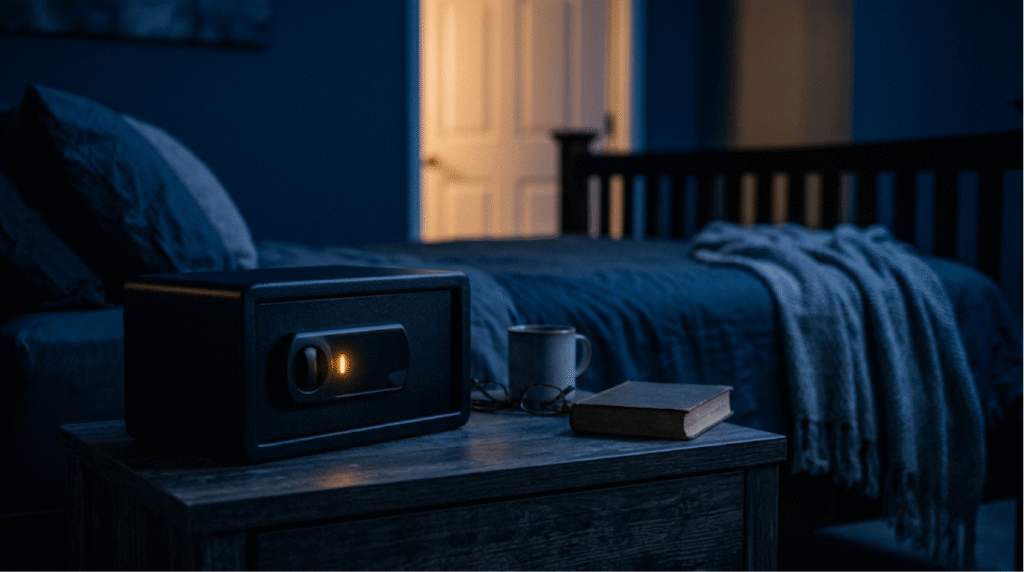
A low-recoil handgun only works as a home defense tool if it is reachable in the moment it is needed, and the owner has rehearsed using it. Store it for fast, secure access rather than burying it unloaded in a closet safe; our state-by-state gun storage law guide and bedside handgun safe comparison both cover compliant options.
Treat handguns- low-recoil enough to feel easy as tools that still need scheduled practice, not just secure storage. Build a simple habit around it: brief dry-fire practice weekly to keep the drawstroke and trigger press sharp (our dry-fire practice drills guide has a full routine), and live-fire practice at least monthly to confirm real-world performance.
Log each session, date, course, and instructor if applicable, the same way you would track any other safety-critical skill. A gun that is comfortable to shoot but never practiced with is not meaningfully more prepared than one that is not comfortable at all.

- Discreet, Secure, Touch-Free Entry - the Hornady Rapid Safe Night Guard, 98215 keeps your handgun safes for pistols as...
- Quick Access Gun Safe - This Hornady gun safe uses the patented RFID technology to unlocks safes faster than keypads and...
- Heavy Duty and Tamper Proof – This nightstand safe is made from 14 gauge steel. Comes with a heavy duty 1500 lb. steel...
Last update on 2026-10-02 / Affiliate links / Images from Amazon Product Advertising API
What’s the Right Next Step Before You Buy?
The best beginner handguns with low enough recoil to control confidently are whichever option your own hands can run accurately, session after session. Test grip fit and felt recoil directly before you buy, pick the floor if you have not trained yet, and commit to regular practice once you own it. A gun you can shoot confidently and repeatedly protects your home better than a more powerful one gathering dust in a drawer.
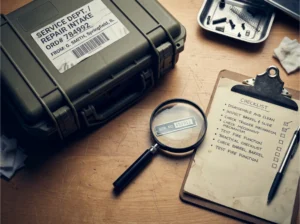
Download the free Low-Recoil Handgun Buyer’s Checklist to walk through grip fit, range testing, and storage, and pair the purchase with a certified beginner handgun safety course. Our complete new-carrier guide covers what to do first once you have chosen a gun.
5 Best 9mm Home Defense Pistols Under $500 from Honest Outlaw.
Frequently Asked Questions
-
What does “low recoil” actually mean for a handgun?
Low recoil describes how much a handgun’s frame, weight, and caliber transmit rearward force and muzzle rise back into the shooter’s hand after firing. It is shaped by cartridge choice, gun weight, and grip design together, not by size alone. A heavier gun in a mild caliber often recoils less than a tiny gun in a hot caliber.
-
Is a smaller handgun always easier for a beginner to shoot?
No. Smaller, lighter handguns often feel less intimidating in the store, but the same lighter frame absorbs less recoil energy, so felt recoil can increase rather than decrease. A mid-size, well-fitted handgun frequently recoils softer and points more naturally than a compact gun chosen for size alone.
-
What calibers are considered low recoil for home defense?
9mm, .38 Special, and .22LR are commonly cited as manageable choices for new shooters, with 9mm the most widely recommended for its balance of control, capacity, and ammunition availability. .380 ACP and similar smaller calibers exist too, though they trade some capability for softer recoil in a lighter frame.
-
Do revolvers or semi-automatic pistols have less recoil?
It depends more on weight and caliber than on the action type itself. A heavy-frame revolver in .38 Special can recoil softer than a lightweight subcompact 9mm pistol. Test both types directly, since grip shape, trigger operation, and reloading method differ enough to affect real-world control either way.
-
How do I test recoil before buying a handgun?
Rent or borrow two to three candidate handguns at a range and fire at least 20 rounds through each in the same session. Compare felt recoil, sight recovery speed, and grip comfort directly against one another rather than relying on a single impression or a sales counter description alone.
-
Is a low-recoil handgun still effective for home defense?
Yes, when paired with accurate shot placement and consistent practice. Documented data on civilian defensive shootings shows most happen at very close range with only a few rounds fired, so a manageable handgun a shooter can hit with reliably outperforms a harder-kicking gun that goes untrained or unused.
-
Should beginners start with a .22LR handgun for home defense?
A .22LR is an excellent training tool for learning trigger control and building confidence, but most defensive trainers recommend stepping up to 9mm or a similar service caliber for the actual home defense gun once the shooter is comfortable, since it offers more dependable performance in a real encounter.
-
What grip and fit issues affect felt recoil the most?
A grip that is too large or too small for the shooter’s hand lets the gun shift during recoil, increasing felt kick and slowing the next shot. Confirm that fingers wrap fully around the grip without strain and that the trigger finger rests naturally on the trigger’s face.
-
How much practice does a new gun owner need before relying on a handgun for home defense?
There is no single number, but consistent weekly dry-fire practice plus at least monthly live-fire range time is a realistic baseline for building and keeping basic defensive competency. A certified beginner or defensive pistol course early on accelerates safe, correct habit-building significantly for most first-time owners.
-
Where should a low-recoil home defense handgun be stored?
Store it where an adult household member can reach it quickly under stress, using a method matched to the household, such as a quick-access lock box, while keeping it secured from children or unauthorized users. Storage law varies by state, so confirm local requirements before deciding what fits.