
Fast Facts
A home firearms safe must block unauthorized access and allow fast retrieval under pressure. The right choice depends on household composition, collection size, and your state’s storage law. This guide covers budget picks under $200, mid-range options from $200-$500, and premium safes above $500, with CPSC recall warnings and verified 2026 tax credit data included.
Related: Firearm Safe Storage for Home: Choosing the Right Gun Safe in 2026
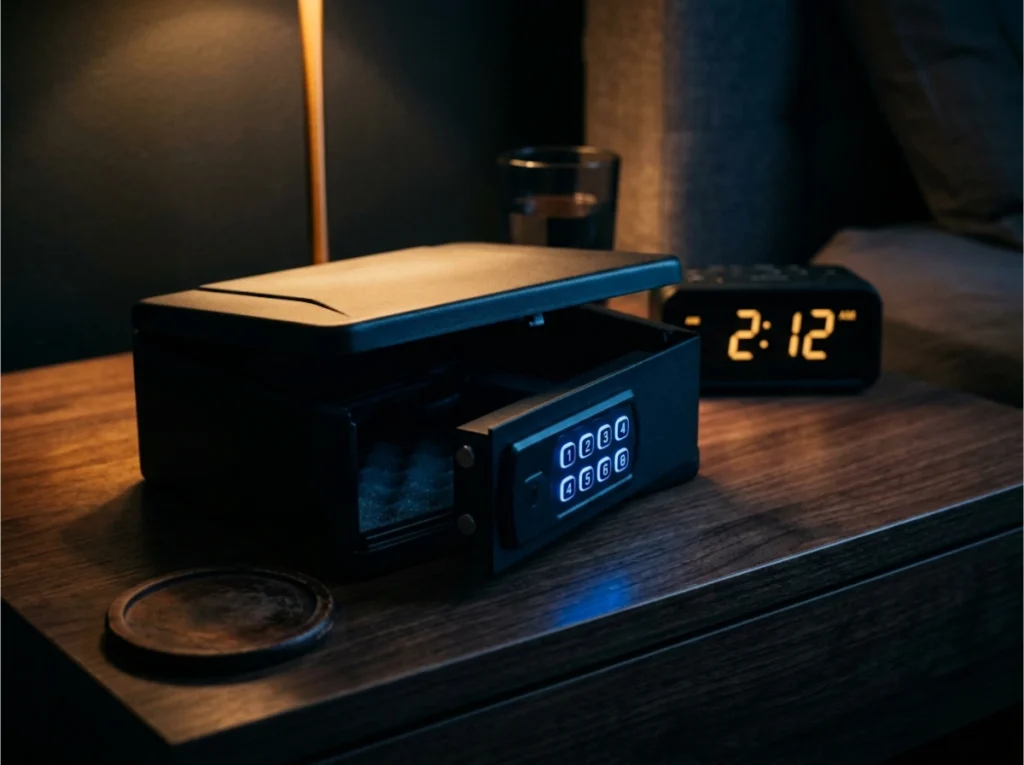
Picking a home firearms safe requires solving two problems at once. The first is keeping unauthorized people out. The second is getting in fast when it counts. Those two requirements pull in opposite directions: a lock strong enough to stop a determined teenager also slows down a stressed adult in the dark at 2 a.m. Most roundups pick a price tier and work backward from there. This guide works from your household first. The security architecture, the state law landscape, the biometric recall history, and the product tiers all follow from that starting point.
The safe that keeps your kids out also has to let you in under pressure, and those are not the same specifications.
What Should a Home Firearms Safe Actually Do?
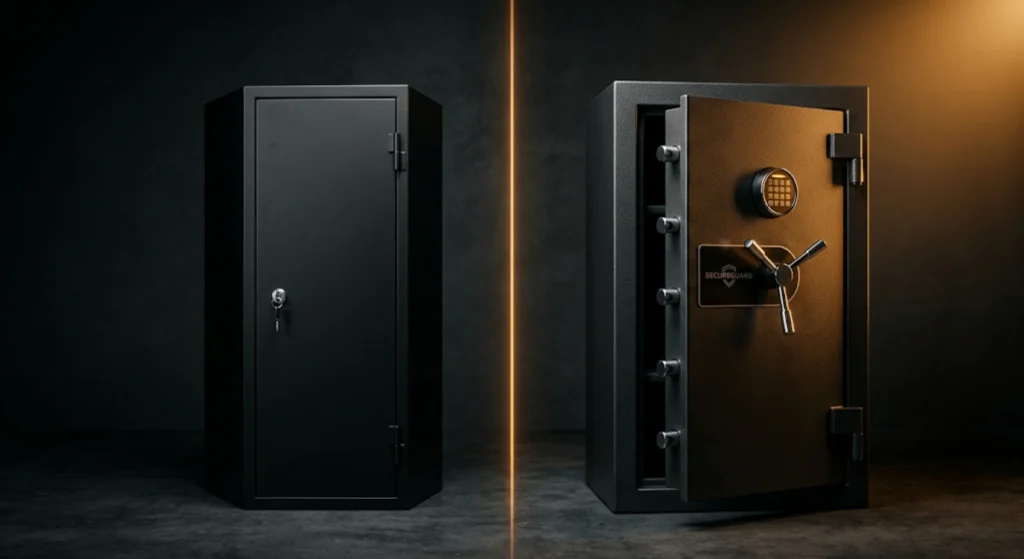
A home firearms safe serves two separate functions, and most buyers attempt to solve both with one product that was built for only one of them.
The first function is child access prevention: stopping unauthorized household members from reaching firearms without supervision. This is where steel gauge, bolt count, and floor anchoring determine the outcome. The second function is defensive access: reaching the firearm fast enough for it to be useful in a crisis. This is where lock type, access mechanism, and positioning determine whether the product helps or fails.
Before comparing any product, complete a five-question household audit. Who has unsupervised access to your home, and what are their ages? What is the maximum acceptable access time for your defensive firearm? How many firearms need storage? What does your state’s safe storage law require? What is the realistic threat: curious children, opportunistic theft, or a determined intruder with tools and time? The answers to those five questions produce your specification. The specification produces the product. That sequence does not work in reverse.
One forum member on AnandTech’s hardware community put the core tension plainly: they needed something “good enough to keep young kids out but easy enough to get in case of a middle-of-the-night burglar.” That is the entire selection problem in one sentence, and every section of this guide resolves it at a different price tier.

- Dimensions: 4-1/4"h (5-1/4"h with buttons and knob) x 12-1/2"w x 10-3/8"d
- 10 gauge steel body
- Gas-strut-assisted heavyweight door
Last update on 2026-10-15 / Affiliate links / Images from Amazon Product Advertising API
What Are the Best Budget Home Firearms Safes Under $200?
At the budget tier, the most important word to learn is “cabinet,” because a gun cabinet and a home firearms safe are not the same product, and the marketing does not always make that clear.
A gun cabinet uses 16-to-18-gauge sheet steel with a basic keyed lock. It deters curious young children. It does not stop a teenager with a flathead screwdriver or a burglar with 90 seconds and a pry bar. Community consensus on TheArmoryLife Forum and across firearms deal communities is consistent and direct: “thin-steel garbage” is not a fringe opinion about the cheapest options. It is an accurate mechanical description of what 16-gauge steel does under tool pressure.
A genuine home firearms safe at this price tier is achievable, but requires knowing exactly what to look for. The minimum specification floor: 14-gauge steel, four active locking bolts, pre-drilled anchor points, and a backup key or keypad. Compact 4-gun steel safes in the $100-$180 range from established US manufacturers can meet this specification and represent the right entry point for households storing a small collection. Keypad access outperforms combination dial under stress at every price point, and that advantage is most pronounced at the budget tier, where there is no redundancy to fall back on.
For the bedside defensive handgun, dedicated quick-access pistol vaults from verified manufacturers such as Fort Knox in the $130-$180 range represent the strongest budget option. These units use 10-to-12-gauge steel for the door and keypad access, and have no battery-dependent biometric component to fail.
One critical caution: the sub-$150 biometric category sold primarily through Amazon and Walmart carries documented recall risk. Four CPSC recall actions in 2024 involved biometric gun safes that failed to do their primary job. Verify any biometric product against the CPSC recall database before purchase. See the biometric section below for the specific recall data.
No products found.
When Does a Mid-Range Home Firearms Safe Make More Sense?
The $200 to $500 range is where the specifications on the label stop being marketing claims and start being engineering facts you can verify independently.
At this tier, UL-listed electronic locks become standard on quality products. The steel gauge moves from 14 to 12. Six-bolt locking patterns replace four-bolt systems. The difference is audible: close a 12-gauge safe and a 14-gauge model back to back and the sound alone distinguishes them.
For households with children, the mid-range is also where meaningful fire protection becomes available at a tested standard. Most products in this range carry a 30-minute rating at 1,200 degrees Fahrenheit. One critical distinction: a fire rating is not the same as a UL RSC (Residential Security Container) security rating. Both should appear on any mid-range home firearms safe you consider seriously. The fire claim and the theft-resistance claim are tested separately and issued separately. Verify both. (See: GunCarrier guide to UL RSC ratings for the full breakdown on what each certification tier actually means.)
Biometric access from reputable manufacturers such as Vaultek, which maintains documented US customer service and offers backup keypad access on its VS series, is appropriate at this price point. The backup keypad is non-negotiable: any biometric safe without a secondary access method introduces a failure mode at exactly the moment when failure is least acceptable.
This is also the tier where the two-product approach makes the most financial sense. A fast-access keypad pistol vault handles the defensive firearm. A mid-range 8-to-12-gun steel safe handles collection and long-gun storage. Combining both functions in one large unit typically costs 5-20 seconds of access time in a crisis, and doing it in two products at this tier usually costs less than a single premium unit.
What Do Premium Home Firearms Safes Above $500 Actually Deliver?
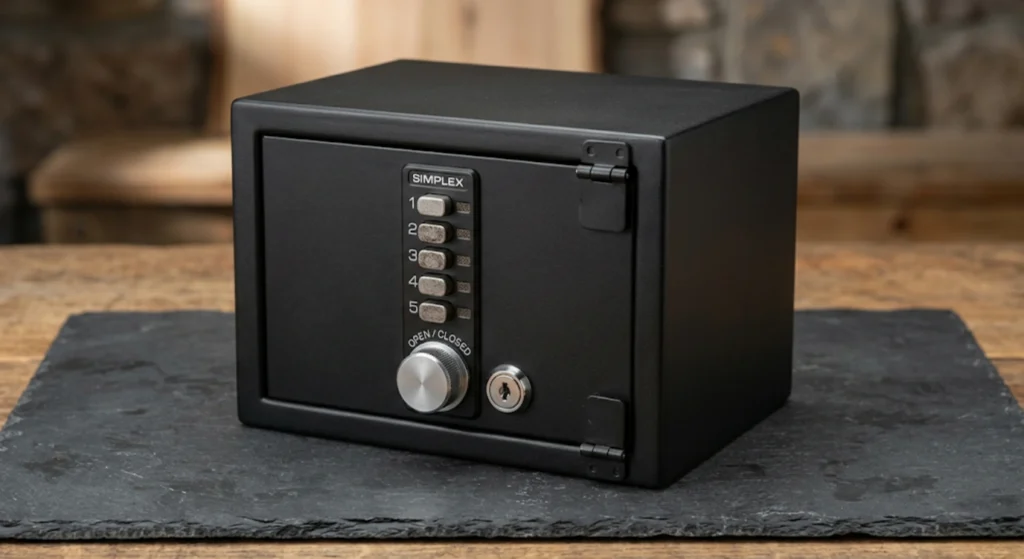
Above $500, the meaningful differences are verified by independent third parties, not stated by manufacturers.
The UL RSC I rating means the safe withstood a five-minute attack with common hand tools in independent testing. The RSC II rating means it held against a ten-minute attack with power tools. These are test results, not marketing claims. For any household storing multiple firearms with significant theft exposure, RSC I is the starting floor at this tier, not an upgrade.
Steel moves to 10-gauge or better on premium products. Fire ratings extend to 60 or 120 minutes from reputable manufacturers, including Liberty Safe and Fort Knox. Experienced safe owners across TheArmoryLife Forum consistently recommend mechanical combination locks as the primary access method at the premium tier, with electronic as secondary: mechanical locks carry no battery dependency and no electronic failure mode to develop over years of continuous use.
A note on installation: safes above 400 pounds still require floor or wall anchoring to prevent tipping and to satisfy installation requirements in some jurisdictions. Weight alone does not substitute for a proper anchor. Budget for professional delivery if the product exceeds 300 pounds; most manufacturers at this tier include white-glove delivery with installation.
One often-overlooked accessory at any tier: a humidity control rod, such as a GoldenRod inside the safe, prevents moisture buildup that damages blued steel and wooden stocks over time. It is a small addition to any budget at this tier and a meaningful one for long-term storage.

- Compact Design can securely hold 1-2 compact handguns, magazine(s), passport, cash, and is easily mountable to a...
- ViSN (Vaultek Intelligent Safe Network) Vaultek's ViSN platform uses WiFi enabled cloud technology to manage the safe...
- Tough and Rugged 16-gauge carbon steel construction features a durable powdercoat finish to prevent corrosion and ensure...
Last update on 2026-10-15 / Affiliate links / Images from Amazon Product Advertising API
Is a Biometric Lock on a Home Firearms Safe Actually Safe With Children in the House?
Four CPSC recall actions in 2024 involved biometric gun safes whose locks opened to any fingerprint without authorization, including children’s.
This is documented in federal recall notices, not in third-party testing or community speculation. The CPSC confirmed in multiple 2024 actions that affected products could remain in a default-to-open condition, allowing any user to access the contents. One Fortress recall involved 61,000 units and is linked to a child fatality. The Awesafe recall covered 60,000 units and documented 71 reported incidents of unauthorized access. A BBRKIN recall documented a specific incident in which a six-year-old opened the safe with his own thumbprint without any enrollment. A Shenandoah Police Chief described the incident plainly: “He just saw the safe and then he put his thumbprint on it and it opened right up for the kid.”
What this means for buyers is specific. Biometric technology from established manufacturers with documented US customer service history and a mandatory backup keypad is a legitimate and useful access method. Biometric-only locks from unverified Amazon or Walmart listings in the sub-$150 range represent a documented safety risk in any household with children present.
Before purchasing any biometric home firearms safe, verify the brand and model number against the CPSC recall database at CPSC.gov. This takes under two minutes. Confirm that any biometric safe you select includes a backup keypad or physical key. Test the secondary access method on arrival day, not after a failure event. (See also: GunCarrier biometric safe roundup for currently verified models by tier.)
How Do Your State’s Safe Storage Laws Affect Which Home Firearms Safe You Need in 2026?
As of January 2025, 35 states and the District of Columbia had some form of child access prevention law on the books, and the 2026 legislative cycle added two of the most significant updates in recent memory.
California and Illinois both strengthened their locked-storage requirements effective January 1, 2026. In states with active child access prevention (CAP) laws, firearms are generally required to be stored in a locked container when minors are present in the home. “Locked container” is defined specifically in most statutes, not left to the buyer’s interpretation. Verify your state’s exact requirements before selecting any product, because the law may define minimum specifications that narrow your choices before the budget is relevant.
On cost: several jurisdictions now offset compliance expenses directly. Georgia’s Safe Storage Tax Credit Act provides $300 toward a qualifying purchase, active from January 2026 through December 2030. California’s AB2861 provides a $300 credit for taxable years beginning January 2025. Federal proposals HR 4487 (Gun Safety Incentive Act, introduced July 2025) and HR 1272 (Secure Storage Information Act of 2025) would provide credits from 10 percent of the purchase price up to $500, depending on the bill. Both remain pending as of publication. Check GunCarrier’s state-by-state CAP law guide for current credit status in your jurisdiction before you buy.
For readers in CAP law states, the statutory minimum is your specification floor. Use this guide’s tier framework to select the right home firearms safe above that floor.

- 55" x 16" x 15" 2
- 141 lb.
- 2 spare override keys to ensure you are never locked out of your safe
Last update on 2026-10-15 / Affiliate links / Images from Amazon Product Advertising API
How Do You Match a Home Firearms Safe to Your Household’s Actual Setup?
The five-question household audit produces a specification, the specification produces a product, and that sequence only works in that order.
Apply your audit results to this decision map.
If children under 16 are present in the home, the minimum product is a 14-gauge locking steel safe, anchored, with a verified lock and no active CPSC recall. Any fast-access vault designated for the defensive firearm must be positioned out of reach of household minors during unsupervised hours. A compact 4-gun safe in a bedroom closet paired with a keypad vault at the bedside covers both requirements in this household type without requiring a single large unit.
If you are a single adult with no minors in the household, match the product to the realistic threat. For most gun owners, that threat is opportunistic burglary, not a determined attacker with pry tools and extended dwell time. A 14-gauge anchored safe with four-point locking bolts stops the vast majority of residential break-in attempts. Put additional budget into access reliability, not fire ratings above what a standard residential fire produces.
If your state defines a minimum storage standard by law, that is your specification floor. Buy to it or above it before considering any other feature.
For the defensive firearm: time your current access from a standing start, in the dark, with stress-induced hand position. Three seconds or under is the operational benchmark for a bedside or home defense vault. If your current setup fails that standard, the product is wrong for that function, regardless of price tier.
Check out this video from SafeandVaultStore.
Frequently Asked Questions
-
What is the difference between a gun cabinet and a home firearms safe?
A gun cabinet uses 16-to-18-gauge sheet steel with a basic keyed lock. A home firearms safe uses 12-to-14-gauge steel with multi-point locking bolts and a UL-listed lock. Cabinets deter curious young children. Safes resist tools and determined access attempts. If anyone in your home is older than approximately 10, a cabinet does not meet the security threshold.
-
What steel gauge should I look for in a home firearms safe?
14-gauge is the minimum starting point for basic security. 12-gauge offers meaningfully better pry resistance and is standard in the $300-$600 range. 10-gauge or better appears on premium products. Lower gauge numbers mean thicker steel. Gun cabinets marketed at 16 or 18 gauge are storage products, not security products.
-
Are biometric gun safes safe if you have kids at home?
Only from verified brands with a backup keypad or physical key, and only after checking the CPSC recall database for active notices. Four CPSC recall actions in 2024 involved biometric safes that opened to any fingerprint. Never rely on a biometric-only lock in a household with children. Confirm no active recall exists, and test the backup access method the day the product arrives.
-
What is a UL RSC rating and why does it matter?
UL RSC stands for Underwriters Laboratories Residential Security Container. RSC I means the safe withstood a five-minute attack with common hand tools in independent testing. RSC II means it held against a ten-minute attack with power tools. A California DOJ approval is not a UL RSC rating. Verify both certifications independently. The fire rating and the security rating are issued separately and mean different things.
-
Can I get a tax credit for buying a home firearms safe in 2026?
In some jurisdictions, yes. Georgia’s Safe Storage Tax Credit Act provides $300, active through December 2030. California’s AB2861 provides $300. Federal proposals HR 4487 and HR 1272 would provide up to $400-$500. Both federal bills remain pending. Eligibility and application requirements vary by state. Check GunCarrier’s CAP law guide for current credit availability in your jurisdiction.
-
Does a home firearms safe need to be bolted down?
Yes. An unanchored safe under 500 pounds can be carried out by two people in under two minutes. Any safe under 750 pounds should be anchored to floor joists or a concrete subfloor using the pre-drilled anchor points included on most quality products. An unanchored safe sitting on carpet is not a security installation. It is a staging area for theft.
-
What is the fastest reliable access type for a home defense safe?
Keypad and RFID-based quick-access vaults are the most consistent performers under stress. Biometric from a verified manufacturer with a backup keypad can match that speed when properly enrolled and tested. Combination dial safes are the slowest under stress and are not appropriate as the primary access method for a defensive firearm. Three seconds or under from waking is the operational benchmark.
-
How many guns should I plan to store when buying a home firearms safe?
Plan for twice what you own now. Manufacturers’ listed gun capacities assume rifles without optics and no accessories. A safe listed for 18 rifles will realistically hold 8-10 modern sporting rifles with scopes mounted. Community consensus across TheArmoryLife Forum and firearms deal communities is consistent: figure out your current collection size, then double it before buying.
-
What does a 30-minute fire rating mean on a home firearms safe?
It means the interior stayed below 350 degrees Fahrenheit for 30 minutes at an external temperature of 1,200 degrees Fahrenheit in a lab test. At 350 degrees, standard paper will not ignite. For firearms and ammunition, this covers a typical residential fire scenario. A fire rating is separate from a UL RSC security rating. Both should appear on any mid-range or premium product you consider.
-
Do I need separate safes for my home defense gun and my other firearms?
Yes, if access speed matters for the defensive firearm. A full-size anchored steel safe handles collection and long-gun storage. A fast-access keypad vault handles the primary defensive firearm. Storing everything in one large safe typically adds 5-20 seconds to access time in a crisis. Two products serving two functions is the correct architecture for most households with mixed storage needs.
Lock in your vote and tell us: Why is this the right call?👇