
Quick Answer
For summer IWB carry, full Kydex wins on retention and moisture resistance. Leather is more comfortable initially but softens under sustained sweat and can collapse at the holster mouth, creating a re-holstering safety risk. Hybrid designs with moisture-wicking synthetic backers balance both. Budget nylon fails all three tests. Your climate and daily carry rate should drive the decision.
Related: Carbon Fiber Holster vs. Kydex: What the Label Really Means for EDC
By August, a lot of CCW holders have quietly stopped carrying, not because they changed their mind about self-defense, but because their holster turned every day into a damp, uncomfortable argument with their waistband. The forums confirm it. “Florida weather is notoriously humid, and I perspire excessively,” wrote one DefensiveCarry.com member looking for summer carry holster options. “I am having trouble justifying the money for a high-quality leather that I know will get soaked from sweat.” Understanding your carry holster materials choices is what resolves that tension between comfort and performance. This is not an aesthetics question. It is a question of whether your setup keeps you carrying when it counts.
Why Does Holster Material Matter More in Summer Than Any Other Season?
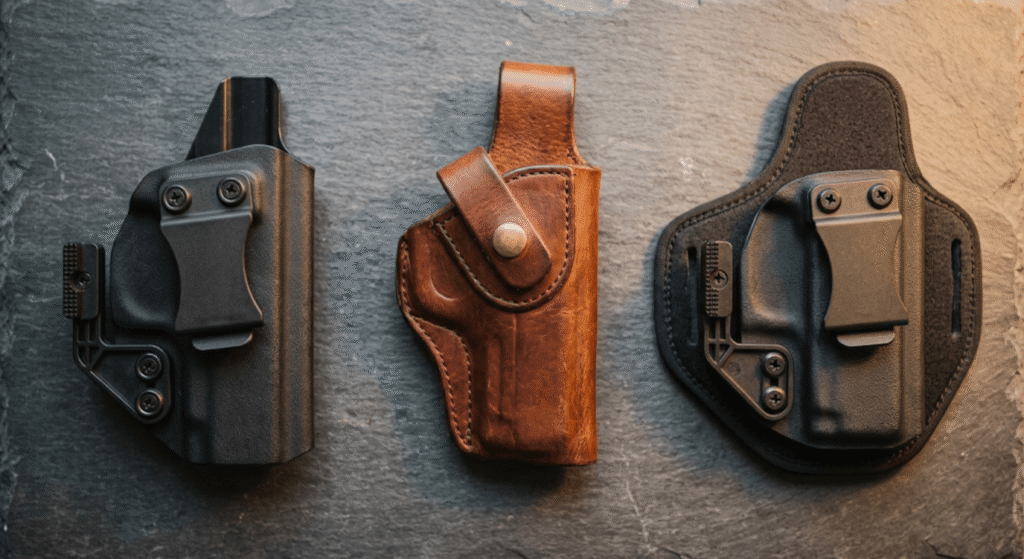
Sweat is the variable that separates a holster that works on the range from one that works every single day.
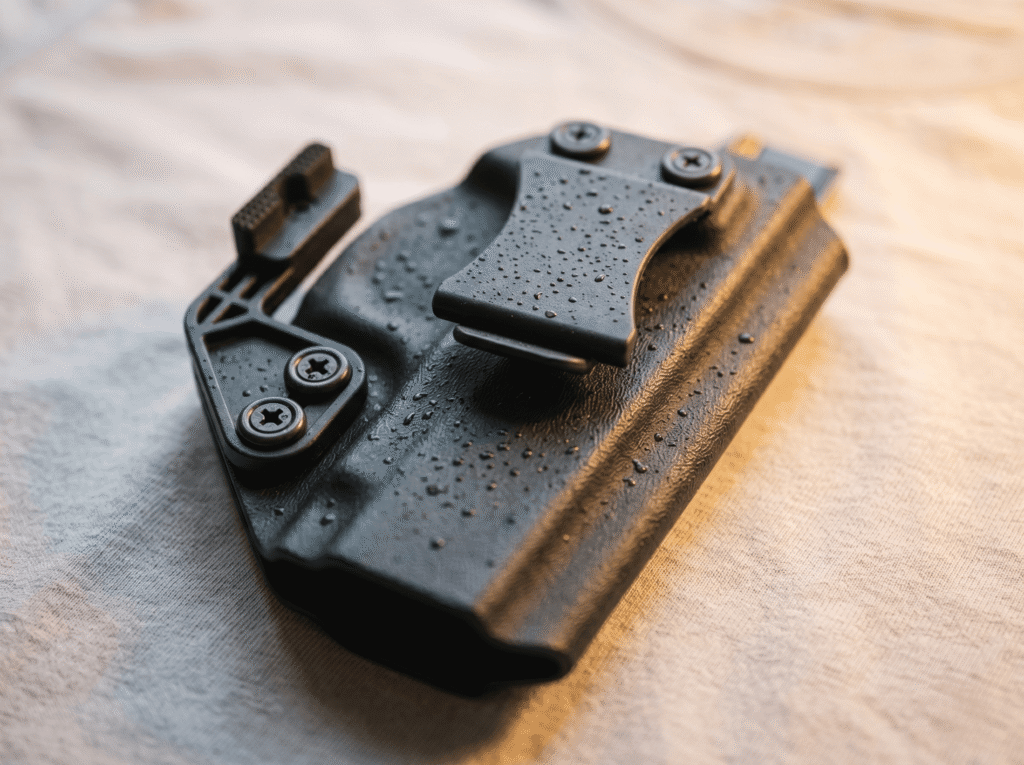
A carry holster that performs perfectly in October faces a completely different stress test in August. Heat is not just a comfort factor. It is a performance variable. Sustained sweat exposure accelerates every material failure mode: leather softens and loses retention, nylon collapses at the mouth, and even well-made Kydex hardware can corrode at the screw points if the clips are not corrosion-resistant.
The deeper problem is what happens when a holster becomes too uncomfortable to wear. “Leather gets wet and stays wet all day long,” wrote one Georgia carrier on DefensiveCarry.com. When the holster starts winning that argument, the gun stays home. A holster that scores a ten on retention and a three on summer comfort is not a high-performing holster. It is a gun safe.
Your carry holster materials choice in summer is ultimately a carry compliance decision, not just a gear decision.
What Are the Real Tradeoffs Between Kydex, Leather, and Hybrid Carry Holster Materials?
Full Kydex wins on retention and moisture resistance; leather wins on initial comfort; the hybrid design wins on carry compliance, provided the hardware holds.
Here is how the three primary carry holster materials compare across the variables that actually matter in warm-weather IWB carry.
Full Kydex is completely impervious to sweat, oil, and solvents. The molded shell maintains its exact contact points permanently. Retention does not degrade with moisture exposure, and you get a distinct audible click on every holster. Re-holstering is safe because the mouth never collapses. The tradeoff is that Kydex is rigid and sits hard against skin. For carriers running IWB at 3 o’clock or AIWB in summer wardrobe, that rigidity creates skin abrasion and heat buildup that full-leather users rarely report in the first weeks of carry.
Leather conforms to the body over time and is generally more comfortable against skin. The problem in summer is straightforward: leather absorbs moisture. As it saturates, it softens. A leather holster mouth that has gone soft from repeated sweat cycles can begin to roll or collapse inward. That is not a comfort complaint. A collapsed mouth can snag the trigger on re-holster, which is a negligent discharge risk. If you carry in a humid climate and prefer leather, plan to inspect the mouth geometry every 90 days and replace the holster when retention feels loose.
Hybrid designs pair a Kydex shell (which maintains retention geometry) with a soft backer that rides against the body. The shell clicks. The backer breathes. When the hardware connecting them is quality and corrosion-resistant, hybrids are the highest daily-carry-compliance option for most summer IWB setups. The failure point is always where the two materials meet: corroded screws, a backer that compresses and shifts the shell angle, or low-quality clips that lose belt grip after weeks of sweat exposure.
No products found.
GunCarrier.com participates in the Amazon Associates program and may earn a commission on qualifying purchases at no extra cost to you.
What Happens to Budget Nylon Holsters When You Sweat Through Them All Summer?
When you choose a nylon holster that cannot hold trigger guard geometry under sweat saturation, you are not making a budget decision. You are accepting a safety risk.
Soft nylon is the one carry holster material category where the analysis ends quickly. Nylon absorbs moisture and holds it. It does not maintain the rigid mouth geometry required to prevent trigger contact during re-holstering. There is no audible or tactile confirmation that the firearm is fully seated. It also degrades faster with repeated washing than either Kydex or leather.
“I use Kydex, it will not deform and get stuck in the trigger guard or soak up sweat and water,” wrote one experienced IWB carrier on DefensiveCarry.com, drawing a direct contrast to softer materials in hot-climate carry.
The only reasonable use case for a budget nylon holster is transporting an unloaded firearm to a range. For daily concealed carry in summer or any other season, nylon does not meet the retention and safety standard that IWB carry requires.
Is a Hybrid Holster Actually Better for Hot Climates, or Just a Marketing Compromise?
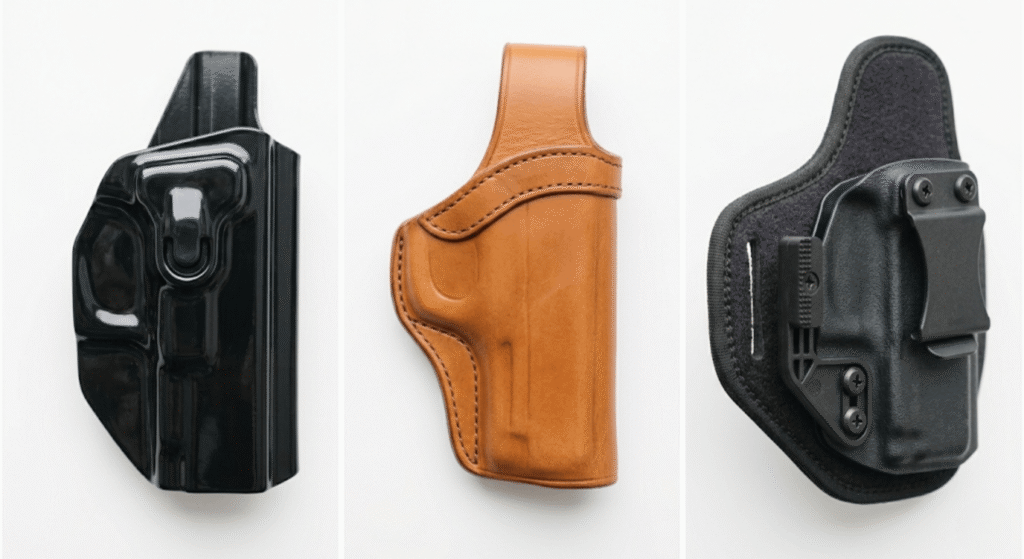
A hybrid holster is only as good as its backer material and the hardware connecting it to the shell, because the weak point is always where the two materials meet.
The hybrid design is not a compromise. It is an engineering answer to a specific problem: carriers who need Kydex retention precision but face summer comfort conditions that make full Kydex too punishing for daily wear. The design works when it is built well. When it is not, you get a holster that delivers neither the retention of Kydex nor the comfort of leather.
The backer material matters more than most buyers realize. Traditional cowhide and horsehide backers are more comfortable than Kydex against skin, but they still absorb moisture. In humid climates, that saturation happens daily. A horsehide-backed hybrid in a Florida summer is better than full leather but still requires the same 90-day inspection routine. A synthetic moisture-wicking backer resists saturation and dries faster, making it the stronger choice for consistently humid environments.
Here is how to match your climate to the right carry holster materials path.
- Dry heat, occasional carry: Full Kydex IWB with a sweat shield works well. The lower comfort ceiling is manageable because sweat exposure is lower and less sustained.
- Humid or tropical conditions, daily carry: Choose a hybrid with a moisture-wicking synthetic backer. Inspect the hardware quarterly. Replace at the first sign of clip shift or shell angle change.
- AIWB carry, female carriers, or physically demanding jobs: The backer material is your top priority. Choose a contoured, wicking backer and run the All-Day Carry Test before committing. Wear the holster for eight or more hours in your actual summer wardrobe before it becomes your daily setup. If you are adjusting it more than twice in that window, the backer is wrong for your body.
The backer-to-shell hardware is the inspection point that the holster industry underemphasizes. Screws that corrode loosen over time. A shell that shifts even two degrees changes your draw angle in ways you will feel before you notice them. Check hardware at the same time you check retention, every 90 days during summer carry conditions.

- PRECISION CUSTOM FIT: Explicitly tailored for the PX4 Storm, ensuring a secure and precise fitment with optimal...
- EASY & TOOL-FREE ADJUSTMENTS: Effortlessly customize ride height, cant, and retention with tool-less adjustments...
- CONCEALED INSIDE WAISTBAND HOLSTER: Our Cloak Tuck Holsters are designed to nestle comfortably against your body...
Last update on 2026-09-27 / Affiliate links / Images from Amazon Product Advertising API
How Do You Know When Your Holster Material Has Failed Before Something Goes Wrong?
Check three things after 90 days of summer carry: does the shell still click, does the backer hold its shape, and has any hardware corroded?
Every carry holster should pass a 90-day inspection after its first summer of daily use. Here is what to look for by material.
- On a Kydex or hybrid shell, holster your firearm and listen for the retention click. If the click is softer than it was when the holster was new, or if the gun moves inside the shell, retention has degraded. That is a replacement trigger.
- On a leather holster or leather backer, press gently on the mouth when the gun is not seated. If the sides move inward easily or the mouth has taken on a compressed shape, the leather has softened past the point of safe re-holstering.
- On all hardware (screws, clips, and attachment points), look for any surface rust or green oxidation. A corroded screw that loosens mid-draw is a draw failure waiting to happen, especially during the sweat-heavy months.
These are not optional maintenance steps. A holster that passes this check every 90 days can be trusted. One that fails should come out of rotation immediately.
Which Carry Holster Materials Work Best for Women Carrying IWB in Summer?
Female body geometry changes the backer material priority because the hip-to-waist curve affects both how the holster sits and where sweat pools.
The standard carry holster materials conversation is built around a male body geometry that does not account for hip-to-waist ratio differences, torso curve, or where IWB holsters actually contact skin on a female frame. A flat Kydex shell that sits flush on a straight male torso can dig into the hip on a curved female one, and that discomfort sustained across a full summer workday is exactly the kind of thing that drives carry compliance down.
For female IWB carriers, the backer material choice is not a comfort preference. It is a daily carry decision. A wide, contoured backer with a moisture-wicking surface distributes the holster’s contact area more evenly and pulls sweat away from skin faster than cowhide or bare Kydex. For AIWB carry specifically, a padded synthetic backer is the most comfortable and dimensionally stable option in hot-weather conditions.
The All-Day Carry Test applies here with one additional requirement: run it in the clothing you actually wear to work, not range clothes. A holster that works in jeans may not work in the pants or skirt that represents your real daily carry environment. Test the actual wardrobe before you commit.

- Premium Steerhide
- Open top
- Butt-forward cant
Last update on 2026-10-08 / Affiliate links / Images from Amazon Product Advertising API
How Should You Choose Between Carry Holster Materials for Your Climate and Carry Style?
The right carry holster materials are the ones that make you carry every single day, including the days in July when you would rather leave it at home.
The selection framework is simpler than the market makes it look.
- If you live in a dry heat climate and carry occasionally or on specific days, a full Kydex IWB with a sweat shield is a solid, low-maintenance choice. It holds its shape, resists moisture, and requires no break-in period.
- If you live in a humid or tropical climate and carry every day, a hybrid with a moisture-wicking synthetic backer gives you Kydex retention without the skin-contact punishment that makes full Kydex hard to sustain through a Southern summer. Budget for quarterly hardware inspection.
- If you are an AIWB carrier, a female carrier, or someone whose job involves sustained physical activity in heat, put backer material at the top of your evaluation criteria rather than the shell. The backer is what you feel every hour of the day. If it drives you to pull the gun and clip out by noon, your carry system has failed, regardless of how its retention scores on paper.
Start with the All-Day Carry Test on any new setup. If you are adjusting the holster more than twice in eight hours, it is the wrong material for your body in your climate. Fix that before you build reps.

- Right Hand Draw
Last update on 2026-10-09 / Affiliate links / Images from Amazon Product Advertising API
The Right Carry Holster Materials Are the Ones You Actually Carry In
Your holster’s real performance metric is not retention spec on paper. It is whether you wore it today. Carry compliance in July is the test that separates a system that works from one that sits on the shelf.
Kydex wins on retention. Leather wins on break-in comfort. Hybrids with wicking backers win on daily carry rate in hot climates. Nylon does not belong in the conversation for IWB carry.
Run the 90-day inspection. Run the All-Day Carry Test before you commit. If your summer carry rate drops below your winter carry rate, look at your holster before you look at anything else. The right carry holster materials are waiting, and so is the habit of carrying every day.
Check this video on How to Conceal a Gun No Matter What You’re Wearing from Modern Protector
Frequently Asked Questions
-
What are the main types of carry holster materials for IWB carry?
The three main carry holster materials are Kydex, leather, and hybrid designs combining a Kydex shell with a soft backer. A fourth option, soft nylon, exists at the budget end of the market but is not recommended for daily concealed carry due to poor retention consistency and re-holstering safety concerns.
-
Is Kydex better than leather for summer carry?
For sweat resistance and retention consistency, full Kydex is the stronger choice in warm-weather carry. Leather is more comfortable initially but absorbs moisture, which degrades retention over time. If comfort is a barrier to daily carry, a hybrid design with a wicking synthetic backer may produce better long-term carry compliance than either material alone.
-
Will sweat damage a leather holster?
Yes. Repeated sweat saturation softens leather over time, reducing retention and risking collapse at the holster mouth. A collapsed mouth can snag the trigger on re-holster. Inspect your leather holster every 90 days in summer carry conditions and replace it when retention feels noticeably looser than it did when new.
-
What is a hybrid holster and is it good for hot weather?
A hybrid holster pairs a molded Kydex shell with a soft backing material that rides against the body. It combines Kydex retention precision with leather or synthetic comfort. For hot climates, choose a hybrid with a moisture-wicking synthetic backer rather than cowhide or horsehide, both of which hold moisture significantly longer under daily sweat exposure.
-
Are nylon holsters safe for concealed carry in summer?
Nylon holsters are not recommended for daily IWB carry in any season. They do not maintain trigger guard geometry under moisture exposure, provide no audible or tactile confirmation of secure holstering, and degrade faster with repeated washing. They are acceptable only for transporting an unloaded firearm to a range.
-
What is a sweat guard on a holster and do I need one for summer carry?
A sweat guard is a material extension on the body side of the holster that creates a barrier between the firearm and your skin. For IWB carry in summer, it reduces skin irritation and moisture transfer to the firearm’s metal surfaces. For hot-climate daily carry, a sweat guard is a practical requirement rather than an optional feature.
-
How do I know when my holster needs to be replaced?
Run a 90-day inspection: confirm the shell still produces an audible click on holstering, check the backer for compression or dimensional shift, and inspect all hardware for corrosion. If retention feels looser than it did when new, or if the mouth of a leather holster has softened or begun to roll inward, remove it from your carry rotation immediately.
-
What carry holster materials work best for AIWB carry in summer?
For appendix carry in summer, the backer material is the most important variable. A contoured, moisture-wicking synthetic backer is the most comfortable and durable option. Full Kydex AIWB holsters work but require more break-in time and can cause skin abrasion during extended carry. Avoid leather backers in high-sweat AIWB setups.
-
Does my carry climate change? Which holster material should I choose?
Yes. Dry heat climates are more forgiving of leather and full Kydex because sweat exposure is lower and intermittent. Humid and tropical climates degrade leather faster and make skin comfort more acute across a full day. In consistently humid environments, prioritize a hybrid or full Kydex setup with a wicking backer and corrosion-resistant hardware.
-
Can I use the same holster year-round or do I need a summer-specific setup?
Many daily carriers use one system year-round, but summer carry in humid climates stresses materials in ways cool-weather carry does not. If your current holster uses a leather backer and you live in a high-humidity region, consider a dedicated warm-weather setup with a synthetic wicking backer and track whether your daily carry rate improves before and after the switch.
Lock in your vote and tell us: Why is this the right call?👇