
What You Need to Know
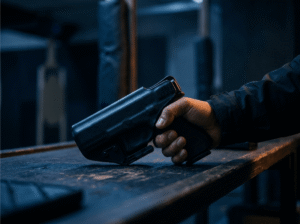
The best budget CCW pistol under $500 in 2026 is the one that passes a 200-round reliability check, fits your hand, and draws clean from concealment. Top contenders are the Springfield XD Mod 4 (around $399), Taurus G3C (around $349), Canik Mete MC9 (around $399), and Springfield Hellcat Micro (around $499). Reliability is non-negotiable. Capacity is a tiebreaker, not a decider. Success isn’t just the gun. It’s the total system: pistol, quality kydex holster, ammunition for break-in, and consistent training.
Related: Best Concealment Holsters for Summer Carry
You don’t want to spend $700 you don’t have on your first carry gun. You also don’t want the cheap one to fail you when it actually counts. That’s the real question, and most buyers’ guides dance around it.
A real CCW carrier put it plainly on a popular firearms forum: “I wasted a lot of money on cheap nylon holsters.” The same trap exists at the pistol level. People buy the spec sheet, not the system. They pick on capacity or price, skip the break-in, holster it in something cheap, and never put 200 rounds through it before carrying.
This guide treats a budget CCW pistol the way it should be treated as one line item in a defensive system that actually has to work. We’ll cover what reliability really means at this price point, how the leading sub-$500 pistols actually compare, and the four-point fit audit that decides between two equally reliable guns.
What Is the Best Budget CCW Pistol Under $500?
The four pistols that genuinely earn the “best budget CCW pistol” label in 2026 are the Springfield XD Mod 4, the Taurus G3C, the Canik Mete MC9, and the Springfield Hellcat Micro. Each clears the reliability floor in published reviews and offers a distinct value proposition for different buyers.

The short verdicts:
- Springfield XD Mod 4 ($399): The safest “modern features at a budget price” pick for a first-time buyer who wants a forgiving learning curve.
- Taurus G3C ($349): The best pure-value play, provided you can handle the aggressive grip texture and longer trigger pull.
- Canik Mete MC9 ($399): The feature-richest option in the tier, with optics-ready slide and accessories that typically appear on $600 pistols.
- Springfield Hellcat Micro ($499): The premium pick at the budget ceiling, earning the price gap for shooters who prioritize the smallest possible footprint.
The right one for you is the one that passes a 200-round break-in, fits your hand, and clears concealment cleanly with the holster you actually own.
What Makes a Budget CCW Pistol Actually Reliable?
Reliability is binary. A pistol either runs through a documented break-in protocol with zero unscheduled stoppages in the final 100 rounds, or it doesn’t carry. Price doesn’t adjust to this standard. Brand reputation doesn’t substitute for measuring your specific copy.
The working floor is a 200-round break-in: roughly 150 rounds of full-power range ammunition followed by 50 rounds of your chosen defensive load. The pistol carries only if the final 100 rounds run with zero unscheduled stoppages. You document the round count and the result.
Why does this matter at the budget tier? Because the difference between a $349 pistol and a $700 pistol is rarely raw mechanical reliability anymore. It’s quality control consistency. Two copies of the same budget pistol can perform differently coming out of the box. One published review of a sub-$350 pistol logged exactly one failure-to-feed in roughly 500 rounds, with 150 rounds of cheap steel-case ammo mixed in. That’s the real-world reliability signal: not the spec sheet, not the warranty card, but the documented stoppage rate on rounds you fired through your gun.
The realistic civilian defensive problem is short range and low round count. Most defensive incidents resolve in one to three rounds at under five feet, a pattern documented across decades of FBI Uniform Crime Reports and civilian defensive use studies. That doesn’t mean reliability matters less. It means reliability matters in a binary way during the rounds that count.
Springfield XD Mod 4 vs. Canik Mete MC9: Which Is Better?
Here’s how the four leading sub-$500 contenders stack up:
| Pistol | Typical Price | Capacity | Optic-Ready | Notable Trade-Off |
| Springfield XD Mod 4 | $399 | 10+1 / 13+1 | Yes | Newer release, shorter track record |
| Taurus G3C | $299–$349 | 12+1 | No (base model) | Slide bite reported with high grips |
| Canik Mete MC9 | $399 | 12+1 / 15+1 | Yes | Slightly heavier than competitors |
| Springfield Hellcat Micro | $499 | 11+1 / 13+1 | Yes | At the ceiling of “budget” |
- Springfield XD Mod 4 sits at $399 and earned attention as a bargain-priced 9mm that works. You get a clean trigger, optic-ready slide on most variants, and an established platform reputation. The Verdict: The safest “modern features at budget price” pick for a first-time buyer who wants a forgiving learning curve and a recognized brand.
- Taurus G3C at $299–$349 is the value leader. Twelve-round capacity, metal sights, three magazines in the box, and a reputation that has improved noticeably over previous Taurus generations. Real-world reviews flag two trade-offs: an aggressive grip texture that draws blood from shooters with a high grip, and a long single-action trigger pull. Neither is disqualifying. The Verdict: The best pure-value play, provided you can handle the aggressive grip texture and you complete the 200-round break-in before carrying.
- Canik Mete MC9 at around $399 has built a strong following for delivering features (optics-ready slide, two magazines, included optic mounting plates) that typically appear at the $600 tier. The Verdict: The feature-richest option under $400 and the strongest pick if you intend to add a red dot within 12 months.
- Springfield Hellcat Micro at $499 sits right at the ceiling. It’s the smallest footprint of the four, optics-ready, with the strongest industry track record on this list. The Verdict: Earns the premium for shooters who prioritize the smallest possible carry footprint and want the deepest aftermarket support.
The honest answer to “which wins” is that the right budget CCW pistol is the one that passes your hand-fit audit and your break-in protocol. Two reasonable buyers can pick differently from this list, and both can be right.


Last update on 2026-09-24 / Affiliate links / Images from Amazon Product Advertising API
Can You Trust a $350 Handgun for Self-Defense?
This is where serious carriers split. One position holds that a reliable $349 pistol is genuinely adequate for the realistic civilian defensive problem, and the savings should fund training and ammunition. The other position holds that reliability standards aren’t price-relative: every carry pistol must clear the same break-in qualification regardless of cost, and if a budget pistol fails, you move up.

Both positions are defensible. Here’s how to choose between them:
- If you’re a first-time buyer with no carry history and a tight budget, the budget pistol is the right answer. A reliable $349 pistol you can afford to feed is better than a $600 pistol you can’t afford to train with. Floor: it has to pass the 200-round break-in.
- If your specific budget pistol fails the break-in with two or more unscheduled stoppages, the discussion is over. Return it, exchange it, or move up in price. Reliability is not a sliding scale.
- If two budget pistols both pass the reliability floor, but one fits your hand and clears concealment cleanly while the other doesn’t, the fit decides. Capacity and price are tiebreakers.
A budget CCW pistol that runs, fits, and gets carried beats a premium pistol that sits in a safe. The data support this position more often than the gun-marketing industry admits.
How Do You Perform a CCW Hand-Fit Audit?
Run a four-point fit audit before you buy. This takes ten minutes at the counter and filters out 80% of the pistols that look right on paper and feel wrong in the hand.
-
Trigger reach.
With a proper firing grip (web of your hand high on the beavertail, fingers wrapped around the grip), the pad of your trigger finger should sit naturally on the trigger face. If you’re breaking your grip to reach the trigger, the pistol doesn’t fit.
-
Grip circumference.
You should be able to wrap your fingers around the grip with the middle knuckle of your middle finger landing under the trigger guard, not stretched. If the gun has interchangeable backstraps, try them all.
-
Slide rack effort.
Use a press-out grip from your pectoral muscle, not your arm strength. Most adults of average grip strength can rack any modern striker-fired pistol this way. If you can’t, the recoil spring is too stiff for your hand, and it’s the wrong pistol regardless of price.
-
Drawstroke from your actual carry holster.
Not the holster they have at the counter. The one you’ll carry in. Five clean draws in under 1.75 seconds, with no fumble. If the gun fights the holster, it’s the wrong combination.
The most common buyer mistake is choosing based on capacity alone. A 12-round pistol you can’t draw cleanly is worse than a 10-round pistol you can. The vast majority of civilian defensive shootings are resolved in fewer than three rounds. Capacity is real. It’s just not the deciding variable.
What Are the Best Holsters for Budget CCW Pistols Under $500?
Here is where most budget CCW systems fail. The buyer spends $349 on a reliable pistol, then $20 on a soft nylon holster, and the system is broken before it leaves the house. “I wasted a lot of money on cheap nylon holsters.” That’s the entire genre summarized in one quote from a real CCW carrier on a popular firearms forum.
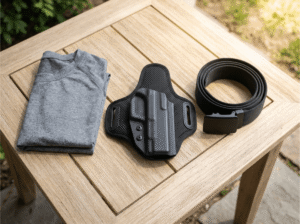
The floor for a serviceable IWB holster is a kydex or kydex-hybrid design with adjustable retention and a real belt clip. The Vedder LightTuck IWB at around $69.99 is the working benchmark at this price tier.
The Verdict: Cheap holsters lack proper retention and structural integrity. They collapse after the draw, making safe re-holstering difficult, and they’re often uncomfortable enough that owners stop carrying altogether. A budget CCW pistol in a $20 nylon holster is not a budget system. It’s an incomplete one.
A reasonable system budget allocates 50% to 55% to the pistol, 12% to 15% to the holster, 25% to ammunition for break-in and the first 90 days of practice, and the remainder to a less-lethal layer (OC spray) and a quality light. A budget CCW pistol fits inside that math. A cheap holster doesn’t.
AIWB Appendix Carry Holster Setup: The 2026 Guide to Comfort, Speed, and Safety
Key Takeaways
- Reliability is binary. The pistol runs through 200 rounds with zero unscheduled stoppages in the final 100, or it doesn’t carry.
- The pistol is roughly half the system. Holster, ammunition, and training make up the rest.
- Fit decides between equally reliable pistols. Capacity is a tiebreaker.
- The realistic defensive problem is close range and low round count. Adequacy is real.
- Document the break-in. The training record is part of the gun.
Your Budget CCW Pistol Is the Start of the System, Not the Finish
Pick the pistol that passes your hand-fit audit. Run the 200-round break-in and write down the result. Holster it in something that doesn’t fight you. Start a training log on day one. The right budget CCW pistol isn’t the cheapest one on the shelf or the one with the most rounds in the magazine. It’s the one that runs reliably, fits your hand, and gets carried every day.
5 Best Budget CCW Pistols Under $500 from Prime Handgun & Rifle:
Frequently Asked Questions
-
What is the best concealed carry pistol under $500 in 2026?
The strongest options under $500 are the Springfield XD Mod 4 (around $399), Taurus G3C (around $349), Canik Mete MC9 (around $399), and Springfield Hellcat Micro (around $499). The right one for you is the one that passes a 200-round break-in, fits your hand, and clears concealment cleanly.
-
What is the 200-round break-in rule?
It is a reliability protocol requiring 150 rounds of full-power range ammunition followed by 50 rounds of your chosen defensive load. The pistol must run with zero unscheduled stoppages in the final 100 rounds to be considered carry-ready. Document the round count and the result in writing.
-
Is the Taurus G3C reliable enough for everyday carry?
The G3C has built a reasonable reliability record at its price point, with published reviews showing low malfunction rates across 500-round samples. Run a personal 200-round break-in before carrying it. If your specific copy passes with zero stoppages in the final 100 rounds, it is carry-capable.
-
How does the Springfield XD Mod 4 compare to the Glock 43X for CCW?
The XD Mod 4 typically sits around $399 versus the Glock 43X at roughly $539. The Glock has a longer real-world reliability track record. The XD Mod 4 offers competitive ergonomics and capacity at a meaningful discount. The right choice depends on whether the price gap funds your training budget.
-
Is a $350 pistol good enough for self-defense?
Yes, if it passes your reliability break-in. The realistic civilian defensive problem (close range, one to three rounds) doesn’t require a premium pistol. It requires a reliable one. A $349 pistol you can afford to train with beats a $700 pistol you cannot.
-
Does the Springfield Hellcat Micro fit the budget category?
At roughly $499, the Hellcat Micro sits at the ceiling of the budget tier. It earns the placement by offering premium features like an optics-ready slide, smaller footprint, and a stronger industry track record than less expensive competitors. If concealability is your top constraint, the extra spend is justified.
-
Why shouldn’t I buy a cheap nylon holster?
Cheap holsters lack proper retention and structural integrity. They collapse after the draw, making safe re-holstering difficult and unsafe. They’re also often uncomfortable enough that owners stop carrying altogether. A quality kydex or kydex-hybrid IWB holster starting around $60 to $70 is the working floor.
-
Do I need an optics-ready slide on a budget CCW pistol?
Not at the entry level. A red dot adds $250 to $400 to a defensive system that already needs a quality holster, ammunition, and training rounds. Buy optics-ready if your budget supports the dot now or within 12 months. Otherwise, prioritize iron-sight competency first and add the optic later.
-
How much should I budget for a complete CCW system, not just the pistol?
Plan on the pistol being roughly half of the total. A reasonable entry budget is $349 to $499 on the pistol, $60 to $80 on a quality kydex hybrid holster, $150 to $200 in range ammunition for break-in and early practice, and a less-lethal layer like OC spray. Total: $600 to $800.
-
What is the most common mistake first-time CCW buyers make?
Choosing capacity or price alone instead of reliability and fit. A high-capacity budget pistol you fumble on the draw is more expensive than the gun that works. The second-most-common mistake is buying the pistol and skimping on the holster, which defeats the entire system.
Caliber wars aside, why that one? Drop your take.👇