
Quick Verdict: Home Defense Firearm
For most first-time buyers who will train regularly, a 9mm handgun (Glock 19 Gen5 is the safe default) offers the best balance of capacity, maneuverability, and training cost. For budget-conscious buyers or those with limited practice time, a pump-action shotgun (Mossberg 500 or Remington 870) delivers strong terminal performance with a lower precision requirement. Every home defense firearm requires a quick-access safe. Federal law requires no permit for home possession in most states, but Illinois, Hawaii, Massachusetts, and several others require a permit to purchase.
Related: The 6 Best Handguns For Home Defense
This guide cuts through the noise with a practical decision framework, the kind of guidance a good instructor would give you in person. There is no single correct home defense firearm for every household. But there is a correct process for finding the right one for yours. That process starts with four questions you need to answer before you walk into a gun store.
How Do You Choose the Right Home Defense Firearm?
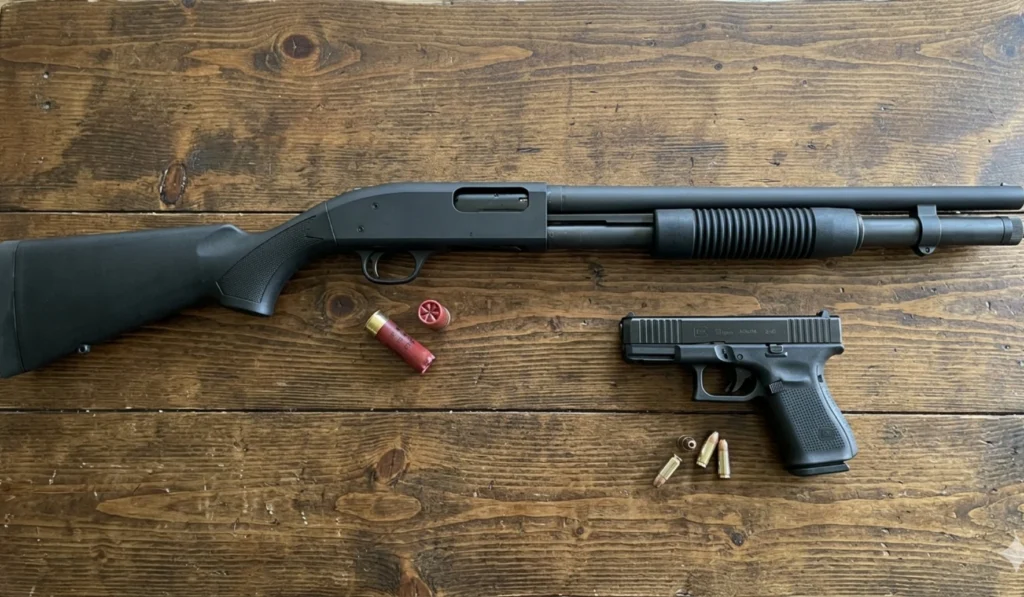
You’ve decided you want a firearm for home defense. Good. Now you’ve spent an hour reading recommendations online and found that every answer contradicts the last one. Shotgun versus handgun. 9mm versus .45. Keep it in a safe versus keep it accessible.
As one carrier on a major community forum put it: “The info out there is chaos.” You’re not wrong to feel that way. Most of what’s published about home defense firearm selection is either a sales pitch, a forum ego, or a rehashed myth.
Before you evaluate any specific gun, get clear on these four variables. Your answers will narrow the field faster than any online comparison chart.
- Who is in your household? Children, elderly family members, or adults with limited firearms experience change your storage and access equation immediately.
- Can you practice regularly? Range access, ammo costs, and your realistic training schedule matter. A firearm you cannot practice with is a liability, not an asset.
- Where will the firearm be stored? The answer affects both platform selection and the type of security solution you need.
- What are your state’s legal requirements? Storage laws, permit-to-purchase requirements, and safe storage mandates vary by state. Know your obligations before you buy.
Decades of documented civilian defensive gun uses show a consistent pattern: most residential break-ins happen at close range (under ten yards, often under five), in poor lighting, with high stress on the defender. The implication for first-time buyers is clear. The correct home defense firearm is the one you can operate reliably under that exact type of pressure. Not the most intimidating-looking platform. Not the highest-caliber option. The one you can run.
Handgun vs. Shotgun for Home Defense: Which Is Actually Better?
This is the most common question new home defense buyers ask, and the answer depends almost entirely on your household situation, not on the stopping-power mythology you’ve been reading on forums.
What Are the Advantages of a Handgun for Home Defense?
A full-size or compact 9mm handgun is the most versatile home defense platform for most first-time buyers. Here’s why:
- Maneuverability. Navigating hallways, rooms, and stairways with a long gun is harder than it looks in calm conditions. Under stress, it becomes significantly more difficult.
- Capacity. A standard 15 to 17-round 9mm magazine gives you considerably more capacity than a pump shotgun’s 5 to 8-round tube. In a residential emergency scenario with multiple threats, capacity matters.
- Accessibility. A handgun fits in a quick-access safe on a nightstand without dominating the furniture. Long guns require more storage space and typically more complex access solutions.
- Training accessibility. 9mm is cheaper to practice with than most calibers, which means more repetitions per dollar, and repetitions are what build reliable performance under stress.
- One-handed operation. If you need a hand free to manage children, operate a phone, or open a door, a handgun allows one-handed use in a way a long gun does not.
On caliber: the persistent belief that you need a .45 ACP or a larger caliber to stop a threat reliably in home defense is not supported by wound ballistics research. Independent gel testing and published wound ballistics research both show that modern 9mm JHP ammunition, specifically 124gr or 147gr loads that meet FBI gel protocol standards, performs comparably to larger calibers in terminal tissue disruption. What matters more than caliber: shot placement, ammunition reliability in your specific firearm, and your ability to deliver accurate hits under stress.
When Is a Shotgun the Right Home Defense Choice?
A pump-action shotgun has legitimate advantages in specific home defense situations:
- Terminal performance at residential distances. At the ranges typical in home defense scenarios, 00 buckshot delivers significant terminal performance with reduced risk of over-penetration compared to rifle rounds.
- Lower precision requirement. In a dark hallway under extreme stress, a pattern of shots gives you more margin for error than a single pistol bullet. This is a real advantage for people who cannot commit to regular pistol training.
- Cost. A reliable pump-action shotgun (Mossberg 500, Remington 870) costs significantly less than a comparable quality handgun. If budget is a genuine constraint, this matters.
- Deterrence effect. The sound of a pump-action being racked is one of the most universally recognized sounds in residential defense. Many defensive uses of force end without a shot being fired.
The honest caveat: the default recommendation of “get a 12-gauge for home defense” fails for a significant portion of buyers. Recoil from a 12-gauge is substantial and can cause flinching that destroys accuracy for anyone who has not built recoil tolerance through practice. If you are smaller-framed, have shoulder concerns, or cannot commit to regular practice, a 20-gauge with reduced-recoil loads or a 9mm handgun will serve you more reliably in an actual defensive scenario.
Which Home Defense Platform Is Right for Your Household?
| Your Situation | Recommended Platform | Why |
| Children in the home, quick-access safe required | Handgun | Fits a nightstand quick-access safe; easier one-handed operation when managing kids |
| No children, limited pistol training, rural property | Shotgun (20-gauge if recoil sensitive) | Lower precision requirement, strong deterrence |
| First-time buyer who will train regularly | Handgun (9mm) | Most versatile platform; best training ROI; widely available instruction |
| Smaller frame or limited hand strength | Handgun (9mm compact) over 12-gauge | Recoil management; operation under stress |
| Budget-constrained, minimal training access | Pump shotgun (Mossberg 500 or Remington 870) | Lower cost, lower precision requirement |
What Are the Best Home Defense Guns of 2026?
These are the platforms that appear consistently in instructor recommendations, rental fleet data, and reliability-focused community discussions. This is not a “ten guns ranked by specs” list. It is a short list of platforms with documented track records of reliability.
What Are the Best 9mm Handguns for Home Defense?
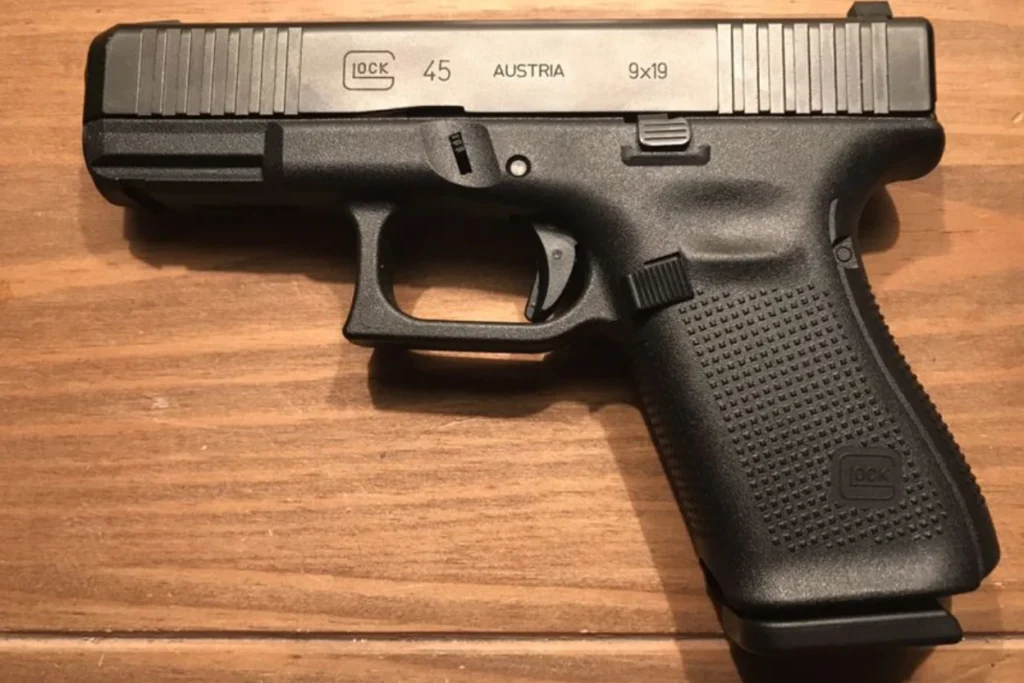
| Model | Price Range | Why It’s Here | Best For |
| Glock 19 Gen5 | $549 to $599 | Largest installed base of any defensive handgun; massive aftermarket; extensively documented reliability; rental fleet staple | Most buyers, the safe default choice |
| SIG Sauer P320 Compact | $549 to $599 | Military-adopted (M17/M18); modular frame system; excellent trigger; growing instructor endorsement | Buyers who prefer striker-fired with modularity |
| Smith and Wesson M&P 9 Shield Plus | $449 to $499 | Slim profile; 10 to 13 round capacity; easier to handle for smaller frames; proven reliability record | Smaller-framed buyers; budget-conscious first purchase |
What Are the Best Pump Shotguns for Home Defense?
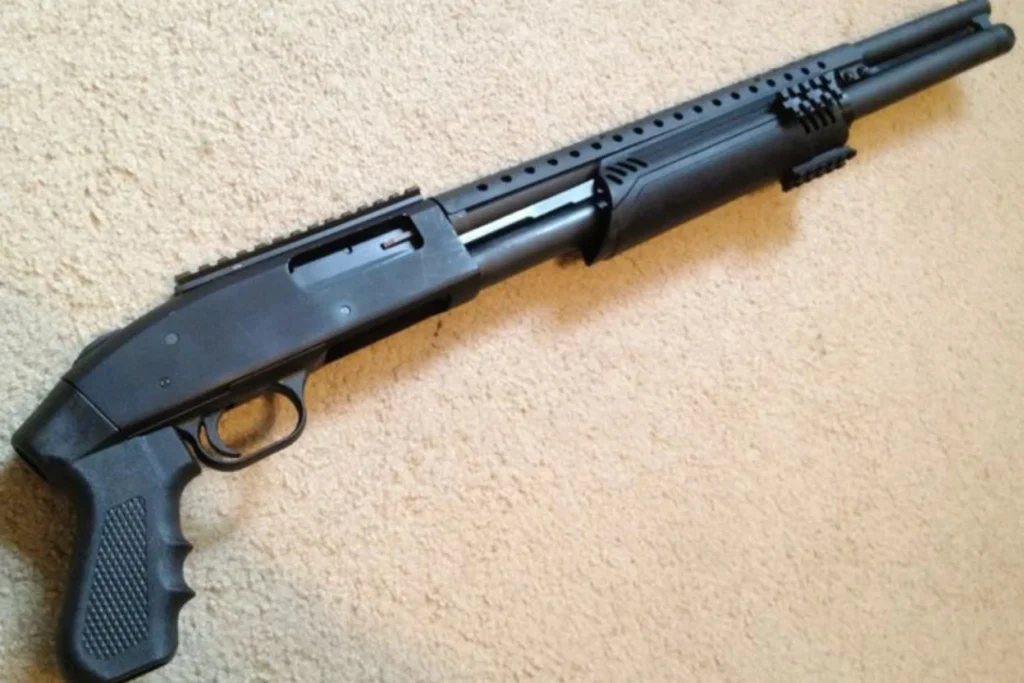
| Model | Price Range | Why It’s Here | Best For |
| Mossberg 500 | $349 to $399 | Ambidextrous tang safety; tool-less disassembly; proven 50-year track record; widely recommended by instructors | Budget-conscious buyers; most first-time shotgun purchasers |
| Remington 870 | $329 to $379 | Extensive aftermarket; proven reliability over decades; widely available for rental and familiarization | Buyers who want the most widely supported shotgun platform |
Before you purchase, handle both the handgun and shotgun options at a range that rents firearms. Shoot at least one magazine or one box of shells through each platform you’re seriously considering. The gun that fits your hands and that you can operate confidently is worth more than any spec sheet.
How Should You Store a Home Defense Firearm?
Safe storage is not a trade-off against home defense readiness. It is part of a complete home defense system. In a post-incident legal proceeding, evidence of responsible ownership (including secure storage) matters. Beyond the legal dimension, if your household includes children, unsecured access to a firearm is a serious safety and legal liability regardless of your intent.
The right storage solution for a home defense firearm meets two requirements simultaneously: it prevents unauthorized access, and it allows rapid access by the authorized user. Quick-access handgun safes solve this problem effectively. They are not a compromise. They are the correct solution.
What Are the Best Quick-Access Home Defense Safes?
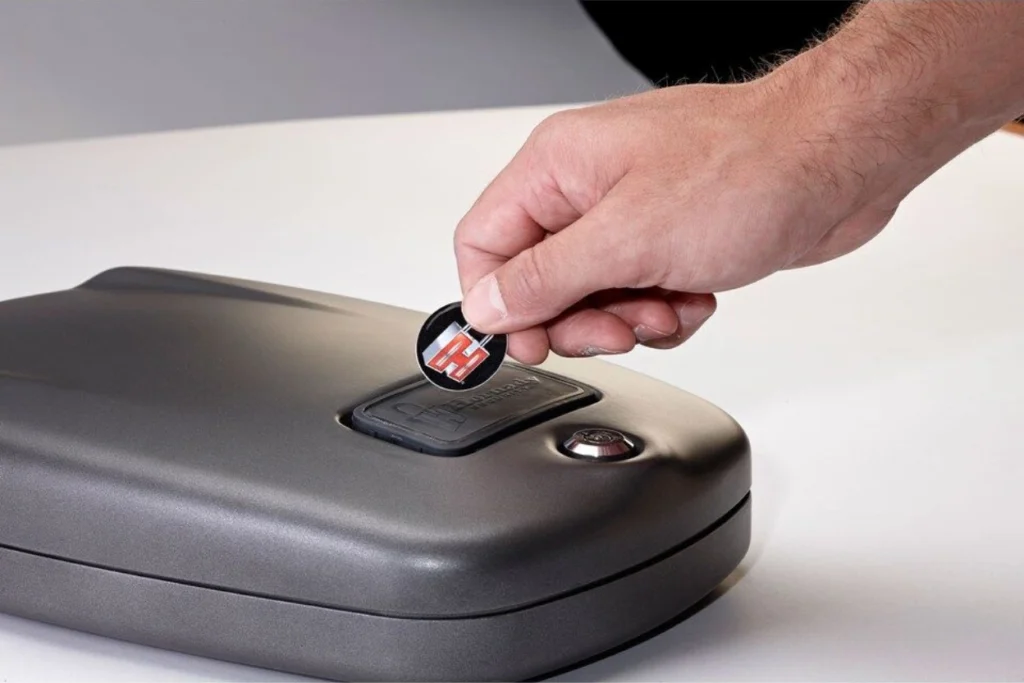
| Model | Price Range | Access Type | Best For |
| Hornady RAPiD Safe | $99 to $129 | RFID wristband, keypad, key | Budget-conscious buyers; RFID access is fast in the dark |
| Fort Knox PB1 Pistol Box | $129 to $149 | Simplex mechanical (no battery) | Buyers who want zero battery dependency, extremely reliable |
| Vaultek VT20i | $129 to $149 | Biometric, keypad, smartphone app | Buyers who want multiple access options and anti-theft alerts |
Note: Some states have specific safe storage laws that apply to households with minors. California, Massachusetts, New York, and several other states have mandatory storage requirements. Check your state’s specific requirements at a legal resource like the CCW laws by state guide, or consult an attorney familiar with your state’s firearms laws before finalizing your storage approach.
Do You Need a Permit to Keep a Gun at Home for Self-Defense?
The short answer: In most U.S. states, no permit is required to possess a firearm in your own home. Federal law does not require a permit for home possession of a legally purchased firearm. However, state law varies in important ways:
- Permit to purchase: A handful of states (Illinois, Hawaii, Massachusetts, and others) require a permit or license before you can purchase a firearm. These permits are separate from carry permits.
- Registration: Some states require registration of all firearms or specific categories of firearms. This is distinct from a purchase permit.
- Safe storage mandates: Several states require specific storage methods in homes with children. California, Connecticut, Massachusetts, and other states have mandatory safe storage laws with criminal penalties for non-compliance.
- Use of force: Possessing a firearm for home defense and legally using it in a defensive situation are two separate legal questions. Justification for defensive use of force is governed by state law. A home defense shooting is legally treated as any other defensive use of force in most states, not differently because it occurred in your home.
This article is not legal advice. State laws change, and individual circumstances vary. For precise legal guidance on your state’s requirements, consult the state-specific CCW and firearms law resource or an attorney licensed in your state.
What Are the Most Common Home Defense Buying Mistakes?
- Buying a gun and skipping the safe. A home defense firearm stored in a nightstand drawer with no security is a liability in a household with children, visitors, or anyone else with access to that space. The safe is part of the system, not optional equipment.
- Choosing based on stopping-power mythology. Caliber debates on forums are largely settled by actual wound ballistics data. Modern 9mm JHP meets or exceeds the performance of larger calibers in FBI-protocol testing. If you are passing on a gun that fits you well because “it’s only a 9mm,” you are making a worse decision.
- Never train with the firearm after purchase. Most people who own a home defense firearm have not practiced drawing from storage, operating in low light, or firing under any kind of stress. These are drillable skills. They do not develop by proximity to the firearm.
- Assuming all family members know the plan. If you are the only person in your household who knows where the firearm is, how to access the safe, and what the home defense plan is, you have a single point of failure. Every capable adult in the household should know the plan.
- Skipping the rental range test before buying. A firearm that your friend recommends or that reviews well online may not fit your hands or your grip strength. Rental range fees are the cheapest form of buyer insurance available. Use them.
Your Next Step
If you have read this far and have not yet handled either a handgun or a shotgun, that is your first step: find a range with a rental program and shoot both platforms. Rentals typically run $10 to $20 for the firearm plus the cost of ammunition. One session with each platform will tell you more than a week of online research.
If you already know which platform you want, the next decision is which specific model. Use the comparison tables in this guide as a starting framework, then check the best handguns for self-defense guide for a deeper breakdown of the current top performers. For your storage solution, the options in the safe comparison table above are all strong choices. Your household situation (children, number of authorized users, budget) determines which fits best.
And once you have the firearm and the safe, find instructions. The concealed carry training guide walks through how to evaluate instruction quality and what a good curriculum actually looks like, because taking a single CCW class and never returning to the range is not the same as being prepared. Your equipment is only as good as your ability to use it.
Check out this video from Honest Outlaw: 5 Best Home Defense Pistols For Beginners
Home Defense Firearm FAQ
-
Is a 9mm powerful enough for home defense?
Yes. Modern 9mm JHP ammunition loaded in 124gr or 147gr that meets FBI gel protocol standards performs comparably to larger calibers like .45 ACP in terminal tissue disruption. Shot placement, ammunition reliability, and your ability to deliver accurate hits under stress matter more than caliber size.
-
What is the best home defense gun for a first-time buyer?
For most first-time buyers willing to train regularly, the Glock 19 Gen5 is the industry default due to its documented reliability, aftermarket support, and rental fleet presence. Buyers with smaller frames should consider the Smith and Wesson M&P 9 Shield Plus. Budget-constrained buyers with minimal training access should look at the Mossberg 500 or Remington 870.
-
Do I need a permit to keep a gun at home for self-defense?
In most U.S. states, no permit is required to possess a legally purchased firearm in your own home. However, Illinois, Hawaii, Massachusetts, and a handful of other states require a permit or license to purchase a firearm. Several states also have mandatory safe storage laws with criminal penalties. Verify your state’s specific requirements before buying.
-
Is a shotgun better than a handgun for home defense?
It depends on your household. Shotguns offer superior terminal performance at residential distances and a lower precision requirement, making them strong choices for buyers with limited training time. Handguns offer better maneuverability in hallways, higher capacity, and one-handed operation. For most trained buyers, a 9mm handgun is more versatile.
-
How much should I spend on a home defense firearm?
A reliable home defense handgun costs $449 to $599 for proven platforms like the Glock 19, SIG P320, or Smith and Wesson Shield Plus. A reliable pump shotgun costs $329 to $399 for the Mossberg 500 or Remington 870. Budget an additional $99 to $149 for a quick-access safe. Skipping the safe to save money is a false economy.
-
Should I keep my home defense gun loaded?
Yes, if it’s stored in a quick-access safe that prevents unauthorized access. An unloaded firearm in an emergency is effectively a paperweight during the seconds that matter. The correct solution is a quick-access safe that lets the authorized user deploy the firearm rapidly while keeping it inaccessible to children, visitors, or intruders.
-
What ammunition should I use for home defense?
Use a modern hollow-point (JHP) defensive load that meets FBI gel protocol standards. For 9mm, 124gr or 147gr premium defensive ammunition from established manufacturers is the standard recommendation. For 12-gauge shotguns, 00 buckshot is the defensive standard. Always test-fire your chosen defensive load through your specific firearm before relying on it.
-
How often should I train with my home defense firearm?
Dry-fire practice weekly and live-fire range time at least monthly is the working minimum to maintain basic competency. Most people who own a home defense firearm never practice drawing from storage, operating in low light, or firing under stress. These are drillable skills that do not develop by simply owning the firearm.
-
Can I legally shoot an intruder in my home?
Possessing a firearm for home defense and legally using it are separate legal questions. The justification for defensive use of force is governed by your state’s law, which generally requires an imminent threat of death or serious injury. A home defense shooting is treated under the same defensive force standards as any other location in most states. Consult an attorney licensed in your state for specific guidance.
-
What’s the difference between a home defense gun and a concealed carry gun?
A home defense firearm prioritizes maneuverability inside the home, rapid accessibility from a safe, and controllability under stress. A concealed carry firearm prioritizes concealment, comfort during all-day carry, and ergonomics from a holstered position on the body. A compact 9mm like the Glock 19 can serve both roles, but dedicated home defense setups often use full-size handguns or shotguns.
Would you trust your life to this choice? Tell us why it earned your vote.👇