
Quick Look at Learn Gunfighting
- Wyatt Earp valued preparation and awareness over speed or bravado
- Most real-world gunfights were sudden, chaotic, and unforgiving
- Calm decision-making mattered more than flashy skill
- Avoidance and deterrence were preferred whenever possible
- Mental readiness often determined survival more than equipment
RELATED: Keanu Reeves Shoots A 3-Gun Course, And His Stance On Gun Control
In this article:
What Wyatt Earp Teaches About Gunfighting: Beyond the Myth

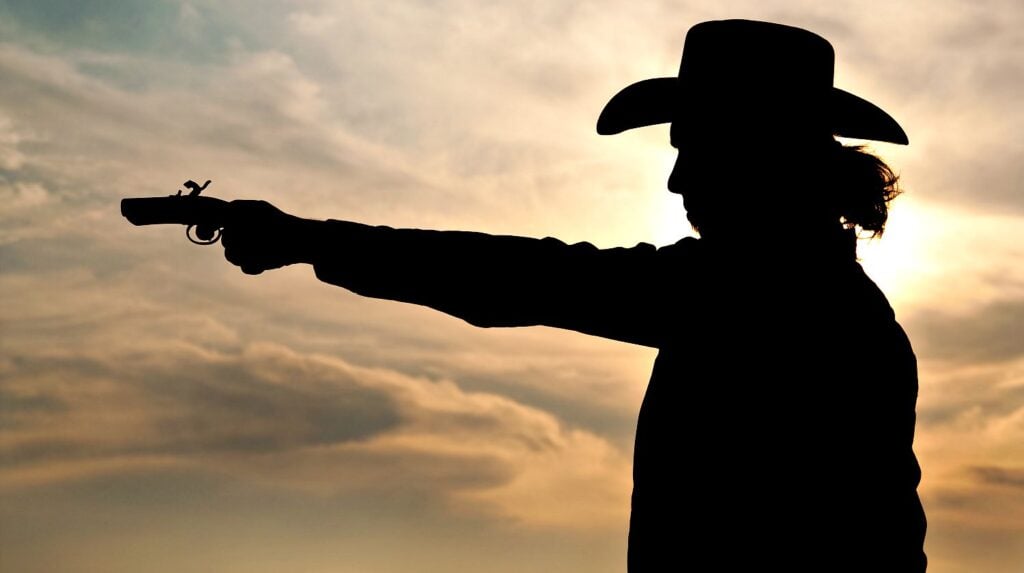
Few names loom larger in American history than Wyatt Earp. Popular culture paints him as a flawless gunslinger, but the real lessons from Earp’s life have far less to do with fast draws and far more to do with mindset, preparation, and decision-making under pressure.
When you strip away Hollywood dramatization, Earp’s approach to violence was pragmatic and restrained. He believed survival favored those who stayed calm, avoided unnecessary fights, and acted decisively only when there was no alternative. His experiences offer timeless insights into situational awareness, discipline, and the realities of confrontation, lessons that still resonate today for anyone interested in history, self-defense philosophy, or responsible firearms culture.
Lessons on Gunfighting from the Legendary Wyatt Earp
This interview excerpt about the lessons on gunfighting, supposedly said by the legendary lawman, gunfighter, and frequent movie subject, Wyatt Earp, comes from a 1994 book written by Stuart Lake, Wyatt Earp: Frontier Marshal. You can find the book online at a hefty price since it’s long out of print.
Wyatt…
“I was a fair hand with pistol, rifle, or shotgun, but I learned more about gunfighting from Tom Speer’s cronies during the summer of 1871 than I had dreamed was in the book.
Those old-timers took their gunplay seriously, which was natural under the conditions in which they lived. Shooting, to them, was considerably more than aiming at a mark and pulling a trigger.
Models of weapons, methods of wearing them, means of getting them into action and operating them, all to the one end of combining high speed with absolute accuracy, contributed to the frontiersman’s shooting skill.
The sought-after degree of proficiency was that which could turn to the most effective account the split-second between life and death. Hours upon hours of practice and wide experience in actualities supported their arguments over style.”
Lesson 1
Marshal Earp is being crystal-clear here: the right gun, the right holster, the right way to carry it on your body, getting out of the holster and either into the low-ready position or right on target, knowledge of your gun’s mechanical systems (and knowing how and why to correct problems when the machinery fails), and how to use it safely, quickly, effectively, and accurately.
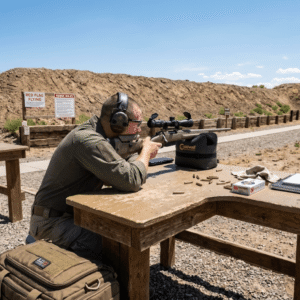
Lots of quality-time practice, a training course at indoor and outdoor ranges, in all lighting and weather conditions.

- Made in The USA!
- Better Value Than Resin or Plastic Statues and Much More Durable
- 100% Cast Stone Construction
Last update on 2026-07-09 / Affiliate links / Images from Amazon Product Advertising API
Wyatt…
“The most important lesson I learned from those proficient gunfighters was that the winner of a gunplay usually was the man who took his time. The second was that, if I hoped to live long on the frontier, I would shun flashy trick-shooting — grandstand play — as I would poison.
When I say that I learned to take my time in a gunfight, I do not wish to be misunderstood, for the time to be taken was only that split fraction of a second that means the difference between deadly accuracy with a sixgun and a miss. It is hard to make this clear to a man who has never been in a gunfight.
What Is A Sixgun? It is another term for a six-shooter, which is a revolver pistol capable of carrying six rounds in its rotating cylinder.
Perhaps I can best describe such time taking as going into action with the greatest speed of which a man’s muscles are capable, but mentally unflustered by an urge to hurry or the need for complicated nervous and muscular actions which trick-shooting involves. Mentally deliberate, but muscularly faster than thought, is what I mean.”
Lesson 2
He’s stating some solid truth here: fast and accurate, especially in close range. Use your trained and developed skills and concentration, which come only through regular practice, to create the required muscle memory.
![Wyatt Earp [Blu-ray]](https://m.media-amazon.com/images/I/51fJf7ohITL._SL160_.jpg)
- Polish Release, cover may contain Polish text/markings. The disk has English audio and subtitles.
Last update on 2026-07-09 / Affiliate links / Images from Amazon Product Advertising API
Wyatt…
“From personal experience and numerous six-gun battles which I witnessed, I can only support the opinion advanced by the men who gave me my most valuable instruction in fast and accurate shooting, which was that the gun-fanner and hip-shooter stood small chance to live against a man who, as old Jack Gallagher always put it, took his time and pulled the trigger once.”
RELATED: Great Action Movie Gun Quotes That Apply To EDC
Lesson 3
In our modern context, he’s not talking about the number of rounds you can put on the paper or human target, but the accuracy of those rounds.
Not just “spraying and praying” and hoping one lands where you wanted it, but a practiced, measured shot each time.
Sight picture, a straight pull of the trigger to the fire, move to the trigger reset quickly, adjust the sight picture off of the recoil, and prepare to do it again.
Wyatt…
“In the days of which I am talking, among men whom I have in mind, when a man went after his guns, he did so with a single, serious purpose.
There was no such thing as a bluff; when a gunfighter reached for his forty-five, every faculty he owned was keyed to shooting as speedily and as accurately as possible, to making his first shot the last of the fight.
He just had to think of his gun solely as something with which to kill another before he himself could be killed. The possibility of intimidating an antagonist was remote, although the ‘drop’ was thoroughly respected, and few men in the West would draw against it.
I have seen men so fast and so sure of themselves that they did go after their guns while men who intended to kill them had them covered, and what is more win out in the play. They were rare.
It is safe to say, for all general purposes, that anything in gunfighting that smacked of show-off or bluff was left to braggarts who were ignorant or careless of their lives.”
Lesson 4
Action is faster than reaction. Even if the bad guy facing you is armed, you can still draw and shoot him, as his (tiny or alcohol or drug-addled) brain tries to figure out what you’re doing.
Why you’re not giving up or complying, and why he suddenly sees muzzle flashes and bullets headed his way.

Last update on 2026-07-09 / Affiliate links / Images from Amazon Product Advertising API
Wyatt…
“Practiced gun-wielders had too much respect for their weapons to take unnecessary chances with them. It was only with tyros and would-be’s that you heard of accidental discharges or didn’t-know-it-was-loaded injuries in the country where carrying a Colt was a man’s prerogative.”
Lesson 5
We learn from our Masters. Be thoughtful about your weapon, be proficient with it, practice with it often, and it will serve you.
The Real Legacy of Wyatt Earp
Wyatt Earp’s true legacy isn’t about glorifying violence. It’s about understanding it. His life demonstrates that confidence comes from preparation, restraint, and clarity under pressure. The most valuable lessons he left behind are mental, not mechanical, and they challenge modern myths about what it really means to survive a confrontation.
Let’s take a trip down memory lane and watch this iconic scene from the movie “Wyatt Earp,” courtesy of FreddieF:
For a man who learned his lessons on gunfighting in the mean and dusty streets of some tough cowtowns, Earp’s teachings ring true today, nearly 90 years after his passing.
If you’re interested in firearms history or personal defense philosophy, look past the legends and study the principles. Learn from history, focus on awareness and responsibility, and remember: the smartest fight is often the one that never happens.
(Wyatt Earp was born on March 19, 1848, and died – peacefully, not from bullets – on January 13, 1929.) With this valuable guide, here’s to hoping gun owners can better protect themselves from any possible threat.
What do you think about the lessons on gunfighting from Wyatt Earp? Let us know in the comments section below.
Up Next:
- A Pump Shotgun For Home Defense: Is It The Right Choice For You?
- Homemade Bullets Can Be Created With Special Report’s Help
- The Real Science Behind A Gunfight
 Follow us on Facebook, Instagram, Twitte
Editor’s Note: This post was originally published on May 17, 2018, and has been updated for quality and relevancy.
FAQ: Lessons From Wyatt Earp’s Gunfighting Experience
Was Wyatt Earp really a legendary gunfighter?
Earp participated in and survived multiple violent encounters, but his reputation grew largely after his lifetime. He wasn’t known for reckless gunplay; he was known for surviving dangerous situations.
What was Wyatt Earp’s philosophy on gunfights?
Earp believed that fights were best avoided. When unavoidable, he emphasized calm action, positioning, and ending the threat quickly rather than prolonged exchanges.
Did Wyatt Earp rely on fast draw techniques?
Historical accounts suggest speed mattered far less than awareness and timing. Many confrontations began at close range with little warning, not formal “duels.”
Are Wyatt Earp’s lessons still relevant today?
Yes, especially the non-technical lessons. Awareness, emotional control, and sound judgment remain critical in any high-stress or defensive situation.
What’s the biggest misconception about Old West gunfights?
That they were clean, dramatic showdowns. In reality, they were messy, unpredictable, and often decided before the first shot by who was prepared and composed.