
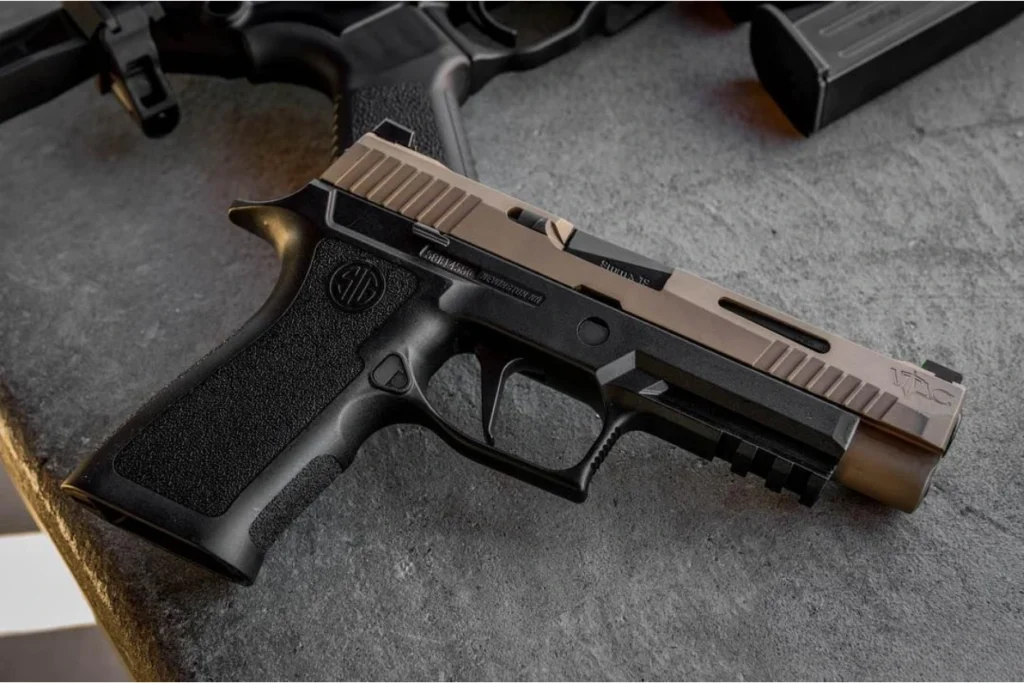

2026 Safety Update
The Sig P320 faces significant legal pressure following two jury verdicts confirming design defects and a landmark recall demand from New Jersey. While Sig Sauer maintains the voluntary upgrade enhances safety, 2025 independent testing demonstrated uncommanded discharges in post-upgrade units. Carriers should prioritize full-coverage holsters and document all upgrades.
Related: 2026 State Firearm Laws: What CCW Holders Must Know Before July 1
“I bought the gun everyone recommended, and now I don’t know if it’s right for me.” That line shows up in carrier forums more than any other, and in 2026, it describes where a lot of P320 owners are standing. You chose the Sig P320 for solid reasons. The military adopted it as the M17/M18. Hundreds of law enforcement agencies issued it. Reviews were strong. These were not bad reasons to choose a carry firearm.
Then the lawsuits started. Then the jury verdicts came in. Then, Houston PD, Chicago PD, and Washington State pulled the P320 from service. Then New Jersey filed the first state-level recall demand. If you carry a P320, this article is not asking you to panic or to join a lawsuit. It is giving you the documented facts so you can make an informed care decision.
What Did the 2026 Sig P320 Uncommanded Discharge Lawsuits Find?
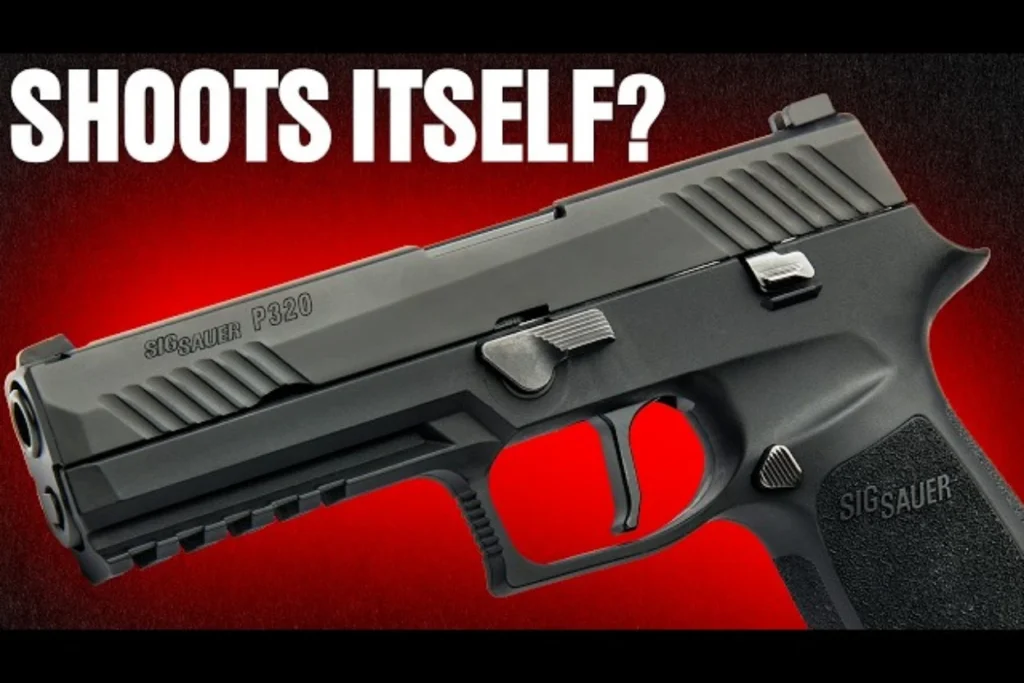
An uncommanded discharge means the firearm fires without the trigger being intentionally pulled. This is the opposite of what a striker-fired pistol is supposed to do. Multiple lawsuits allege that the P320’s striker mechanism can be activated by external force, impact, or drop under certain conditions without trigger contact. A Wyoming Gun Project video published in July 2025 demonstrated a post-upgrade P320 discharging without a trigger pull in a controlled test setting.
Two separate juries have found the P320 design to be defective. These are not allegations. These are jury verdicts, which means a group of people weighed the evidence and concluded the design had a problem. A class action lawsuit filed against Sig Sauer describes the P320 as “extraordinarily dangerous.” These findings do not mean every P320 will malfunction. They mean there is a documented legal and technical record that the design has been found deficient under specific conditions.
Law enforcement decisions add weight to the documented record. Houston PD, Chicago PD, and Washington State have all removed the P320 from active service. These agencies have significant liability exposure when they issue firearms to officers, and their decisions to transition away from the P320 reflect an institutional judgment about risk. Documented defect findings around a carry platform become part of the legal record that an opposing attorney can access if an incident involves that firearm.
What Is the Current Legal Status of Sig P320 Litigation and Recalls?
As of early 2026, litigation is ongoing on multiple fronts. New Jersey has become the first state government to file for a recall, which signals that the issue has moved beyond individual plaintiffs and into state-level regulatory action. The Florida Senate Committee heard arguments on SB 1748 in February 2026, a bill designed to provide Sig Sauer with legal protections against P320 lawsuits. The existence of a bill specifically designed to shield the manufacturer tells you something about the scale of the litigation pressure the company is facing.
The class action filing alleging the P320 is “extraordinarily dangerous” is proceeding separately from the individual cases that already produced jury verdicts. These are different legal tracks, but they share the same underlying factual record. You do not need to become a litigation expert to understand the basic picture: multiple courts are actively examining this issue, verdicts have gone against the manufacturer, and the legislative fight over manufacturer protections is underway.
None of this means the P320 is illegal to own or carry. No court has ordered a recall. Sig Sauer has not recalled the firearm. What exists is a growing documented record of defect findings and agency decisions that every carrier should be aware of before deciding whether to keep this platform in service.
Read more: Sig Sauer P320 AXG Trigger Assembly Recall 2026: What Owners Must Do Now
Does the Sig Sauer Voluntary Upgrade Fix the Discharge Issue?
Sig Sauer introduced a voluntary upgrade program for the P320 following initial discharge reports. The program updated the trigger mechanism, the sear, and the disconnector, and added a load-bearing surface to the fire control unit. Sig framed this as an enhancement, not a recall or an acknowledgment of a defect. The upgrade is available to P320 owners and does not require you to ship the firearm to a dealer; it can be sent directly to Sig’s service center.
The Wyoming Gun Project demonstration in July 2025 showed that a post-upgrade P320 still discharged without a trigger pull under the test conditions. This does not mean the upgrade had no effect. It means the upgrade did not fully resolve the documented concern for all configurations and conditions. If you have not completed the voluntary upgrade and you own a P320, completing it is the minimum baseline step regardless of any other decision you make about the platform.
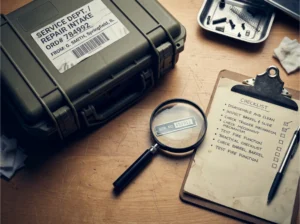
To complete the upgrade, contact Sig Sauer customer service directly. The process involves sending your P320 to their service center for parts replacement at no cost. Keep documentation of when you completed the upgrade and what your serial number is. This matters both for your own records and for any future legal or insurance purposes.
How Should P320 Owners Manage Legal and Safety Risks in 2026?
The question every P320 carrier needs to answer is straightforward: Do I have enough confidence in this platform to stake my safety and legal standing on it? This is not a question about brand loyalty. It is not a question about whether you like the trigger or the ergonomics. It is a question about whether the documented record meets your threshold for a defensive carry firearm.
If you choose to keep the P320 as your carry gun, the baseline steps are clear. Complete the voluntary upgrade if you have not already. Document when you completed it. Know the serial number of your firearm and keep it recorded. Carry it in a proper holster with full trigger guard coverage. There are no scenarios where a P320 should be carried loose or in a non-trigger-covering holster, given the documented uncommanded discharge concerns.
If you choose to evaluate alternative platforms, that is also a reasonable response to the documented record. The decision to switch is not an overreaction. It is a data-driven carry decision, which is exactly how responsible carriers should make equipment choices. For a current overview of well-tested carry platforms across multiple size and price categories, our guide to the best handguns for self-defense covers the options worth considering. Whatever platform you carry, your ability to operate it under stress matters more than brand name, and that comes from consistent, documented training, which our concealed carry training guide addresses in detail.
Related: AIWB vs OWB: Best Holster Positions for Everyday Carry
What Are the Most Common Mistakes Sig P320 Carriers Make Today?
- Dismissing the lawsuits because the gun has military adoption. Military and law enforcement adoption is a credibility signal, not a legal defense against a design defect. Two jury verdicts found defective design regardless of the M17/M18 designation. Evaluate the evidence on its merits.
- Assuming the voluntary upgrade fully resolved the issue. Post-upgrade demonstrations have shown discharge without trigger pull under specific conditions. The upgrade is still worth completing as a minimum baseline, but carriers should not treat it as a closed case. Stay current on litigation developments.
- Ignoring the legal exposure angle entirely. If you carry a firearm with a documented defect record and an incident occurs, that record is potentially relevant in any legal proceeding. This is not about joining a lawsuit. It is about understanding the legal landscape around your carry tool. Informed consent about your equipment is part of responsible carry.
- Carrying without a trigger-covering holster. Whatever the platform, any firearm with documented sensitivity to external mechanical input demands a proper holster with full trigger guard coverage. This applies to the P320, specifically given the documented concerns, but it is a universal carry principle.
- Making a platform switch decision based on forum sentiment instead of documented evidence. The documented record is what matters. Two jury verdicts, multiple agency pullbacks, and a post-upgrade demonstration of discharge are the actual evidence. Read those primary facts rather than basing your decision on forum consensus or brand enthusiasm in either direction.
Informed Carry Is Responsible Carry
The P320 has a documented legal and technical record that every carrier of this platform should know. Two jury findings of defective design. Multiple law enforcement agencies are pulling it from service. A post-upgrade demonstration of discharge without trigger pull. A state recall demand. A class action proceeding. These facts do not make the decision for you, but they are the facts, and carrying without knowing them is not responsible carry.
If you keep the P320, complete the voluntary upgrade and document it. Carry it properly in a full-coverage holster. Stay current on the litigation. If you switch platforms, make that decision based on the documented evidence and find a replacement you can operate reliably under stress. Whatever you decide, base it on what is actually known, not on what you hoped would be the case when you bought it.
For carry platform comparisons across the current market, our guide to the best handguns for self-defense covers what is actually available and worth considering in 2026.
Related: ATF Pistol Brace Enforcement in 2026: What Every Owner Must Know
Check this video from Lock & Load with Dick Fairburn about SIG P320 Update.
Frequently Asked Questions
-
Is there a mandatory recall on the Sig P320?
No. While New Jersey filed the first state-level recall demand in early 2026, no federal court or regulatory agency has ordered a nationwide recall. Sig Sauer has not issued a recall. The voluntary upgrade program remains the manufacturer’s official response, and completing it is the minimum baseline step for all P320 owners.
-
Did the voluntary upgrade stop the P320 from firing when dropped?
Not completely. While the upgrade modified the trigger, sear, and disconnector, a July 2025 Wyoming Gun Project test showed a post-upgrade unit still discharged without a trigger pull under controlled conditions. The upgrade is worth completing, but carriers should not treat it as a final resolution of the documented concern.
-
Which police agencies have stopped using the Sig P320?
As of 2026, the Houston PD, the Chicago PD, and Washington State have removed the P320 from active service due to liability concerns. These are institutional risk-management decisions made by agencies with significant legal exposure when issuing duty firearms to officers. Their transitions reflect documented judgment about platform risk.
-
What does a jury verdict of defective design actually mean for carriers?
It means a jury weighed the evidence and concluded the P320 design had a flaw under specific conditions. It does not mean every P320 will malfunction. It does mean a documented legal record of defect findings now exists. If you carry this platform and are involved in an incident, an opposing attorney can access that record.
-
What is the fastest way to complete the Sig P320 voluntary upgrade?
Contact Sig Sauer customer service directly and request the upgrade for your serial number. You send the firearm to their service center at no cost. Keep a written record of the date, serial number, and confirmation of completion. That documentation matters for both legal and insurance purposes.
-
Should I switch away from the Sig P320 based on the lawsuits?
That decision belongs to you. The documented record, including two jury verdicts, multiple law enforcement pullbacks, and a post-upgrade discharge demonstration, is the basis for an informed decision. Switching is not an overreaction. Neither is staying, provided you complete the upgrade, document it, and carry it with a proper trigger-covering holster.
-
What holster type does the P320 require, given the discharge concerns?
A holster with full trigger guard coverage is non-negotiable for the P320. Given the documented sensitivity to external mechanical input, any holster that leaves the trigger guard exposed creates unnecessary risk. This is a universal carry principle that applies with additional urgency to the P320 specifically.
-
What is Florida SB 1748, and why does it matter?
SB 1748 is a Florida bill heard in committee in February 2026 that would provide Sig Sauer with legal protections against P320 lawsuits. The fact that a bill specifically shielding the manufacturer from this litigation was introduced reflects the scale of legal pressure the company faces. Carriers should monitor whether it passes and what that means for ongoing litigation.
-
Can I still legally carry the Sig P320 in 2026?
Yes. No court has ordered a ban or mandatory recall. The P320 remains legal to own and carry in all standard jurisdictions. What has changed is the documented record around the platform. Legal carry means informed carry, and every P320 carrier should understand the current litigation landscape before making platform decisions.
-
Does completing the voluntary upgrade affect my legal standing if an incident occurs?
Completing and documenting the upgrade is a positive step for your legal record. It demonstrates that you took the manufacturer’s recommended corrective action. However, because post-upgrade discharge demonstrations exist, the upgrade alone does not fully resolve the platform’s documented record. Consistent use of a proper holster and current knowledge of litigation developments are part of the full responsible carry picture.
Lock in your vote and tell us: Why is this the right call?👇





5 thoughts on “Sig P320 Lawsuit Update 2026: Recalls, Verdicts, and Safety Facts”
While some lawsuits have been lost by Sig, many have been won by Sig. It also appears that the lawsuits have all been brought by a small group of attorneys looking for a big pay out. I also remember similar claims about the Glock in the early days. In the upgraded design for an un-commanded discharge to happen there would need to have multiple failures that would be extremely unlikely, but maybe possible. The difference in the P-365 is very small so moving from the P-320 to the P-365 does not make any sense. My thinking is that the P-365 is not likely to be subjected to the same harsh conditions as a duty gun. Since, no one has been able to reliably reproduce the issue it is likely not a mechanical issue.
Hey Tyler. You make some valid points regarding the lawsuits and the nature of the claims. It’s true that Sig has experienced both wins and losses in court, and it seems like some of the litigation is driven more by certain attorneys seeking settlements than by widespread mechanical failures.
About the P-320 and the P-365, I agree that the transition might not make sense for everyone, especially if the concerns about unintentional discharges are deemed unlikely under normal usage. The P-365 is indeed designed to be a more compact option, which may lend itself better to concealed carry situations rather than duty use. The fact that the issue hasn’t been reliably reproduced adds another layer to the discussion, suggesting that it could be more situational than systemic. Bottom line, it’s crucial to consider both the engineering behind these firearms and the real-world experiences of users when evaluating their safety and reliability.
I think at this time I don’t feel comfortable carrying my P320. I have had Sig add a manual safety to all 3 of my P320’s and will be awaiting any future internal safety modification or recall as may be offered in the future. I have changed my carry to to a P365 fuse with a manual safety and have been very satisfied so far.
It’s completely understandable to feel cautious about your P320, especially with the concerns surrounding safety features. Adding a manual safety is a strong step toward increasing your comfort while carrying. Many people are opting for models like the P365 for its added safety features and compact design, so it seems like you made a good choice.
Staying informed about potential internal safety modifications or recalls is wise, and I hope they address any lingering concerns. It’s great to hear that you’re satisfied with the P365 Fuse. Having confidence in your carry is essential for safety and peace of mind. If you have any specific questions or need more information, feel free to ask!