As school routines settle in, your teen may spend more unsupervised time at home or with friends. This makes it the right moment to reinforce one of the most important responsibilities in your household: firearm safety.
This isn’t just about securing your guns. It’s about showing your teen how to think clearly around firearms. They need to understand what safe handling looks like, what’s expected of them, and why those rules matter, especially when no one else is watching.
Teach the Rules in Person, Not on Paper
Every teen in a home with firearms should know how to handle them safely. The core safety rules should become instinct, not trivia.
Start with the basics:
- Always assume every firearm is loaded
- Never point a firearm at something you don’t intend to shoot
- Keep your finger away from the trigger until you’re ready to fire
- Confirm your target and everything around it before taking a shot
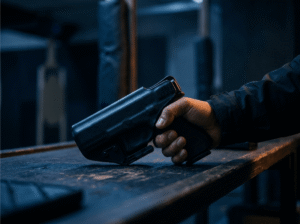
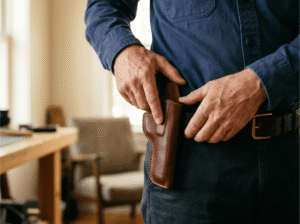
Don’t leave these rules in a pamphlet or poster. Teach them face-to-face. Walk through them with a real (unloaded) firearm in your hands. Let your teen see what safe behavior looks like in practice.
Show Them What Responsible Handling Looks Like
Firearm safety should begin before your teen ever holds a gun. Even if they’ve never asked to shoot, they still need to know what to do if they ever come across one. Ignoring that moment doesn’t protect them. It leaves too much room for confusion when the risks are real.
Set aside time to walk them through the basics:
- How to check if a firearm is unloaded by inspecting the chamber and the magazine
- Where firearms are stored in your home and how they’re secured
- What to do if they find a gun when no adult is present
This isn’t about preparing them to shoot. It’s about making sure they stay calm and make smart choices if they ever face an unexpected situation. Each of these lessons creates a chance to build trust. And when that trust is in place, teens are more likely to ask questions instead of hiding their uncertainty.
Lock It Up and Double-Check
No matter how responsible your teen seems, secure storage remains your job. Curiosity can lead to accidents if the temptation is left within reach.
Set clear rules for storage:
- Firearms should always be unloaded before storage
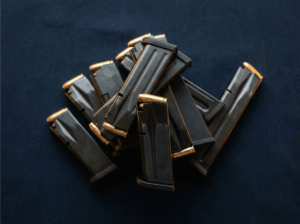
- Ammunition should be kept in a separate locked container
- Use a purpose-built safe, not just a drawer or closet
For a quick audit of your setup, check out this NSSF guide. A good system doesn’t just secure the firearm, it removes doubt and removes opportunity.
Reinforce Safety Through Practice, Not Just Talk
Knowing the rules is a start, but firearm safety grows stronger when it’s part of everyday habits. A teen who only hears the rules may forget them. A teen who practices those rules remembers why they matter.
Give them opportunities to apply what they’ve learned under supervision. That could mean helping you check that a firearm is unloaded or explaining back to you how the storage works. Let them show that they understand the expectations.
Review your storage regularly. Ask your teen to walk you through what they would do if they found a firearm somewhere it didn’t belong. Keep the tone serious, but not harsh. The more familiar they are with real scenarios, the more likely they’ll respond the right way under pressure.
Firearm Safety Begins at Home and Stays There
Firearm safety isn’t a box to check. It’s a long-term habit you shape over time. That habit comes from conversations, clear expectations, and a consistent example. The habits you set now shape how they’ll think later. Locking up your firearms is part of that. So is making time for honest conversations. When you take the lead, you teach your teen that safety is personal, not just a rule to follow.
If you’ve had this talk with your teen or found a way to make it work in your home, drop it in the comments. Someone else may be looking for a place to start.
FAQs
Q: When should I start talking to my teen about firearms?
A: As soon as they’re old enough to notice or ask. Sooner is better than later.
Q: What if I don’t want my teen handling guns at all?
A: You can still teach them how to act safely around one. Curiosity doesn’t wait for permission.
Q: Should I show my teen how the firearm works?
A: Yes—if it’s done safely and under your full control. Show them the basics, even if they won’t be using it.
Q: How do I know if they’re ready to learn more?
A: If they handle other responsibilities well and respect boundaries, that’s a good sign.
Q: What’s the safest way to store a firearm at home?
A: Unloaded, locked in a secure safe, with ammunition stored separately.