
2026 Carry Optic Summary
The Trijicon RMR Type 2 remains the gold standard for carry durability. The Holosun 507C/508T X2 series offers the best value with solar redundancy. Success requires a 3–6 MOA dot, a verified footprint match, and a dedicated drawstroke reprogramming regimen before you carry with optics. Optics-ready handguns are now the standard configuration for carry pistols, not an upgrade tier. But mounting the wrong red dot on your carry gun is worse than running irons: battery failures, zero shift, and footprint mismatches can create equipment problems at the worst possible moment.
Related: Red Dot Sight Training – Home Drills
“How do I know if this upgrade actually matters?” That’s the right question to ask about pistol red dots because not all of them do.
Is a Red Dot Sight Necessary for Concealed Carry in 2026?
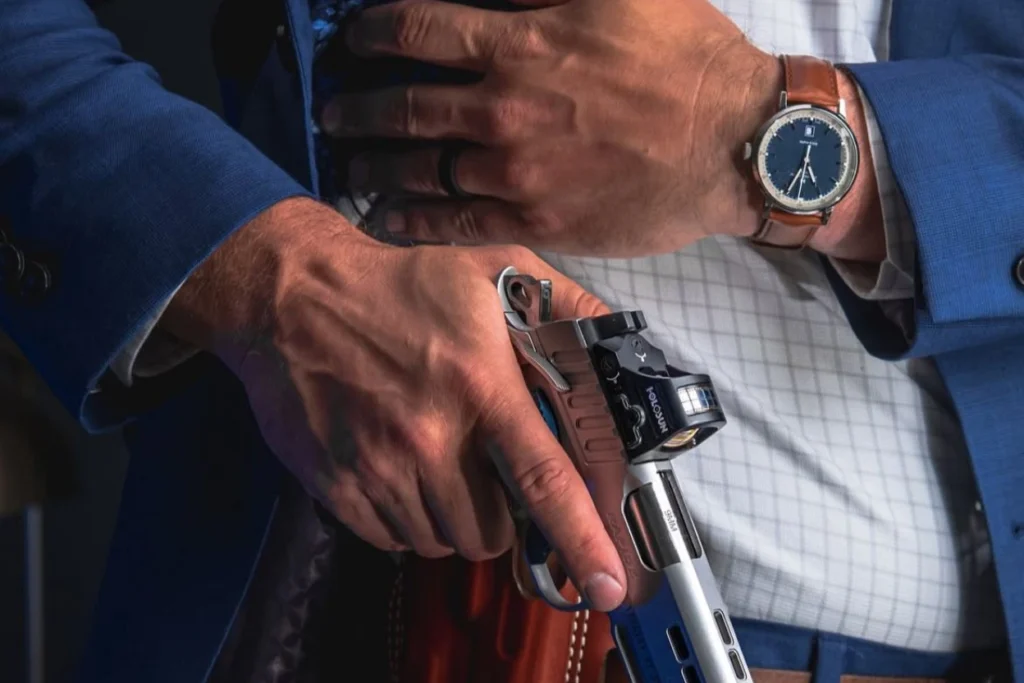
Five years ago, a pistol red dot was a competition shooter’s accessory. In 2026, every major handgun manufacturer, Sig Sauer, Glock, Smith & Wesson, Springfield, Ruger, will offer optics-ready variants at standard price points. Duty gun platforms across law enforcement have been adopting pistol-mounted optics (PMOs) at an accelerating rate, and the carry community has followed.
The legitimate case for red dots on carry guns is skill-based, not gear-enthusiasm-based. Older shooters who have developed presbyopia (the near-focus loss that comes with age) often find a red dot dramatically easier to use than a front sight they can no longer sharply resolve. Shooters who have trained extensively with carbine optics often find the dot intuitive. And for longer-range defensive scenarios, which are uncommon but documented, a dot provides faster target acquisition than iron sights for most shooters.
The case against starts with the same place the data on civilian defensive gun uses starts: most DGUs happen at 3 to 7 yards, in poor light, with little warning. At 5 yards, a competent iron sight shooter is not slower than a red dot shooter by any meaningful margin. If red dot adoption comes at the cost of fewer repetitions on basic drawstroke because the shooter is managing a new manual of arms, that is a net negative to preparedness.
The honest answer: a red dot on a carry pistol is a valid tool for the right shooter. It is not a shortcut, and it is not for everyone.
What Actually Matters in a Carry Red Dot
Not all miniature red dot sights (MRDS) are built to the same standard. The demands on a carry red dot are more severe than on a competition optic: it will be holstered and drawn hundreds or thousands of times, exposed to sweat, rain, and temperature cycling, and it needs to work on the first press every time.
Durability and Zero Retention
- The most critical requirement. A red dot that shifts zero after 500 draw cycles is not a carry optic; it is a liability. Industry-standard durability testing for carry-grade dots typically involves drop tests, recoil cycles (typically 10,000+ rounds on a pistol), and temperature range testing. Check manufacturer specifications and look for documented testing methodology, not marketing language.
Battery Life
- The dominant carry-grade dots in 2026 offer battery life in the range of 1–4 years at moderate brightness settings. The Trijicon RMR Type 2 and SRO advertise up to 4 years on a single CR2032 at setting 4 of 8. The Holosun 507C/508T series uses solar backup in addition to a battery. For carry purposes: choose a dot with at least 1-year battery life at your typical brightness setting, establish a battery replacement schedule (most instructors recommend annual or semi-annual replacement regardless of indicated battery level), and know where your battery compartment is and how long it takes to access.
Which Red Dot Footprint Fits My Handgun Slide?
This is where most first-time red dot buyers make expensive mistakes. Pistol optic footprints are not standardized despite industry movement toward a common standard; you still have RMR-cut, Shield RMSc, Deltapoint Pro, and other footprint patterns, and not all slides accept all optics. Before purchasing a red dot, verify your specific gun’s slide cut and confirm the optic you are considering fits that footprint. Conversion plates exist, but they add height and potential failure points.

- 3.25 MOA LED RMR: Automatically adjusts illuminated reticle to available light conditions (No manual brightness...
- DEPENDABLE ELECTRONIC DESIGN: Ruggedized Battery contacts and electronics ensure performance and survivability in harsh...
- UNIQUE PATENTED HOUSING SHAPE: Military-grade aluminum alloy forged housing shape diverts force of impact away from the...
Last update on 2026-10-09 / Affiliate links / Images from Amazon Product Advertising API
What Is the Best MOA Dot Size for a Carry Red Dot?
Measured in MOA (minutes of angle). A 3.25 MOA dot covers approximately 3.4 inches at 100 yards. At 7 yards, the defensive range, the dot covers a fraction of the target. For carry distances, a 3–6 MOA dot is the practical range. Smaller dots (1–2 MOA) are competition precision tools; larger dots (8–13 MOA) are intended for rapid CQB acquisition where precise aiming is secondary.
Best Optics for Concealed Carry: 2026 Evaluation
The following optics are consistently cited by carry instructors and documented testers as the top performers for concealed carry use. Prices are approximate retail.
| Model | Dot Size | Approx. Price | Battery Life | Carry Suitability |
|---|---|---|---|---|
| Trijicon RMR Type 2 | 3.25 MOA | $499–$599 | Up to 4 years (setting 4) | Tier 1. The durability benchmark for carry. Expensive but proven to 50,000+ round counts. |
| Holosun 507C X2 | 2 MOA dot / 32 MOA circle | $299–$349 | 50,000+ hours; solar backup | Best value tier. Multi-reticle system. Solar backup is a genuine carry advantage. RMR footprint compatible on most slides. |
| Holosun 508T X2 | 2 MOA dot / 32 MOA circle | $349–$399 | 50,000+ hours; solar backup | Titanium housing. Improved durability over 507C. Recommended upgrade for hard-use carriers. |
| Trijicon SRO | 2.5 MOA | $499–$549 | Up to 4 years (setting 4) | Larger window than RMR. Better for aging eyes. Not as snag-resistant; verify holster compatibility before purchase. |
| Shield RMSc | 4 MOA | $199–$249 | ~20,000 hours | Micro-compact footprint. Designed for smaller slides (Sig P365, Glock 43X). Budget-accessible carry option. |
Performance note: the Trijicon RMR Type 2 remains the durability benchmark, with documented testing under military and law enforcement adoption protocols. The Holosun 507C/508T offers the most compelling value for civilian carry — the solar backup feature provides genuine redundancy that a battery-only optic does not. The Shield RMSc is the appropriate choice for micro-compact platforms where the RMR footprint is too large for the slide.
Best Optics for Micro-Compacts (P365 / G43X / Hellcat)
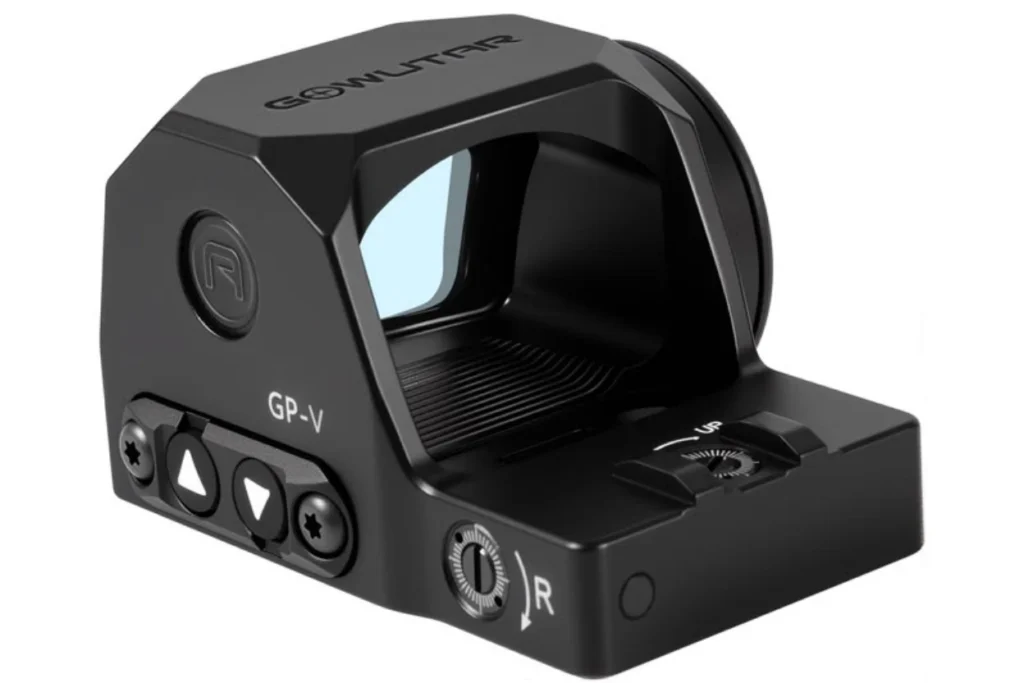
The correct footprint for most micro-compact platforms is the Shield RMSc cut. Confirm your specific pistol’s factory cut before purchasing. Common micro-compact pairings that work:
- Sig P365 / P365XL: Sig ROMEO Zero, Shield RMSc, Holosun EPS Carry
- Glock 43X MOS: Shield RMSc footprint; verify slide cut generation
- Springfield Hellcat: OSP cut; Shield RMSc compatible
At micro-compact defensive ranges, which are typically shorter than full-size carry encounters, the 4 MOA Shield RMSc dot provides fast acquisition without obscuring the target. The smaller window is a real limitation for extended precision work, but the defensive use case for a pocket-class pistol rarely demands it.
Holster Compatibility: The Step Most Buyers Skip
Mounting a red dot on your carry pistol immediately invalidates most OEM and budget holsters. The optic adds height above the slide, and the objective lens protrudes forward. Most generic holsters will not fit an optic-equipped pistol, and forcing one in risks damaging the optic, failing to achieve positive retention, or creating a draw problem.
Before purchasing a red dot, confirm that a quality carry holster exists for your specific pistol and optic combination. The major Kydex holster makers, Safariland, PHLster, Tenicor, and Tier 1 Concealed offer optic-compatible variants for the most common carry platforms. Custom kydex shops (Vedder, Werkz, T.Rex Arms) can build to your specific combination.
Do not use a holster that was not specifically designed or tested for your optic-equipped gun. This is a non-negotiable safety and retention requirement, not a recommendation.
For a complete holster selection guide including optic-compatible options, see our best concealed carry holsters guide.
No products found.
Training on a Red Dot: What Changes and How to Fix It
Transitioning from iron sights to a pistol red dot is not a casual equipment swap. The most common failure pattern: a shooter mounts a red dot, finds the dot during static range practice, and assumes they are ready to carry. Under stress, the dot is harder to acquire than expected. The natural tendency is to look for it below the optical plane, the same place the front sight was.
Established curriculum guidance on red dots is consistent across most carry instructors: the transition requires deliberate drawstroke reprogramming. The specific drill that produces the fastest results is the “up drill” from the holster, drive the gun straight up to eye level while simultaneously focusing on where the dot should appear. Practice this 200–300 repetitions dry before adding live fire stress.
The standard carry training position on pistol red dots for civilian carry is measured: they are a legitimate tool, but skill on irons should be established first. Shooters who learn to shoot on a dot without building iron sight fundamentals have a single point of failure; if the dot fails in the field, they have no reliable backup skill. The recommended sequence: achieve competency on iron sights first, then transition to a red dot as a tool that enhances existing skill rather than replacing it.
Common Mistakes With Pistol Red Dots on Carry Guns
- Buying a competition optic for a carry application.
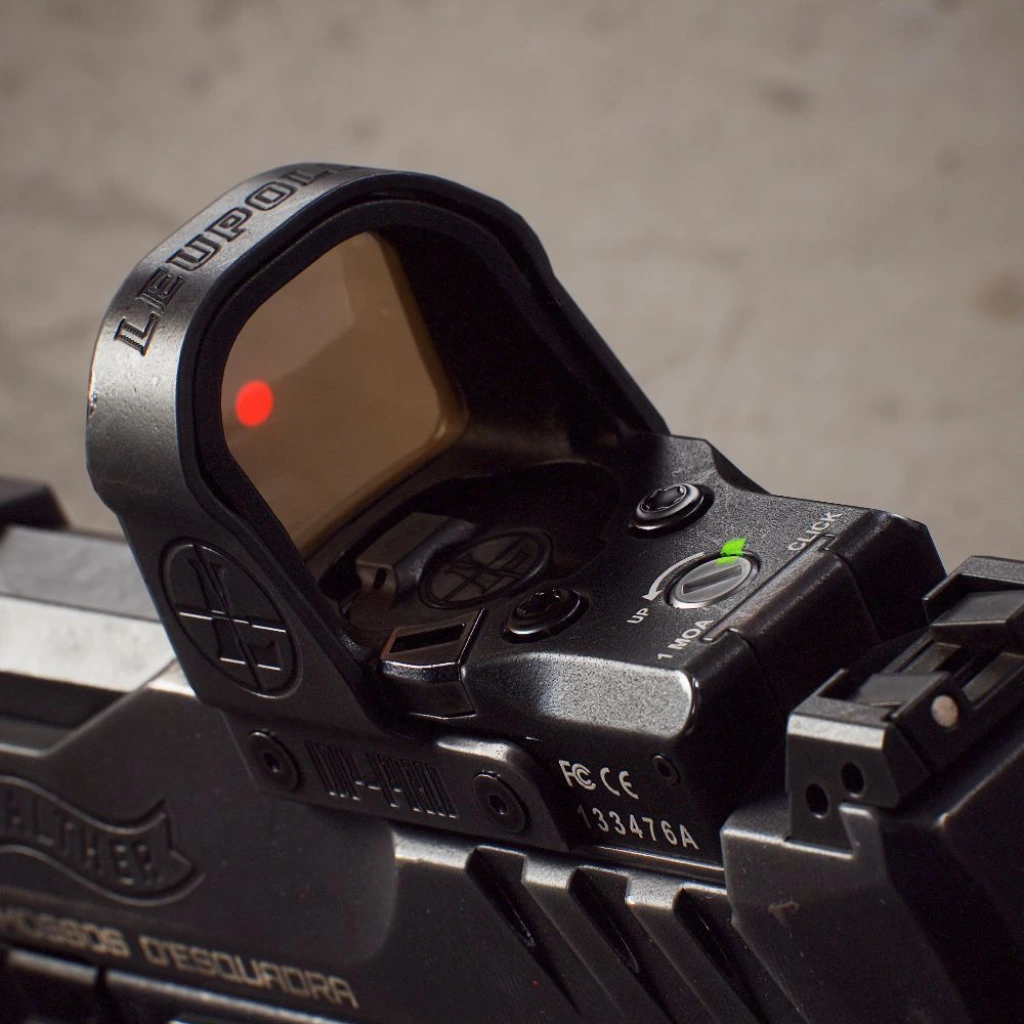
Leupold DeltaPoint Pro and similar competition-oriented dots have larger windows and lower profiles that work well in competition rigs. They were not designed to survive the environment a carry gun lives in. Verify that the optic you are considering has been tested for carry-duty use, not just range use. - Skipping the co-witness iron sight question.
If your red dot battery fails mid-carry day, do you have suppressor-height irons that co-witness through the optic? Or are your factory irons now blocked by the optic body? Carry red dot setups should include irons that remain usable if the optic goes dark. Verify co-witness height before finalizing your setup. - Zeroing at 25 yards and never confirming at carry distances.
A 25-yard zero on a pistol red dot is a practical carry zero at 7 yards; the point of impact will be slightly below the dot hold. Know your specific zero’s offset at 3, 5, and 7 yards and train with it, not just at the paper target distance. - Ignoring the screws.
Red dot mounting screws on pistol optics work loose under recoil. Apply thread-locking compound (blue Loctite, not red) to mounting screws, torque to manufacturer spec, and check the mounting screws on your carry gun every 500–1,000 rounds. A loose optic is a shifted zero. - Assuming the optic covers the cost of less training.
A red dot does not make you faster, more accurate, or more prepared. It is a tool that can enhance existing competency for the right shooter. If the money spent on the optic would buy 4–6 hours of quality instruction, the instruction is almost certainly the higher-value investment at most skill levels
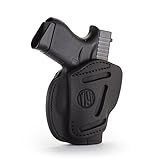
- VERSATILITY: The 3 WAY holster allows for 3 different CCW positions. The holes on both side of the holster allow for...
- COMFORT & QUALITY: Upgrade your carry to the 3-WAY leather gun holster. Made with 100% American Steerhide Leather that...
- CONCEALMENT & CONVENIENCE: Our Glock Holster is designed for concealment and convenience. Easy to conceal in both right...
Last update on 2026-10-09 / Affiliate links / Images from Amazon Product Advertising API
Bottom Line
Pistol red dots are a legitimate carry upgrade for the right shooter, specifically, shooters who have established iron sight competency, selected an optic with documented carry-duty durability, confirmed holster compatibility before mounting anything, and committed to reprogramming their draw stroke.
For most carry setups, the Holosun 507C X2 or 508T X2 represents the best value-to-durability ratio in the current market. For shooters who want the durability reference standard and have the budget for it, the Trijicon RMR Type 2 has the longest documented track record. For micro-compact platforms, the Shield RMSc or Holosun EPS Carry is the correct footprint choice, and neither should be skipped in favor of a conversion plate on a full-size-footprint optic.
Whatever optic you mount: verify the footprint, verify the holster compatibility, establish your zero at carry distances, and train the draw stroke until dot acquisition is automatic, not something you are still working out when it matters.
For complete gun reviews that include optic compatibility notes, see our best handguns for self-defense guide. For carry system setup guidance, see our concealed carry holsters hub.
Check this video out from Survival Gear: This Is the Best Pistol Red Dot of 2026
Frequently Asked Questions
-
Is a red dot sight necessary for concealed carry?
No. A red dot is a tool that enhances existing competency for the right shooter, not a requirement. Shooters with established iron sight fundamentals and specific needs (presbyopia, prior optics experience, longer-range defensive scenarios) gain the most. If you are still building basic drawstroke competency, the optic investment should wait.
-
What is the best MOA size for a carry red dot?
A 3–6 MOA dot is the practical range for defensive carry. It balances rapid acquisition at typical defensive distances (3–7 yards) without obscuring the target the way larger 8+ MOA dots do. Competition shooters often prefer 1–2 MOA for precision; that precision comes at a cost in speed under stress at carry distances.
-
Which red dot footprint fits my handgun slide?
It depends on your pistol’s factory slide cut. Full-size and compact pistols (Glock 17/19, Sig P320, M&P) most commonly use the RMR cut. Micro-compacts (P365, G43X, Hellcat) typically use the Shield RMSc footprint. Confirm your specific model’s cut before purchasing any optic. Conversion plates exist, but they add height and potential failure points.
-
Will my current holster work with a red dot?
Almost certainly not. Mounting an optic immediately invalidates most OEM and budget holsters. You need a holster specifically designed for your pistol-and-optic combination, one that accounts for the optic’s height above the slide and forward lens position. PHLster, Tenicor, Safariland, and Tier 1 Concealed all offer optic-compatible options for major carry platforms.
-
How often should I change the carry optic batteries?
Despite 4-year battery life ratings, most carry instructors recommend annual or semi-annual replacement regardless of the indicated battery level. Environmental stress, temperature cycling, and the consequences of battery failure during a defensive encounter make prophylactic replacement the correct practice. Know your battery compartment location and access procedure before you carry.
-
Why does my red dot lose zero after drawing?
The most common causes are loose mounting screws, an incorrect footprint fit creating optic movement under recoil, or failure to apply thread-locking compound to the mounting screws. Apply blue Loctite (not red) to mounting screws, torque to manufacturer spec, and verify zero every 500–1,000 rounds. A zero that holds through range sessions but drifts over time points to a screw torque issue.
-
How do I co-witness iron sights with a red dot?
Co-witnessing requires suppressor-height or raised irons that align through the optic body when the dot is active. Verify your existing irons’ height relative to your specific optic before finalizing your setup. If your factory irons sit below the optic’s optical plane, they are blocked when the dot fails. Co-witness is not an aesthetic preference; it is your backup system.
-
Should I learn to shoot on irons before switching to a red dot?
Yes, and the reason is practical: a shooter who has only trained on a red dot has a single point of failure. If the optic fails in the field, they have no reliable backup skill. The recommended sequence is to establish documented competency on iron sights first, then transition to a red dot as an enhancement layer rather than a replacement.
-
What is the best red dot for a Sig P365 or Glock 43X?
For micro-compact platforms, the Shield RMSc and Holosun EPS Carry are the two most consistent performers. Both use the RMSc footprint, offer adequate battery life for carry use, and have documented holster support from major manufacturers. The Holosun EPS Carry adds solar redundancy, which is a genuine carry advantage over battery-only options at a similar price point.
-
Is the Trijicon RMR worth the premium over Holosun?
For most civilian carry applications, the Holosun 507C X2 or 508T X2 delivers comparable carry-duty performance at a meaningfully lower price. The RMR’s premium reflects its documented durability through military and law enforcement protocols, 50,000+ round testing, and sustained abuse testing that most civilian carry guns will never approach. If budget is not the constraint and you want the longest proven track record, the RMR is the correct answer. For most carriers, the Holosun is the better value decision.
Lock in your vote and tell us: Why is this the right call?👇