
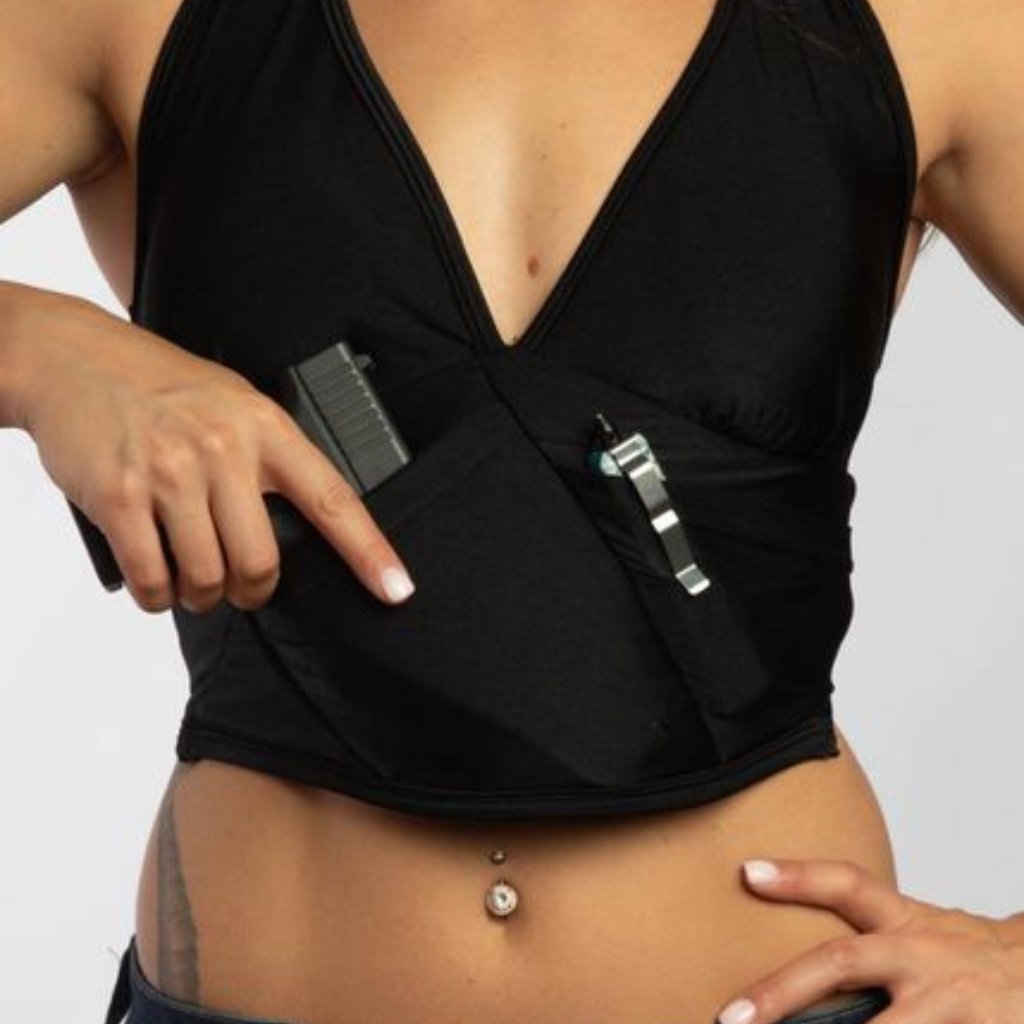

Quick Look at IWB Holster for Women With Curves
- Curves change concealment: hip flare, waist taper, and bust drape often make standard IWB setups tip, dig, or print.
- The best results usually come from carry position + adjustability (ride height, cant, clip placement), not a “women’s” label.
- AIWB and strong-side (3–4 o’clock) are common winners for curvy carriers once tuned.
- Choose holsters with full trigger coverage, stable retention, and comfort features that spread pressure.
- Wardrobe matters: high-rise pants and layering often conceal better than thin, clingy fabrics.
Related: Best Glock 43 Appendix Holsters for Women
Why “Standard” IWB Doesn’t Fit Curves
Most IWB (inside-the-waistband) holsters are developed around a fairly straight torso-to-hip profile, a flatter abdomen, and clothing patterns that assume a more uniform waistline. That’s not a “you” problem. It’s a design baseline problem.
Why are standard IWB holsters designed for male body frames
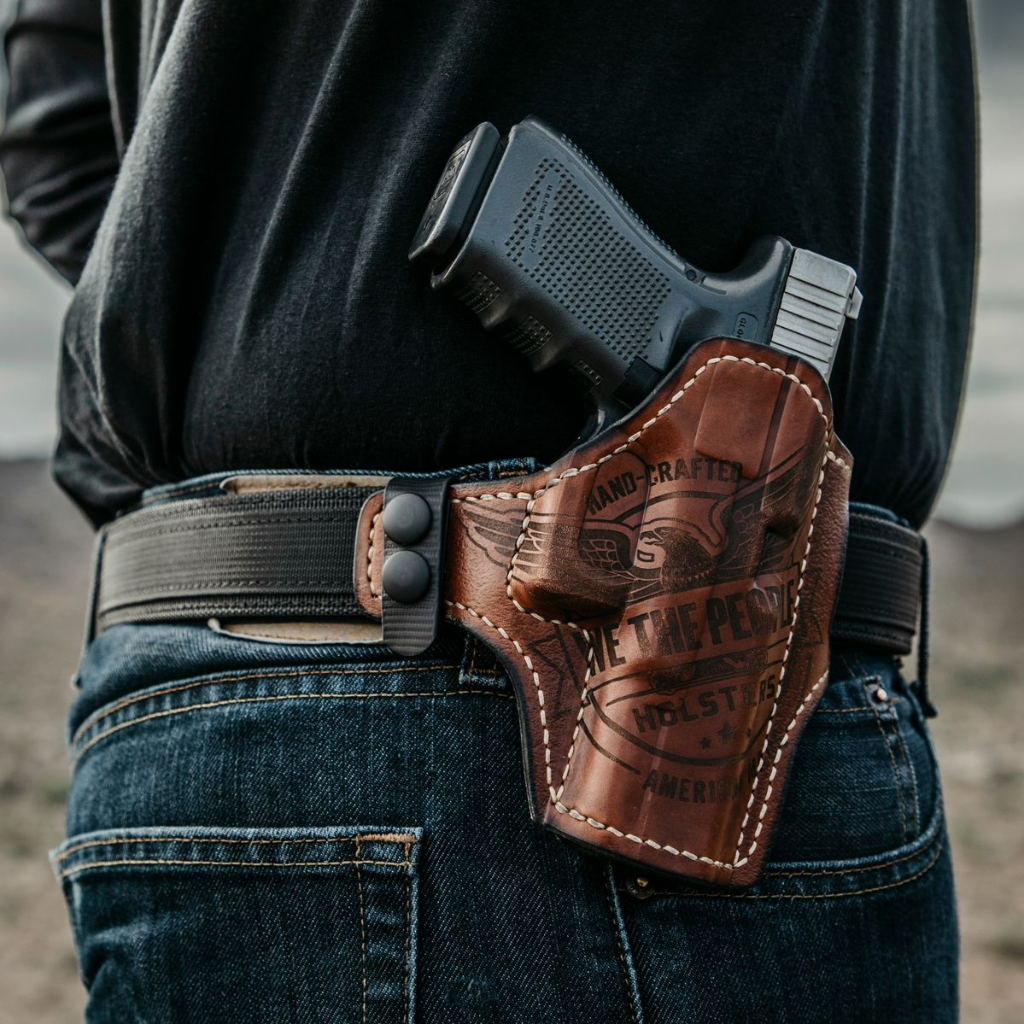
A lot of mainstream IWB design assumes:
- A straighter hip line (less hip flare)
- A more consistent waist measurement (less taper)
- Less bust projection affects how shirts drape over the grip
- Pants and belts that sit at predictable heights and angles
Those assumptions can make a perfectly good holster feel awful, print badly, or shift constantly on a curvier body.
The unique challenges curvy women face
If you’ve got pronounced hips, a tapered waist, and a bust that changes how fabric hangs, you’ve probably experienced at least one of these:
- Hip flare: the holster “rides out” or tips as it tries to follow the curve
- Waist taper: belts want to slide to the narrowest point, changing holster angle
- Bust + shirt drape: tops can “bridge” over the grip, or tighten across it, and print
- Clothing fit: high-rise jeans, shapewear, and fitted dresses change pressure points fast
Why carry position must adapt to body shape
For curvy concealment, the “best holster” is often the one that lets you change the geometry:
- where the holster sits (position)
- how it sits (cant/angle)
- how deep it sits (ride height)
- how it spreads pressure (backing/clip placement)
Think of it like shoes: the right brand helps, but fit and placement make the difference.
Understanding Female Anatomy & Concealment
Curves don’t just change comfort. They change how concealment works.
Hip-to-waist ratio
A higher hip-to-waist ratio often means the belt line forms a cone rather than a cylinder. Translation: holsters want to tilt, lever, or climb unless the clip layout and ride height match your shape.
Bust projection vs. grip printing
Many women notice printing “up top,” not because the holster is too big, but because:
- The bust changes the drape of the fabric
- Shirts may pull across the midsection
- The grip (not the slide) is the part most likely to print
A setup that tucks the grip inward (via cant, ride height, and clip position) matters more than shaving 0.1 inch off holster thickness.
Pelvic tilt and holster angle
Pelvic tilt varies person to person, and it affects where the muzzle and grip want to point and press. Small changes to cant can be the difference between:
- “I can sit all day.”
- and “this digs into my thigh/ribs every time I move.”
How curves affect ride height, cant, and pressure points
- Ride height: too high = the grip tips outward and prints; too low = hard draw and more pinch.
- Cant: too neutral on the strong side can jab ribs or print; too much cant can make the muzzle poke in odd places when seated.
- Pressure points: curves concentrate pressure. A small holster hotspot on a flat torso can become “unwearable” on a curved one.
Best IWB Carry Positions for Curvy Women
Below are the most common IWB positions, with a curvy-body lens. No single position wins for everyone, but patterns show up.
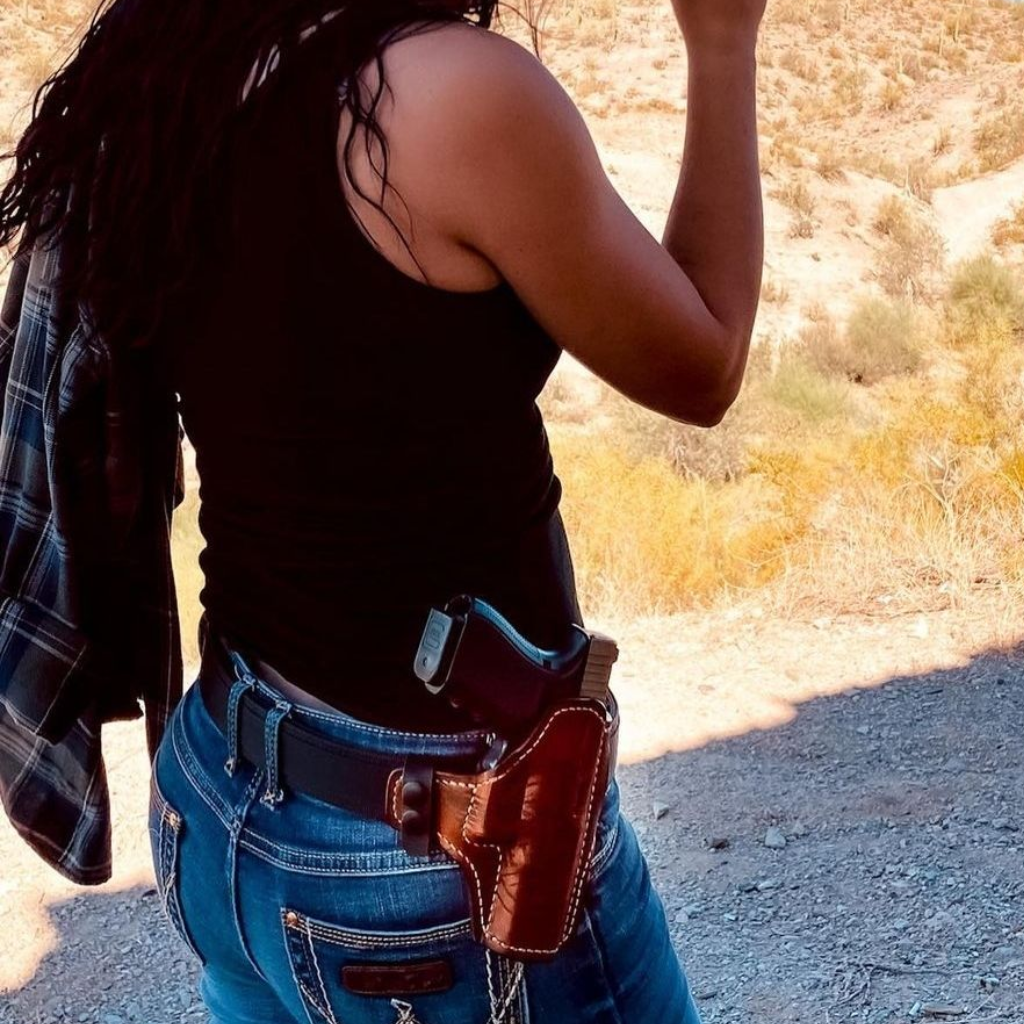
Appendix (AIWB)
Comfort:
AIWB can be very comfortable for curvy women if you match the ride height and angle to your pelvic structure. The main discomfort trigger is muzzle pressure when seated and grip pressure under the bust line.
Concealment with curves:
Often excellent, because the gun sits under the natural “shadow” of the torso and can be easier to control against printing. But it’s sensitive to belt height (high-rise vs low-rise).
Clothing compatibility:
Works best with:
- mid- to high-rise pants/jeans
- structured tops, sweaters, layered outfits
Harder with:
- clingy bodycon fabrics
- low-rise waistlines that force the holster to sit too low
Pros
- Fast access (especially standing)
- Great control over printing
- Easier to protect the gun in crowded spaces
Cons
- More sensitive to sitting posture and pant rise
- Reholstering demands extra attention to safety and clothing clearance (see Safety section)
Strong-side hip (3–4 o’clock)
Comfort:
For many curvy women, this is the “almost works” position—until the hip flare pushes the grip outward or the muzzle finds a pressure point.
Concealment with curves:
Can be good if:
- You use a bit of forward cant
- The grip is tucked into the waistline (not perched on the hip crest)
Clothing compatibility:
Works well with:
- looser tops, tunics, flannels
- jackets and layers
Harder with:
- shorter tops that end at the widest part of the hip
- very fitted tees that cling around the grip
Pros
- Familiar draw stroke for many shooters
- Less front-of-body pressure than AIWB
- Often easier to fit with different bust sizes
Cons
- Printing at the hip is common on curvy frames
- The holster can tip outward unless the clip placement is stable
Behind-the-hip (4–5 o’clock)
Comfort:
This position can feel great standing, but sitting can be the deal-breaker—especially with fuller hips and a narrower waist, because the holster compresses between body and chair.
Concealment with curves:
Often excellent standing, because the grip sits behind the widest hip point. But printing can appear when bending forward (your shirt stretches across the back/side).
Clothing compatibility:
Best with:
- longer tops
- cardigans, hoodies, coats
Harder with:
- cropped tops
- tight waistbands that force the holster upward
Pros
- Very discreet for many body types
- Grip can “hide” behind the hip structure
Cons
- Seated comfort can be rough
- Draw can be slower and requires more shoulder mobility
Crossdraw
Comfort:
Crossdraw can be a strong option for curvy women who struggle with hip printing or rib digging on the strong side. It’s also often friendlier for driving.
Concealment with curves:
Varies widely. On some bodies, crossdraw places the grip in a spot where the bust drape helps conceal it. On others, it prints because the grip points across the stomach.
Clothing compatibility:
Works well with:
- layered outfits
- jackets/vests
Harder with:
- fitted tops without layering
- low-rise pants that don’t support stable placement
Pros
- Often comfortable seated (including in a car)
- Can reduce hip printing for some curvy shapes
Cons
- Needs careful setup to avoid grip printing forward
- Requires training and discipline to draw safely and consistently
What to Look for in an IWB Holster for Curvy Body Types
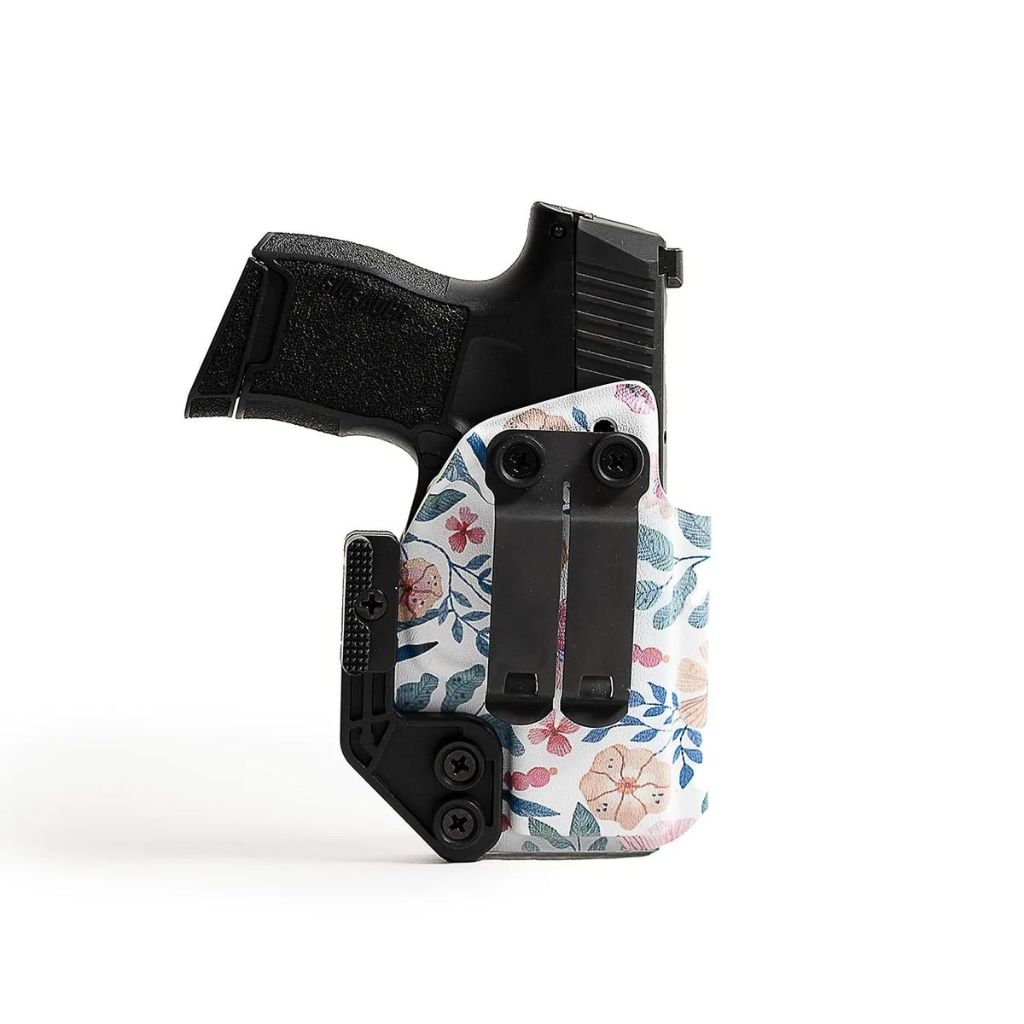
Holster “fit” for curves is mostly about adjustability + pressure management.
Adjustable cant & ride height
This is non-negotiable for most curvy carriers. Your anatomy changes the ideal angle and depth. Look for holsters that let you:
- raise/lower ride height in meaningful increments
- change cant from neutral to forward (and sometimes negative for AIWB)
(Example: We The People notes that ride height and cant change by moving the clip position on certain IWB models.) )
Flexibility vs. rigidity
- Rigid shells (Kydex/polymer): great retention and trigger coverage, can create hotspots if edges press into curves.
- Hybrid/contoured backers: can reduce hotspots by spreading pressure across more surface area, especially on hips.
Alien Gear’s ShapeShift IWB line emphasizes a backer built to flex with the body and mentions adjustable ride height/cant on product pages.
Contoured backing
If your waist and hip line create “gaps,” a contoured backing can:
- Reduce tipping
- Smooth pressure points
- Stabilize the holster through movement
Pressure distribution
Curves amplify pressure. A good curvy-friendly IWB setup tends to:
- Spread the load across a wider area
- Avoid narrow clip spacing that creates a “hinge” effect
- Keep hard edges off hip bones and ribs
Belt clip placement
Clip placement matters as much as the holster body.
- Wider clip spacing can stabilize on curvier hips.
- A single clip can be fine, but only if it doesn’t let the grip lever outward.
Retention and trigger coverage
For any IWB holster, prioritize:
- Full trigger guard coverage
- Reliable retention that doesn’t collapse or deform
A Girl & A Gun highlights full trigger guard coverage as a necessary holster feature.
Brands That Design for Female Anatomy (Without the Pink Tax Vibes)
You don’t need a “women’s holster” label to get a great fit. But you do want features that accommodate curves: adjustability, pressure distribution, and stability.
How We the People and Alien Gear approach contouring and adjustability
- We The People: Many IWB models emphasize adjustable ride height and cant through clip positioning, which can help curvy carriers fine-tune grip tuck and comfort
- Alien Gear: The ShapeShift IWB platform is often positioned around comfort features like a backer designed to flex with the body, and a configurable carry setup, plus adjustable cant/ride height on product listings.
Design features that accommodate curves
Look for:
- meaningful ride height and cant adjustment
- smoother backer edges or padding where your body curves hardest
- stable clip geometry that resists tipping on a tapered waist
Why “gender-neutral” holsters often fail women
It’s not the gender label. It’s the assumptions:
- The belt line sits flat and level
- The hip doesn’t flare
- The torso doesn’t create a fabric drape that changes printing patterns
Curvy bodies break those assumptions, so you need gear that can adapt.
Comparison Table
| Carry Position | Body Type Fit | Comfort | Concealment | Best Clothing Styles |
| Appendix (AIWB) | Great for many curves if tuned to rise/tilt | Medium–High | High | Mid/high-rise jeans, layers, structured tops |
| Strong-side (3–4) | Good if grip tucks into waist (not on hip crest) | Medium | Medium | Tunics, loose tees, jackets |
| Behind-hip (4–5) | Great standing; varies seated depending on hip/butt shape | Low–Medium seated | High standing | Longer tops, hoodies, coats |
| Crossdraw | Works well for some curvy frames and drivers | Medium–High | Medium | Layering, jackets/vests, longer tops |
Styling & Wardrobe Tips for Curvy Concealed Carry
You don’t have to dress like a tent. You do need to understand where fabric tightens.
High-waisted vs. low-rise
- High-waisted: often ideal for AIWB because the belt line supports the holster higher and steadier.
- Low-rise: can force the holster too low, increasing muzzle pressure when seated and making grip access harder.
Dresses vs. jeans
- Jeans/pants: easiest for IWB because you have a belt anchor and waistband structure.
- Dresses: can work with the right layering (cardigan, jacket), but many dresses lack a stable belt line. If you’re committed to dresses, consider structured belts and thicker fabrics.
Belt placement
A sturdy belt reduces tipping and printing because it keeps the holster from migrating to the narrowest part of your waist. If your belt slides, your holster angle changes all day.
Layering strategies
Layers are your friend, especially with curves:
- open-front cardigans
- denim jackets
- flannels
They add visual break-up and reduce “fabric cling outlines.”
Common Problems & Solutions
Hot spots
Why it happens: hard edges meet hip bones or rib lines.
Fixes:
- Adjust ride height slightly (even ¼ inch helps)
- Add a contoured backer or choose a holster with a broader backing surface
- Experiment with shifting 1 inch forward/back from the painful spot
Printing at the bust or hip
Why it happens: the grip is the usual culprit.
Fixes:
- Increase cant slightly (strong-side) to tuck the grip
- Lower ride height a touch (if draw remains safe and accessible)
- Choose tops with more structure or add a light outer layer
Holster tipping
Why it happens: waist taper + clip layout + belt stiffness mismatch.
Fixes:
- Move clip position (if adjustable) to change leverage
- Consider wider clip spacing designs
- Use a stiffer belt that stays put on your waistline
Grip digging into ribs
Why it happens: grip angle points into your rib line as you bend or sit.
Fixes:
- Reduce the cant slightly or adjust the position from 3:00 closer to 3:30/4:00
- Try AIWB with a slightly different ride height if the strong side keeps jabbing you
- Test a holster with better pressure distribution
Safety Considerations for Curved Body AIWB & IWB
Your body shape changes angles and clothing interactions. Safety fundamentals stay the same.
Trigger coverage
Use a holster that fully covers the trigger guard and maintains its shape during wear. That’s a widely emphasized baseline for safe carry.
Reholstering angles
Appendix carry deserves extra care because reholstering is where many negligent discharges occur. often due to fingers or clothing entering the trigger guard.
If your posture or holster angle forces the muzzle toward your body during reholster, slow down and prioritize a safer process (including clearing garments carefully). PHLster specifically notes how angle and body position can affect safe reholstering mechanics.
Clothing interference
Curvy wardrobes often involve:
- longer tops
- shapewear
- drawstrings
- layered fabrics
All of these can snag or fold into the holster mouth. Before you reholster, visually and physically confirm the holster is clear of fabric.
Safety note (non-negotiable): Holstering is not a race. Slow, deliberate reholstering prevents most avoidable incidents.
Your Best IWB Setup Is the One That Matches Your Curves
If you’ve tried IWB and felt like it “just isn’t for you,” chances are you were fighting geometry, hip flare, waist taper, bust drape, and pressure points that standard setups don’t account for.
Start with the carry position, then fine-tune:
- ride height
- cant
- clip placement
- pressure distribution
The win isn’t finding a one-size-fits-all holster. It’s building a setup that fits your shape and your wardrobe.
Next Step: Test Positions With Anatomy-Engineered Adjustability
Pick one adjustable IWB holster platform and run a simple at-home test:
- Try AIWB, 3–4 o’clock, and 4–5 o’clock for short sessions.
- Change only one variable at a time (ride height, cant, or position).
- Sit, bend, reach, and walk, then note comfort and printing.
Look for holsters that emphasize adjustable geometry and comfort-driven backing/pressure management so you can dial in concealment without fighting your body.
FAQ
-
What is the best IWB carry position for women with curves?
For many curvy women, appendix (AIWB) or strong-side 3–4 o’clock works best once ride height and cant are tuned. AIWB often conceals well under natural torso drape, while strong-side can be comfortable with the grip tucked into the waistline rather than perched on the hip.
-
Is the appendix carry safe for curvy women?
Yes, with the right holster and careful habits. The holster must fully cover the trigger guard and stay rigid, and reholstering should be slow and deliberate, with clothing fully cleared. Many safety discussions highlight reholstering as the highest-risk moment, not the carry position itself.
-
Can you conceal with tight clothing?
Sometimes, but it’s less forgiving. Tight fabrics tend to print the grip and outline clip locations. If you prefer fitted outfits, prioritize deeper concealment ride height, grip tuck (cant/clip geometry), and layering (even a light overshirt or cardigan). Thicker, structured fabrics usually conceal better than thin knits
-
Do women need different holster geometry?
Not always “women-only” geometry, but many women do need more adjustability and better pressure distribution due to hip flare, waist taper, and how tops drape over the grip. A holster that offers meaningful ride height/cant adjustments and stable clip placement often matters more than a gender label.
-
Why does my holster dig in when I sit down?
Sitting changes angles at the waist and hips, and curvier bodies can create stronger pressure points. The fix is usually a small adjustment: shift the position an inch, change the cant slightly, or raise/lower the ride height. If seated comfort is a constant issue, crossdraw or a different AIWB setup may work better.
-
How do I stop printing at my hip?
Printing at the hip usually means the grip is levering outward. Try increasing forward cant slightly, lowering ride height a touch, or moving the holster from 3:00 closer to 3:30/4:00 so the grip tucks into your waist curve. Also consider tops that end above or below the widest hip point (not right on it).
-
What features matter most in an IWB holster for curves?
Top priorities are adjustable ride height and cant, solid trigger guard coverage, stable clip placement, and comfort features that spread pressure (like contoured backers). Brands that emphasize adjustability can help you fine-tune concealment instead of forcing a one-position-only fit.
-
Should I size up my pants for IWB carry?
Often, yes, especially with rigid holsters. Many carriers find going up one pant size (or choosing stretch denim/high-rise options) improves comfort and reduces waistband pressure. The goal is to avoid compressing the holster into your body so hard that it creates hotspots or pushes the grip outward.
-
What’s the best IWB option for driving or sitting a lot?
Many curvy women prefer crossdraw or a carefully tuned AIWB for extended seated time. Behind-the-hip (4–5 o’clock) often becomes uncomfortable in cars because the holster gets pinned between your body and the seat. If you drive daily, test your setup seated before committing.
-
Can a “better belt” really fix concealment issues?
Yes, often dramatically. A stable belt reduces holster tipping, keeps ride height consistent, and prevents the grip from levering outward as you move. On a tapered waist, a belt that stays in place can be the difference between “constantly adjusting” and “set it and forget it.”


Leave a Comment