
Updated : The 2023 rule remains vacated, ATF’s October 9 non-enforcement policy is in effect, and no final repeal has been published.
The ATF pistol stabilizing brace rule is gone, and the SBR paperwork is unenforced. So why does it still feel so murky? Because three different things happened at three different times, and they keep getting lumped together. A court killed the rule. ATF proposed erasing its text. Then in October, ATF stopped enforcing SBR registration altogether.
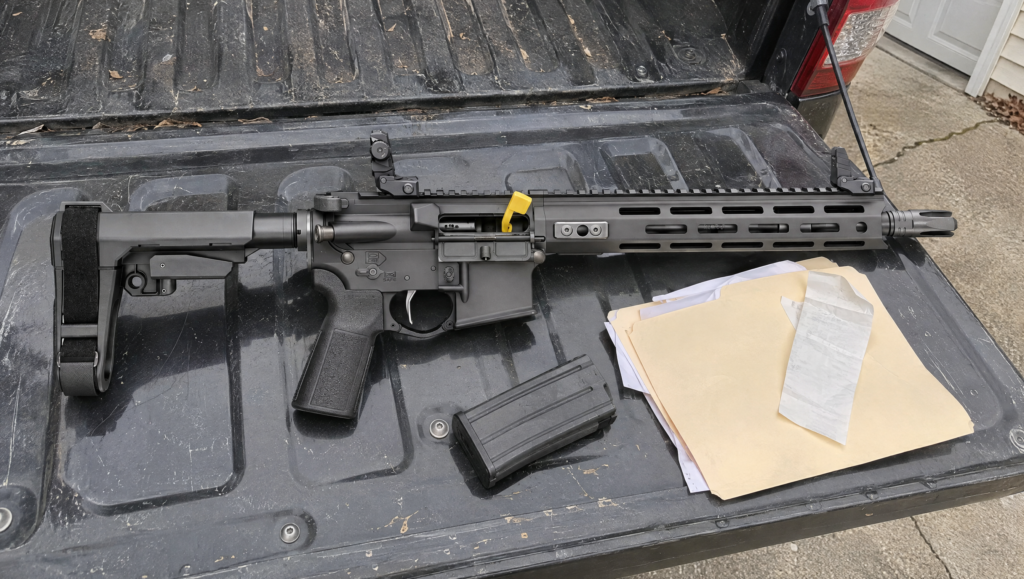
Our read: if you own a braced pistol, the end of the ATF pistol stabilizing brace rule puts you in a better spot than you’ve been in years. But better isn’t the same as settled, and a few details still decide what you should do next.
At a Glance: The Brace Rule in November 2026
- Rule status: A federal court vacated the 2023 ATF pistol stabilizing brace rule in June 2024. It has no legal force.
- Repeal: ATF proposed deleting the rule’s text in May 2026. No final repeal is published yet.
- October 9 change: ATF stopped enforcing NFA registration for short-barreled rifles. That is policy, not repeal.
- Still applies: State law, the Form 20 for SBR travel, and the chance enforcement returns.
GunCarrier earns a commission if you buy through the Amazon link on this page, at no extra cost to you. As an Amazon Associate, GunCarrier earns from qualifying purchases.
This article is for education, not legal advice. GunCarrier does not provide instructions for modifying firearms. Verify your situation with a qualified firearms attorney in your state.
What Is the ATF Pistol Stabilizing Brace Rule’s Status in November 2026?
The ATF pistol stabilizing brace rule has no legal force: a federal court vacated it in 2024, and ATF’s proposal to delete its text from the regulations is still pending.
Here is the timeline of the ATF pistol stabilizing brace rule in plain English:
-
Jan 31, 2023
ATF publishes Final Rule 2021R-08F, reclassifying most braced pistols as short-barreled rifles (SBRs). Owners get 120 days to comply.
-
Jun 13, 2024
A federal court in Texas vacates the rule nationwide in Mock v. Garland.
-
Jul 2025
The government dismisses its appeal. The vacatur stands.
-
May 6, 2026
ATF proposes deleting the brace language from 27 CFR 478.11 and 479.11 (RIN 1140-AA98). Comments closed August 4, 2026.
-
Oct 9, 2026
ATF publishes an open letter and stops enforcing SBR registration. A policy, not a repeal.
-
Early Nov 2026
No final repeal has been published yet.
As of early November 2026, we found no final repeal in the Federal Register. Honestly, that’s a paperwork gap, not a legal risk. The ATF pistol stabilizing brace rule can’t be enforced while its text just sits on the books.
One wrinkle we wouldn’t ignore, even with the ATF pistol stabilizing brace rule gone: in 2026 court filings, ATF said it still reviews some braced builds case by case. And the old line hasn’t moved. A barrel under 16 inches on a gun designed to be fired from the shoulder is still an SBR.
What Did ATF’s October 9, 2026 Open Letter Change?
The October 9 letter is a separate story from the ATF pistol stabilizing brace rule: it stopped NFA registration enforcement for SBRs, but it did not repeal anything.
This part started with money. Congress cut the NFA tax on SBRs, short-barreled shotguns, suppressors, and “any other weapons” from $200 to $0 starting January 1, 2026. Then on August 5, 2026, a Texas federal judge ruled in Silencer Shop Foundation v. ATF that registration for those items couldn’t stand with a $0 tax. That injunction only covered the parties in the case.
So on October 9, ATF published an open letter and FAQ that extended non-enforcement to everyone, as a matter of discretion. Here’s what that means in practice:
- No longer enforced: ATF approval before making or transferring an SBR, and NFA registration of SBRs.
- Still required: Gun Control Act rules, the Form 4473 and background check at a dealer, and an approved Form 20 before you move an SBR across state lines.
- Still in force: Every state and local law on SBRs and braced firearms.
Non-Enforcement Is Not Repeal
The NFA is still federal law. ATF warns enforcement could resume if Congress adds a tax, the court order is overturned, or the policy is rescinded. Unregistered items get no automatic grandfather clause.
People mix up three things here: the vacated ATF pistol stabilizing brace rule, ATF’s October 9 policy, and the pending repeal.
2023 brace rule
Vacated
- What it did
- Treated most braced pistols as short-barreled rifles.
- Status
- Vacated by a Texas court in June 2024. No legal force.
- Can it change?
- Its text stays on the books until a final repeal.
October 9 ATF policy
Not enforced
- What it does
- Stops enforcing NFA approval and registration for SBRs.
- Status
- Enforcement discretion. The NFA is still federal law.
- Can it change?
- Yes. ATF says enforcement could resume.
Formal repeal
Proposed only
- What it would do
- Delete the brace language from federal regulations.
- Status
- Proposed May 6, 2026. Comments closed Aug 4, 2026.
- Can it change?
- Not final. No final rule yet as of early Nov 2026.
Sources: Federal Register 2023-01001 and 2026-08930; ATF open letter, Oct 9, 2026.
Should You Keep the Brace or Switch to a Stock?
Since the ATF pistol stabilizing brace rule fell, experienced owners are split, and the right answer depends on your state, your travel, and your tolerance for policy risk.
One camp says keep the brace. Their logic is simple. A pistol was never an NFA item, so it stays lawful no matter which way enforcement swings. It also skips the Form 20 step for travel, and in some states pistol status matters for carry permits.
The other camp says the paperwork that made the ATF pistol stabilizing brace rule a threat is now unenforced, so set the gun up for how you actually shoot it. Fair enough. But that carries the exact risk ATF names in its own letter: policy can change.
We’d let these four questions decide it, not a hunch:
- Does your state ban the host firearm or SBRs? If yes, state law governs. Talk to an attorney before changing anything.
- Did you register during the 2023 amnesty? Read the next section first.
- Do you cross state lines with it? A braced pistol avoids the Form 20 requirement that applies to SBRs.
- Does it stay home in a permissive state? Both paths are federally unenforced today, but only the pistol stays clearly lawful if enforcement resumes.
What If You Registered During the 2023 Amnesty?
An approved Form 1 filed under the ATF pistol stabilizing brace rule amnesty is still a valid registration, and removing it is a one-way door.
ATF’s FAQ spells out the process: you write the NFA Division at NFAFAX@atf.gov. The catch is what happens next. Once an item is removed, it can’t be re-registered unless the Attorney General declares a new amnesty.
That matters most in states that tie SBR possession to federal registration. Talk to a firearms attorney before you file anything. This isn’t one you get to undo.
Which States Still Restrict Braced Pistols?
The end of the ATF pistol stabilizing brace rule does not override state law, and about a dozen jurisdictions still restrict braced pistols or their host firearms.
State snapshot
Check your home state and every state you drive through.
| Status | Jurisdictions |
|---|---|
| Ban on common braced AR and AK pistols | Connecticut, Delaware, Hawaii, Illinois, New Jersey, New York, Washington, D.C. |
| Restricted | California, Colorado, Massachusetts, Washington |
| Watch list | Virginia: 2026 law naming arm braces, blocked by court injunction |
Removing the brace may not help: most of these states reach the host firearm through feature tests.
Reference: statute-cited state matrix, verified October 20, 2026. Your state statute takes priority.
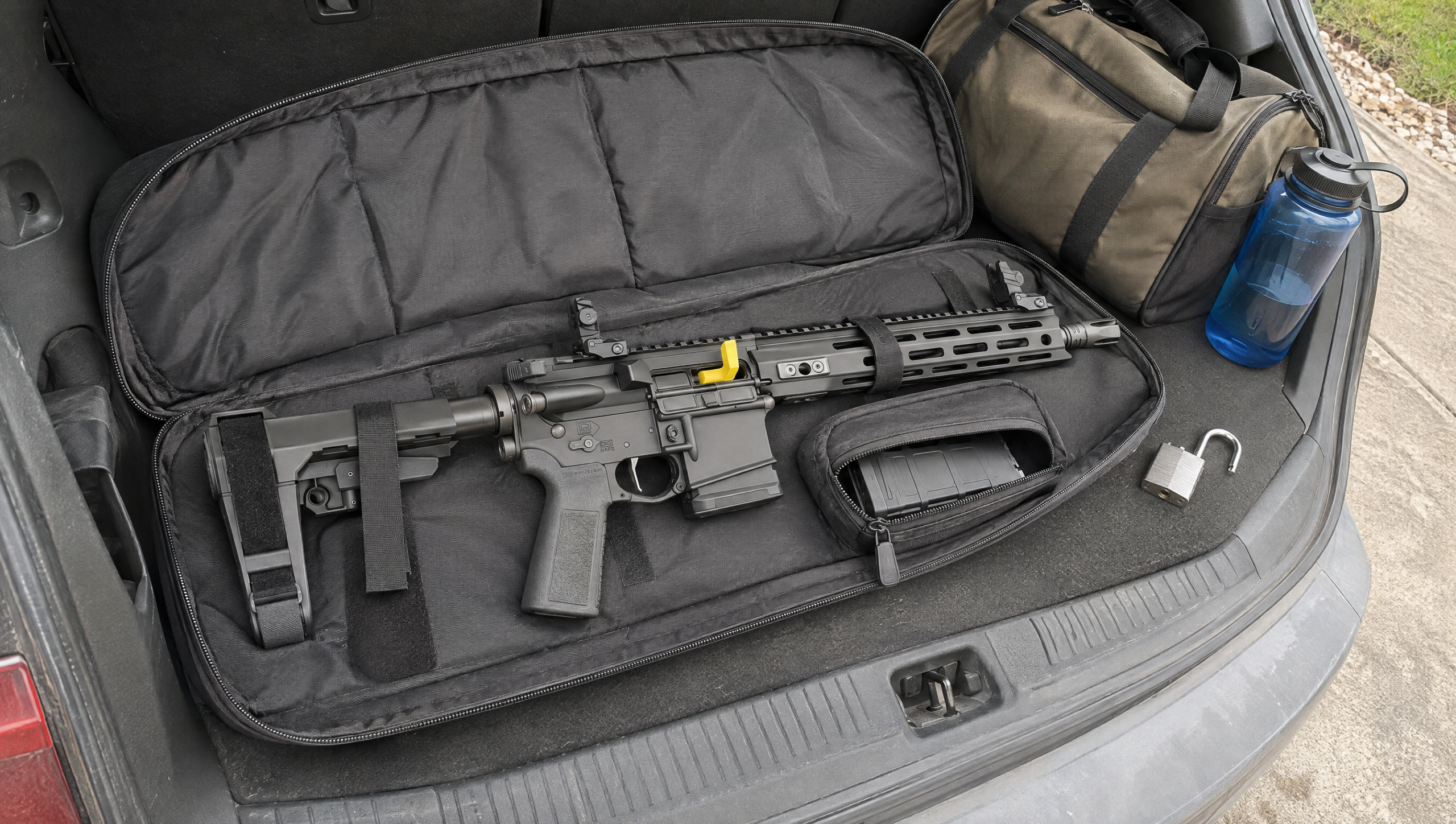
Driving somewhere? Check our guide to traveling with a gun across state lines, and read your destination’s current statute before every trip. A pistol that’s fine at home can be a problem two states over.
Where Braced Pistol Owners Stand Now
The ATF pistol stabilizing brace rule is finished as a legal threat. What replaced it is discretion, though, and discretion can move. Before you buy, change, sell, or travel, run this quick check:
- Federal status: Is my firearm a pistol, or does it meet the SBR definition?
- State status: What do my home state and destination states say about this configuration?
- Paperwork status: Do I hold an amnesty registration, and does my state rely on it?
Want the bigger picture? See our breakdown of the ATF 34-rule reform package and our report on suppressors and the NFA.
Compliance Tools
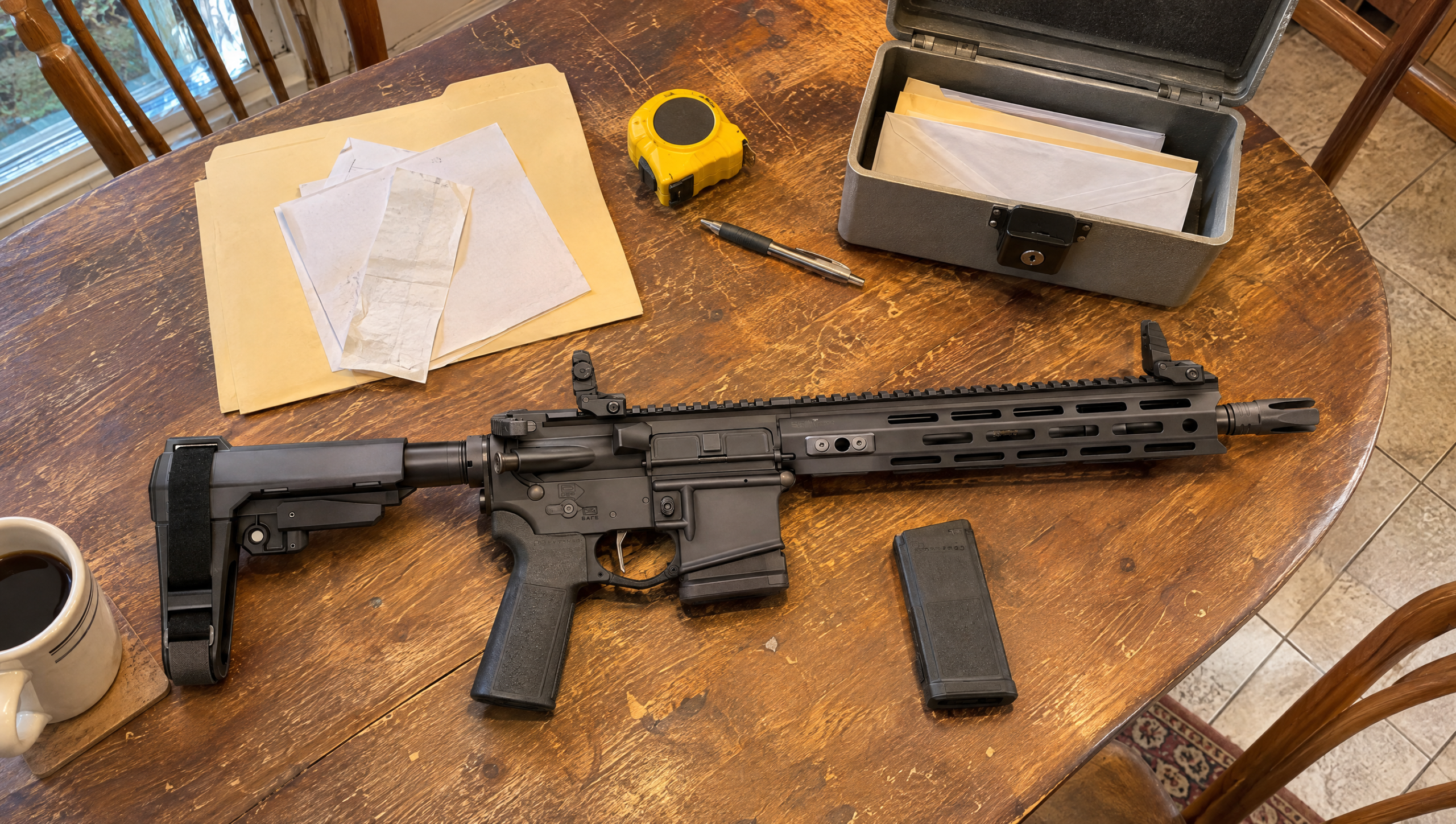
Good records are cheap insurance here. A fireproof file box keeps photos, measurements, receipts, and NFA paperwork in one place. It protects documents, not the firearm, and its fire and water ratings are the manufacturer’s claims.
Paid link.
- FIRE AND FLOOD PROTECTION FOR ESSENTIAL PAPERS: UL Classified to withstand high temperatures for up to thirty minutes...
- DESIGNED FOR IMPORTANT DOCUMENT STORAGE: Spacious interior fits hanging file folders and is ideal for organizing...
- KEY LOCK SECURITY YOU CONTROL: Durable key lock helps prevent unauthorized access and keeps the lid securely closed...

Last update on 2026-11-03 / Affiliate links / Images from Amazon Product Advertising API
Do one thing today
Photograph your braced firearm, write its barrel length and overall length on the receipt, and file both with your records on the ATF pistol stabilizing brace rule. It takes a few minutes, and if the rules shift again, you’ll have a dated record of exactly what you owned.
Frequently asked questions
No. A federal court in Texas vacated the 2023 rule nationwide on June 13, 2024, and the government dropped its appeal in July 2025. ATF proposed deleting the rule’s text in May 2026. As of early November 2026, no final repeal has been published, but the vacated rule cannot be enforced.
No. A firearm that remains a pistol was never subject to NFA registration, and the vacated 2023 rule cannot require it. Since October 9, 2026, ATF also does not enforce NFA registration for short-barreled rifles. State law may still impose its own requirements, so check your home state statute.
ATF stopped enforcing NFA approval and registration for short-barreled rifles, short-barreled shotguns, suppressors, and “any other weapons” nationwide, as a matter of enforcement discretion. Gun Control Act rules, background checks at dealers, the Form 20 for interstate SBR travel, and every state law still apply.
No. The National Firearms Act is still federal law. ATF chose not to enforce certain parts of it after Congress set the tax to $0 and a Texas court ruled against registration. ATF warns enforcement could resume if the tax returns, the court order is overturned, or the policy is withdrawn.
A braced firearm that stays a pistol was never an NFA item, so it remains lawful even if federal enforcement changes later. Interstate travel matters too, since SBRs still need an approved Form 20 before crossing state lines, and some state rules treat pistols differently for carry permits and vehicles.
Your approved Form 1 is still a valid registration. ATF says you can request removal by writing the NFA Division at NFAFAX@atf.gov, but a removed item cannot be re-registered unless the Attorney General declares a new amnesty. Talk to a firearms attorney before filing, especially in states that rely on federal registration.
A statute-cited matrix verified October 20, 2026 lists bans on common braced AR- and AK-pattern pistols in Connecticut, Delaware, Hawaii, Illinois, New Jersey, New York, and Washington, D.C. California, Colorado, Massachusetts, and Washington impose restrictions. Virginia’s 2026 law naming arm braces is blocked by injunction. Confirm the current statute yourself.
The statute still defines an SBR as a rifle with a barrel under 16 inches designed to be fired from the shoulder. In 2026 court filings, ATF said it reviews some braced builds case by case. A pistol with a brace used as a brace is not what that review targets.
Keep dated photos of the firearm’s current configuration, its barrel length and overall length, purchase receipts for the firearm and the brace, and any NFA paperwork. Store copies somewhere fire-safe. A dated record helps you and your attorney answer questions about your firearm’s status at a specific point in time.
Quick Poll: Brace or Stock?
What would change your answer: travel, your state, or the next policy change? Tell us in the comments.