
Key facts
The ATF 34-Rule package, signed April 29, 2026, includes seven final rules and 27 proposed rules across five categories: repeal, modernize, reduce burden, clarify, and align. The most consequential ATF 34-Rule changes are the rescinded pistol brace rule, the rescinded engaged-in-the-business expansion, and new NFA interstate travel and CLEO notification reforms. Proposed rules require a 90-day public comment period before they take effect. State laws still apply.
Related: 2026 State Firearm Laws: What CCW Holders Must Know Before July 1
In This Article
- What Is the ATF 34-Rule Package and What Just Changed?
- Which ATF 34-Rule Changes Affect Your Pistol Brace?
- How Does the ATF 34-Rule Package Affect Your NFA Items?
- What Should Concealed Carriers Know About the ATF 34-Rule Changes?
- Which States Override the ATF 34-Rule Pistol Brace Reversal?
- What’s Your 3-Step Compliance Checklist After the ATF 34-Rule Package?
- Where Do You Stand on the ATF 34-Rule Changes?
- Frequently Asked Questions
If you registered your braced pistol as a short-barreled rifle during the 2023 amnesty, the news that the ATF 34-Rule package has rescinded that rule probably triggered the same question thousands of owners are asking right now. As one forum commenter put it: “Currently the reg is in limbo, valid in some places, invalid in others.”
That tension is the right starting point. The ATF 34-Rule reforms point in a permissive direction overall, but treating the package as a single block is how compliant owners make expensive mistakes. Here is what changed, what is enforceable now, and what you should do before you modify anything.
This article is for general information only and is not legal advice. Verify all federal and state firearms law with a licensed attorney before making, transferring, or modifying any firearm.
What Is the ATF 34-Rule Package and What Just Changed?
On April 29, 2026, Acting Attorney General Todd Blanche signed the ATF 34-Rule package hours after the Senate confirmed Robert Cekada as ATF Director. The DOJ described it as the most significant ATF regulatory rewrite in 15 years.
The package contains 34 notices: seven final rules and 27 proposed rules, organized into five categories named Repeal, Modernize, Reduce Burden, Clarify, and Align. It was issued under Executive Order 14206, “Protecting Second Amendment Rights.”
The ATF 34-Rule package mixes immediately enforceable Final Rules with proposed rules that require a 90-day public comment period before they take effect. That distinction is the single most important compliance fact in the entire announcement. Acting on a proposed rule as if it were final exposes you to enforcement risk that a final rule does not. For a deeper background on how ATF rule-making works, see our guide to federal firearms rule-making.
Which ATF 34-Rule Changes Affect Your Pistol Brace?
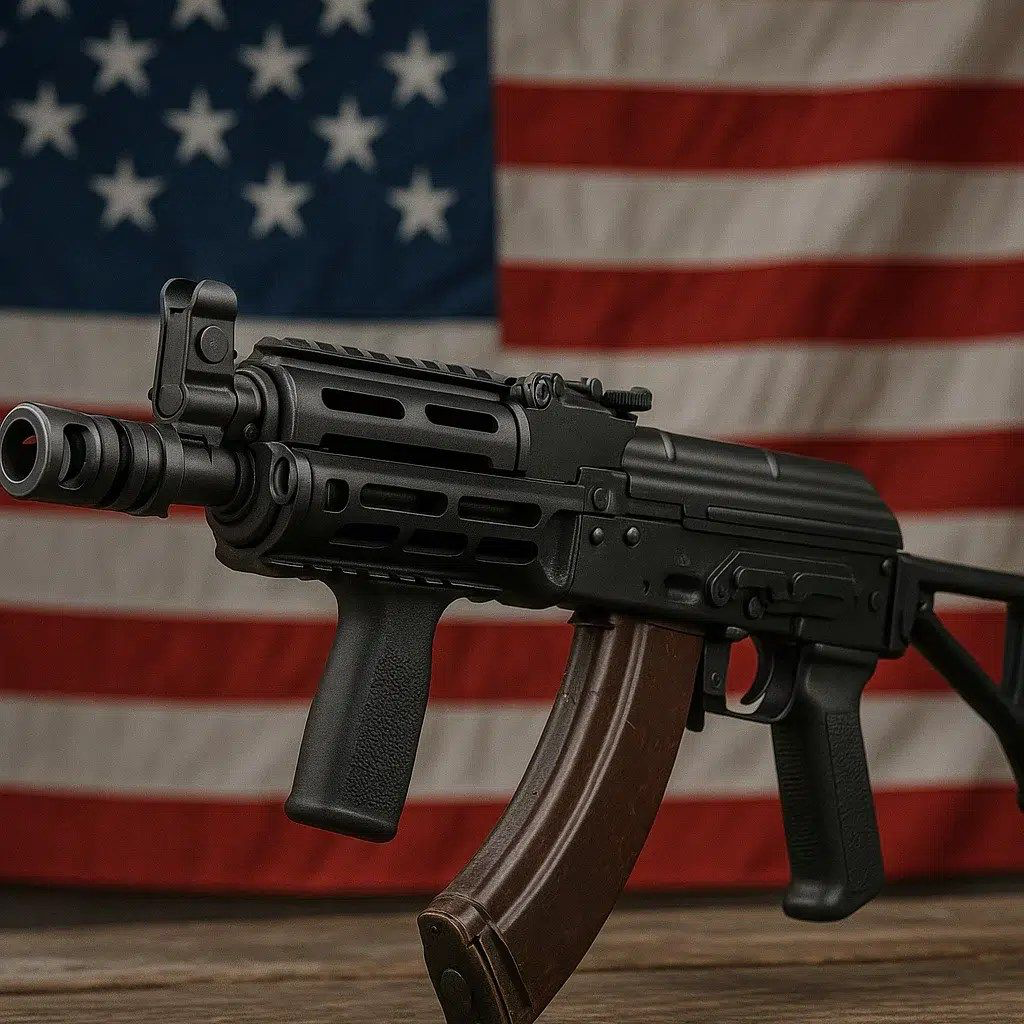
The 2023 stabilizing brace rule (Final Rule 2021R-08F) is being formally rescinded. This piece of the ATF 34-Rule update is a Notice of Proposed Rulemaking, which means the rescission moves through the comment process before it is finalized.
In practice, the rule was already on life support. Federal courts vacated it in 2024 and 2025 through Mock v. Garland in the Fifth Circuit and parallel rulings in the Eighth. The agency has not enforced it. The ATF 34-Rule rescission cleans up the regulatory text after the courts already did the legal work.
What does not change: the underlying NFA statute. A barrel under 16 inches plus a stock plus an overall length under 26 inches still produces a short-barreled rifle classification under federal law. A pistol brace is not a stock. If you keep the brace, you keep the pistol. If you swap to a stock on a sub-16-inch barrel, you are still in NFA territory regardless of what this package does. For a refresher on how SBRs are defined and registered, see our SBR laws and Form 1 basics guide.
Existing SBR Form 1 registrations remain valid. The deregistration path is not yet documented in the rule.
How Does the ATF 34-Rule Package Affect Your NFA Items?
The Reduce Burden category in the ATF 34-Rule package is where existing NFA owners feel the largest practical shift.
Interstate transport for trips of 365 days or fewer no longer requires Form 5320.20 advance notice or approval. Joint spousal NFA registration becomes a path on Form 4 without a gun trust. The CLEO notification step on Form 1 and Form 4 applications is removed. Owners converting an existing rifle into a short-barreled rifle on a Form 1 can use the firearm’s existing serial number rather than engraving a new makers’ mark.
The bump stock language in the federal definition of “machinegun” gets stripped through a Final Rule, aligning the regulation with the Supreme Court’s 2024 decision in Garland v. Cargill.
Note one separate item: the $0 NFA tax stamp came from the One Big Beautiful Bill effective January 1, 2026, not from the ATF 34-Rule package. They are different reforms. This package addresses paperwork. The tax change came from Congress. If you are new to suppressors and SBRs, our NFA suppressor ownership basics covers the registration process the ATF 34-Rule changes now streamline.
What Should Concealed Carriers Know About the ATF 34-Rule Changes?
affect you indirectly through Form 4473 modernization and the engaged-in-the-business definition.
Form 4473 is being updated to allow electronic signatures, auto-populated fields, and digital attachments. The retention period is being capped at 20 to 30 years instead of indefinite. The 2024 engaged-in-the-business expansion rule is being rescinded through an Interim Final Rule.
What does not change: the underlying Bipartisan Safer Communities Act statutory definition still applies. Sellers who predominantly earn a profit from firearm sales still need a Federal Firearms License. State private-transfer requirements continue to operate independently.
Most CCW permit holders will not need to change anything about their daily carry setup based on the ATF 34-Rule package.
Which States Override the ATF 34-Rule Pistol Brace Reversal?
This is where the ATF 34-Rule package creates the most compliance risk for owners reading celebratory headlines. Federal rescission does not override state law. A handful of states maintain independent restrictions that survive the ATF 34-Rule changes intact.
The seven states with the heaviest independent restrictions are California, New York, Connecticut, New Jersey, Illinois, Washington, and Hawaii. Each handles braces, SBRs, suppressors, and assault-weapon classifications differently. California treats some braced configurations as banned features under its assault weapon statute. New York and New Jersey carry their own SBR registration and possession rules. Illinois maintains a state-level NFA item registry under the Firearm Owners Identification framework. For state-specific carry and ownership rules, consult our state-by-state firearms law guide.
Before you change your setup based on the ATF 34-Rule package, verify the controlling statute in your state and confirm with a licensed firearms attorney. The federal rescission gives you no defense against a state charge.
What’s Your 3-Step Compliance Checklist After the ATF 34-Rule Package?
Two responsible reads of this package exist among careful owners. One says the federal rule is dead, courts already vacated it, and the path is documented enough to act. The other says most of the 27 proposed rules are not yet enforceable, the deregistration path is undocumented, and your state law has not changed. Both reads are defensible. The right one depends on which rule, which state, and which item you own.
Run this checklist before you touch anything:
- Identify what stage the rule affecting you is in. Read the ATF summary at atf.gov for each rule that touches your gear. Note whether it is a Final Rule, an Interim Final Rule, a Direct Final Rule, or a Notice of Proposed Rulemaking. Only the first three are enforceable now.
- Check your state law before modifying anything. Federal rescission does not override state restrictions on pistol braces, SBRs, suppressors, or private transfers. The seven states named above maintain independent restrictions the federal change does not touch.
- Preserve every piece of paperwork you currently hold. Form 1s, Form 4s, tax stamps, approval letters, and supporting receipts. Do not destroy registration records based on the rescission of the rule that produced them. The registration itself causes you no legal harm while it stands.
Before you change a single component on your firearm, verify the rule that affects you is final, your state law allows it, and your paperwork is preserved.
Where Do You Stand on the ATF 34-Rule Changes?
The ATF 34-Rule package is the largest single regulatory shift in a generation, and most of it points in a permissive direction. The discipline of responsible ownership is to know exactly what changed, exactly when each change takes effect, and exactly how your state interacts with the federal change. Track the rules that affect your specific gear. Keep your paperwork. Verify your state. Then make decisions one rule at a time.
Bookmark this page. We will update it as each ATF 34-Rule proposed rule moves from comment to final.
Sources: Department of Justice Office of Public Affairs press release (April 29, 2026), ATF.gov rules and regulations page, Federal Register notices for the seven final rules, and industry reporting from The Reload, USA Carry, and licensed firearms attorneys. Court citations: Mock v. Garland (5th Cir. 2024), Garland v. Cargill (S. Ct. 2024).
GunCarrier articles are reviewed for factual accuracy, legal clarity, and brand-neutral framing before publish. Updates and corrections are tracked in the article history.
This article is for general information only and is not legal advice. Verify all federal and state firearms law with a licensed attorney before making, transferring, or modifying any firearm.
ATF Just Signed 34 New Rules: What It Means for Gun Owners from Palmetto State Armory
Frequently Asked Questions
-
What is the ATF 34-Rule package?
The ATF 34-Rule package is a regulatory reform announced April 29, 2026, comprising seven final rules and 27 proposed rules across five categories: repeal, modernize, reduce burden, clarify, and align. It targets the pistol brace rule, the engaged-in-the-business expansion, NFA paperwork, and FFL recordkeeping.
-
When do the ATF 34-Rule changes take effect?
Final Rules, Interim Final Rules, and Direct Final Rules are enforceable on publication in the Federal Register. The 27 Notices of Proposed Rulemaking require a 90-day public comment period before the agency issues a final rule. Not all 34 changes are active immediately.
-
Does the ATF 34-Rule package make my pistol brace legal again at the federal level?
The 2023 stabilizing brace rule is being formally rescinded via proposed rulemaking. Federal courts had already vacated that rule in 2024 and 2025. The underlying NFA statute still applies, so a barrel under 16 inches with a stock and overall length under 26 inches remains a short-barreled rifle.
-
What should I do with my existing SBR registration after the ATF 34-Rule changes?
Keep it. The Form 1 is valid and your tax-exempt registration retains legal effect. The deregistration path is not yet documented in the rule. Most owners will leave the registration in place. Do not destroy any approval paperwork or supporting records you currently hold.
-
Are private gun sales legal again under the ATF 34-Rule package?
The 2024 engaged-in-the-business rule is being rescinded via Interim Final Rule. The underlying Bipartisan Safer Communities Act statutory definition still applies. Sellers who predominantly earn a profit from firearm sales still need a Federal Firearms License. State private-transfer laws continue to apply independently.
-
Can I now travel across state lines with my NFA items without notice under the ATF 34-Rule package?
For trips under 365 days, the proposed rule eliminates the Form 5320.20 advance notice requirement for interstate transport of NFA items. State laws governing possession in the destination state still apply. Confirm the destination jurisdiction allows the specific NFA item before travel.
-
Do state firearms laws still apply after the ATF 34-Rule changes?
Yes. State firearms laws operate independently of federal rules. California, New York, Connecticut, New Jersey, Illinois, Washington, and Hawaii maintain their own restrictions on pistol braces, SBRs, suppressors, and private transfers. The federal rescission does not preempt or override any state-level restriction.
-
How can I submit comments on the proposed ATF 34-Rule changes?
Each Notice of Proposed Rulemaking will be published in the Federal Register with instructions for submitting comments through Regulations.gov. The comment period typically runs 90 days from publication. Comments influence the final rule, and ATF has stated it will consider significant feedback before finalizing each rule.