
Quick Facts
New Mexico is not a constitutional carry state in 2026. A valid New Mexico Concealed Handgun License (NMCHL) is required to carry concealed on foot in public. Permitless carry legislation failed in the 2025 session. CCW holders traveling to or through New Mexico must carry a valid permit, understand restricted-location rules, and verify reciprocity with each destination state independently before crossing any border.
Related: Mississippi Permitless Carry Laws: What Every Legal Gun Owner Must Know in 2026
“Is it even legal to carry there?” That question follows every responsible CCW holder across every state line. New Mexico just changed the answer for its own borders. But if you think that means you can skip training, let your permit lapse, or drop your carry insurance, you’re reading the wrong headline.
New Mexico is now a constitutional carry state. That is real. That matters. And it comes with a set of misunderstandings that are going to get people into serious legal trouble before the year is out.
Here is exactly what changed, who it affects, what it does not change, and what you need to do right now if you carry in or through New Mexico.
Does New Mexico have Constitutional Carry in 2026?
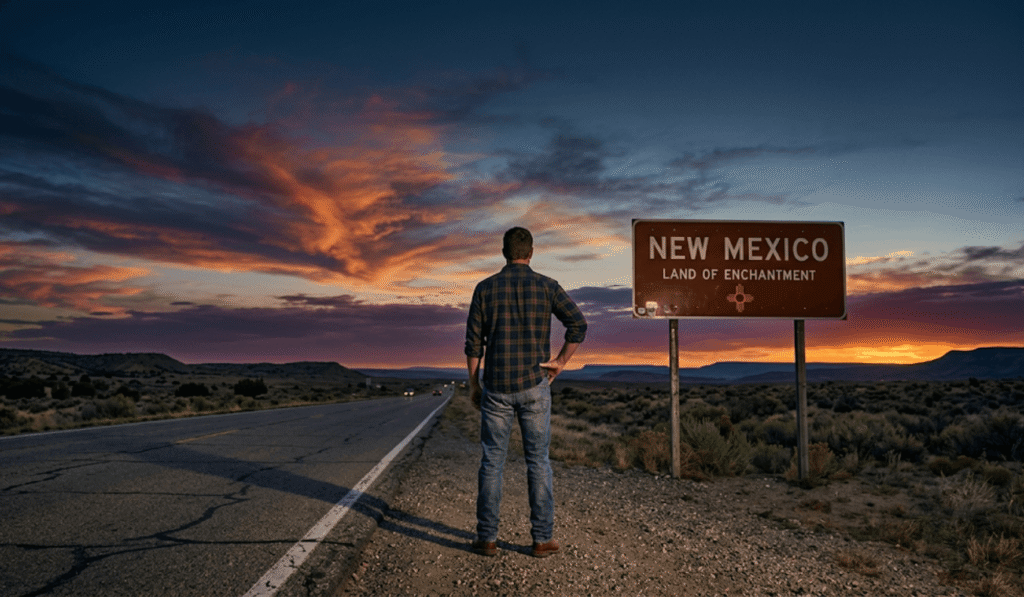
No. New Mexico requires a Concealed Handgun License to carry a loaded, concealed handgun in public as of 2026.
A permitless carry bill (HB 83) was introduced in the 2025 legislative session. It died in committee without reaching a floor vote. New Mexico state law was not amended. The New Mexico Constitution explicitly states that nothing in its right-to-bear-arms provision “shall be held to permit the carrying of concealed weapons.” The state has been shall-issue since 2003, and that system remains fully in place.
If you carry concealed in New Mexico without a valid license or a permit from a state New Mexico honors, you are committing a crime. That is the accurate starting point for every other question in this article.
What Are The Current Requirements To Carry Concealed In New Mexico?
The New Mexico Concealed Handgun License is issued by the NM Department of Public Safety (DPS) Concealed Carry Unit. Requirements as of 2026:
- Eligibility: You must be at least 21 years old, a U.S. citizen or lawful permanent resident, a New Mexico resident (or active-duty military permanently stationed in New Mexico or a qualifying dependent), and legally eligible to possess a firearm under state and federal law. Prohibited persons under NMSA 1978 do not qualify.
- Training: A minimum of 15 hours of DPS-approved classroom and range instruction is required, covering New Mexico law, firearm safety, and live-fire qualification. The course must be taught by a DPS-certified instructor. Military veterans with an honorable discharge within the last 20 years may qualify for a training waiver.
- Qualification: Applicants must pass a live-fire shooting proficiency test. The NMCHL identifies the specific category (revolver or semi-automatic) and caliber of handgun you are licensed to carry. That license covers only the category and caliber you qualified with.
- Application: Submit the completed application, DPS fingerprinting, background check authorization, training certificate, and applicable fees to the LERB Concealed Carry Unit. The DPS has 30 days from receipt of a complete application to issue a determination.
- License validity: The NMCHL is valid for four years for the general public and five years for active military. A two-hour refresher course is required at the two-year mark between issuance and renewal.
- Non-resident licenses: New Mexico does not issue non-resident CHLs, with one exception: active-duty military permanently stationed in New Mexico and their qualifying dependents may apply. Out-of-state visitors must carry a permit from a state that New Mexico honors under reciprocity to carry concealed legally in New Mexico.
- Open carry: Open carry of a loaded handgun is legal in New Mexico without any permit for adults 19 and older who are legally eligible to possess a firearm. Open carry is subject to the same sensitive-place restrictions that apply to concealed carry.

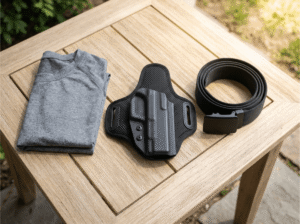
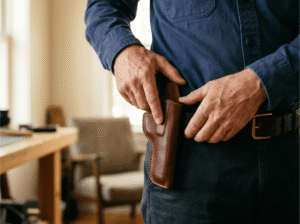
- Fits: GLOCK G19 - G23 - G32
- Easily Adjustable Retention Pressure & Carry Angle
- Posi-Click Audible Retention Lock System - Integrated Full Sweat Shield
Last update on 2026-10-23 / Affiliate links / Images from Amazon Product Advertising API
Which States Honor The New Mexico Concealed Handgun License?
This is the question that gets traveling carriers into legal trouble. The NMCHL is a documented credential with real reciprocity value across more than 30 states. That credential disappears the moment you allow it to lapse.
The table below reflects currently reported reciprocity agreements. Reciprocity arrangements are not permanent. State agreements can be updated, withdrawn, or modified without notice to individual license holders. Verify current status with each destination state’s attorney general or official carry resource before you travel.
Reciprocity Table
| State | Honors NMCHL | Notes for NM Carriers |
|---|---|---|
| Arizona | Yes | AZ is also a shall-issue state. NM residents with a valid NMCHL are covered under reciprocity. Verify any AZ-specific restrictions before travel. |
| Arkansas | Yes | Honors NMCHL under reciprocity. Verify current AR-specific carry restrictions before crossing. |
| Colorado | No | Colorado does not honor the NMCHL and does not have constitutional carry. NM residents who cross into Colorado without a CO-recognized permit cannot carry concealed legally in that state. |
| Florida | Yes | FL honors the NMCHL. Note that FL issues non-resident permits; some states only honor FL permits held by actual FL residents. Confirm destination-state rules if layering a FL permit on top of your NMCHL for travel coverage. |
| Idaho | Yes | Honors NMCHL under reciprocity. |
| Kansas | Yes | Honors NMCHL under reciprocity. |
| Louisiana | Yes | Honors NMCHL under reciprocity. Verify current LA carry restrictions. |
| Michigan | Yes | Honors NMCHL under reciprocity. |
| Missouri | Yes | Honors NMCHL under reciprocity. |
| Nebraska | Yes | Honors NMCHL. Nebraska has strict reciprocity rules. Verify all NE-specific requirements before travel. |
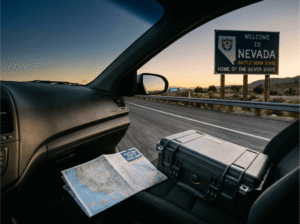
| Nevada | No | Nevada does not currently honor the NMCHL. |
| North Carolina | Yes | Honors NMCHL under reciprocity. |
| Oklahoma | Yes | OK is a constitutional carry state. OK generally honors out-of-state permits and NM carriers with a valid NMCHL are covered under reciprocity. |
| Texas | Yes | TX is a constitutional carry state for residents. TX recognizes the NMCHL under formal reciprocity. NM residents traveling to TX should carry the NMCHL as their documented credential for any law enforcement contact. |
| Utah | Yes | Utah honors the NMCHL. Utah does not recognize permitless carry from other states for concealed carry purposes. Your NMCHL is your carry credential in UT. |
| Virginia | Yes | Honors NMCHL under reciprocity. |
| Wyoming | Yes | Honors NMCHL under reciprocity. WY is also a constitutional carry state. |
The bottom line: Colorado is the most critical gap for NM carriers traveling north. New Mexico’s shall-issue permit does not open Colorado’s border, and Colorado does not have constitutional carry. NM carriers heading north need to either carry a CO-recognized permit or accept that they cannot carry concealed legally in Colorado.
Your NMCHL is not just a state compliance credential. It is your travel document. The states listed above recognize it. Without it, you are relying on each destination state’s own carry rules for out-of-state visitors, and those rules vary significantly. Letting your NMCHL lapse because you think you no longer need it for in-state use is a mistake that will limit your carry options the first time you cross a state line.
Legal Disclaimer: The information in this article is for general informational purposes only and does not constitute legal advice. Firearms and concealed carry laws change frequently. Always verify current laws in your state and any state you intend to carry in before doing so. Consult a licensed attorney in your jurisdiction with specific legal questions. GunCarrier.com is not a law firm and does not provide legal representation.
What Locations are off-limits for Concealed Carry in New Mexico?
A valid NMCHL or recognized out-of-state permit covers most public spaces in New Mexico. It does not cover everywhere. The following locations are off-limits regardless of license status:
Restricted Locations Table
| Location | Rule |
|---|---|
| Federal gun-free zones | Federal law governs federal facilities and property. No state permit creates any exception to federal gun-free zone restrictions. |
| K-12 school premises | Firearms are prohibited on school premises under NMSA 1978. There is a limited vehicle exception for adults 19 and older, but entering the building or school zone on foot with a concealed handgun is a fourth-degree felony. |
| Courts and court facilities | Prohibited unless specifically authorized by the presiding judge. |
| Polling places and ballot drop boxes | Concealed carry is prohibited within 100 feet of a polling place. NMCHL holders have a limited exemption from the ballot drop box restriction (50-foot zone). Verify current rules during election cycles. |
| Licensed liquor establishments | Carrying in a bar or establishment that derives more than 60% of revenue from on-site alcohol sales is prohibited regardless of license status. |
| Public buses | Firearms may not be readily accessible aboard public buses without carrier approval. |
| Tribal land | The NMCHL is not valid on tribal land unless specifically authorized by the governing body of that nation, tribe, or pueblo. Tribal firearms policies range from fully permissive to complete prohibition. Verify tribal carry rules before entering reservation land. |
| Private property with posted notice or verbal prohibition | Property owners and managers may prohibit concealed carry by posting notice or verbally informing you. The prohibition is legally enforceable. When in doubt, ask or leave the firearm secured in your vehicle. |
Why Training Still Matters When The State Does Not Require It For Carry
New Mexico requires 15 hours of training before issuing an NMCHL. That training requirement has a specific purpose: it pushes new carriers toward a documented baseline before they carry in public.
The state-mandated course is not the actual standard for defensive competency. It never was. The practical standard is whether you can draw from concealment, hit a target at 5 to 7 yards, and manage a malfunction under stress. The permit course does not test for any of that in any meaningful way.
The data on civilian defensive shootings is consistent: most incidents happen at close range, under stress, with limited time to react. The gap between a permit course graduate and a career with documented training to a published performance benchmark is significant. That gap does not close by itself.
Two specific actions close it: structured training with a certified instructor beyond the minimum required course, and recurring dry-fire practice between range sessions. Dry-fire is free, available at home, and directly develops the drawstroke repetition that matters most in the first two seconds of an encounter.
If you have not attended a structured defensive handgun course since your initial NMCHL certification, the investment is worth revisiting. See our guide on how to choose a CCW class for what to look for in a qualifying instructor and curriculum.

- If you're looking for a premium leather gun belt designed for concealed carry, this is it. Our EDC belt is handcrafted...
- Proudly made in the USA by Relentless Tactical. Our leather gun belts for men are cut, stitched, and built right here in...
- This is a gun belt sized for carry. For a quick and simple sizing method, just select your Pant Size. If you are looking...
Last update on 2026-10-23 / Affiliate links / Images from Amazon Product Advertising API
Do You Still Need CCW Insurance In New Mexico?
Yes. Without question.
A permit is a state administrative requirement. What happens after a defensive shooting is a separate system entirely, governed by the district attorney’s office, civil courts, and your attorney. None of those processes become cheaper or simpler because you had a valid permit.
Criminal defense for a self-defense case that reaches trial runs from $50,000 to $200,000 or more, even for completely lawful shootings. A district attorney retains full discretion to file charges after any use of deadly force. A survivor or a survivor’s family retains full standing to pursue civil action regardless of how the criminal case resolves. The permit was a prerequisite for legal carry. It does not function as a shield against legal exposure after a shooting.
Two providers cover most of the NM carrier market. Carry insurance is the subject of a dedicated comparison guide linked below. The short version for planning purposes:
Disclosure: Some links in this section are affiliate links. We may earn a commission at no additional cost to you.
USCCA offers three coverage tiers. The Essentials plan starts at approximately $29 per month and includes criminal defense protection up to $250,000, civil suit coverage up to $50,000, and access to their attorney network. The Defender plan raises criminal defense coverage to $500,000. The Elite plan provides up to $2,000,000 in total protection and includes bail bond funding. USCCA also provides training resources, which are particularly relevant if you are building skills beyond your initial NMCHL certification.
U.S. LawShield operates on an unlimited coverage model for covered incidents, at approximately $10.95 per month for single-state membership. Their multi-state supplement is a practical consideration for NM carriers who cross into Texas, Utah, or Oklahoma regularly. Attorney access is available 24 hours a day following an incident, and their network covers 48 states.
Common Mistakes NM Carriers Make After A Permitless Carry Bill Fails
Every time a major permitless carry bill generates news, a wave of misunderstandings follows. These are the errors currently showing up in carry forums and in attorney consultations in New Mexico.
Assuming HB 83 passed because it was widely reported on. The bill was introduced and generated significant coverage. It was then sent to the House Consumer and Public Affairs Committee, where it died. News coverage of a bill’s introduction is not reporting on a bill’s passage. Verify carry law changes against official state sources, specifically the NM DPS and NM Legislature website, before changing your carry behavior.
- Thinking that permitless carry states nearby makes the rules looser in NM. Arizona and Oklahoma are constitutional carry states. That fact does not affect what New Mexico requires inside its own borders. Each state’s carry law governs within that state’s borders and nowhere else.
- Letting the NMCHL lapse because you heard it was going to be permitless. Your NMCHL is your out-of-state carry credential. Texas, Utah, Oklahoma, and more than 30 other states recognize it under formal reciprocity agreements. Allowing it to expire based on legislation that never passed eliminates that travel coverage.
- Skipping training because the story made carrying sound easier. The permit process creates a training floor, not a training ceiling. The actual standard for defensive readiness is independent of what the state requires. Nothing in the legislative debate changed what a real defensive situation demands from the person holding the gun.
- Assuming federal law tracks state carry law. Federal gun-free zones apply regardless of state permit status. NM state carry law covers New Mexico-regulated spaces. Federal facilities, federal buildings, and federally restricted locations operate under federal statute. No state permit creates an exception to federal restrictions.
- Dropping CCW insurance because of the news cycle. The legal exposure after a defensive shooting is identical whether NM had constitutional carry or not. Prosecutorial discretion, civil liability, and defense attorney costs are not altered by state permit requirements. Carry insurance exists to cover the legal fight that follows a shooting, not the shooting itself.
No products found.
How To Get or Renew Your New Mexico Concealed Handgun License in 2026
Initial application steps:
- Complete a DPS-approved 15-hour firearms training course with a certified instructor. The course must include live-fire qualification. Your certificate will specify the category and caliber you qualified with.
- Contact the NM DPS Concealed Carry Unit to schedule fingerprinting, or use a DPS-authorized fingerprint vendor.
- Submit your completed application, fingerprint card, background check authorization, training certificate, and fees to the LERB Concealed Carry Unit (6301 Indian School Rd NE, Suite 310, Albuquerque, NM 87110 or via the DPS online portal if available.
- DPS has 30 days from receipt of a complete application to approve or deny.
Renewal: The NMCHL is valid for four years. A two-hour DPS-approved refresher course is required at the two-year mark. Renewal applications require a current background check and applicable fees. Do not wait until the expiration date to start the renewal process; processing time can vary.
For military members: Active-duty military with at least 20 years of eligible service and veterans with an honorable discharge within the last 20 years may qualify for a training waiver. Submit the DD-214 or applicable military documentation with your application.
Caliber and category note: Your NMCHL specifies the category and caliber of handgun you are licensed to carry. If you want to carry a different handgun outside your licensed category or caliber, you will need to complete additional qualification. Plan your training accordingly if you are considering changing your carry platform.
For complete current instructions, contact NMCC.Questions@dps.nm.gov or call (505) 841-8053. Verify all current requirements directly with DPS before submitting any application.
State-by-State Carry
The reciprocity table above covers New Mexico’s neighbors. But if you travel across more than one state line, you need a complete picture of which permits work where, which states have gone constitutional carry, and where the gaps are.
New Mexico’s constitutional carry law is a legitimate legal shift. For responsible carriers who already carry lawfully and train consistently, it mostly confirms what you were already doing. For new carriers, it is an invitation to do the work that a good permit process used to push you toward on its own.
Keep your NMCHL current. Get travel insurance before your next trip. And know your destination state’s law before you drive across that line. The permit requirement is gone. The responsibility is not.
Legal Disclaimer: The information in this article is for general informational purposes only and does not constitute legal advice. Firearms and concealed carry laws change frequently. Always verify current laws in your state and any state you intend to carry in before doing so. Consult a licensed attorney in your jurisdiction with specific legal questions. GunCarrier.com is not a law firm and does not provide legal representation.
Check this video from Relaxxd Fit Tactical.
FREQUENTLY ASKED QUESTIONS
-
Is New Mexico a constitutional carry state in 2026?
No. New Mexico requires a Concealed Handgun License (NMCHL) to carry concealed on foot in public as of 2026. Permitless carry legislation (HB 83) was introduced in the 2025 legislative session and died in committee. State law was not amended.
-
Does my out-of-state permit work in New Mexico?
It depends on your home state. New Mexico recognizes permits from states with which it has formal reciprocity agreements. The state does not recognize all out-of-state permits. Verify current agreements directly with the NM Department of Public Safety before traveling, as reciprocity agreements can be updated or withdrawn.
-
Do I need carry insurance in New Mexico?
No state requires carry insurance by law. It is strongly recommended for all carriers, regardless of state. Criminal defense for a lawful self-defense shooting can run from $50,000 to $200,000 or more, even when charges are dropped. Carry insurance covers the legal exposure that a permit does not address.
-
Can I carry in New Mexico with an Arizona permit?
New Mexico honors permits from states with which it has reciprocity agreements. Verify whether NM currently honors the specific Arizona permit you hold by checking the NM DPS recognition and reciprocity agreements section before you travel. Reciprocity arrangements change.
-
What locations are off-limits for concealed carry in New Mexico?
Federal gun-free zones, K-12 school premises, courthouses, licensed liquor establishments deriving more than 60% of revenue from on-site alcohol sales, polling places within 100 feet, public buses, tribal land unless specifically authorized by the tribal governing body, and private property with a posted or verbal prohibition.
-
Is the NMCHL still worth getting into in 2026?
Yes. The NMCHL provides documented carry credentials recognized by more than 30 states under formal reciprocity agreements, including Texas, Utah, Oklahoma, and Wyoming. It also establishes a training record that supports legal defensibility in any post-incident proceeding.
Lock in your vote and tell us: Why is this the right call?👇