
Quick Look
Related: Best Pistol Weapon-Mounted Lights [2026] Reviewed
“How do I know if this upgrade actually matters?” That question is in every forum thread about putting a red dot on a carry gun. The honest answer: it matters — but only if you close three gaps that most optics articles never mention. This guide covers what actually works on compact pistols under $200, how to install it right, and why zeroing at carry distances changes the whole picture.
And yes, you can put a red dot on a compact pistol for concealed carry. Optic-ready slides are now standard on carry guns: the Glock 43X MOS, SIG P365 XL, S&W M&P Shield Plus Performance Center, Springfield Hellcat OSP. The platform exists. The question is whether you’re ready to run it correctly.
Affordable CCW Optics for Compact Pistols 2026: Best Red Dots Under $200
“How do I know if this upgrade actually matters?” That question shows up in nearly every forum thread about mounting a red dot for concealed carry. The honest answer: it matters. But only if you close three gaps that most optics articles skip entirely.
This guide covers what actually works on compact pistols under $200, how to install it without the common errors, and why zeroing at carry distances rather than bench distances changes the whole picture. Optic-ready slides are now standard on carry pistols: the Glock 43X MOS, SIG P365 XL, S&W M&P Shield Plus Performance Center, and Springfield Hellcat OSP. The platform exists. The question is whether you can run it correctly before you depend on it.
Three gates to pass before you mount anything: your draw stroke is consistent enough that you will find the dot on every presentation, you are willing to zero at a carry-distance standard, and you have budgeted for a new holster. Clear all three in order. Skipping one turn turns an upgrade into a liability.
Do Red Dots Actually Improve Performance on a Carry Pistol?
Yes, and the reason is specific. Stress-induced tunnel vision is a documented physiological response in defensive situations. Your eyes fix hard on the threat. Iron sights demand a focus shift across three planes: rear notch, front post, and target. A red dot for concealed carry collapses that problem by projecting the aiming reference into your focal plane. The dot is where the threat is. You acquire the sight picture faster because you are not fighting your own visual system.
This is not marketing language. It is the reason law enforcement agencies that have transitioned to pistol-mounted red dot sights report improved first-shot hit rates under stress, and why civilian instructors with documented student incident data now include optics training in core defensive curricula.
The tradeoff is real and worth stating clearly. A red dot on a carry gun adds one mechanical failure point and one electronic failure point that iron sights do not have. A dead battery, a screw that walked loose under carry compression, an optic that took a hard hit during a physical confrontation before you could draw: any of these can leave you with no aiming reference if you removed your irons. Co-witness iron sights are not optional on a defensive pistol with a mounted optic. They are your backup system. Never remove factory irons to gain height clearance.
The question is not whether a red dot for concealed carry is worth it. For a carrier with a consistent drawstroke and the discipline to maintain the system, it is. The question is whether you are ready to maintain it correctly.
No products found.
Which CCW Red Dots Under $200 Are Worth Carrying?
Check your slide footprint before anything else. Shield RMS, RMR, and Docter cuts are three different specifications. They are not interchangeable. Ordering the wrong optic means a return, a wait, and possibly an adapter plate that adds height. Confirm your pistol model’s specific cut on the manufacturer’s product page or owner’s manual before you place any order.
These models are recommended based on documented field use and consistent instructor community feedback, not advertising relationships.
| Tier | Model | Price Range | Dot Size | Battery Life | Best For |
| Good (Under $150) | Shield Sights RMS-C | $129-$149 | 4 MOA | ~3,000 hrs | Slim slides, lowest-profile carry |
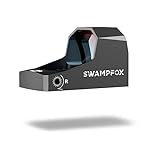
| Better ($150-$200) | Swampfox Sentinel | $149-$169 | 3 MOA | ~50,000 hrs | Value-first buyers, lifetime warranty |
| Better ($150-$200) | Holosun 407K | $169-$189 | 6 MOA | Solar failsafe | Compact carry, solar battery backup |
| Best ($200-$300) | Holosun 507K | $229-$249 | 2 MOA / 32 MOA circle | Solar failsafe | Multi-reticle, top value overall |
| Reference | Trijicon RMRcc | $449-$499 | 3.25 MOA | ~4 years | Benchmark, what premium buys |
For most carriers running a red dot for concealed carry on a budget, the Holosun 407K is the call. The solar failsafe means a dead battery does not leave you with no aiming reference. The compact footprint fits the optic-ready slides on the most common compact carry pistols. At $169 to $189, you get meaningful durability without the Trijicon price tag. The Swampfox Sentinel’s lifetime warranty is a legitimate value proposition if you are hard on gear and want the lowest possible cost of ownership.
How Do You Install a Red Dot on a Compact Pistol Without Making Costly Mistakes?
The installation process is straightforward. The mistakes are predictable. Most of them happen in the first ten minutes because the instructions in the box do not cover the carry-specific context.
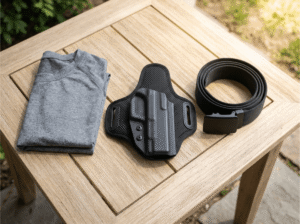
Adapter plates change your whole setup. If your slide requires an adapter plate to accept the optic, that plate adds height above the slide. More height means your existing IWB holster almost certainly will not clear the optic body. Budget $50 to $120 for an optic-compatible holster as part of the total cost. This is not optional and it is not covered in the optic’s box.
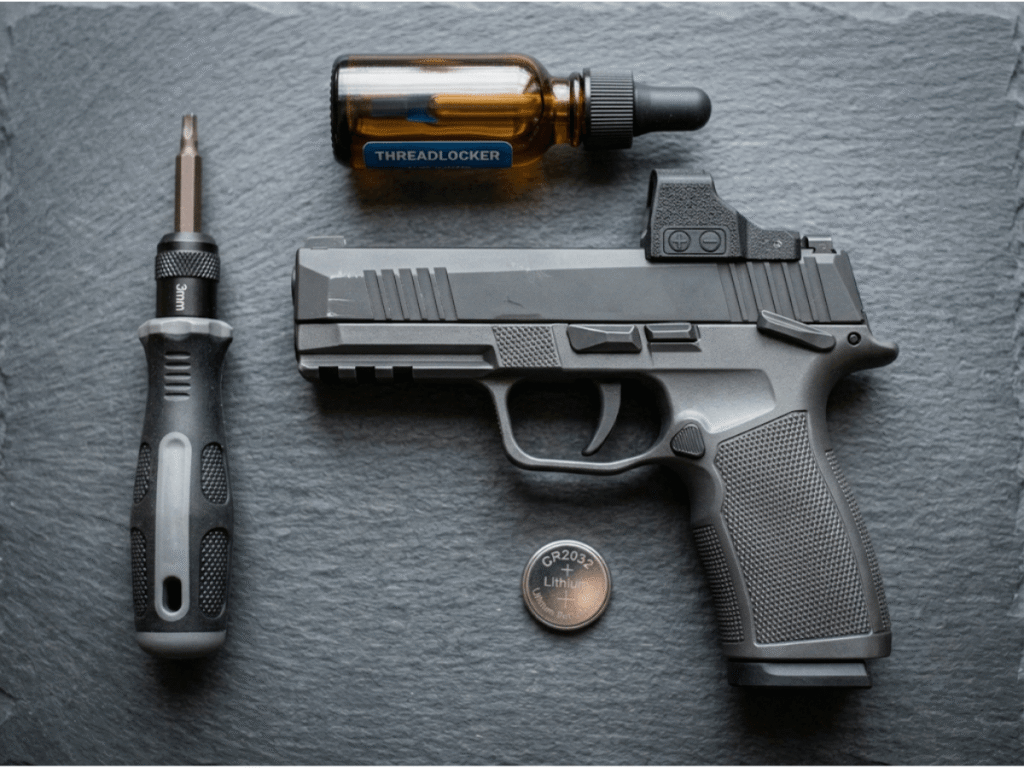
Torque the mounting screws to specification. Most optic failures in the field trace back to under-torqued or over-torqued screws, not to optic defects. Use a proper torque driver. Your thumb and a Leatherman are not torque tools. The spec is in the manual, typically 15 to 17 in-lbs for optic mounting screws. Apply one drop of blue Loctite (medium strength) per screw after torquing. Never red Loctite. Red is a permanent-grade thread locker and you will damage the optic housing trying to remove it.
Install a fresh battery before your first range session and record the install date. Write the date on a small piece of tape and place it on the inside of your dust cover. Set a six-month phone reminder for the replacement. Battery discipline is not complicated. It is a habit most carriers skip until the optic is dark when they need it.
After mounting, present the gun 20 times from your carry position and confirm the dot appears on every rep. If you are hunting for the dot on 3 out of 20 presentations, your drawstroke is not consistent enough yet. Work presentation at home with dry fire before going to the range. A red dot for concealed carry does not fix an inconsistent draw. It makes the inconsistency impossible to ignore.
Last update on 2026-10-18 / Affiliate links / Images from Amazon Product Advertising API
What Is the Right Zero Distance for a Carry Pistol Red Dot?
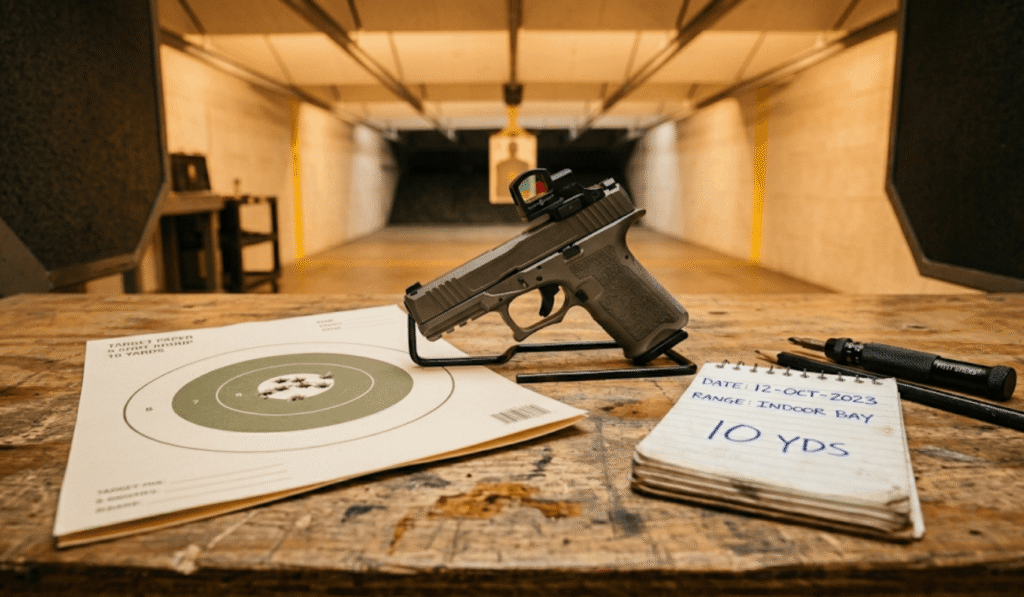
Ten yards. Not 25.
Most defensive encounters happen between 3 and 15 yards. Rangemaster data from years of documented student defensive incident debriefs places the majority between 3 and 5 yards. A 25-yard bench zero puts your point of impact high at the distances where a compact carry pistol is actually used. Zero your red dot for concealed carry at 10 yards and your holdover at 3 to 5 yards is negligible.
The 10-yard zero method: set a 3-inch aiming point, shoot 5-shot groups unsupported at a realistic cadence rather than a deliberate bench pace. Adjust windage and elevation in 4-click increments. A 3-inch or better group at 10 yards centered on your point of aim is your carry zero. That is the standard.
One carry-specific zeroing problem most guides ignore: appendix carry and pocket carry without a rigid-framed holster allow the optic to shift under compression from your body and clothing. If you carry in either position, check your zero once a month. The verification takes 10 minutes at the range. The alternative is carrying a red dot that has not been verified since the day you mounted it.
Re-zero every time you change the battery or remove and reinstall the optic. No exceptions. The optic has no memory of where it was zeroed.
What Are the Most Common Mistakes Shooters Make With CCW Optics?
These are the five patterns that show up consistently across carry optic setups that fail in the field.
- Buying before checking slide compatibility. Footprints differ, and adapter plates add height. Confirm your slide’s specific cut before ordering anything.
- Skipping the holster budget. Your existing IWB will not clear most optic bodies. Budget $50 to $120 for an optic-compatible holster as part of the total system cost.
- Zeroing at 25 yards. A bench zero puts you high at the 3 to 5 yard distances, where carry pistols are most likely to be used. Zero at 10 yards.
- No battery change schedule. No install date, no reminder, no replacement protocol. Set a six-month phone reminder when you install the battery. Write the date inside the dust cover. This takes two minutes and eliminates the failure.
- Removing factory iron sights to reduce height. Your irons are the backup system when the optic fails, loses power, or takes a hit. Co-witness sights are not optional on a carry pistol red dot setup. Carrying a pistol with a mounted optic and no backup irons is carrying a pistol with a single point of failure for your aiming system.

Last update on 2026-10-18 / Affiliate links / Images from Amazon Product Advertising API
Your Next Step
The three gates come first: consistent drawstroke, carry-distance zero at 10 yards, optic-compatible holster. Run through them in order before you carry the upgraded pistol.
For most carriers who want a reliable red dot for concealed carry without the $500 price tag, the Holosun 407K is the call. Solar failsafe backup, proven compact footprint, and right at the $169 to $189 mark. If cost is the primary driver, the Swampfox Sentinel at $149 to $169 with a lifetime warranty is hard to argue against.
Check your slide compatibility first. Then pick your tier. The best IWB holsters for compact pistols and our pistol zeroing guide cover the next steps once the optic is mounted and zeroed.
Check this video from PickNest.
Frequently Asked Questions
-
Can I put a red dot on a compact carry pistol?
Yes, if your pistol has an optic-ready slide with a factory footprint cut. Common examples include the Glock 43X MOS, SIG P365 XL, S&W M&P Shield Plus Performance Center, and Springfield Hellcat OSP. Always confirm your slide’s specific footprint cut (Shield RMS, RMR, or Docter) before ordering. They are not interchangeable.
-
What is the best red dot for concealed carry under $200?
The Holosun 407K ($169 to $189) is the top pick for most CCW carriers. It combines a solar failsafe battery backup, a compact footprint, and proven durability at a price well below the Trijicon benchmark. The Swampfox Sentinel ($149 to $169) is the best budget option, with a lifetime warranty that is difficult to match at that price point.
-
What distance should I zero a carry pistol red dot?
Zero at 10 yards. Most defensive encounters happen between 3 and 7 yards, and a 25-yard bench zero puts your point of impact high at those distances. Use a 3-inch aiming point, shoot 5-shot groups unsupported, and adjust in 4-click increments until centered at 10 yards.
-
Do I need iron sights if I add a red dot to my carry gun?
Yes. Iron sights are your backup system if the optic loses power, takes a hit, or develops a mechanical failure. Co-witness irons are not optional on a carry pistol with a mounted red dot. Never remove factory irons to gain height clearance.
-
How often should I change the battery in a carry pistol red dot?
Every six months on a scheduled interval. Write the install date on a piece of tape inside your dust cover and set a phone reminder. If you carry a Holosun 407K or 507K, the solar failsafe adds a backup layer, but the scheduled battery change still applies.
Make the case: Why did you vote that way?👇