
Quick Answers
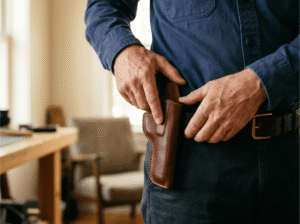
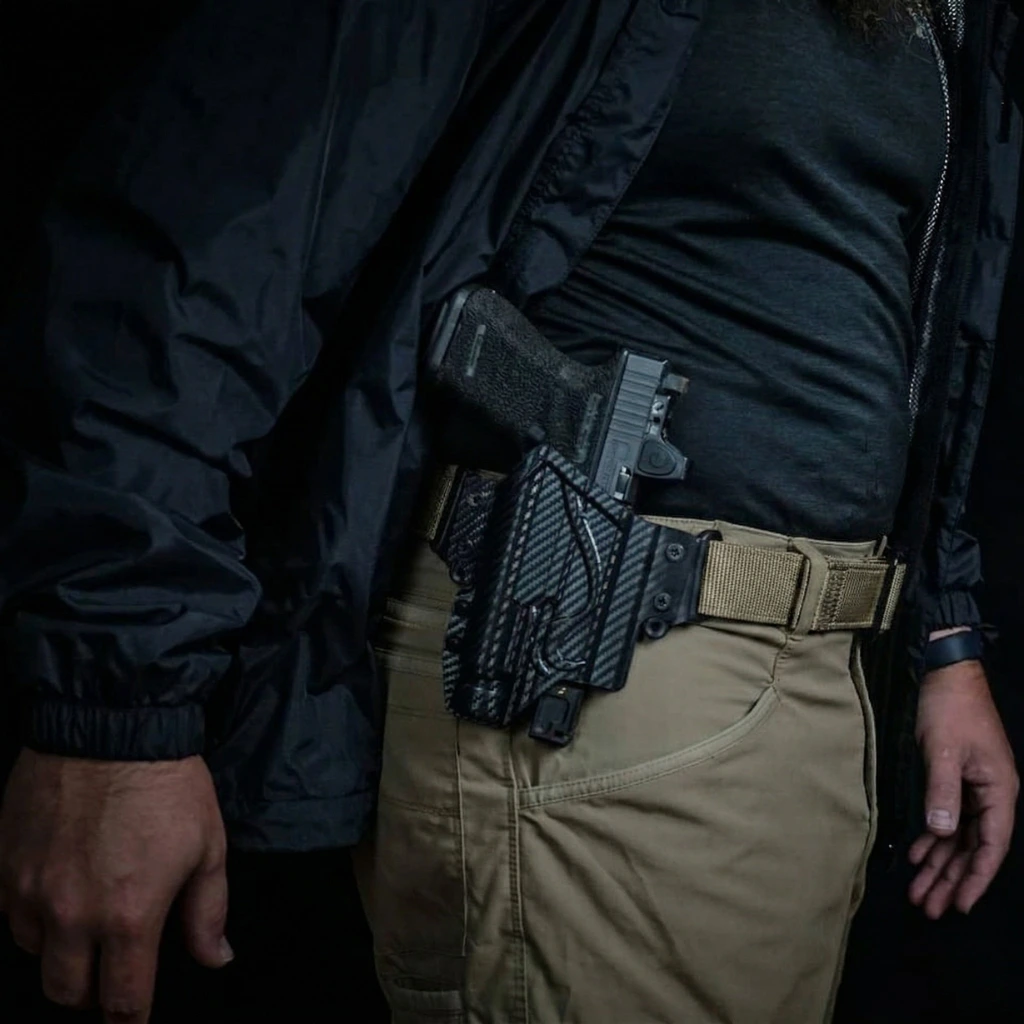
Can you conceal OWB? Yes. OWB holster concealment is a viable daily carry system when you optimize four variables: a reinforced gun belt, a slim-profile holster with 10 to 20 degrees of forward cant, a cover garment that clears cleanly on the draw, and a carry position matched to your body type. Fix the mechanics, and printing disappears.
Related: Best OWB Holster for Women Concealment
The Real Reason Your OWB Holster Prints (And How to Fix It)
A carrier sat down at an outdoor restaurant in April 2026, carrying a full-size 1911 in an OWB holster under a T-shirt. A couple at the next table noticed. The wife took a photo. On the way out, the husband made sure he heard it: “I can see that firearm clear as day.”
About an inch of holster was showing under his shirt. Not the gun itself. Just the holster. He adjusted and left. No confrontation, no call to police, no real incident. Just that specific, low-grade dread that follows a concealment failure in public.
The thread that followed on Reddit landed on a clean conclusion: fix the system, not the shirt.
That is the right call. As one forum commenter put it at DefensiveCarry.com: “OWB carry is my preferred mode of carry. You just need to think about your dress and your daily activities.” That sounds simple. The execution requires more precision than most guides will tell you.
OWB holster concealment is not a compromise. It is a system. Here is how to build one that works.

- FIT MOST: for Glock 17 19 19X 20 21 22 23 31 32 37 38 45 /// Sig Sauer P220 P225 P226 P228 P322 SP2022, MOSQUITO /// H&K...
- FIT MOST: for Beretta 86, 92FS, FSR, 92X, 96A1, APX, PX4, M9, M9A1, M9A3, M9A4 /// Cz 75B 75 Compact, P01 P07 P09 P...
- FIT MOST: for Sarsilmaz Sar9, SAR9c, 9METE, 9SPORT, 9X, Kilinc 2000 /// Taurus: G3XL, PT59, PT845, TS9, TH9, PT917, TX...
Last update on 2026-10-09 / Affiliate links / Images from Amazon Product Advertising API
Is OWB Carry Really Concealable for Everyday Use?
The reputation problem with OWB is real. Outside the waistband holsters were designed for open carry and duty use. The assumption that they print by default is not wrong historically. It is wrong now.
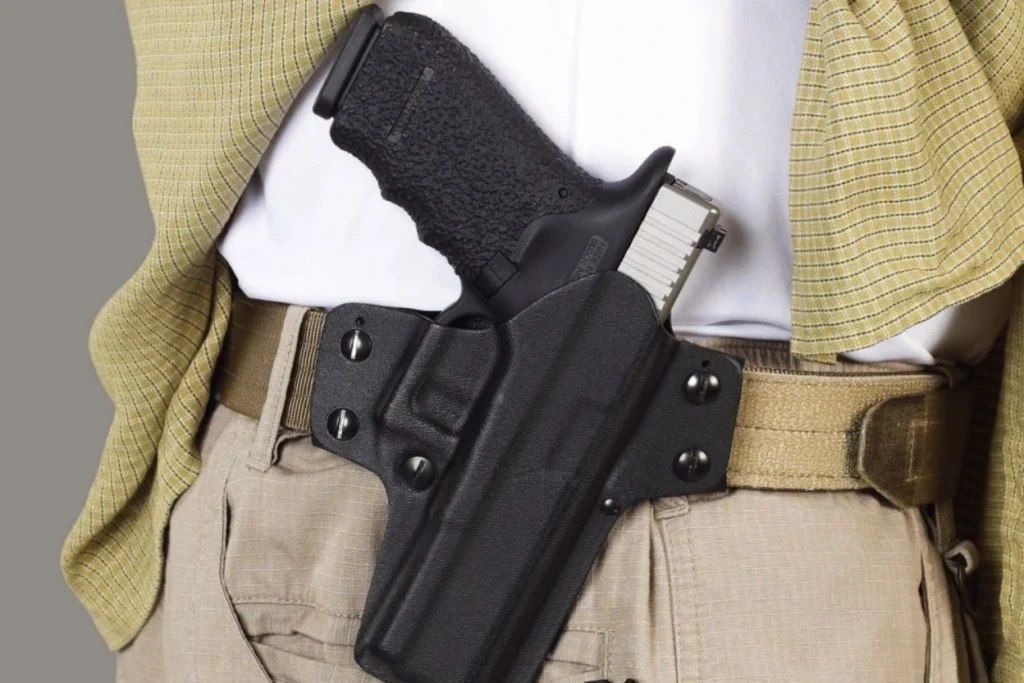
Modern slim-profile Kydex OWB designs have changed the math. Pancake-style and single-loop Kydex holsters typically sit 0.5 to 1 inch closer to the body than paddle or molded duty designs. A properly canted holster, angled 10 to 20 degrees forward, removes the shelf effect that makes a straight-drop setup telegraph through fabric. These are measurable improvements, not marketing claims.
The GlockTalk community put it plainly: “Out of my drawer full of wasted money…” That is what happens when carriers buy holsters without understanding the system variables. The holster is one part. The reinforced gun belt, the carry position, the cover garment, and the holster’s cant and ride height are the other parts. Every printing problem traces to one of these failures, usually in combination.
Before you buy anything, understand what you are solving for. Here is how the most-recommended purpose-built OWB options stack up:
| Holster | Est. Price | Best For |
| Bravo Concealment BCA 3.0 | ~$40 | Budget entry; slim Kydex; daily CCW use |
| Rounded Gear OWB Kydex | ~$45 to $60 | New carriers; purpose-built CCW profile |
| Safariland 6354DO | ~$70 to $90 | Established carriers; requires heavier cover garment |
| Phlster Floodlight | ~$120 | Hybrid OWB/IWB; bridges comfort and access geometry |
What Is the Best Cover Garment for OWB Holsters?
The cover garment is not the fix for a broken system. It is the final layer of a system that is already working.
Three categories, with honest tradeoffs:
- Jacket or flannel over-shirt. Highest concealment margin. Easiest to execute. Limits you seasonally and reads as deliberate cover in warm weather. Fine for fall and winter. Not a summer solution in most climates.
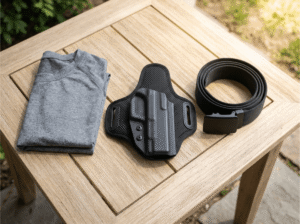
- Untucked button-down or polo. The everyday workaround. Length is the critical variable. The hem must reach below the bottom of the holster during normal movement, not just when standing still. Reach up to a shelf. Get in and out of a car. Bend down to pick something up. If the shirt clears in all three, it passes. When building your full [concealed carry wardrobe], prioritize hem length before fit or fabric.
- T-shirt OWB. Viable, but conditional. It works with a compact or subcompact firearm, correct ride height, the right cant angle, and a body type where the shirt drapes naturally away from the hip. On a fuller build where the shirt rests against the waist, a T-shirt is not a cover garment. It is a printing demonstration.
One practical note from the TheArmoryLife forum that holds up: “Plaids and Hawaiian shirts act as camouflage over solids. Even if your gun prints somewhat, the pattern makes it difficult to see.” Patterned fabric disrupts the visual outline that a solid-color shirt reveals as a shadow or bulge. It is not a fix for a poorly set-up rig. But it is a real edge when everything else is dialed in.
The test that matters is not the mirror. It is the movement audit: draw the gun from your OWB holster while wearing the clothes you actually put on this morning. Not your range shirt. Not your carry-day outfit. Whatever you wore yesterday. If the draw clears cleanly without snagging and the cover garment resettles without manual adjustment, the system works.
Why Does Your Gun Belt Matter More Than the Holster?
This is the most under-discussed variable in OWB holster concealment. Most carriers blame the holster. The holster is usually innocent.
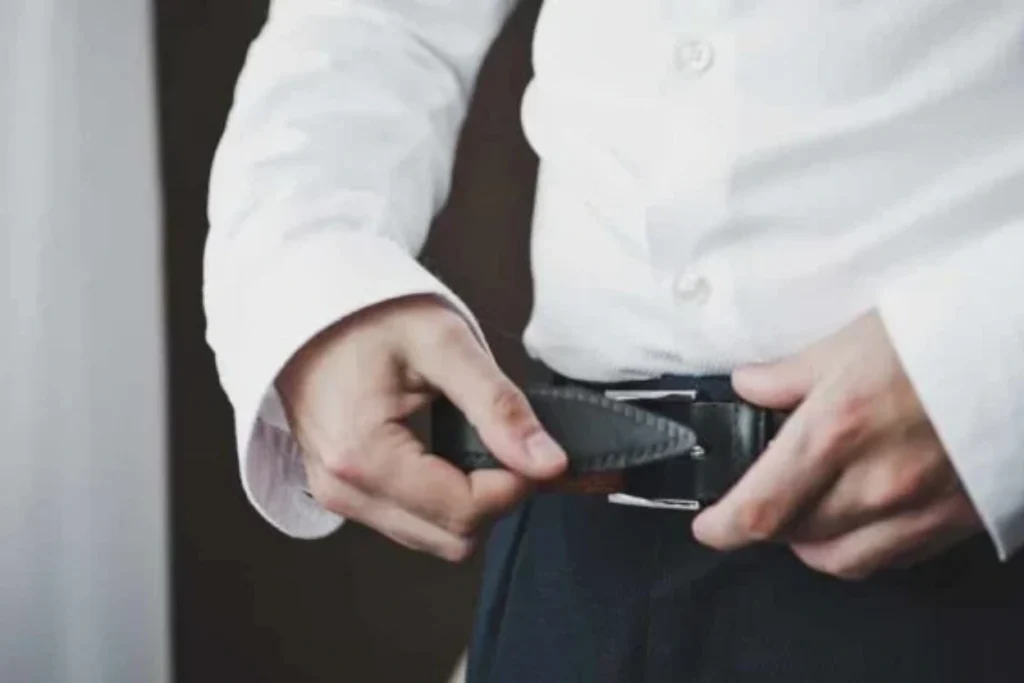
A standard dress belt or casual belt flexes under the weight of a loaded firearm. That flex allows the holster to lever outward and away from the body. A holster that sits flush against your hip in a mirror check will print visibly at the grocery store because the belt is moving with every stride.
A [purpose-built gun belt], 1.5 to 1.75 inches wide with a reinforced polymer or steel core, maintains consistent holster-to-body contact across movement. A flexing belt allows roughly 0.5 to 1 inch of lateral holster movement per stride. That is enough to create a visible print through a light shirt at the hip.
DefensiveCarry.com confirmed what range instructors have said for years: “The wider gun belt actually works better as it seems to hold the gun closer and flatter to my body.”
One fit detail that gets skipped in most guides: the belt must match the holster’s attachment system. A 1.5-inch holster loop on a 1.25-inch belt produces movement, printing, and holster wear. Check the specs before you order either piece.

- CARRY WITH OUTSIDE: Please feel free to choose our KYDEX Holster to protect for Glock 19 Holster. This is our...
- US .08" KYDEX - LIGHTWEIGHT - STRONG - DURABLE: The Glock 19 holster is hand-crafted from sturdy KYDEX alloy plastic...
- SAFETY LOCK BELT CLIP: Belt clip with switch and safety lock for 1.5-2 Inch belt, adjustable width, height and angle...
Last update on 2026-10-09 / Affiliate links / Images from Amazon Product Advertising API
Which Carry Position Prevents OWB Printing?
Carry position is the most body-type-dependent variable in the system. There is no universal answer, but there is a framework.
- 3 o’clock (strong side hip). The natural draw position for most carriers. Accessible, fast, and it works well for most body types. The print risk is moderate: the grip can lever outward when seated or when the belt gives. A rigid gun belt is non-negotiable at this position.
- 3:30 to 4 o’clock (slightly behind the hip). Reduces grip print for fuller builds because the hip provides more natural coverage. The draw is slightly slower and harder to execute while seated. Many experienced carriers land here as their permanent position after experimenting with alternatives.
- Cross-draw (weak side, grip forward). Worth knowing about, rarely discussed. One carrier at TheFiringLine discovered that after a full-size G19 printed badly at the strong side, cross-draw concealed it cleanly. Vehicle carry is the primary application. It is not a daily-carry default for most setups.
Body geometry is real, and it is not a flaw to work around. As one TheFiringLine commenter explained: if your torso tapers at the waist, your shirt drapes away from your hip, and the gun disappears into that space. If your shirt rests against your waist, every position requires more from the holster and belt. That is a system design problem, not a gun selection problem.
OWB vs. IWB: Which System Is Better for You?
Here is where the practical disagreement lives, and it is worth naming directly.
One school of thought says OWB is a legitimate carry platform only when the carrier trains with it and can meet a documented drawstroke standard. Comfort that enables carrying is worth something. Comfort that replaces training accountability costs you something you cannot see until you need it. The published benchmark: drawstroke from concealment to first shot, 1.5 seconds or under at 5 yards, from the holster you actually carry.
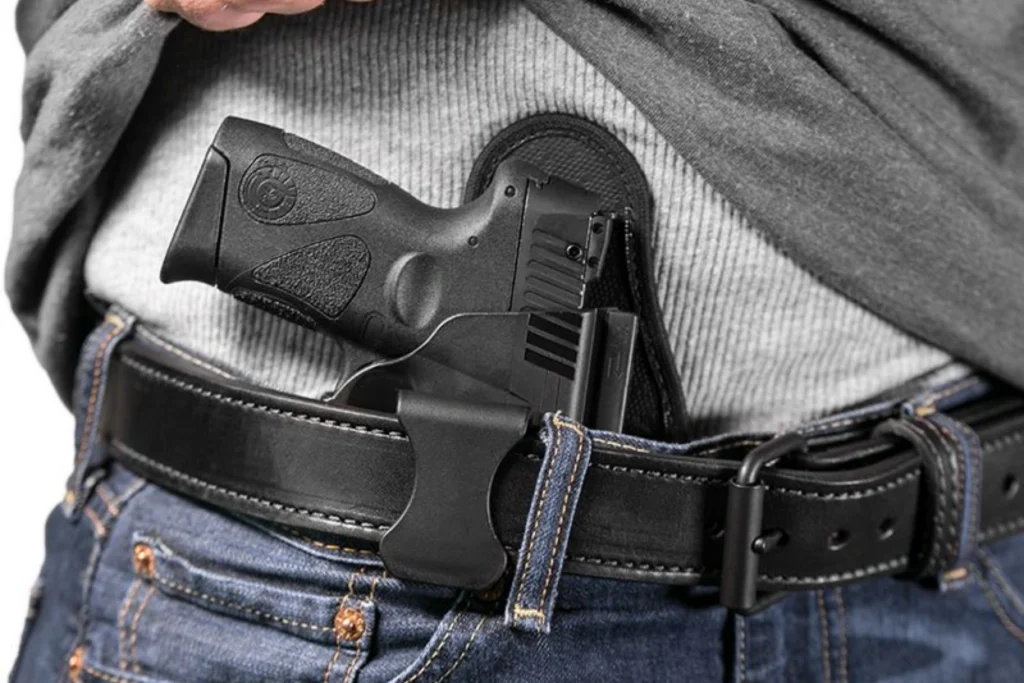
The other school says the bar is simpler. A carrier who wears OWB every day outperforms a carrier who owns a technically superior [IWB holster] and leaves it in the drawer. The best system is the one you will actually put on. As the community has said for years, “A gun sitting in the safe defeats the purpose.”
Both are right. They apply at different stages.
- New carrier (0 to 6 months of consistent carry). OWB is a valid entry platform. The standard is the grocery store test: does the cover garment complete the concealment during normal daily movement without manual adjustment? If yes, you are meeting the standard. Build the daily carry habit first. Optimize from there.
- Established carrier (6 or more months of daily carry). Apply the drawstroke standard. Train with the holster you carry, not a different rig at the range. The muscle memory your body builds goes to the platform you practice on. One platform, trained to a measurable benchmark, beats two platforms trained casually.
For carriers who want the comfort of OWB with tighter access geometry, the Phlster Floodlight (~$120) runs as both OWB and IWB depending on clip configuration. The Rounded Gear OWB Kydex (~$45 to $60) is a clean entry-point option for new carriers who want a purpose-built CCW design without the duty-holster price.
One legal note: printing laws vary by state. Some states treat visible printing as a violation of concealed carry requirements. Others have no explicit prohibition. A brief, unintentional flash is typically treated differently from prolonged visible exposure, but know your state’s specific statute before you rely on any carry setup in public.
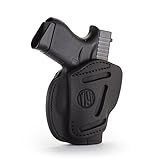
- VERSATILITY: The 3 WAY holster allows for 3 different CCW positions. The holes on both side of the holster allow for...
- COMFORT & QUALITY: Upgrade your carry to the 3-WAY leather gun holster. Made with 100% American Steerhide Leather that...
- CONCEALMENT & CONVENIENCE: Our Glock Holster is designed for concealment and convenience. Easy to conceal in both right...
Last update on 2026-10-09 / Affiliate links / Images from Amazon Product Advertising API
The Mirror Test Is Step One. The Drawstroke Test Is Step Two.
OWB holster concealment is not a compromise. It is a carry system that works when all four variables are locked in together. If yours is not working yet, here is where to start:
- Replace your belt first. A reinforced 1.5 to 1.75-inch gun belt is the single highest-impact change most carriers can make. The holster cannot perform if the platform it rides on flexes under load.
- Adjust ride height and cant before changing clothing. Set the holster 10 to 20 degrees of forward cant and dial ride height so the grip clears the cover garment cleanly. Printing is a mechanical problem. Fix the hardware, then address the wardrobe.
- Run the movement audit in your real clothes. Reach overhead, sit down, get in and out of a car. If the cover garment holds without manual adjustment through all three, the system passes.
- Match your training rig to your carry rig. The draw stroke you build at the range belongs to the holster you train on. If you carry OWB but practice with something else, you are building the wrong habit.
If you are building your first OWB setup, start with the holster and belt together. The cover garment is the last decision, not the first.
Check out this video from Alien Gear Holsters on How to Use an OWB Holster for Concealed Carry:
Frequently Asked Questions
Can you conceal carry with an OWB holster?
Yes. OWB holster concealment is fully viable with the right combination of holster fit, carry position, gun belt, and cover garment. It requires more intentional wardrobe planning than IWB but offers meaningful advantages in comfort and draw speed. Many experienced carriers use OWB as their permanent daily setup.
What is the best cover garment for OWB holster concealment?
An untucked button-down or polo shirt with a hem that reaches below the holster bottom is the most practical everyday option. Jackets and flannel over-shirts offer the widest concealment margin but limit you seasonally. Patterned fabrics conceal better than solids because they disrupt the visual outline of the grip through the fabric.
Does OWB carry print more than IWB?
It can, but most OWB printing stems from system failures like a standard dress belt or a holster with no cant rather than the carry method itself. Fix the mechanical variables before concluding that OWB does not work for your body type or clothing style.
What carry position works best for OWB concealment?
Strong side hip at 3 to 4 o’clock is the most reliable for most body types. Slightly behind the hip at 3:30 to 4 o’clock reduces grip printing for fuller builds. Body geometry matters significantly: if your shirt drapes naturally away from the waist, most positions work. If it rests against the waist, position selection and holster choice become more critical.
Is OWB or IWB better for concealed carry?
Neither is universally better. IWB offers deeper concealment with fewer cover garment requirements. OWB offers more comfort, faster draw access, and better support for larger firearms. The right choice depends on your body type, daily environment, clothing norms, and how consistently you will actually carry the system you choose.
Why does my OWB holster keep printing through my shirt?
The most common causes are grip length sitting above the beltline, a holster with no forward cant, a belt that flexes and allows the holster to lever outward, and a cover garment that is too short or too fitted. Printing is a mechanical problem. Adjust ride height and cant before changing your clothing strategy.
Do I need a special gun belt for OWB carry?
Yes. A purpose-built gun belt is not optional for OWB holster concealment. A standard dress or casual belt flexes under the weight of a loaded firearm, allowing the holster to drift away from the body and produce a printing signature. Look for a reinforced 1.5 to 1.75-inch belt that fills the holster’s attachment loops completely.
Can I conceal a full-size pistol in an OWB holster?
Yes, with the right cover garment and holster design. Full-size pistols are sometimes easier to carry OWB than IWB because OWB better distributes weight across the belt. Grip length remains the primary printing variable. A longer grip requires a longer, stiffer cover garment that maintains coverage during movement, not just at neutral standing.
Is printing illegal for concealed carry?
Printing laws vary significantly by state. Some states treat visible printing as a violation of concealed carry requirements. Others have no explicit prohibition. A brief, unintentional flash is typically treated differently from prolonged visible exposure. Know your state’s specific statute before relying on any carry setup in public.
What holsters work best for OWB concealed carry?
Slim-profile, single or dual loop Kydex OWB holsters designed specifically for concealed carry outperform duty-style or paddle holsters in concealment applications. Purpose-built designs like the Bravo Concealment BCA 3.0, Safariland 6354DO, and Rounded Gear OWB Kydex keep the firearm close to the body with a minimal lateral footprint.
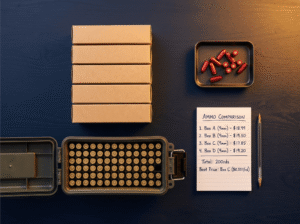
What’s the logic behind your loadout? Break down your choice in the comments.👇