Quick Summary: Handguns Designed For Concealed Carry
- This article reviews five handguns manufactured and available in 2025 that are designed for concealed or discreet carry.
- Each handgun is examined through design intent, ergonomics, construction, and feature set rather than rankings or recommendations.
- The article highlights major concealed carry design trends, including optics-ready slides and increased capacity.
- It explains how manufacturers balance concealability and shootability in modern carry-focused handguns.
- The piece provides a neutral, technical context for understanding today’s concealed carry handgun landscape.
Handguns designed for concealed carry should operate within tight technical constraints. They must remain compact enough to conceal, controllable enough to shoot accurately, and durable enough to withstand constant daily carry. By 2025, most manufacturers focus less on radical redesigns and more on refining ergonomics, capacity, and accessory compatibility. Given the diverse inventory of weapons available out there, which models and which manufacturers offer the best options for gun carriers like you and me?
| Product | Brand | Price (USD) | Caliber | Capacity | Weight (Unloaded) | Rating ( /5 ) |
| Glock 43X MOS | Glock | ~$485 | 9×19mm | 10+1 | 16.26 oz (no magazine) | 4.4 |
| SIG Sauer P365 XMacro (Comp) | SIG Sauer | ~$899 | 9mm | 17+1 | 21.5 oz | 4.7 |
| Smith & Wesson M&P 9 Shield Plus | Smith & Wesson | ~$549 | 9mm | 10+1 / 13+1 | 20.2 oz | 4.5 |
| Springfield Armory Hellcat Pro OSP (15-rd) | Springfield Armory | $670 MSRP | 9mm | 15+1 | 21 oz | 4.6 |
| Ruger LCR (9mm) | Ruger | $879 MSRP | 9mm Luger | 5 | 17.2 oz | 4.2 |
The following five handguns are all current-production models manufactured and available during 2025. Each model was reviewed for its design approach and technical characteristics rather than relative merit.
Glock 43X MOS
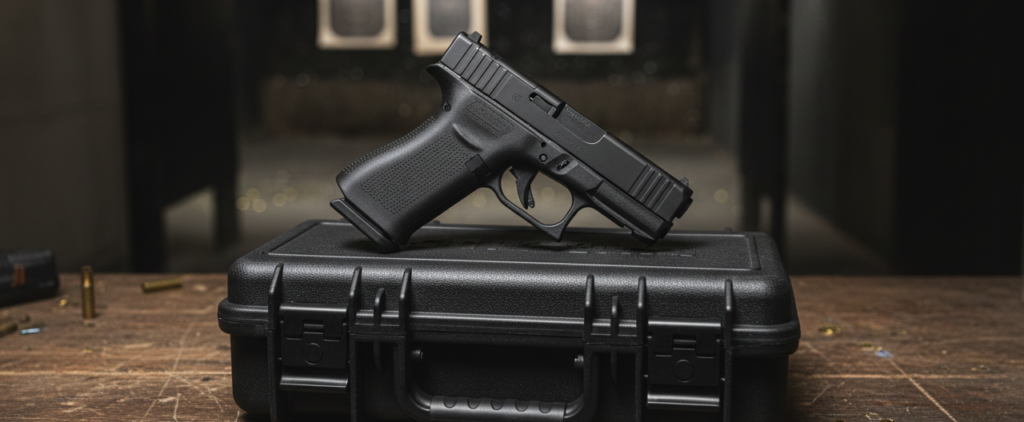
The Glock 43X MOS is part of Glock’s slimline series, combining a narrow slide profile with a longer grip frame. This configuration increases controllability compared to earlier single-stack designs while maintaining a relatively slim overall width.
The MOS variant is cut from the factory to accept micro red-dot optics, reflecting Glock’s shift toward optics compatibility as a standard feature. The pistol retains Glock’s familiar control layout and trigger feel, emphasizing consistency across the brand’s lineup. Its polymer frame and corrosion-resistant finish are designed for durability under continuous carry conditions.
From a design standpoint, the 43X MOS favors functional simplicity and repeatability over aggressive size reduction.
Pros
- Factory optics-ready slide (MOS) for micro red dots
- Slim profile with a longer grip for improved controllability
- Simple, consistent Glock control layout for repeatability
Cons
- Lower capacity versus newer high-cap micro-compacts (10-round standard)
- Grip height can print more than shorter-grip micro-compacts
- Factory configuration favors simplicity over “feature-rich” extras
SIG Sauer P365 XMacro
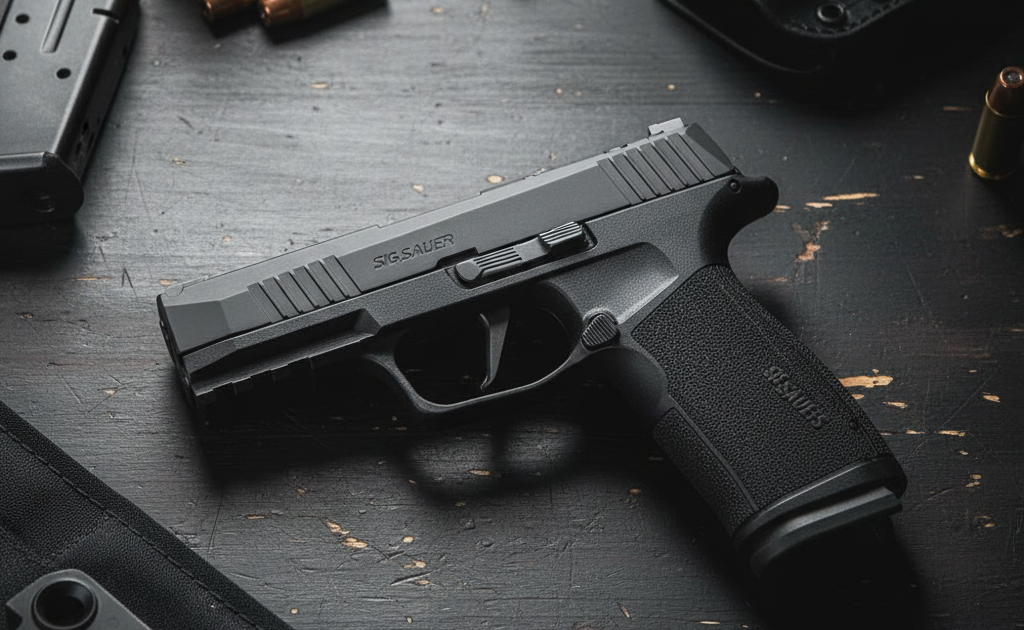
The SIG Sauer P365 XMacro represents an expanded interpretation of the micro-compact concept. While larger than the original P365, the XMacro incorporates a longer grip module, enhanced texture, and increased capacity while remaining within dimensions commonly associated with concealed carry.
The grip angle is more vertical than many compact pistols, altering recoil management and wrist alignment. Ambidextrous controls and a flat-faced trigger contribute to a modernized user interface. The slide is optics-ready, and the platform is clearly designed around contemporary carry accessories rather than legacy iron sights alone.
The XMacro illustrates how concealed carry designs have gradually increased in size to emphasize shootability and capacity.
Pros
- High capacity in a thin carry profile (17+1)
- Optics-ready, modern controls, and carry-accessory-friendly design
- More vertical grip angle can improve recoil management for many shooters
Cons
- Larger footprint than “true” micro-compacts can reduce deep-conceal comfort
- Accessory/holster ecosystem can be more configuration-dependent
- Pricing typically lands above budget carry options
Smith & Wesson M&P 9 Shield Plus
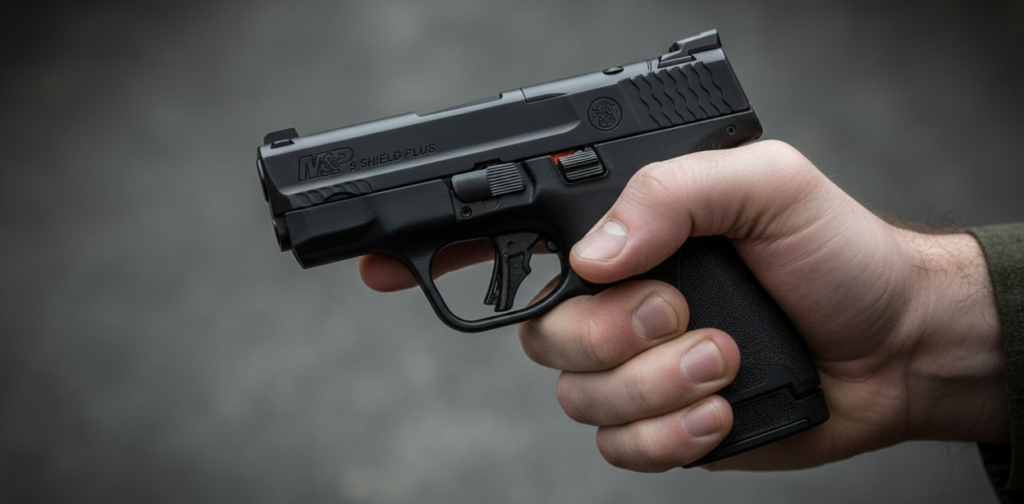
The M&P 9 Shield Plus builds on the long-running Shield platform by addressing one of its historical limitations: magazine capacity. Through a redesigned magazine and grip frame, the Shield Plus increases capacity without significantly altering its external footprint.
Ergonomics remain familiar, with a grip angle and texture that emphasize natural pointing. The updated flat trigger provides a more consistent feel compared to earlier hinged designs. Optics-ready configurations reflect Smith & Wesson’s recognition of changing user expectations.
The Shield Plus represents a conservative but deliberate evolution of an established concealed carry design.
Pros
- Capacity upgrade without a major footprint increase (10/13 options)
- Familiar Shield ergonomics with an updated trigger feel
- Optics-ready configurations available
Cons
- Less “modular” feel versus some newer platforms
- Feature set varies significantly by configuration (OR vs non-OR, bundles)
- Capacity still trails the highest-capacity macro compacts
Springfield Armory Hellcat Pro
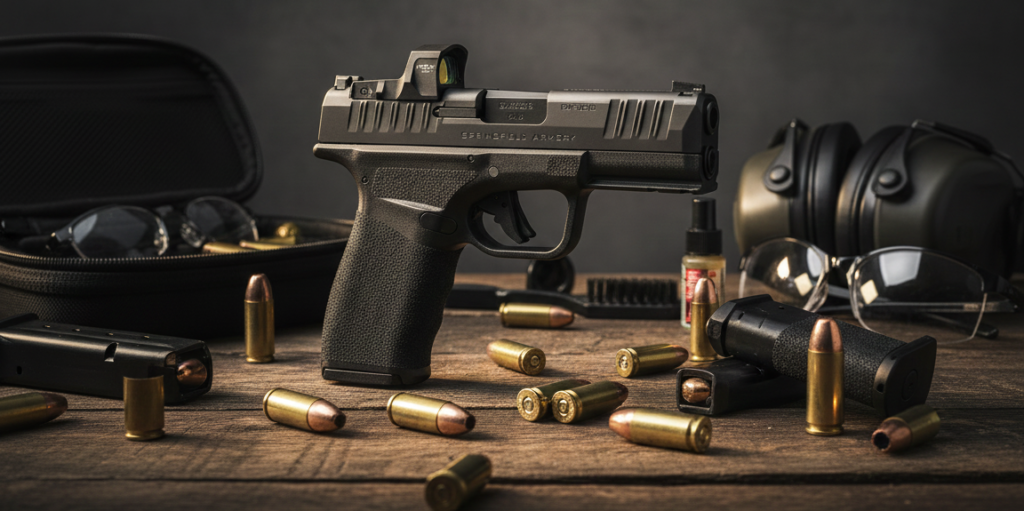
The Hellcat Pro extends the original Hellcat concept into a slightly larger format. With a longer slide and grip, it occupies a space between micro-compacts and traditional compact pistols.
The frame features aggressive texturing and supports a high grip position. Controls are kept low-profile to reduce snag risk, and the slide is factory-cut for optics. The trigger maintains Springfield Armory’s established characteristics, with a defined break and short reset.
The Hellcat Pro emphasizes stability and control while remaining positioned within the concealed carry market.
Pros
- Strong capacity-to-size balance (15+1 flush, optics-ready)
- More stability than smaller micro-compacts due to longer slide/grip
- Carry-focused controls and texture designed to stay secure under recoil
Cons
- Less “pocketable” than smaller micro-compact options
- Some users prefer softer texture for all-day carry comfort
- Optics and accessory choices can add bulk/weight quickly
Ruger LCR (9mm Variant)

The Ruger LCR diverges from the striker-fired semi-automatic trend by offering a lightweight revolver platform. Its polymer and aluminum construction reduces overall weight while preserving structural strength.
The internal hammer design minimizes external protrusions, and the revolver’s defining feature is its smooth double-action trigger system. Chambering the platform in 9mm reflects Ruger’s effort to modernize the revolver’s role within the concealed carry conversation.
The LCR demonstrates that revolvers continue to be refined for discreet carry applications even as semi-automatics dominate the market.
Pros
- Very simple manual of arms (DAO revolver) with snag-reduced profile
- Lightweight for its class and easy to carry
- 9mm chambering can simplify ammo logistics for some owners
Cons
- Lower capacity (5-shot cylinder) compared to semi-autos
- Reloads are typically slower than magazine changes
- DAO reminder: trigger discipline and practice matter for speed/accuracy
Key Concealed Carry Handgun Design Trends In 2025
Across these models, several consistent trends emerge. Optics-ready slides are now standard rather than optional. Capacity improvements are achieved through magazine and grip redesigns instead of increased width. Ergonomics and grip texture receive as much attention as internal mechanics. The overall size envelope of concealed carry handguns continues to expand slightly to favor shootability.
These trends suggest a mature market focused on refinement rather than experimentation.
Understanding the Science Behind Handguns Designed for Concealed Carry
Modern concealed carry handgun design reflects convergence rather than divergence. By 2025, manufacturers largely agree on core mechanical solutions, leaving differentiation to ergonomics, capacity management, and accessory integration.
The five handguns reviewed here demonstrate that a single size or configuration no longer defines concealed carry. Instead, it encompasses a range of designs that balance discretion and control in different ways, allowing users to prioritize specific characteristics without departing from the concealed carry category.
| Product | Review Summary |
| Glock 43X MOS | A durability-first, optics-ready slimline that prioritizes functional simplicity and repeatability for everyday carry. |
| SIG Sauer P365 XMacro (Comp) | A high-capacity, modernized carry platform that emphasizes shootability and accessory integration while remaining concealment-friendly. |
| Smith & Wesson M&P 9 Shield Plus | A refined evolution of the Shield line that improves capacity without sacrificing familiar ergonomics or concealability. |
| Springfield Armory Hellcat Pro OSP (15-rd) | A slightly larger concealed-carry pistol focused on stability, control, and optics readiness while maintaining strong capacity. |
| Ruger LCR (9mm) | A lightweight, snag-reduced revolver that favors simplicity and discreet carry over maximum ammunition capacity. |
Frequently Asked Questions
What’s the best compact handgun for concealed carry?
The best compact handgun for concealed carry balances size, capacity, and shootability. For many carriers, the Glock 43X MOS stands out thanks to its slim profile, manageable recoil, and optics-ready slide, making it easy to conceal while remaining comfortable and controllable for everyday carry.
Which concealed carry gun is most reliable?
Reliability in a concealed carry handgun comes from proven design, consistent manufacturing, and simplicity. Models with long service records, such as Glock and SIG platforms, are widely trusted. Among modern options, the SIG Sauer P365 XMacro combines a strong reliability reputation with modern features and higher capacity.
Best concealed carry handgun for beginners?
For beginners, the best concealed carry handgun is one that’s easy to control, simple to operate, and comfortable to shoot regularly. The Smith & Wesson M&P 9 Shield Plus is a common recommendation because of its manageable recoil, intuitive ergonomics, and balance between size and capacity, helping new carriers build confidence safely.
Is a higher-capacity handgun better for concealed carry?
Higher capacity can be beneficial, but it must be balanced against concealability and comfort. While extended magazines offer more rounds, they also increase grip length and printing risk. Pistols like the Springfield Armory Hellcat Pro strike a middle ground by offering strong capacity without moving fully into full-size carry dimensions.
Should I choose a revolver or a semi-automatic for concealed carry?
The choice depends on simplicity versus capacity. Revolvers offer a straightforward manual of arms and reduced snag risk, while semi-autos provide faster reloads and higher round counts. For those prioritizing simplicity and discretion, the Ruger LCR remains a viable concealed-carry option despite its lower capacity.
Does optics-ready matter for a concealed carry handgun?
Optics-ready handguns are increasingly popular, even for concealed carry, because micro red dots can improve target acquisition under stress. While not required, having the option adds future flexibility. Pistols like the Glock 43X MOS allow carriers to choose irons or optics without replacing the firearm.