
Quick Look
“The info out there is chaos.” That’s the frustration: 50 states, 50 different sets of laws, and until last week, no single tool that let you compare them side by side without wading through lobbying spin or opaque methodology. The Firearms Policy Coalition changed that on April 3, 2026, when it released the 2026 FPC Freedom Index, the first transparent, equal-weight, publicly auditable ranking of Second Amendment protections across all 50 states and Washington, D.C. If you carry, travel with a firearm, or are thinking about a move, this is the tool you’ve been waiting for. Here’s what the number means, and what it doesn’t.
Related: Gun Laws by State
What Is the FPC Freedom Index, and How Does It Work?
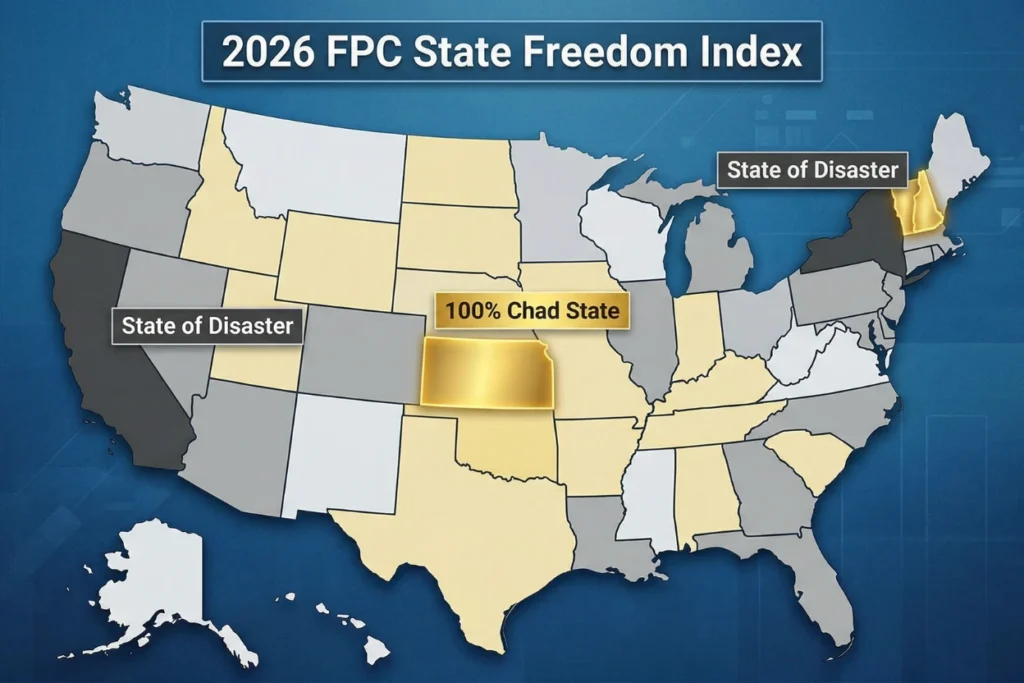
The FPC Freedom Index scores every state on 22 yes/no criteria spread across four categories: Arms, Acquisition, Carry, and Other. Every criterion carries equal weight: one point for each pro-freedom response, divided by 22 for a percentage score. No grading on a curve. No participation trophies for political rhetoric.
The result is four tiers:
| Tier | Score Range | Notable States |
|---|---|---|
| Chad State | 100% | Kansas, New Hampshire |
| Freeish State | 85–99% | TX, MT, AZ, IA, IN, KY, NC (95%); NV (90.91%); ID, OK (90.91%); WY (86.26%) |
| State of Confusion | 70–84% | FL, OH (81.82%); many mid-tier states |
| State of Disaster | Below 70% | CA (4.55%) + 11 others; VA expected to join Jul 1 |
The interactive map at fpcfreedomindex.org lets you pull any state’s full line-item breakdown and run side-by-side comparisons. That compare function is where the real value is: it shows you exactly which specific criteria your state fails, not just a summary score.
Which States Scored Highest, and Which Ones Surprised Everyone?
Kansas and New Hampshire are the only two states to earn a perfect 100%. That’s it. Every other state in the country has at least one criterion where lawmakers chose restriction over freedom.
California’s last-place finish at 4.55% surprises no one. The real story is in the middle of the map. Florida and Ohio (two states with years of pro-gun political branding) both scored 81.82%, landing them squarely in “State of Confusion” territory. Texas, Montana, Arizona, Iowa, Indiana, Kentucky, and North Carolina all hit 95%, meaning each is one or two legislative fixes away from a perfect score.
The community noticed immediately. Within hours of the release, forum threads were running line-by-line audits. One poster captured it well:
“The difference between Texas and being a gold State is how they structured one of the questions. Texas lets CCW licensees carry in more places than constitutional carry, and for that, it gets dinged.”, Texas Gun Talk forum, April 2026
That’s the right way to read the Index. It rewards constitutional, across-the-board freedom, not just high-profile wins. States that left permit-based carry in place alongside constitutional carry may score lower than states that went all the way.
What Do the 22 Criteria Actually Mean for Your Everyday Carry?
The score is a number. The breakdown is the tool. Here’s what each of the four categories measures in plain language:
| Category | Plain-Language Question | What It Covers |
|---|---|---|
| Arms | Can you own what you carry? | Handgun rosters, semi-auto bans, suppressor rules, magazine capacity limits, body armor, personal manufacture |
| Acquisition | How hard is it to get it? | Waiting periods, purchase permits, age restrictions, purchase rationing (e.g., 1 gun per 30 days) |
| Carry | Where are you legal? | Permit requirements, prohibited locations (parks, transit, government buildings, places of worship), age bans for 18–20-year-olds |
| Other | Is state law the only law you follow? | Mandatory registration, state preemption of local ordinances |

Last update on 2026-09-24 / Affiliate links / Images from Amazon Product Advertising API
Key Takeaway: Weak Preemption Is a Hidden Risk
The preemption criterion in the ‘Other’ category is the one most daily carriers overlook. A state that fails this question means cities and counties can pass their own gun restrictions: restrictions that override state law in ways you may never anticipate. A 90% state with no preemption protection is not 90% safe in every zip code. Before you assume your state’s score covers you, check whether that score holds inside the city limits where you actually spend your day.
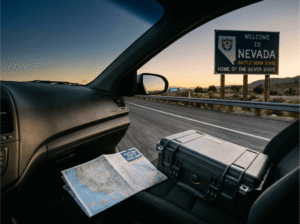
What does a specific score look like when you break it apart? Nevada scored 90.91%. It doesn’t restrict common handguns, semi-automatic firearms, suppressors, or magazine capacity, and it doesn’t require a permit to carry. It scored ‘yes’ (meaning a restriction exists) on two questions: personal manufacture of firearms and an age-based carry restriction for 18-to-20-year-olds. Ninety percent freedom. Two specific gaps. That’s the level of detail the Index gives you.
Does a High Score Mean You’re Legally Protected?
This is the question the Index doesn’t answer, and it’s the one that matters most after a defensive shooting.
A score is not a shield. The FPC Freedom Index measures regulatory freedom: what the law permits you to own, acquire, and carry. It does not measure what happens when you use that firearm in self-defense.
Three things your state’s Index score tells you nothing about:
- Your state’s use-of-force standard and whether you have a duty to retreat before drawing
- How your local district attorney approaches defensive shooting cases, which can vary dramatically even within high-scoring states
- City or county ordinances in low-preemption states that may criminalize carry in locations your state score appears to permit
“Legal confusion: state laws around concealed carry can be complex, and knowing what is allowed is intimidating.” That’s true before you look at the Index. It’s still true after. The Index reduces one layer of that complexity. It doesn’t eliminate the others.
Here’s how to layer the Index against what it can’t tell you:
| Situation | What the Index Tells You | What You Still Need |
|---|---|---|
| Daily carrier, current state | Your regulatory baseline: what you can own and where you can legally carry | Your state’s use-of-force statute, duty-to-retreat status, and specific prohibited-location list |
| Traveling across state lines | The destination state’s regulatory posture toward gun rights | Whether your permit is honored there (use USCCA reciprocity map separately) |
| Considering relocation | First-filter comparison of candidate states | Permit application timeline, city-level preemption status, use-of-force law in your new state |
How Should CCW Holders Use the FPC Freedom Index as a Practical Tool?
Three situations, three specific action plans:
Use Case 1: Daily Carrier in Your Current State
- Pull your state’s full score breakdown at fpcfreedomindex.org
- For each criterion your state fails, identify one real location in your daily life that the criterion affects: work, church, transit, parks
- Map your prohibited-location gaps against your actual carry pattern. If your state fails the transit criterion and you commute by train, you’re disarmed for that portion of your day
- Then layer on your state’s use-of-force law: know your duty-to-retreat status and the legal standard for a justified defensive use


Last update on 2026-09-24 / Affiliate links / Images from Amazon Product Advertising API
Use Case 2: Traveling Across State Lines
- As of 2026, states still control reciprocity rules. You must verify the law before crossing state lines, regardless of the Index scores
- The Index tells you the destination state’s regulatory posture. It is not a reciprocity map. Use the USCCA reciprocity resource separately to confirm your permit is honored
- A high index score does not mean your permit is automatically recognized. These are separate questions with separate answers
- Pay particular attention to the Carry category for any state you’ll spend time in. Prohibited locations vary significantly even among Freeish States
Last update on 2026-09-24 / Affiliate links / Images from Amazon Product Advertising API
Use Case 3: Considering Relocation
- Use the Index as your first filter: identify top candidate states, pull their full breakdowns, and note every criterion each state fails
- One gun owner who relocated described it plainly: between the COVID backlog and the 2020 election surge in demand, getting a resident CCW permit in a new state took almost eight months. Factor permit timeline into your relocation decision: it’s not just a logistics problem, it’s a carry-gap problem
- After the Index, run three additional checks: the new state’s use-of-force statute, city-level preemption status in your target area, and permit reciprocity coverage during the transition period
- Relocation is a legal reset. Your carry knowledge (prohibited locations, use-of-force law, post-incident protocol) does not transfer. Build it from the ground up in your new state before you carry there
What Your State’s Score Should Make You Do Next
The FPC Freedom Index is the most transparent Second Amendment ranking tool ever published. For a CCW holder, the number matters. But the line-item breakdown matters more, and what’s underneath the breakdown matters most.
Pull your state’s full score. Find the specific criteria it fails. Then layer on what the Index can’t tell you: your state’s actual use-of-force law, your duty-to-retreat status, and what a defensive shooting legally looks like in your jurisdiction. A score of 95% still leaves five percent of the picture blank. Know what’s in that five percent.
Check your state’s full breakdown at the FPC STATE Freedom Index. Then find your state’s concealed carry laws, prohibited locations, and use-of-force requirements in our state carry guides to fill the gaps the Index revealed.
Check this video out from Guns Savvy: These 8 HANDGUNS WILL Be ILLEGAL in 2026
Frequently Asked Questions
-
What is the FPC Freedom Index?
The FPC Freedom Index is a state-by-state ranking of Second Amendment protections released by the Firearms Policy Coalition in April 2026. It scores all 50 states and Washington, D.C., on 22 equal-weight yes/no criteria across four categories: Arms, Acquisition, Carry, and Other. Higher scores mean fewer restrictions. The full breakdown is at fpcfreedomindex.org.
-
Which states scored highest on the FPC Freedom Index?
Kansas and New Hampshire are the only two states to earn a perfect 100% score, classified as ‘Chad States.’ Texas, Montana, Arizona, Iowa, Indiana, Kentucky, and North Carolina all scored 95%. Several states widely considered pro-gun (including Florida and Ohio) scored 81.82%, placing them in the ‘State of Confusion’ tier despite years of pro-2A political branding.
-
Which state scored lowest on the FPC Freedom Index?
California ranked last at 4.55% out of a possible 100%. It failed on nearly every criterion across all four categories, including restrictions on handguns, semi-automatic firearms, magazine capacity, waiting periods, purchase permits, and carry locations. The state also requires firearm registration and lacks strong preemption protections for gun owners against local ordinances.
-
What are the four tiers in the FPC Freedom Index?
The Index uses four tiers: ‘Chad State’ (100%), ‘Freeish State’ (85–99%), ‘State of Confusion’ (70–84%), and ‘State of Disaster’ (below 70%). Currently, 12 states sit in the ‘State of Disaster’ tier, with Virginia expected to join on July 1. Only Kansas and New Hampshire hold ‘Chad State’ status. Most states fall in the Freeish or Confusion ranges.
-
Does a high FPC Freedom Index score mean my concealed carry permit is recognized in that state?
No. The Index measures a state’s regulatory posture toward gun rights: it is not a reciprocity map. Your permit’s validity in another state depends on bilateral recognition agreements, which are determined separately from Index scores. Always verify current reciprocity before carrying across state lines using a dedicated CCW reciprocity resource like the USCCA map.
-
My state scored well on the Index. Am I legally protected if I use my firearm in self-defense?
A high score means fewer regulatory restrictions, not legal immunity. Your exposure after a defensive shooting depends on your state’s use-of-force law, your duty-to-retreat status, and local ordinances in low-preemption states. None of these is captured by the Index. Understand your state’s self-defense statute as a separate and equally important document.
-
What does ‘preemption’ mean in the FPC Freedom Index, and why does it matter?
State preemption means state law overrides local firearms ordinances. States without strong preemption allow cities or counties to impose restrictions stricter than state law: restrictions you may never know exist. A state can score 90% on the Index and still have municipalities with conflicting local laws that create real legal exposure for carriers inside those city limits.
-
How should I use the FPC Freedom Index if I’m thinking about relocating?
Use it as your first filter. Pull each candidate state’s full breakdown at fpcfreedomindex.org and note every criterion it fails. Then check your new state’s use-of-force law, permit application timeline, preemption status, and CCW reciprocity profile during the transition. Relocation is a full legal reset: the Index is the starting point, not the finish line.
-
What are the 22 criteria the FPC Freedom Index uses to score states?
The criteria cover Arms (handgun rosters, semi-auto bans, suppressors, SBRs, SBSs, machine guns, magazine limits, body armor, personal manufacture), Acquisition (purchase permits, age restrictions, waiting periods, purchase rationing), Carry (permit requirements, prohibited-location restrictions, age bans for 18–20-year-olds), and Other (mandatory registration and state preemption of local ordinances).
-
How often will the FPC Freedom Index be updated?
The 2026 index reflects state laws as of the end of 2025. FPC has committed to updating the Index as laws change. Given the current pace of state-level legislative activity (Virginia’s new gun control laws, for example, are expected to push it into ‘State of Disaster’ territory by July 1), treat your state’s score as a current snapshot and revisit fpcfreedomindex.org regularly.
Make the case: Why did you vote that way?👇