
Key Takeaways
- Pick 9mm if you want easier recoil management, higher capacity in similar-size guns, and cheaper practice, so you’ll train more.
- Pick .45 ACP if you shoot it as well or better, don’t mind lower capacity, and you’re comfortable carrying a bigger/heavier pistol.
- With modern defensive ammo, the gap is smaller than the internet makes it sound. The “best” caliber is the one you carry consistently and hit with quickly.
Safety note: This article is for lawful, responsible owners. Follow safe gun-handling rules, verify local laws, and focus on training and reliable function over caliber arguments.
How Do I Choose Between 9mm vs .45 ACP for My Use Case?
Caliber debates stick around because nobody wants to feel underprepared. But the truth is simple: your carry choice has to fit your body, your budget, and your skill level. Once you choose for your real needs, the forum noise gets quiet fast.
Before you compare numbers, decide what “success” looks like for you. Are you building confidence in a new career? Do you need deep concealment in light clothes? Are you training weekly or a few times a year?
Use-case checklist (be honest):
- Will I carry this every day, or only “sometimes”?
- Can I conceal it in my normal clothes without fidgeting?
- Can I shoot fast, accurate follow-ups with it?
- Can I afford to practice enough to stay sharp?
- Do I have hand/wrist issues that make recoil a bigger factor?
Side-by-Side Snapshot (The “Stop Arguing” Table)
Most “9mm vs. 45” arguments skip the part where your pistol has to fit into your life. This quick comparison gives you the trade-offs that actually matter for concealed carry. Use it to narrow the field, then confirm your choice with range time.
9mm vs. 45 ACP: Practical Carry Comparison
| Factor | 9mm (Typical Reality) | .45 ACP (Typical Reality) |
| Recoil/recovery | Easier for many shooters to control and recover | Often slower recovery, especially in lighter guns |
| Capacity (same-size guns) | Usually higher | Usually lower |
| Practice cost & availability | Typically cheaper and widely available | Typically more expensive, sometimes less variety |
| Concealment options | Many small, high-capacity pistols | Often thicker/heavier or lower-capacity to stay slim |
| Skill-building | High reps for the same budget | Fewer reps for the same budget |
| Who it fits best | Most carriers, newer shooters, and recoil-sensitive | Shooters who run it well and carry larger guns comfortably |
Bottom line: If all else is equal, 9mm is the easier default. If .45 is your best-shooting gun, that matters more than winning an argument online.
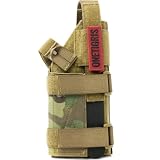
- Fully Customizable & Universal Fit: Crafted from reliable 500D nylon, this MOLLE gun holster features fully adjustable...
- Tactical Cross-Draw Design & Quick Access: Engineered for rapid response, the versatile cross-draw design accommodates...
- Secure Quick-Release & Heavy-Duty Construction: Built to last with high-strength 500D nylon and 100% polyester...
Last update on 2026-09-03 / Affiliate links / Images from Amazon Product Advertising API
Is 9mm or .45 ACP Easier to Shoot Accurately?
Recoil talk gets emotional because it’s personal. Some people shoot .45 confidently and feel “at home” with it. Many others shoot 9mm faster with less effort. Your goal isn’t to prove anything; it’s to pick what you can run well when it counts.
Here’s the practical point: recoil isn’t just “ouch.” It’s muzzle rise, sight recovery, and how quickly you can deliver another accurate shot. In concealed carry, that ability often matters more than caliber identity.
A simple range evaluation (skill check, not a stunt):
- Shoot both calibers at 7 yards: aim for a tight group, slow and steady.
- Then shoot controlled strings: focus on seeing your sights return and keeping hits consistent.
- If your hits open up or you start “anticipating” recoil, note which caliber triggers it more.
What tends to happen:
- 9mm: Many shooters track sights better and maintain accuracy at speed.
- .45: Some shooters like the “push” in heavier pistols, but snappy or light .45s can punish consistency.
Capacity (It’s Not Everything, But It’s Nothing)
Capacity is a touchy subject because people want a single “correct” number. In reality, you’re balancing capacity against concealability, comfort, and performance. More rounds can be helpful, but not if the gun is so big you don’t carry it.
For similar-sized pistols, 9mm usually offers more capacity. With .45, you’ll often accept fewer rounds or a larger grip. That trade-off is not automatically bad; it’s just a trade-off.
Consider capacity in context:
- Do you carry a spare magazine consistently?
- Does higher capacity come at the cost of printing or discomfort?
- Are you choosing a gun that you can actually keep on you all day?
If you conceal a compact 9mm easily but struggle with a larger .45, the “bigger bullet” discussion ends right there.
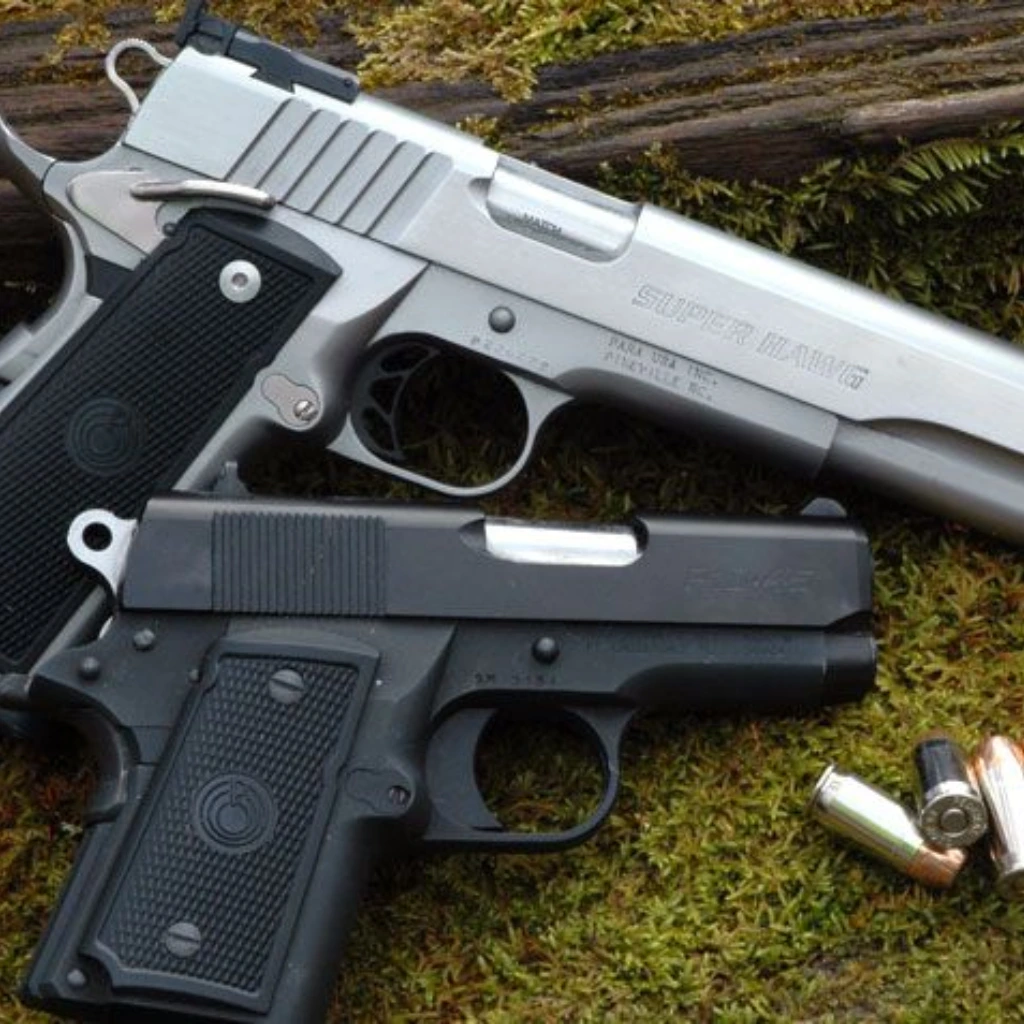
| Metric (2026 Averages) | Compact 9mm | Compact .45 ACP |
| Standard Capacity | 12–15 Rounds | 6–8 Rounds |
| Typical Grip Width | 1.0″ – 1.1″ | 1.2″ – 1.4″ |
| Weight (Loaded) | ~22–26 oz | ~28–35 oz |
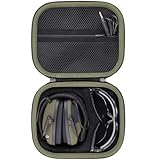
- Perfect design: The Baval Hard Protective Case is specifically designed for Walkers Razor Slim/Howard Leight Honeywell...
- High quality materials: The walkers razor slim electronic shooting earmuffs case is made of EVA and Nylon materials. The...
- Soft interior: The Howard Leight Bluetooth Shooting Earmuff protective case has dedicated earmuff and Shooting Glasses...
Last update on 2026-09-03 / Affiliate links / Images from Amazon Product Advertising API
Practice Cost in 2026 (The Hidden Decider)
A lot of caliber debates ignore the most important predictor of real performance: practice volume. If one caliber lets you train more often, it often becomes the better choice for your skill level over time. Your carry gun should be a tool you maintain proficiency with, not a trophy you “mean to train with.”
In the 2026 market, 9mm has solidified its status as the logistics standard, with manufacturers prioritizing its production over niche calibers. This has resulted in a stable supply chain for 9mm “stack-it-deep” bulk cases, while.45 ACP remains subject to 15-20% higher price volatility depending on raw lead and brass costs.
A quick reality check:
- If 9mm lets you shoot twice as many rounds in the same budget, you’re buying more reps.
- More reps usually mean better trigger control, faster sight recovery, and more confidence.
Budget-friendly skill builders (either caliber):
- Dry fire practice (safe, structured, consistent)
- Short, focused live-fire sessions (quality over marathon trips)
- A “carry confirmation” box each session: a few mags with your carry setup to stay honest
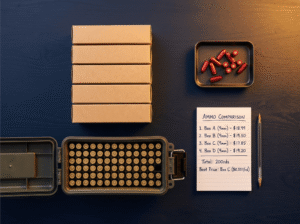
| Ammunition Type | 9mm Luger (Avg. Price/Round) | .45 ACP (Avg. Price/Round) | Cost Increase for .45 ACP |
| Practice / Range (FMJ) | $0.28 | $0.48 | +71% |
| Defensive (JHP) | $0.99* | $1.75* | +76% |
| Bulk Case (1,000 rds) | $249.00 ($0.25/rd) | $429.00 ($0.43/rd) | +72% |
Concealability and Comfort (The Gun You’ll Actually Carry)
This is where many people “lose” the caliber argument in real life. A carry gun has to disappear under your daily clothes and remain comfortable for hours. If it doesn’t, you’ll leave it at home or constantly adjust it, which defeats the purpose.
Caliber can influence concealment because .45 versions of similar pistols may be bulkier or heavier, or they may reduce capacity to keep the gun slim. None of that is a deal-breaker, but it matters.
Practical concealment questions:
- Does the grip print when you bend, sit, or reach?
- Does the weight make your belt sag or shift?
- Can you carry it on your typical day, not your “ideal” day?
If you’re choosing between a compact 9mm you’ll carry daily and a larger .45, you’ll carry “sometimes,” the daily gun usually wins.

- Versatile Storage: Includes one standard-sized box. Perfect for .30 caliber, 9mm, 5.56 ammunition, and more. Great for...
Last update on 2026-09-03 / Affiliate links / Images from Amazon Product Advertising API
Reliability and Platform Choice (Boring Stuff That Matters)
Caliber debates are exciting. Reliability is boring. Reliability is also what you should prioritize. A dependable pistol with proven magazines and a vetted defensive load beats any theoretical caliber advantage.
Different calibers can behave differently in certain platforms, but the more common issue is gun-and-magazine compatibility, maintenance, and whether you’ve tested your carry setup.
Carry reliability checklist (either caliber):
- Choose a reputable pistol with a track record
- Use quality magazines and mark them if you rotate multiple mags
- Function-test your defensive load in your gun
- Keep your setup clean and lubricated per the manufacturer
If your .45 runs perfectly and your 9mm is finicky, pick the reliable option and fix the other later.
Terminal Performance Without the Hype
This section is where internet noise gets loud. People want an easy answer like “bigger is always better.” Real life is messier. With modern defensive ammunition, both 9mm and .45 ACP can perform well when paired with reliable function and accurate shot placement.
Modern ballistic testing (following standard FBI heavy clothing protocols) shows that 9mm and .45 ACP defensive loads now achieve nearly identical penetration depths of 12 to 18 inches in 10% ballistic gelatin. This data confirms that shot placement, rather than “stopping power,” is the primary variable in defensive effectiveness.
Keep it simple:
- Pick quality, widely trusted defensive ammo
- Confirm it functions in your carry gun
- Prioritize training so you can place shots under pressure
Who Should Pick 9mm in 2026?
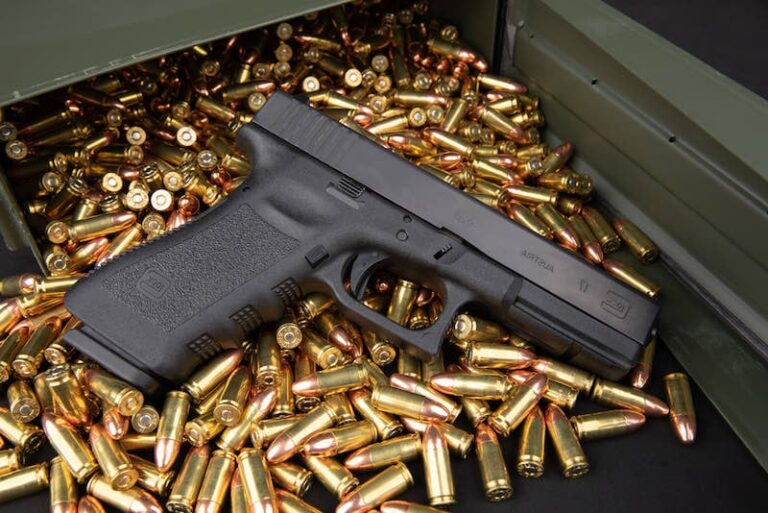
If you want the short version: 9mm is the best fit for a lot of concealed carriers because it makes the whole system easier. That includes carrying a smaller pistol, shooting it well, and practicing often enough to build real competence.
Choose 9mm if you:
- Want easier recoil control and quicker sight recovery
- Prefer higher capacity in compact guns
- Plan to practice regularly and want to keep costs manageable
- Need deep concealment in smaller, lighter pistols
- Are newer to concealed carry and want a smoother learning curve
If you’re torn: 9mm is the “safe default” for most people because it helps you build skill faster.
Who Should Pick .45 ACP in 2026?
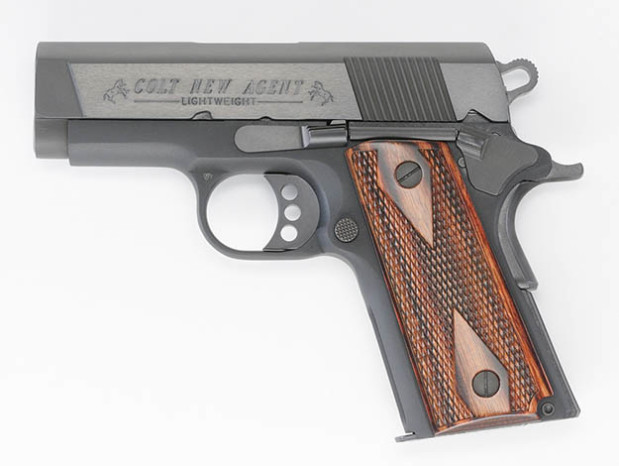
.45 ACP isn’t obsolete, and it isn’t “wrong.” It’s simply a choice with different trade-offs. If you shoot .45 exceptionally well, carry a platform that conceals for you, and you’re willing to train with it, it can be a solid option.
Choose .45 ACP if you:
- Consistently shoot it as well or better than 9mm
- Are comfortable with lower capacity and accept the trade-off
- Prefer a larger/heavier pistol that tames recoil
- Can afford enough practice to keep your performance consistent
- Value the feel and confidence you have with your .45 platform
The best argument for .45 is not theory. It’s measurable performance in your hands.
The Decision Framework (Pick in 5 Minutes)
Decision fatigue is real, and the internet makes it worse. The fastest way out is to score what matters and let the results decide. You’re not picking a personality. You’re picking a tool you’ll carry and train with.
Use a simple 1–5 score for each caliber (with your actual carry gun candidates, not imaginary ones):
Score each category (1 = poor, 5 = excellent):
- Concealment comfort (all-day wear)
- Fast, accurate hits (your range results)
- Practice affordability (your budget reality)
- Confidence and familiarity (no flinching, no doubt)
- Reliability track record (gun + magazines + ammo)
Tie-breakers:
- If scores are close, default to 9mm for most concealed carriers.
- If .45 is clearly your better shooter and you’ll carry it daily, choose .45 and commit.
Common Mistakes to Avoid (Forum Myths, Real Consequences)
Most “caliber regrets” come from buying into internet identity instead of daily reality. You don’t need to win debates. You need a setup you’ll carry, shoot, and maintain.
Avoid these traps:
- Buying a caliber for pride, then under-practicing because it’s expensive
- Choosing a gun that’s too large to conceal consistently
- Switching platforms constantly instead of building proficiency
- Ignoring reliability testing because “it’s a good brand.”
- Over-focusing on caliber and under-focusing on carry comfort, holster setup, and training
Pick the Caliber You’ll Carry and Shoot Well
9mm and .45 ACP both have a long track record, and neither is a “magic answer.” In 2026, the smartest move is to choose based on what you can conceal, what you can afford to practice with, and what you can shoot accurately at speed.
If you want the least complicated path, 9mm is the practical default for many carriers. If .45 is genuinely your best-performing option and you’ll carry it daily, it can be a great choice. Pick one, train, and stop second-guessing.
Key takeaways:
- Shootability and practice matter more than internet arguments.
- Concealability and comfort decide what you’ll carry consistently.
- Modern defensive ammo narrows the gap; reliability and hits matter most.
- Use a scorecard, then commit to and build a skill.
See the Side-by-Side and Choose With Confidence
Want a simple way to decide without spiraling into another comment thread? Re-read the comparison table and run the 1–5 scorecard with your two top gun choices. Then pick the winner and put your energy into training and comfort, not debating.
Up Next:
Colt New Agent (.45 ACP): The Snag-Free 1911 Built to Carry
6 Powerful and Compact 9mm Revolvers for Ultimate Concealed Carry
The FBI Just Settled the 9mm vs .40 vs .45 Debate from TFB TV:
FAQ
-
Is 9mm or .45 ACP “better” for concealed carry in 2026?
Neither is universally better. 9mm is often easier to shoot well, offers higher capacity, and usually costs less to practice with. .45 can be great if you shoot it confidently and carry a platform that conceals comfortably. Your performance and consistency matter most.
-
Does .45 ACP have more “stopping power” than 9mm?
The idea of guaranteed “stopping power” is overstated. With modern defensive ammunition, both calibers can perform effectively when shots are placed well and the ammo functions reliably. Instead of chasing myths, pick a reputable defensive load and focus on accuracy and follow-up shots.
-
Is 9mm recoil always softer than .45 recoil?
Not always. Many shooters find 9mm easier to control, especially in compact pistols, but the recoil feel depends on gun weight, grip, and design. Some people describe .45 as a slower “push,” especially in heavier guns. The best answer is what you control best.
-
Is .45 ACP harder to conceal than 9mm?
Often, yes, but not because of caliber alone. Many .45 pistols are thicker, heavier, or lower capacity to keep size manageable. If you can conceal and carry your .45 comfortably all day, it’s fine. If it’s bulky and you leave it at home, it’s not.
-
Will I be less effective with 9mm than .45 ACP?
Not if you shoot a 9mm better or practice more with it. Practical effectiveness comes from fast, accurate hits and reliable function, not caliber pride. If 9mm lets you train more and control recoil better, it can improve your real-world performance compared with a harder-to-shoot setup.
-
Should beginners choose 9mm or .45 ACP?
Most beginners do well starting with 9mm because it’s widely available, typically cheaper, and easier for many shooters to control. That helps build fundamentals without fighting recoil or budget pressure. .45 can work for beginners, too, but it often requires more careful gun selection and practice.
-
Does higher capacity mean 9mm is always the smarter choice?
Higher capacity can be a real advantage, but it’s not everything. If the higher-capacity gun is uncomfortable, prints badly, or you don’t shoot it well, it’s not the best choice. Capacity matters most when it doesn’t compromise concealment, comfort, and your ability to make accurate hits.
-
Is .45 ACP too expensive to practice with regularly?
It depends on your local prices and your training habits, but .45 is often more expensive than 9mm. If cost reduces your practice frequency, your skills may suffer over time. If your budget supports regular training and you prefer .45 performance, it can still be a solid choice.
-
What matters more: caliber or ammo choice?
For most carriers, ammo reliability and proven performance matter more than caliber arguments. Choose a reputable defensive load, verify it runs in your gun, and keep it consistent. Avoid chasing gimmicks. Then invest in training to place shots accurately and manage recoil effectively.
-
If I’m truly undecided, what should I pick?
If you’re stuck and both options feel similar, pick 9mm as the practical default. It usually offers easier shootability, higher capacity, and lower training costs, helping you build skills faster. If you later find you shoot .45 noticeably better and can carry it daily, switch then.
What’s your ‘why’ for this setup? Tell us how it fits your defense strategy below👇