
Quick Look at Crossdraw Holsters for Women Accessibility
- Crossdraw carry can improve accessibility for women, especially for seated carry and limited shoulder mobility.
- The best setup prioritizes neutral wrist/shoulder angles and repeatable reach seated + standing.
- Look for adjustable cant/ride height, full trigger coverage, secure retention, and stable belt attachment.
- OWB crossdraw often maximizes comfort; IWB crossdraw can conceal better but may need more tuning.
- Test with your real wardrobe (coats/cardigans) and daily seating (car/office chair) before buying.
Related: IWB Holster for Women With Curves
Crossdraw Holsters: Ergonomics, Reach, and Seated Access
Accessibility is often the missing piece in holster advice. Most “best carry position” talk assumes you can comfortably twist, reach behind your hip, and clear a cover garment the same way every time.
Many women cannot. Some deal with limited shoulder mobility, wrist pain, short reach, hypermobility that makes angles unpredictable, or a day that includes lots of sitting (driving, desk work, caregiving). Others simply find that traditional strong-side carry (behind the hip) fights their shape, wardrobe, or comfort. That’s where crossdraw can shine as an accessibility-first option. For the right person and setup, a crossdraw holster for women accessibility needs can mean less strain, easier reach, and more consistent access when seated, without turning the conversation into “tactics.”
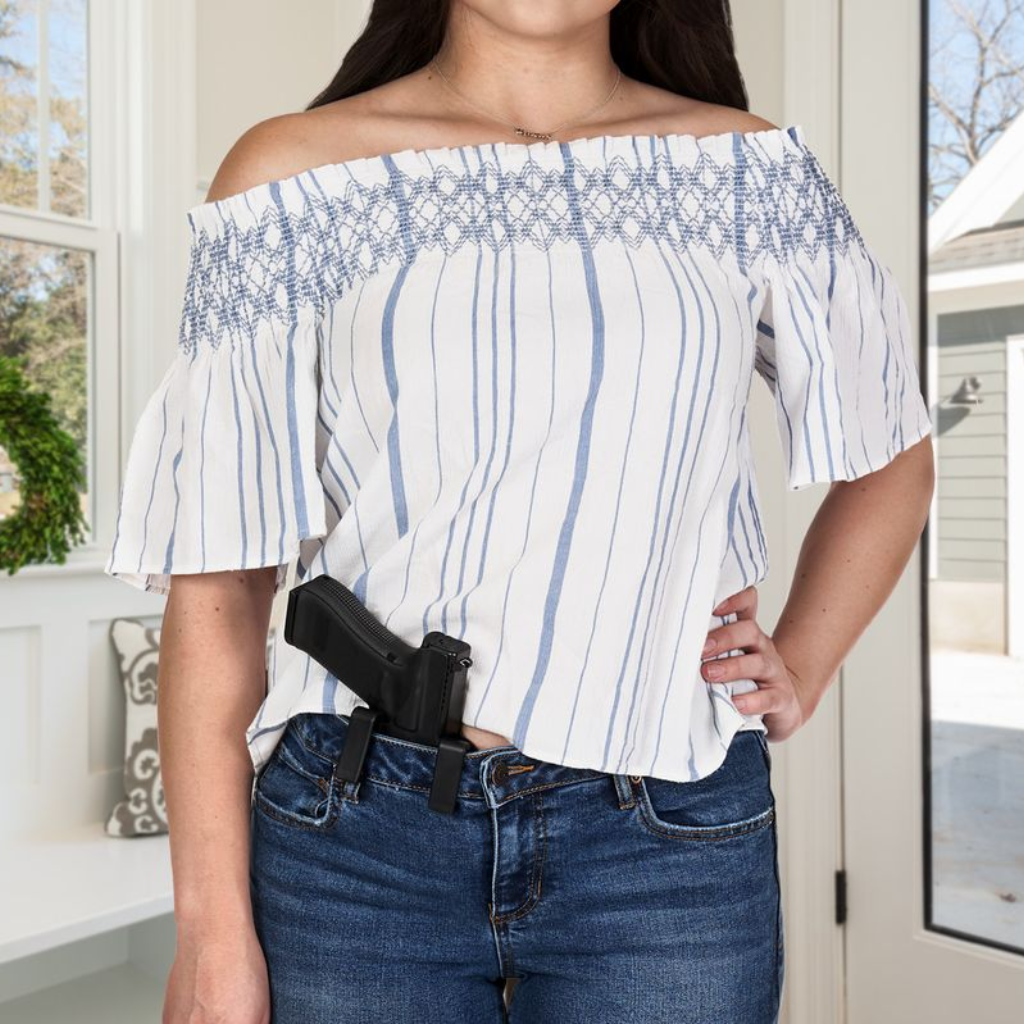
If your biggest problem is reach and comfort (especially seated), carry position matters as much as holster brand.
What Is Crossdraw Carry?
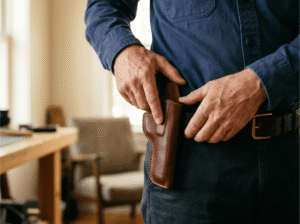
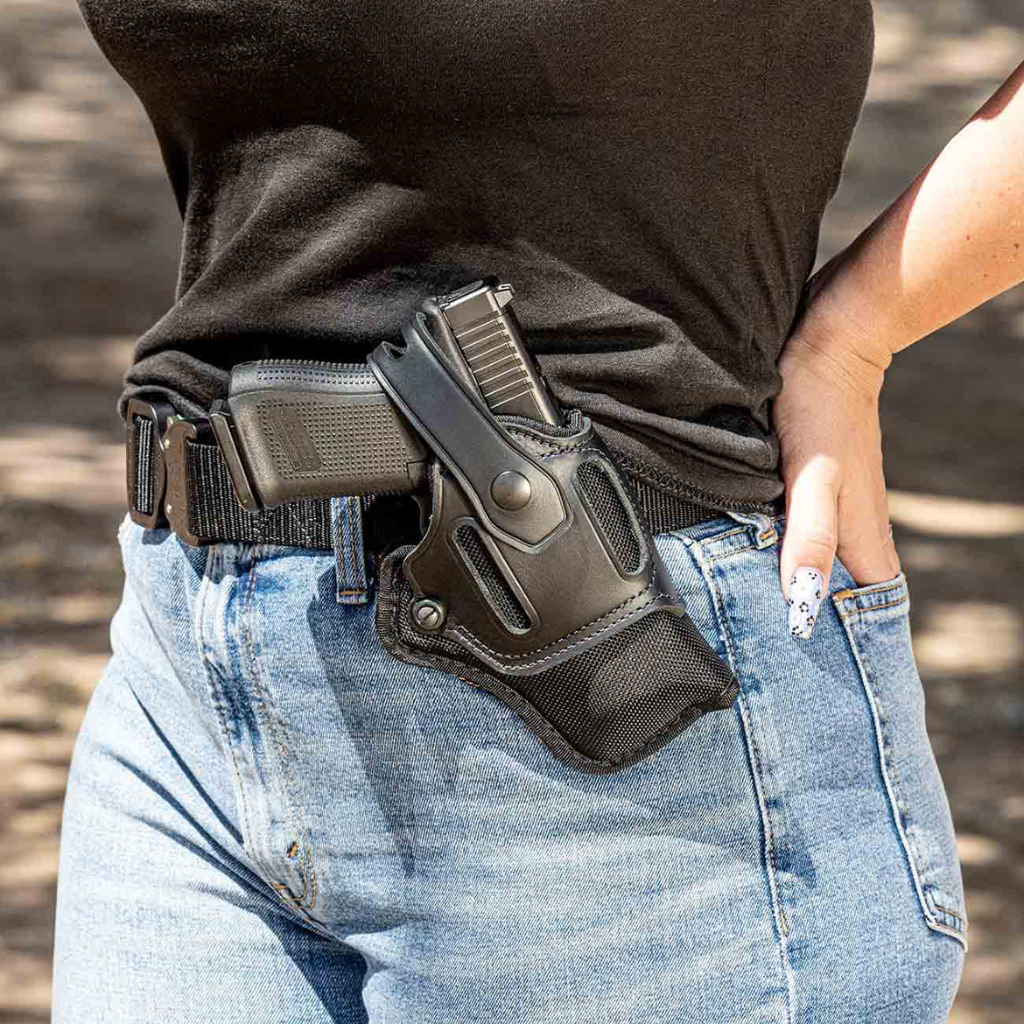
Crossdraw carry places the holster on the opposite side of your dominant hand, angled so you reach across the front of your body to access it, commonly described around the “9 o’clock” area for right-handed shooters (and “3 o’clock” for left-handed).
How it differs:
- Strong-side (hip): usually sits on the same side as your dominant hand, often closer to or behind the hip bone.
- Appendix (front/centerline): sits near the front of the waistband, typically between the hip bones.
- Crossdraw: sits forward of the support-side hip, emphasizing across-the-body reach.
Why this matters: positioning changes your joint angles. Shoulder rotation, wrist bend, elbow path, and how your torso moves (standing vs. seated) are all different depending on where the holster sits.
Crossdraw is less about “speed” and more about reachable angles, especially when your torso is bent or seated.
Why Crossdraw Works Well for Some Women
Crossdraw can be a comfort upgrade when other positions feel like a yoga pose you didn’t sign up for.
Reduced shoulder and wrist strain
If reaching behind your hip aggravates your shoulder, crossdraw can reduce that backward reach and the wrist contortions that often come with it.
Easier reach across the body
For shorter arms or a limited range of motion, “in front of you” is simply easier than “behind you.”
Improved access when seated (driving, office chair)
Crossdraw is widely favored for seated access because it remains reachable when your hips are flexed, and a seatback limits your elbow path. It’s often cited as one of the carry methods that consistently works from a seated position.
Clothing compatibility (jackets, coats, cardigans)
Layers can block behind-the-hip access. A forward, crossdraw placement can be easier to clear under open-front layers like cardigans or coats, especially when you’re sitting and the fabric drapes differently.TL;DR: Crossdraw’s “win” is often comfort + seated reach + wardrobe practicality.
Crossdraw’s “win” is often comfort + seated reach + wardrobe practicality.
Accessibility Considerations by Body Type & Movement
No two bodies “index” the same. Crossdraw can be a great fit, but only when the ergonomics match you.
Bust and grip clearance
A fuller bust can change how you reach across your torso and whether your hand can establish a comfortable grip without awkward elbow flare. You’re looking for a position where your hand lands naturally and your wrist stays neutral.
Waist-to-hip ratio and holster angle
Curves can cause a holster to tilt or gap. Crossdraw often benefits from small-angle (cant) adjustments so the grip doesn’t dig into your ribs or float away from your body.
Arm length and range of motion
Shorter reach tends to favor slightly more forward placement. Limited shoulder external rotation (or pain reaching “back”) often improves when the holster moves forward.
Standing vs. seated access
Test both. A position that feels perfect standing can become blocked by a seatbelt, chair arm, or your own torso compression when sitting.
Accessibility Considerations by Body Type & Movement
No two bodies “index” the same. Crossdraw can be a great fit, but only when the ergonomics match you.
Bust and grip clearance
A fuller bust can change how you reach across your torso and whether your hand can establish a comfortable grip without awkward elbow flare. You’re looking for a position where your hand lands naturally and your wrist stays neutral.
Waist-to-hip ratio and holster angle
Curves can cause a holster to tilt or gap. Crossdraw often benefits from small-angle (cant) adjustments so the grip doesn’t dig into your ribs or float away from your body.
Arm length and range of motion
Shorter reach tends to favor slightly more forward placement. Limited shoulder external rotation (or pain reaching “back”) often improves when the holster moves forward.
Standing vs. seated access
Test both. A position that feels perfect standing can become blocked by a seatbelt, chair arm, or your own torso compression when sitting.
The “best” crossdraw position is the one that you can reach the same way standing and seated.
Ideal Crossdraw Positioning for Women (High-Level, Safety-Focused)
This is about placement and comfort, not technique.
Belt position range (clock reference explained conceptually)
Think of your waistband as a clock face. For many, crossdraw lives in a forward zone on the support-hand side—forward of the hip bone, not behind it. Alien Gear describes crossdraw as typically around “9 o’clock” for right-handed shooters.
Your exact spot depends on seated comfort and whether your elbow has room to move.
Ride height considerations for accessibility
- Too low: harder to reach, more torso bending.
- Too high: can poke ribs or interfere with bra line/waist shaping garments.
An adjustable platform can help you find the height that keeps your wrist straighter and your shoulder relaxed.
Cant (angle) adjustments for smoother motion
Small cant changes can dramatically improve comfort, especially if your wrist or shoulder complains. A holster with adjustable cant makes it easier to tune the angle for your body and wardrobe. For example, Galco’s Tuck-N-Go 2.0 is designed with clips adjustable for cant and is intended to work for strong-side, crossdraw, or appendix positions.
Placement differences for IWB vs. OWB crossdraw
- IWB (inside waistband): usually more concealable under lighter layers, often needs more careful ride height and belt stability.
OWB (outside waistband): can be more comfortable and easier to “set” consistently, often best under jackets/sweaters.
Prioritize neutral joints (wrist/shoulder) and repeatable access seated + standing.
Key Features to Look for in a Crossdraw Holster (Women-Focused)
If accessibility is the goal, features matter more than hype.
Adjustable cant and ride height
Adjustability lets you solve for curves, torso length, and seated comfort. CrossBreed’s Reckoning is built to be worn in strong-side, appendix, or crossdraw positions and includes multiple retention/fit adjustment points.
Alien Gear’s Cloak Tuck 3.5 emphasizes clip adjustability so you can fine-tune ride height and cant.
Secure retention with intuitive release
Retention should be secure, consistent, and not require awkward hand gymnastics. Safariland’s 575 IWB uses a grip-based retention system and provides fully adjustable cant.
Full trigger coverage
This is non-negotiable for safe carry. The holster must fully cover the trigger guard.
Stable belt attachment
Crossdraw can amplify “pull” on the belt during movement. Look for sturdy clips/loops and a setup that resists rotating or sliding.
Comfort padding or contoured backing
For many women, a softer backer or contoured surface reduces hot spots, especially at the front/side of the waist where clothing seams and curves meet.
Accessibility improves when the holster stays put, covers the trigger fully, and adjusts to your body.
Crossdraw vs. Other Carry Positions (Accessibility Comparison)
Crossdraw vs. strong-side
Strong-side can be great, until you’re seated, wearing layers, or limited by shoulder mobility. Crossdraw often reduces the “reach behind” problem and can stay more accessible in chairs and vehicles.
Crossdraw vs. appendix
Appendix can offer excellent access standing, but some women find it uncomfortable with certain body shapes, waistbands, or seated posture. Crossdraw can be a middle ground: forward access without being centered.
When crossdraw is the better choice
Crossdraw is often best when:
- Seated access is a daily reality
- Your shoulder/wrist dislikes behind-the-hip angles
- Your wardrobe favors open-front layers
- You want a reachable position without centerline pressure
If you sit a lot or can’t comfortably reach behind your hip, crossdraw deserves a serious look.
Product Comparison
Affiliate note: If you buy through product links on our site, we may earn a commission at no extra cost to you. We recommend gear based on fit, features, and accessibility, not hype.
Best Crossdraw Holsters for Women (By Accessibility Need)
1) DeSantis Criss-Cross (OWB)
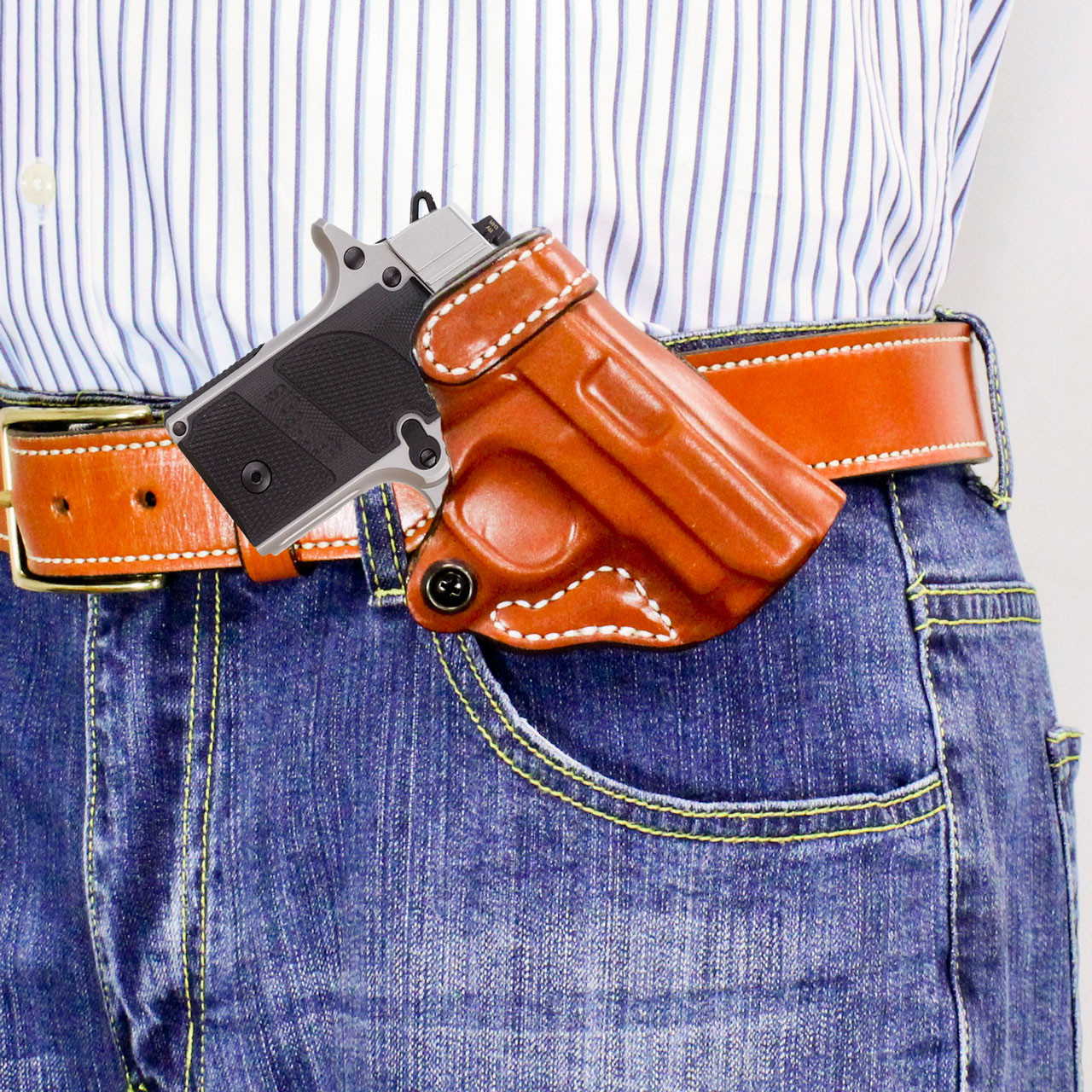
- Carry style: OWB
- Accessibility strengths: Designed specifically for cross-draw; explicitly marketed for driving/walking; adjustable tension device
- Ease-of-draw rating: 4.5/5
- Comfort notes: Leather can be forgiving on curves; best with a supportive belt
- Best use case: Seated carry + daily errands in layers
- Price range: ~$81.99
2) Galco Switchback Strongside/Crossdraw Belt Holster (OWB)
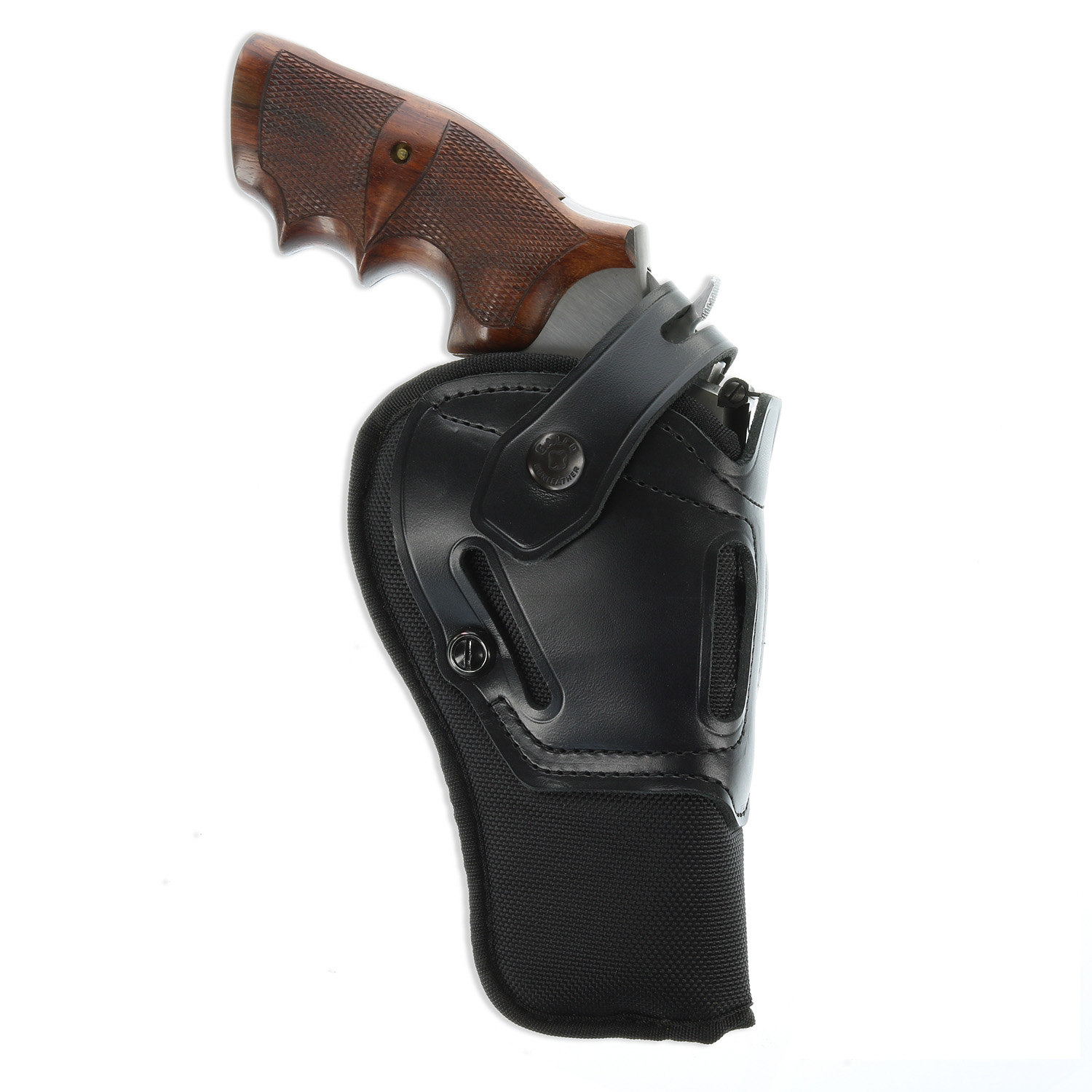
- Carry style: OWB
- Accessibility strengths: Built to convert between strong-side and crossdraw; retention strap; hybrid leather/synthetic construction
- Ease-of-draw rating: 4/5
- Comfort notes: Hybrid build adds structure; good for longer wear under outer layers
- Best use case: Outdoor errands, range days, jacket weather
- Price range: ~$67.00
3) Galco Tuck-N-Go 2.0 Strongside/Crossdraw IWB (IWB)
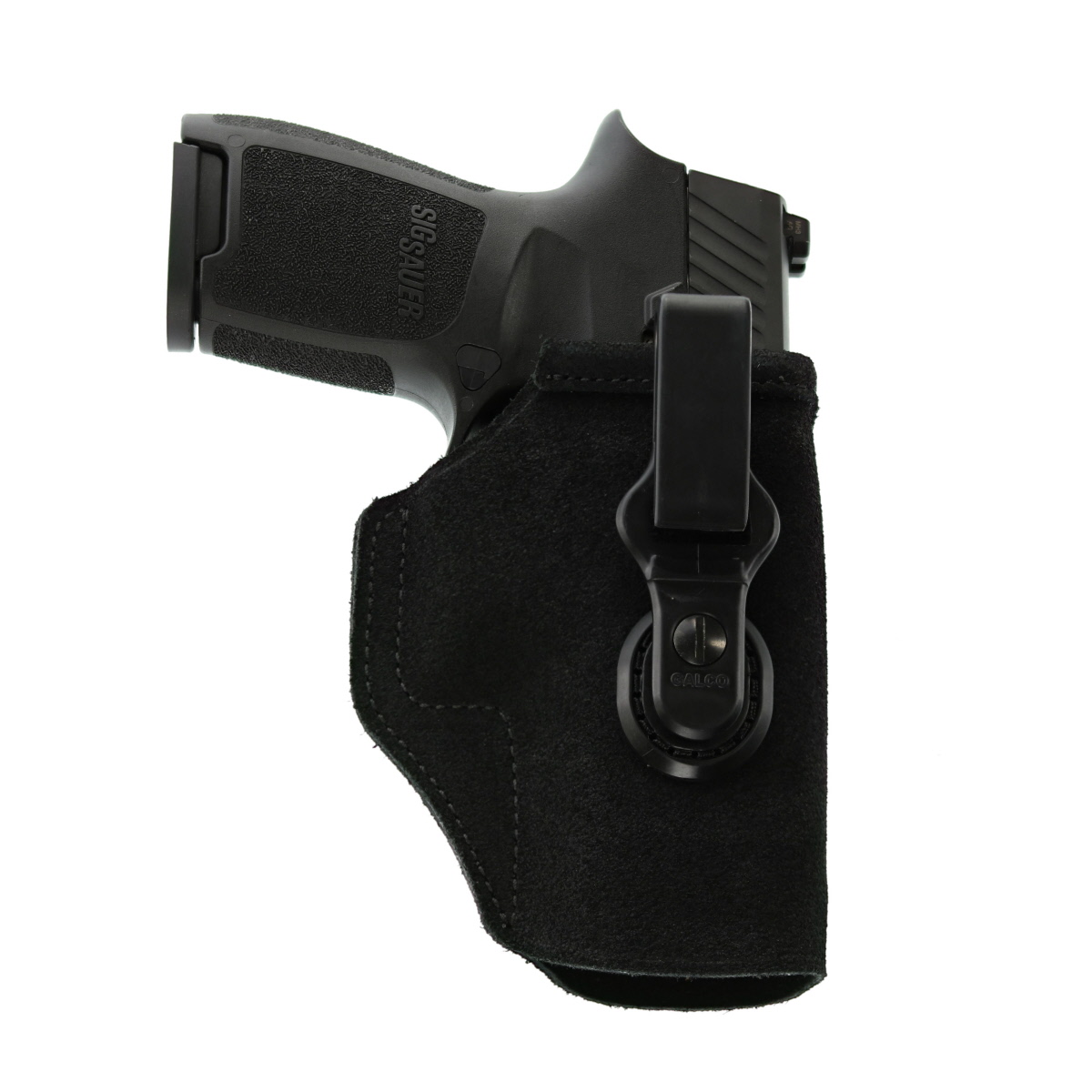
- Carry style: IWB
- Accessibility strengths: Designed to work crossdraw; cant-adjustable clips; reinforced mouth for easier reholstering
- Ease-of-draw rating: 4/5
- Comfort notes: Leather IWB can feel softer against skin; tuckable clip options
- Best use case: Everyday wear when you want crossdraw capability with concealment
- Price range: ~$54.00
4) CrossBreed Reckoning (IWB convertible / crossdraw-capable)
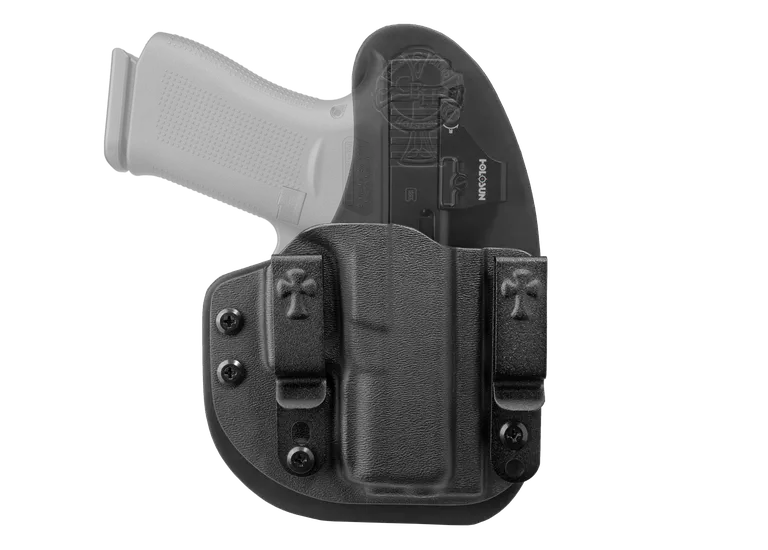
- Carry style: IWB (convertible options noted by maker)
- Accessibility strengths: Explicitly supports crossdraw positioning; multiple retention adjustment points
- Ease-of-draw rating: 4/5
- Comfort notes: Leather backer can help with pressure points on curves
- Best use case: Women who want tuning options to solve ride height/angle issues
- Price range: ~$70–$85 (common retail listing around $76.99)
5) Alien Gear Cloak Tuck 3.5 (IWB, high-adjustability platform)

- Carry style: IWB
- Accessibility strengths: Tool-less clip adjustment to fine-tune cant and ride height for your preferred draw position
- Ease-of-draw rating: 4/5
- Comfort notes: Flexible support core + sweat guard; good for all-day wear
- Best use case: Women experimenting with crossdraw-adjacent placement for reach comfort
- Price range: ~$79.99
6) Safariland 575 IWB GLS Pro-Fit (IWB, grip-based retention + adjustable cant)
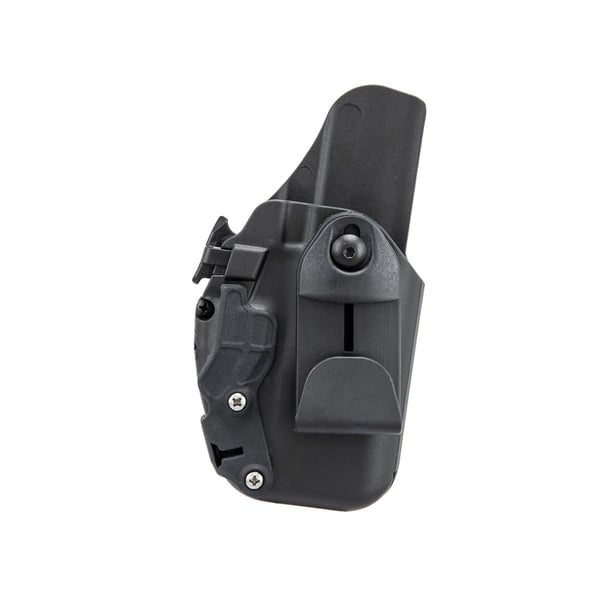
- Carry style: IWB
- Accessibility strengths: Grip-based retention concept; fully adjustable cant; designed for concealment
- Ease-of-draw rating: 3.5/5
- Comfort notes: Compact profile; focus on consistent retention feel
- Best use case: Women who want a consistent retention system and adjustable cant for accessibility tuning
- Price range: ~$84.50
Accessibility & Ease-of-Draw Comparison Table
| Holster | Carry Style | Accessibility Rating | Seated Access | Adjustability | Best For | Price |
| DeSantis Criss-Cross | OWB | 5/5 | Excellent | Tension (retention) | Driving + daily wear | ~$81.99 |
| Galco Switchback | OWB | 4/5 | Very good | Convertible setup | Layers + outdoor wear | ~$67.00 |
| Galco Tuck-N-Go 2.0 | IWB | 4/5 | Very good | Cant adjustable | Concealed crossdraw | ~$54.00 |
| CrossBreed Reckoning | IWB/convertible | 4/5 | Good–very good | Retention + fit tuning | Curves + comfort tuning | ~$70–$85 |
| Alien Gear Cloak Tuck 3.5 | IWB | 4/5 | Good | Ride height + cant | Experimenting for reach | ~$79.99 |
| Safariland 575 IWB | IWB | 3.5/5 | Good | Cant adjustable | Consistent retention feel | ~$84.50 |
Common Accessibility Issues & Solutions
Grip blocked by clothing
Fix: Choose a holster position that works with how your layers hang when seated. Open-front layers often pair well with forward positions. Also, prioritize an adjustable cant so the grip doesn’t bury under fabric.
Limited shoulder mobility
Fix: Move the holster forward until your elbow can stay closer to your ribcage and your wrist stays straighter. Small cant changes can reduce strain more than you’d expect.
Holster shifting during movement
Fix: Upgrade belt support and choose stronger attachment hardware. Crossdraw comfort collapses if the holster rotates.
Draw difficulty while seated
Fix: Test seated access in the environments you actually live in (car seat, office chair, booth seating). Crossdraw is often chosen specifically for seated reach.
Safety Considerations for Crossdraw Carry (High-Level)
- Muzzle awareness: Crossdraw changes orientation across the front of the body. Keep safety front-and-center, and get professional coaching if you’re unsure.
- Retention matters: Especially with forward-of-hip placement, choose secure retention that stays consistent through daily movement.
- Reholstering: Favor holsters that remain open and stable (a reinforced mouth can help) to reduce fumbling.
- Clothing interference: Practice safe, unloaded checks to confirm fabric doesn’t enter the holster mouth or snag.
Safety note: Always follow local laws, use a holster with full trigger coverage, and seek qualified instruction to validate fit and safe handling.
Embracing Crossdraw for Enhanced Accessibility
Crossdraw isn’t for everyone, but it can be excellent for accessibility, especially if you’re seated frequently, have limited mobility, or find behind-the-hip carry uncomfortable with your body shape or wardrobe.
The key is proper positioning (forward enough to reach comfortably) and adjustability (ride height and cant) so your joints stay neutral and your access stays consistent. If crossdraw solves your “I can’t reach it” problem, it’s not a compromise; it’s smart ergonomics.
Find the Perfect Crossdraw Holster for Your Comfort and Accessibility Needs
If you’re exploring crossdraw for accessibility, start with holsters that offer adjustable cant/ride height and stable belt attachment, then test comfort and reach standing and seated before you commit.
Browse adjustable crossdraw-capable options like DeSantis Criss-Cross, Galco’s crossdraw-ready designs, and other tunable IWB platforms that let you find your most comfortable, repeatable access point.
FAQ
Is crossdraw easier for women to access?
Often, yes, especially for women who struggle reaching behind the hip. Crossdraw places the holster forward on the opposite side of the dominant hand, which can reduce shoulder strain and improve reach consistency. The biggest benefit is usually comfort and repeatable access, not “tactical” speed.
Is crossdraw good for seated carry?
Crossdraw is commonly favored for seated access because the holster stays reachable when the hips are flexed, and a seatback limits movement. Many carriers find it more consistent in vehicles and office chairs than behind-the-hip positions. Test with your actual seatbelt and chair setup to confirm.
Can crossdraw work with curves?
Yes. Curves often make holster angle and ride height more important, not less. Look foran adjustable cant and a stable attachment so the holster doesn’t rotate. Leather or hybrid backers can also reduce pressure points. The goal is neutral wrist/shoulder alignment and a grip that doesn’t dig or print.
Is crossdraw safe for everyday carry?
It can be safe when you use a quality holster that fully covers the trigger guard, provides secure retention, and stays stable on the belt. Because crossdraw changes the firearm’s orientation across the front of the body, it’s worth getting qualified instruction to confirm safe handling and reholstering habits.
What makes a crossdraw holster “accessible”?
Accessibility usually means you can reach it comfortably without painful shoulder rotation, extreme wrist bend, or torso twisting, standing and seated. Adjustable cant and ride height help you tune the holster to your body. A stable clip/loop system matters because shifting ruins consistent reach and comfort.
Does crossdraw work with jackets and cardigans?
Often, yes. Open-front layers can drape in a way that blocks behind-the-hip holsters, especially when seated. Crossdraw placement is usually more forward, which can make it easier to clear layered clothing. Your best test is wearing your real outerwear and checking whether the fabric routinely covers the grip area.
Should I choose IWB or OWB for crossdraw accessibility?
OWB often wins for comfort and consistency, especially with structured outer layers. IWB can conceal better under lighter clothing, but may require more dialing-in of ride height and cant. If seated access is your top priority, many women find OWB crossdraw easier to set and reach reliably throughout the day.
What if I have limited shoulder mobility?
Start by prioritizing a forward placement zone that reduces the “reach behind” motion. Choose a holster with cant adjustment so your wrist stays straighter. If pain or limited range affects safe handling, a qualified instructor or physical therapist-informed approach can help you find a position that’s both reachable and safe.
How do I stop a crossdraw holster from shifting?
Shifting is usually a hardware-and-belt problem. Use a supportive belt, pick holsters with strong belt loops/clips, and avoid overly flexible mounting that lets the holster roll. Platforms designed for stable belt carry, plus retention/tension adjustment, tend to stay put better during walking and sitting.
Is a retention system important for crossdraw?
Yes. Because crossdraw is typically more forward and may contact seatbelts, countertops, or chair arms, consistent retention helps keep the firearm secure. Look for intuitive retention that doesn’t require awkward hand motions. Systems like Safariland’s GLS concept are built around a grip-based deactivation, and some leather OWB options include adjustable tension devices.