
Fast Facts
Related: Magazine Capacity Laws by State 2026: Know Before You Carry
Why Does Magazine Capacity Law Feel So Confusing Right Now?

You own an ordinary gun with an ordinary magazine. Then you cross a state line, or move, or read a headline about a court ruling, and suddenly you are not sure if the magazine in your gun is legal anymore. That is the core of the magazine capacity challenge: the rules are not national, and they are actively being argued in court this year.
Gun owners on public forums describe the same frustration. One traveler asked a simple, direct question after crossing into a neighboring state: was he “importing an illegal magazine” just by driving through with his everyday carry gun? Another owner summed up the real problem better than any law review article could, warning fellow travelers that “firearms laws change quickly” and any summary made today could be outdated within months. That is not a complaint about politics. It is a warning that the information you’re relying on has a shelf life.
This matters because magazine capacity is a possession law, not a use of force law. You do not have to fire a shot or threaten anyone to be exposed. Possession alone is the violation. You don’t have to use the magazine, or even the gun, for a compliance problem to become a criminal one. Whether or not you ever intended to use it, simply owning, carrying, or transporting a magazine over your state’s limit can be enough. For how this interacts with your broader carry compliance, see our state-by-state concealed carry law guide.
Which States Actually Restrict Magazine Capacity?
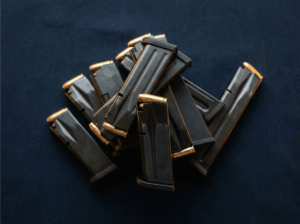
Roughly 14 states and Washington, D.C. currently restrict magazine capacity, with limits generally falling between 10 and 20 rounds, according to USCCA’s state-by-state tracker. Most common handguns ship from the factory with magazines that exceed 10 rounds, which means an out-of-the-box gun bought in a free state can be automatically non-compliant the moment you carry it into a restricted one. If you’re building or adjusting a carry setup around a specific state’s rules, our drawstroke-first carry system guide walks through gun and holster selection in more detail.
Some of these states allow older, pre-ban magazines to be kept legally under a grandfather provision, even though new ones cannot be sold there. That protection is narrower than most owners assume: it typically depends on proof of manufacture date and does not extend to buying, selling, or importing new stock, even for personal use.
A handful of states also allow magazines permanently modified so they cannot be readily restored to full capacity. The legal bar for “permanent” is strict, and a removable plug or block generally will not satisfy it. Forum owners researching do-it-yourself fixes consistently report the same finding: there is no reliable way to modify a standard magazine down to a compliant one that holds up under inspection.
Why Are Magazine Capacity Laws Changing So Fast in 2026?
Magazine capacity law is not stable right now, and the last few months prove it. In March 2026, a D.C. panel struck down the district’s 10-round cap in Benson v. United States. That ruling did not stand. The full D.C. Court of Appeals vacated it and granted en banc rehearing on April 22, 2026, reinstating the ban. The 10-round cap is back in force in D.C. right now, pending a full rehearing with no argument date set.
Illinois moved the other direction. The 7th Circuit ruled 2-1 in Barnett v. Raoul on July 9, 2026, upholding the state’s ban on AR-15-style rifles and 30-round magazines, reversing a lower court injunction. Plaintiffs plan to petition the Supreme Court, which just days earlier agreed to hear Viramontes v. Cook County and Grant v. Higgins, asking whether the Second Amendment protects rifles like the AR-15. California’s 10-round cap remains in force after Ninth Circuit en banc review, with a related Duncan v. Bonta cert petition still pending.
The core legal question is whether a magazine itself is a protected “arm,” or just an accessory the government can regulate freely. Courts have gone both directions this year, sometimes reversing themselves within weeks. None of this changes what is enforceable in your state today. A ruling in one circuit does not bind another, a struck-down law can be reinstated on rehearing, as D.C.’s just was, and an upheld law can still face reversal on appeal, as Illinois’s may. Treat any single ruling as a development to watch, not a change you can act on immediately.
How Do You Know If Your Setup Is Compliant Right Now?
The right approach depends on whether magazine capacity is a daily fact of your life or an occasional travel problem.
If you live full time in a restricted state, the simplest path is to standardize your everyday carry gun and every magazine you own around your state’s limit. One consistent setup removes the daily decision entirely, so you’re never carrying something you forgot to swap out.
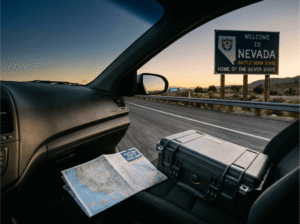
If you travel or carry across state lines regularly, standardizing is not enough on its own. Every state on your route needs to be checked before you leave, not assumed from memory or a headline you read last month. A limit that applied last time you drove through may have changed, and a ban you heard was struck down may already be back in force, exactly as happened in D.C. this spring. Active or retired officers carrying under LEOSA should check our LEOSA reciprocity explainer too, since capacity exemptions vary by state and are not automatic.
If a law you are counting on is tied up in litigation, comply with the law as written and enforced today, not the outcome you expect once the case resolves. Courts can take years to settle these questions, and a magazine that becomes legal next year will not protect you from a citation this year.
Does a Compliant Magazine Change How You Should Carry?
Complying with a magazine capacity limit is not just a legal checkbox; it is a gear decision. Dropping from a standard 15- or 17-round magazine to a compliant 10-round version changes grip length, how the gun prints under clothing, and how quickly you can reload.
Owners researching compliant options routinely land on the same conclusion: a magazine and gun combination built around the limit from the start beats a modified standard magazine that may not hold up to scrutiny. A magazine you have never actually run is not one you can trust under stress. Test-fire and dry-practice with the exact compliant magazine you’ll carry, not the standard-capacity one you train with at home. Our concealed carry compliance checklist covers this alongside the rest of your legal carry setup.
What Should You Do Before Your Next Trip or Purchase?
Magazine capacity law will keep shifting through 2026 as more court cases work their way through the system. Waiting for a final national answer is not a compliance strategy. Before your next trip, purchase, or move, confirm the current, enforced limit for every state involved from an official source, not a headline or an old forum thread.
Ready to travel or carry with confidence? Download our free state-by-state magazine capacity checklist below and confirm your setup before you ever leave home.
Magazine Capacity Laws Are Being Struck Down from Gun Law Update.
Frequently Asked Questions
-
How many rounds can a magazine legally hold?
It depends entirely on your state. Most states have no limit at all. States that do restrict magazine capacity generally cap it between 10 and 20 rounds. There is no single federal number, so the correct answer always starts with checking your specific state’s current law.
-
Which states currently restrict magazine capacity?
Roughly 14 states and Washington, D.C. currently restrict magazine capacity, with limits ranging from 10 to 20 rounds. Several of these bans are actively being challenged in court, so enforcement status can change. Always confirm current enforcement before assuming a listed limit still applies to you.
-
Is it illegal to travel through a state with a lower magazine limit?
In most restricted states, simply possessing an over-limit magazine inside that state’s borders can violate the law, even if you’re only passing through. Some states allow narrow travel exceptions; many don’t. Confirm your specific route’s state laws before you leave, not after you’ve already arrived.
-
Does owning a grandfathered high-capacity magazine protect me?
Some states allow magazines made before a specific cutoff date to be kept legally, even though new ones can’t be sold. These grandfather clauses vary widely in scope and proof requirements. Don’t assume your magazine qualifies automatically; verify your state’s exact grandfather provisions before relying on one.
-
Can I legally modify a magazine to reduce its capacity?
Some states allow permanently modified magazines that can’t be readily restored to full capacity, but the legal standard for “permanent” is strict and state-specific. A removable plug or block usually won’t satisfy it. Confirm your state’s exact modification requirements before attempting any changes yourself.
-
Does a pending court ruling mean a magazine ban is no longer enforced?
Not automatically. A ban can be struck down by one court and still be appealed, stayed, or reinstated before final effect. Always rely on the law’s current, confirmed enforcement status in your state, not news coverage describing a ruling that may still be in litigation.
-
Do magazine capacity laws apply to law enforcement or retired officers?
Some states carve out exceptions for active or retired law enforcement, including under federal LEOSA provisions, but these exceptions are not universal and don’t cover every restricted state. Officers should confirm their specific exemption status in each state before assuming it automatically applies to them
-
How does magazine capacity affect my choice of carry gun?
In a restricted state, a gun that normally holds 15 or more rounds will carry with a shorter, compliant magazine, which can change grip length and reload speed. Choose and practice with the actual magazine you’ll legally carry there, not just your everyday standard-capacity setup at home.
-
What happens if I’m found with a non-compliant magazine?
Penalties vary by state but can include criminal charges, fines, and confiscation of the magazine and sometimes the firearm itself. Some jurisdictions treat it as a misdemeanor; others prosecute more seriously. Check your specific state’s penalty structure rather than assuming it’s a minor infraction.
-
Where can I find the current magazine capacity limit for my state?
Start with your state attorney general’s office or state police website, since these are updated as laws change or rulings take effect. Third-party guides make a useful starting reference, but confirm anything you rely on against an official source before you travel or purchase.
Caliber wars aside, why that one? Drop your take.👇