
Quick Look
You saw the headline. The Supreme Court just changed the rules on marijuana and gun ownership. And now you are sitting there with a carry permit in your wallet, wondering what that actually means for you.
Here is what most of those headlines missed. The ruling changed federal law. It did not change your state’s law. And for CCW holders, the gap between those two things is exactly where people make decisions that cost them their permits, their firearms rights, or worse. Before you act on anything, read this.
What Did the 2026 Supreme Court Ruling on Marijuana Users and Firearm Ownership Actually Change?
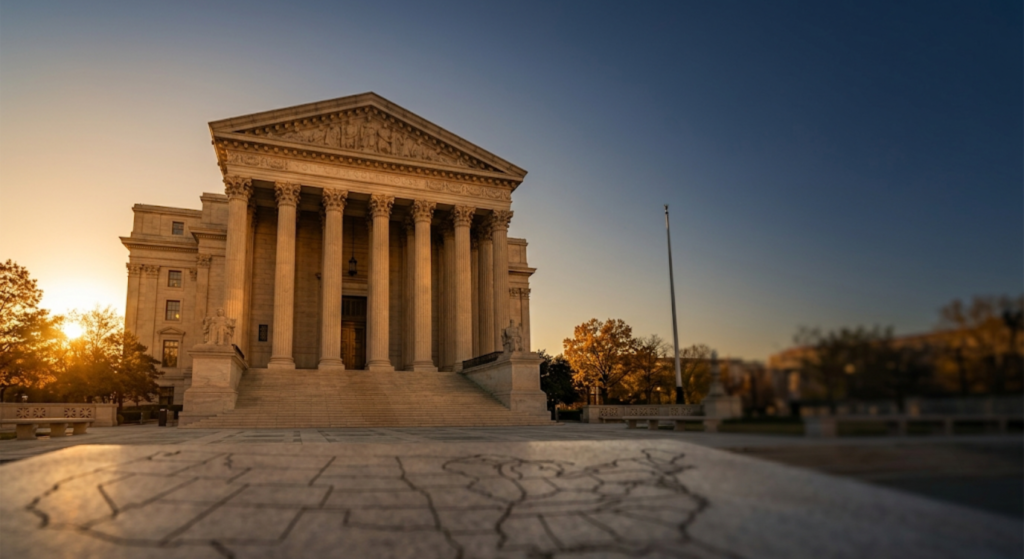
The ruling changed one piece of federal law. It did not change your state’s law, your permit application, or Form 4473.
For years, federal law barred anyone who was an “unlawful user of a controlled substance” from possessing firearms. That is 18 U.S.C. 922(g)(3). Marijuana stayed a federally controlled substance no matter what individual states did with legalization. So marijuana users and firearm ownership were a federal felony risk even for a Colorado resident holding a dispensary receipt.
In United States v. Hemani, decided June 18, 2026, a unanimous Supreme Court narrowed that reach. The Court held that the government cannot prosecute someone under 922(g)(3) based on marijuana use alone, without proof that the person is actually dangerous. The decision rested on the Second Amendment’s historical tradition test from Bruen (2022), not on whether any state had legalized the drug.
That last point is where most headlines on marijuana users and firearm ownership got it wrong. Ali Hemani lived in Texas, where marijuana is illegal. State legalization was not the deciding factor. The deciding factor was that the government tried to disarm him for life without ever showing that his use made him a danger to anyone.
The Court also drew a hard line around how far the win goes. It did not protect addicts, it did not protect anyone carrying or using while intoxicated, and it left the door open to prosecute a marijuana user when the government can show individualized proof of dangerousness. The rule on marijuana users and firearm ownership is narrower than a quick headline suggests.
What it did NOT change: your state’s marijuana laws, your state’s carry permit laws, your state’s permit application and renewal requirements, or ATF Form 4473 wording. None of those moved because a federal court issued an opinion.
Here is the principle Gun Carrier hammers on. Federal and state law are independent legal instruments. A federal ruling does not rewrite a state statute. If your state’s permit application asks about controlled substance use, and your state still classifies marijuana as a controlled substance, you are still bound by that state definition. That is the core tension in marijuana users and firearm ownership today.
Your state laws may vary. Consult a licensed attorney in your state for your specific situation.
Does the Ruling Change Your State’s CCW Permit Rules?
No. The federal ruling is one layer. Your state is the layer that governs your permit.
Here is where 6 key states stand as of mid-2026 on marijuana users and firearm ownership. Verify current law with a licensed attorney in your state before acting on any of this.
- California
Recreational marijuana is legal, but California’s CCW permits are administered separately by the state DOJ and county sheriffs. State law bars issuing a permit to someone addicted to a controlled substance. The state Penal Code’s definition of “controlled substance” does not automatically mirror federal changes. On marijuana users and firearm ownership, California permit holders who use marijuana need a legal opinion on their specific status. State laws may vary by county. - Texas
Marijuana remains illegal under Texas state law, and no recreational program exists. For Texas LTC holders, the ruling changes little about marijuana users and firearm ownership at the state level. Possession is still a state crime, and the LTC application still requires disclosing drug use. Note that Hemani himself was a Texas case, yet his win was federal, not a change to Texas law. - Florida
Florida has a medical marijuana program, but recreational marijuana remains illegal at the state level. The Florida CCW permit application, run by the Department of Agriculture and Consumer Services, asks about controlled substance use, and state law still governs that question. On marijuana users and firearm ownership, medical cardholders with a CCW permit sit in a genuinely ambiguous space, the ruling did not resolve. Talk to a Florida attorney, not a search engine. - Colorado
Colorado legalized recreational marijuana years ago, but carry permits are administered by county sheriffs and the Colorado Bureau of Investigation. State statute requires applicants to be legally able to possess a firearm under state and federal law. Post-ruling, the federal layer shifted. Colorado’s own statutory language has not. On marijuana users and firearm ownership, verify with a Colorado attorney whether your permit status changed under state statute. - Arizona
Arizona legalized recreational marijuana in 2020 and is a constitutional carry state, so a permit is not required to carry. But permits still matter for reciprocity. The Department of Public Safety application asks about convictions for drug offenses, which is different from the federal possession question the ruling addressed. On marijuana users and firearm ownership, check current DPS language before assuming you are clear, especially if you carry that permit in other states. - New Mexico
New Mexico legalized recreational cannabis in 2021. The Department of Public Safety administers carry permits, and applications require certifying that you are not prohibited from possessing a firearm under state or federal law. The federal prohibition shifted post-ruling, but the certification language references both. Consult a licensed New Mexico attorney before concluding you are clear. Your state laws may vary.
How Does the Ruling Affect Your CCW Permit Compliance?
Two things govern you now: your state permit application and Form 4473. The ruling touched neither.
There are 2 parts to this question, and both shape marijuana users and firearm ownership at the practical level.
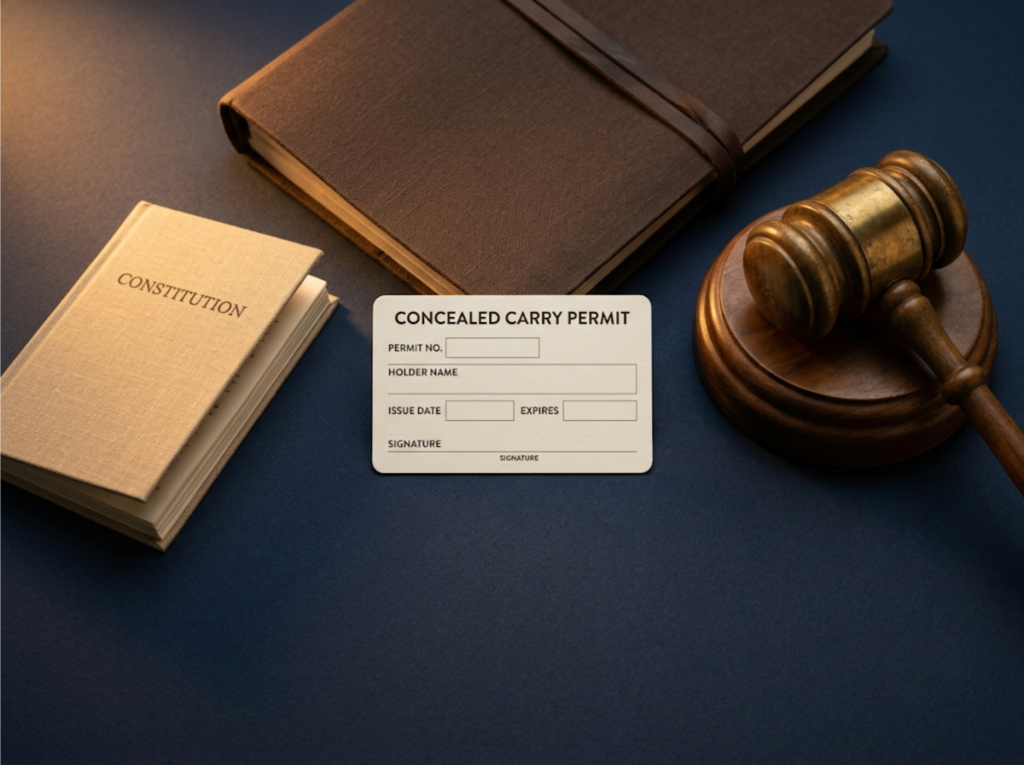
Part 1: Permit application and renewal. Most state CCW applications ask whether you are an unlawful user of a controlled substance. If your state still classifies marijuana as a controlled substance, your state’s definition of “unlawful” applies to that question, not the federal court’s revised ruling. Answering incorrectly can constitute a false statement on a government document. If you use marijuana and are renewing, consult a licensed attorney before filling out that form.
Part 2: ATF Form 4473. When you buy a firearm from a licensed dealer, you complete ATF Form 4473. The ATF’s current form may not yet reflect the ruling. Do not work from a cached version. Get the current form from ATF.gov and consult an attorney on what truthful compliance looks like for you.
There is a second risk most coverage ignores, and it sits at the center of marijuana users and firearm ownership after a defensive shooting. Even where state and federal law both permit a marijuana-using carrier to possess a firearm, that use creates prosecutorial risk after a defensive gun use. A prosecutor can raise marijuana use as evidence of impaired judgment at the time of a shooting. Being legally permitted to own a firearm and being legally defensible after using it are two separate legal questions. Know the full picture.
Your state laws may vary. Consult a licensed attorney in your state for your specific situation.
What Mistakes Do Carriers Make After a Ruling Like This?
The biggest mistake is treating a federal win as a state-level green light.
There is a well-documented gap between what most CCW holders know about the law and what they need to know. This ruling on marijuana users and firearm ownership will widen that gap for a subset of carriers. Here is what to avoid.
- Mistake 1: Assuming federal change equals state change. On marijuana users and firearm ownership, the Supreme Court changed only a federal rule. Your state legislature did not change anything. Federal rulings do not automatically modify your state’s statutes, permit application language, or county sheriff’s policy.
- Mistake 2: Reading a headline and treating it as legal clearance. “The Supreme Court said marijuana users can own guns” is not a legal opinion that applies to your specific permit in your specific state. It is a summary of a complex ruling that needs real legal analysis to apply.
- Mistake 3: Not checking their specific state permit application language. Many carriers filled out their application once, years ago, and do not know exactly what it asks. Go find it. Read it. Know what you attested to.
- Mistake 4: Assuming legal recreational use means they are covered while carrying. Even where both marijuana use and carrying are legal, combining them creates issues in a post-shooting proceeding. Impairment and the reasonable-person standard are separate from whether you may possess a firearm.
- Mistake 5: Relying on internet forums for jurisdiction-specific conclusions. The person on r/GunPolitics giving you a confident answer is not your attorney and does not know your state’s current permit language. Do not build your legal strategy on forum posts.
- Mistake 6: Forgetting that reciprocity adds another layer. A permit valid under your home state’s interpretation may still create issues in a neighboring state with different marijuana and carry laws. Check reciprocity before you cross a state line.
The Bottom Line for Permit Holders
Find out exactly what your state law says, then talk to an attorney who knows it.
The 2026 ruling changed something real at the federal level. But for CCW holders, the practical answer to “what do I do now” is not “relax, you are clear.” It is “find out exactly what your state law says, then talk to an attorney who knows it.”
That is how marijuana users and firearm ownership actually work. Your carry rights live at the state level. The Court shifted one federal piece. The rest of the machine still runs on state law, state permit offices, and state definitions; the Court did not touch.
If you carry in multiple states, the work is bigger. Check your state’s carry permit reciprocity rules to see where your permit is recognized and what laws apply in each state.
Want to stay current on state firearm laws as they evolve? Bookmark the Gun Carrier legal compliance section. If you are reviewing CCW training requirements in your state, do that alongside your legal review.
One call to a licensed attorney in your state on marijuana users and firearm ownership. That is the next move. Everything else is background noise until you make that call.
This article is for informational purposes only and does not constitute legal advice. Laws vary by jurisdiction and change over time. Consult a licensed attorney in your state for guidance specific to your situation.
-
Did the Supreme Court legalize guns for all marijuana users?
No. The ruling was narrow and applied only to the facts before the Court. It held that the government cannot prosecute someone under 922(g)(3) based on marijuana use alone, without proof of dangerousness. It did not declare a blanket right for every marijuana user in every situation to own a firearm.
-
Does the ruling only apply in states where marijuana is legal?
No, and this is the detail most coverage got wrong. Ali Hemani lived in Texas, where marijuana is illegal. State legalization was not the deciding factor. The Court ruled on the absence of any dangerousness showing under the Second Amendment historical test, so the holding does not depend on your state legalizing marijuana.
-
Did my state carry permit application change because of this ruling?
No. A federal court ruling does not rewrite state statutes or permit-question language. If your state still classifies marijuana as a controlled substance, your state definition still governs your permit application and renewal. Nothing about your state form changed simply because the Supreme Court issued a federal opinion.
-
Can I now answer “no” to drug use on ATF Form 4473?
Do not assume that. The current form and its instructions may not yet reflect the ruling, and the question wording controls your answer. Always pull the current form directly from ATF.gov, never a cached copy, and consult a licensed attorney about what a truthful answer looks like for your specific situation.
-
Can I still be prosecuted for using marijuana and owning a gun?
Possibly. The Court left the door open for the government to prosecute where it can show individualized proof of dangerousness. The ruling also did not protect addicts or anyone possessing or carrying while intoxicated. Use alone, without a dangerousness showing, is what the decision took off the table.
-
Does the ruling protect medical marijuana cardholders?
The decision did not single out medical cardholders, and it did not resolve their status under every state permit scheme. A medical card shows lawful use under state law, but your state permit application may still ask a controlled-substance question that the federal ruling did not touch. Get a legal opinion for your state.
-
What about harder drugs or prescription medications?
The ruling addressed marijuana use specifically and declined to extend its reasoning to other substances. It expressly left open prophylactic laws Congress might adopt for drugs that pose a special risk. Do not read this decision as protection for any controlled substance beyond the narrow marijuana-use question that was actually before the Court.
-
Does this ruling affect concealed carry reciprocity between states?
Indirectly, yes. A permit valid under your home state’s post-ruling interpretation can still create problems in a neighboring state with stricter marijuana and carry laws. Reciprocity means you must satisfy the laws of every state you carry in, so verify each state’s rules before crossing a line with a firearm.
-
If I use marijuana legally, am I safe after a defensive shooting?
Being permitted to own a firearm and being legally defensible after using one are separate questions. A prosecutor can raise marijuana use as evidence of impaired judgment at the time of a shooting. Even where your possession is lawful, that argument can surface in a post-incident proceeding, so know the full picture.
-
After this ruling, what should a CCW holder actually do right now?
Start with your own state. Read your current permit application language, confirm how your state defines a controlled substance, and check your reciprocity obligations if you carry across state lines. Then make one call to a licensed attorney in your state. That single step matters more than any headline you read.