
Quick Answer
Related: Affordable CCW Optics for Compact Pistols 2026: Best Red Dots Under $200
This article is educational information, not individualized instruction. Confirm any pistol you’re considering is legal to buy and carry where you live, and get hands-on instruction from a certified defensive firearms instructor before you carry any handgun for self-defense.
Can a $400 Gun Actually Keep You Safe?
“I am looking for a carry pistol in the $300 to $400 price range.” Some version of that sentence opens hundreds of gun-buying forum threads a year, and it’s almost never really a question about money. It’s a question about trust.
The real question behind every search for CCW pistols under $400 isn’t “which gun is cheapest,” it’s “can I trust a cheap gun with my life?” That’s a fair question, and it deserves a straight answer instead of a sales pitch.
Here’s the straight answer: price and reliability stopped being the same conversation years ago. A shooter on USACarry.com summed up the buying anxiety plainly, admitting he “paid $390 for my Bodyguard 380” without much confidence it would hold up. That worry is reasonable. It’s also, in 2026, mostly outdated. The sub-$400 tier now includes optics-ready slides, tritium sights, and modular triggers, features that cost twice as much five years ago.
That doesn’t mean every gun under $400 deserves your trust. It means the price tag alone can’t tell you which CCW pistols under $400 actually earn it.
What Does “Reliable” Actually Mean At This Price Point?
Reliability isn’t a feeling you get from reading a spec sheet. For CCW pistols under $400, it’s a number you get from a test.
A pistol earns “reliable” status by running 200 rounds of your carry ammunition with zero unscheduled stoppages in the final 100 rounds, not by looking good in a review. Anything less is a guess, and guessing with a self-defense gun is how people get hurt.
This standard matters more for CCW pistols under $400 than it does for a $1,200 custom build, not because cheap guns are inherently less reliable, but because they’re less forgiving of a skipped break-in. A budget striker-fired pistol that hasn’t been run in will show you its problems on the range. A pistol you skip the break-in on and carry anyway will show you its problems somewhere much worse.
Run the test before you trust the gun. That’s not optional, and it’s not expensive: a 200-round break-in costs less than a single range membership fee, which is a small price for confirming any of the CCW pistols under $400 on your shortlist will actually run.
Should You Buy For How It Shoots, Or How You’ll Actually Carry It?
This is where honest buyers split, and it’s worth naming the disagreement instead of pretending it doesn’t exist.
One camp says controllability is the whole game: buy the gun you can grip fully, draw efficiently, and hit your target under stress, even if that means a slightly bigger, less concealable pistol. A gun you can’t control isn’t safer just because it’s smaller.
The other camp points at a different set of facts: the gun that gets carried every single day, in July heat and January coats, beats the marginally more controllable gun that ends up staying home because it’s uncomfortable. An uncarried gun protects nobody, no matter how well it shoots on a range.
Both are right, and among CCW pistols under $400, the split depends on you, not on the gun. If your $400 buys a compact you can actually conceal in the clothes you already wear, prioritize controllability. If getting anything bigger than a micro-compact means you’ll leave it in the safe on hot days, prioritize the gun you’ll actually carry. That’s not a compromise. It’s the correct decision tree for a choice this personal.
One forum poster, weighing a $442 Ruger against a $376 Sig, put the tension in the plainest possible terms: not sure he’d like it $76.00 more.” That’s the whole debate, in one sentence, at a price point most first-time buyers will recognize.
Which CCW Pistols Actually Earn a Spot Under $400 in 2026?
Not every gun that fits the price qualifies for this list of CCW pistols under $400. These do, based on documented reliability testing and real owner feedback, not marketing copy.
- Ruger MAX-9 ($300 to $350): An optics-ready slide, a tritium front sight, and a genuinely easy-to-conceal 18-ounce frame. This is the pick for buyers who want the smallest possible footprint without giving up a red dot option.
- PSA Dagger Micro (around $300): A Glock-pattern clone with a 15-round magazine, meaningfully higher capacity than most micro-compacts in this price class. The trigger is unremarkable, but the reliability and the capacity are not.
- Taurus GX4 (around $240 to $260): The lowest-cost entry that still delivers an 11-round magazine and genuinely firm build quality. Some early production runs had a documented trigger-reset issue; if you’re buying used, ask about it and function-test before you carry.
- Ruger RXM (around $400): A Glock 19-pattern clone at compact size, not micro-compact. This is the pick for buyers with larger hands or anyone who decided, honestly, that concealability matters less to them than a full firing grip.
- Smith & Wesson Bodyguard 2.0 (around $390): Light enough for pocket or ankle carry, with a trigger good enough that reviewers keep comparing it favorably to guns twice its price.
Every one of these CCW pistols under $400 is a legitimate primary carry gun for a responsible owner who runs the reliability test and trains with it. None of them is automatically inferior to a $700 pistol you never practice with.
How Do You Actually Test A Candidate Before You Buy?
Spec sheets and star ratings can’t tell you if a gun fits your hand. Only your hand can tell you that, and that’s true for every one of the CCW pistols under $400 listed above.
Before you commit $400 to any pistol, run this three-part test: rent or borrow it, dry-fire draw it from the exact holster and clothing you’ll actually wear, then function-test it for 200 rounds before you trust it for daily carry. Skip any one of those three steps and you’re buying on hope, not evidence.
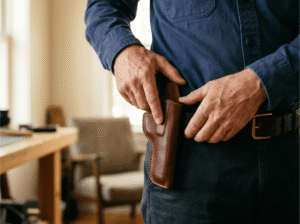
The draw test matters more than most first-time buyers expect. A gun that feels great sitting on a store counter can be a completely different experience drawn from concealment under a t-shirt in August. If you can’t get a full three-finger grip and a clean draw in the clothes you actually wear, the gun has already failed the only test that counts, regardless of what it costs.
What Should You Budget Beyond The Gun Itself?
The pistol is the smallest line item in a real carry system, not the whole system.
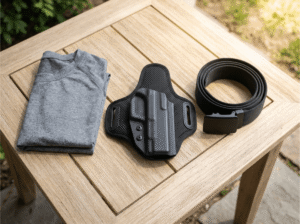
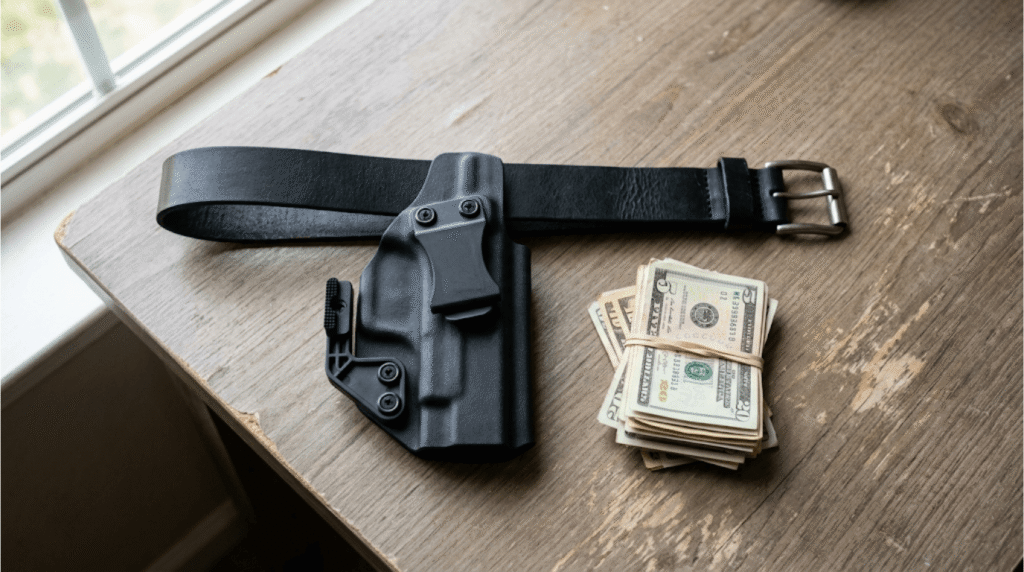
A quality kydex holster, a gun belt built to support daily carry, and enough ammunition to complete a 200-round break-in plus ongoing practice will often cost as much as any of the CCW pistols under $400 recommended here. Buyers who spend their entire $400 on the pistol and improvise the rest usually end up replacing a cheap holster within the year, and a bad holster is a safety problem, not just a comfort one.
Budget the system, not just the gun: pistol, holster, belt, and enough ammunition for a real break-in and a few months of dry-fire practice.
The Bottom Line on Budget Carry Guns
A responsibly chosen gun from this list, function-tested and carried consistently, will protect you better than a more expensive pistol bought on impulse and left in a drawer. The budget market carry guns in 2026 is genuinely strong enough to support that choice. Do the break-in, do the draw test, and budget the system around the gun, and a budget pistol stops being a compromise and starts being a legitimate, defensible decision.
Top 5 Budget Concealed Carry Pistols from ClassicFirearms.
Frequently Asked Questions
-
What is the best CCW pistol under $400 in 2026?
The strongest options are the Ruger MAX-9, PSA Dagger Micro, Taurus GX4, Ruger RXM, and Smith and Wesson Bodyguard 2.0. The right pick is not the cheapest one. It is whichever pistol passes a documented 200-round reliability break-in and actually fits your hand and your carry position.
-
Is a pistol under $400 reliable enough to carry for self-defense?
Price alone does not determine reliability. A budget pistol earns trust by running 200 rounds of your carry ammunition with zero unscheduled stoppages in the final 100 rounds. Skip that test and you are guessing, and guessing with a self-defense gun is a risk no price tag justifies.
-
What is a 200-round reliability break-in, and why does it matter?
It is a documented function test: fire 200 rounds of your intended carry ammunition and confirm zero unscheduled stoppages in the final 100. Budget pistols are less forgiving of a skipped break-in than expensive custom builds, so the test matters more here, not less.
-
Is the Ruger MAX-9 a good concealed carry option?
Yes, for buyers who prioritize concealment. The MAX-9 runs $300 to $350, weighs about 18 ounces, and pairs an optics-ready slide with a tritium front sight. It is built for the smallest practical footprint without giving up a red dot option.
-
How much capacity does the PSA Dagger Micro hold?
The PSA Dagger Micro ships with a 15-round magazine, noticeably higher than most micro-compacts in its roughly $300 price class. It is a Glock-pattern clone with an unremarkable trigger, but its reliability and capacity are why it earns a spot on this list.
-
Is the Taurus GX4 safe to carry given past reliability concerns?
Current-production GX4 pistols deliver an 11-round magazine and firm build quality around $240 to $260. Some early production runs had a documented trigger-reset issue. If buying used, ask about that history and run a full function test before you carry it.
-
What is the difference between the Ruger RXM and the Ruger MAX-9?
The MAX-9 is a micro-compact built for maximum concealment. The RXM is a Glock 19-pattern clone at compact size, around $400, with a fuller firing grip. Choose the RXM if you have larger hands or value grip over the smallest possible footprint.
-
Is the Smith and Wesson Bodyguard 2.0 good for pocket or ankle carry?
Yes. At around $390, the Bodyguard 2.0 is light enough for pocket or ankle carry, and reviewers consistently rate its trigger favorably against guns costing twice as much. It is a strong pick for buyers who need a genuinely small, deep-concealment option.
-
Should I buy the smallest gun I can conceal, or the one that shoots best?
Both approaches are defensible. A compact you can fully control is the safer pick if you can conceal it in clothes you already wear. But a slightly larger gun you will actually carry every day beats a smaller one that stays home because it is uncomfortable.
-
Do I need to budget for more than just the pistol itself?
Yes. A quality kydex holster, a gun belt built for daily carry, and enough ammunition to complete a 200-round break-in plus ongoing practice often cost as much as the pistol. Budget for the full carry system, not just the price tag on the gun.
Lock in your vote and tell us: Why is this the right call?👇