Last verified by the Editorial team: January 27, 2026
Quick Look at Gun Laws by State
- U.S. gun laws vary significantly by state, covering permitless carry, concealed and open carry rules, reciprocity, duty to inform, and transport requirements.
- Many states now allow permitless (constitutional) carry, while others require permits and impose stricter limitations.
- Reciprocity rules determine whether a state honors firearm permits issued by other states and can change frequently.
- Certain locations (schools, government buildings, private property, etc.) are commonly restricted, even in permitless carry states.
- This guide is informational only and should be verified against official state government statutes and attorney general guidance before relying on it.
Related: Gun Law Changes Every Firearm Owner Must Know
It’s written for responsible gun owners who want confidence while being clear on gun laws. To help make it clearer, we’ve cut through the legal jargon to show what matters most. Where you can carry, when you need a permit, and how reciprocity works across state lines.
Each entry includes:
- a quick reference box with key facts
- a summary explaining carry rules in everyday language
- source links to verify with official state statutes
Disclaimer: This publication is for general informational purposes only and is not legal advice. Always confirm details through your state’s official code or a qualified attorney.
Gun Laws by State Explained: Concealed Carry, Open Carry & Reciprocity
At GunCarrier, we know our readers only want one thing: clarity without the fluff. No legal jargon and definitely no politics. Only straight answers about what’s legal where you live. If you’ve ever asked the following questions:
- “Can I legally carry while driving through another state?”
- “Do I need to inform an officer if I’m armed?”
- “Which states honor my permit?”
Then, you’re in the right place. This page is designed to be the definitive, plain-English index of U.S. firearm laws that’s verified quarterly by our editorial team.
How to Use This Guide
- Scroll or search for your state below.
- Scan the tables for a 10-second overview.
- Read the summary to understand the law in practice.
- Follow the sources if you need official statutes or updates.
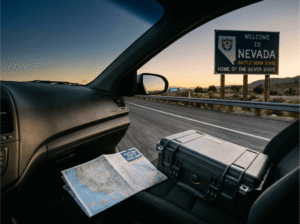
And if you’re road-tripping, make sure to always bring secure gun safes; some states require unloaded, locked storage when you can’t carry.
(As an Amazon Associate, we earn from qualifying purchases.)

- Security, Everywhere You Want It – Store and protect your handguns, passports, sensitive documents, heirlooms, media...
- Heavy Duty and Sturdy – This SnapSafe Lock Box features heavy duty 16-gauge housing and include a 1500 lb. rated cable...
- Ideal for Travel – The metal gun case provides handgun storage and security for concealed carry permit holders...
Last update on 2026-10-05 / Affiliate links / Images from Amazon Product Advertising API
Important Note: The U.S. Congress is debating national reciprocity (H.R. 38 reported Oct 3, 2025), but it isn’t law yet. State-by-state rules still apply, and several states (e.g., Texas) updated reciprocity this year. Check your destination’s AG page or the current reciprocity map before you travel
Legal Disclaimer
Not Legal Advice
The information on this page is provided for general informational purposes only and does not constitute legal advice. Firearm laws vary by state, county, and municipality, and they change frequently. While we strive to keep this guide accurate and up to date, we make no guarantees regarding completeness or current applicability.
Before carrying, transporting, or using a firearm, you should verify the law directly with official state government sources and, if necessary, consult a qualified attorney or your local law enforcement agency
List of U.S. States With Their Gun Laws
- Alabama
- Alaska
- Arizona
- Arkansas
- California
- Colorado
- Connecticut
- Delaware
- Florida
- Georgia
- Hawaii
- Idaho
- Illinois
- Indiana
- Iowa
- Kansas
- Kentucky
- Louisiana
- Maine
- Maryland
- Massachusetts
- Michigan
- Minnesota
- Mississippi
- Missouri
- Montana
- Nebraska
- Nevada
- New Hampshire
- New Jersey
- New Mexico
- New York
- North Carolina
- North Dakota
- Ohio
- Oklahoma
- Oregon
- Pennsylvania
- Rhode Island
- South Carolina
- South Dakota
- Tennessee
- Texas
- Utah
- Vermont
- Virginia
- Washington
- West Virginia
- Wisconsin
- Wyoming
Alabama Gun Laws
| Category | Rule |
|---|---|
| Permitless Carry | Yes, legal for adults 21+; constitutional carry for 19+ (general law-abiding public) and 18+ (military/law enforcement officers) [as of Jan 1, 2023] |
| Permit Type | Shall Issue (for optional concealed handgun license) |
| Open Carry | Allowed without a permit |
| Concealed Carry | Legal without a permit (must meet age and eligibility requirements) |
| Reciprocity | Alabama honors permits from all other states |
| Duty to Inform | No general duty unless asked by law enforcement |
| Transport Rules | Loaded firearm allowed in vehicle; follow federal school zone restrictions |
| Off-Limits Areas | Courthouses, schools, police stations, certain government buildings |
Alabama allows both open and concealed carry without a permit for law-abiding adults 21 and older. Those under 21, or anyone who doesn’t meet federal firearm eligibility requirements, must still obtain a state permit to carry concealed.
Open carry is legal statewide, but firearms are prohibited in certain locations such as schools, courthouses, police stations, and other restricted government properties.
It’s also a shall-issue state for those who choose to apply for a concealed handgun license, which can simplify reciprocity and background checks when traveling. The state recognizes all other U.S. permits, making it one of the most reciprocity-friendly states in the country.
In vehicles, loaded handguns are allowed without a permit, provided you meet age and eligibility criteria. As always, follow federal law when near school zones and verify details through official state publications.
Sources and Statutes:
- Alabama Code § 13A-11-7, § 13A-11-52, § 13A-11-75
- Alabama Law Enforcement Agency (ALEA): Firearms Permits and Carry Info
- Alabama Attorney General Opinions — Official Website
Alaska Gun Laws
| Category | Rule |
|---|---|
| Permitless Carry | Yes, legal for anyone 21+ who may lawfully possess a firearm |
| Permit Type | Shall Issue (optional Alaska Concealed Handgun Permit available) |
| Open Carry | Legal without a permit |
| Concealed Carry | Legal without a permit (age 21+ and legally eligible) |
| Reciprocity | Alaska honors permits from all states that recognize Alaska’s |
| Duty to Inform | Required when carrying under a permit; recommended if carrying without one |
| Transport Rules | Loaded firearm allowed in vehicle or on person; follow federal transport laws |
| Off-Limits Areas | Schools, courthouses, correctional facilities, posted private property, and certain government buildings |
Alaska was one of the first states to adopt full constitutional carry, allowing both open and concealed carry without a permit for anyone 21 or older who is legally allowed to possess a firearm.
While no permit is required to carry, the state continues to offer a Concealed Handgun Permit (CHP) that benefits residents who travel, as it grants reciprocity with many other states.
Open carry is legal statewide, though private businesses and certain government facilities may restrict firearms. Firearms are prohibited in schools, courthouses, and correctional facilities.
Duty to inform applies only to those carrying under a CHP, but disclosure is considered best practice if contacted by law enforcement. Firearms may be carried loaded in vehicles, and Alaska defers to federal law for interstate and air travel rules.
Sources and Statutes:
- Alaska Statutes §§ 11.61.220–11.61.250
- Alaska Department of Public Safety — Concealed Handgun Permits
- Alaska State Legislature — Firearms Laws and Statutes

- TSA approved luggage lock enables screeners with the ability to inspect and relock luggage without damaging lock
- Set your own three-digit combination luggage lock; TSA lock is best used as a luggage lock or backpack lock
- Travel lock is constructed with a metal body for durability and a vinyl covered cable for resistance to abuse from...

Last update on 2026-10-06 / Affiliate links / Images from Amazon Product Advertising API
Arizona Gun Laws
Last Updated: February 2026
| Category | Rule |
|---|---|
| Permitless Carry | Yes, legal for adults 21+ (since 2010) |
| Permit Type | Shall Issue (optional Concealed Weapons Permit available), Background checks required for dealer sales |
| Open Carry | Legal without a permit (age 18+) |
| Concealed Carry | Legal without a permit (age 21+ and lawfully eligible) |
| Reciprocity | Arizona honors all valid out-of-state permits |
| Duty to Inform | Required when asked by law enforcement |
| Transport Rules | Loaded firearm allowed in vehicle; handgun must be visible if under 21 without permit |
| Off-Limits Areas | K–12 school grounds (with exceptions), Polling places during elections, nuclear facilities, Establishments that prohibit firearms by posted notice, Certain federal buildings, and Secured government facilities |
| Magazine Limit | None |
Arizona is a full constitutional carry state, meaning law-abiding adults 21 and older can carry a concealed firearm without a permit. Those between 18 and 20 may openly carry but need a permit to conceal.
Arizona’s optional Concealed Weapons Permit (CWP) is still useful for reciprocity with other states and for faster firearm purchases under NICS exemptions.
Open carry is common and lawful throughout the state, though private businesses and certain government facilities may restrict firearms. Firearms are banned in schools, polling places on election days, and in buildings with posted security screening.
In vehicles, anyone 21 or older may carry a loaded firearm concealed. Those under 21 must keep the firearm in plain view or locked in a compartment. Arizona’s broad reciprocity makes it a carry-friendly state for both residents and visitors.
Sources and Statutes:
- Arizona Revised Statutes (A.R.S.) Title 13, Chapter 31
- Arizona Department of Public Safety — Concealed Weapons Permit Unit
- Arizona Attorney General — Firearms Laws and Opinions
Does Arizona allow permitless carry?
Yes. Arizona allows permitless concealed carry for individuals aged 21 and older who are legally eligible to possess firearms. No permit is required for in-state concealed carry. Federal firearm prohibitions and restricted location laws still apply.
Does Arizona allow open carry?
Yes. Arizona permits open carry of firearms for individuals 18 and older who are legally allowed to possess a firearm. Firearms must not be carried into prohibited locations such as schools, certain government buildings, or secured areas.
Is a concealed weapons permit available in Arizona?
Yes. Arizona issues Concealed Weapons Permits (CWPs). While not required for in-state concealed carry, a permit provides benefits such as interstate reciprocity and exemption from certain federal background check requirements when purchasing firearms.
Are background checks required to buy a gun in Arizona?
Yes. Federal law requires background checks for firearm purchases through licensed dealers (FFLs). Private sales between individuals are not subject to state-mandated background checks, though transferring a firearm to a prohibited person remains illegal.
Are there waiting periods to purchase firearms in Arizona?
No. Arizona does not impose a state-level waiting period for firearm purchases. Transfers through licensed dealers follow federal background check procedures but do not require additional state-imposed delays.
Are magazine capacity limits in place in Arizona?
No. Arizona does not impose statewide magazine capacity limits for most firearms. Standard-capacity magazines are legal under state law, subject to federal restrictions where applicable.
Does Arizona recognize out-of-state concealed carry permits?
Yes. Arizona recognizes concealed carry permits from all other states. However, travelers should confirm the laws of their destination state before carrying outside Arizona.
Arkansas Gun Laws
| Category | Rule |
|---|---|
| Permitless Carry | Yes, recognized statewide since 2021 for lawful adults |
| Permit Type | Shall Issue (optional Concealed Handgun Carry License available) |
| Open Carry | Legal without a permit |
| Concealed Carry | Legal without a permit for lawful adults |
| Reciprocity | Arkansas honors all valid out-of-state permits |
| Duty to Inform | Required when asked by law enforcement |
| Transport Rules | Loaded firearm allowed in vehicle; follow federal transport and school zone laws |
| Off-Limits Areas | Schools, courthouses, police stations, certain posted private properties, and secure government buildings |
Arkansas recognizes both open and concealed carry without a permit for any adult who is legally allowed to possess a firearm. This “permitless carry” status was affirmed by the Arkansas Supreme Court and further clarified by state law in recent years.
Open carry is legal statewide, and there are no licensing requirements for concealed carry if you are 18 or older and not prohibited under state or federal law. However, the optional Concealed Handgun Carry License (CHCL) is available for residents who want reciprocity benefits or easier firearm purchases.
Firearms are restricted in schools, courthouses, police stations, and certain government or private facilities that post “no guns” signage. Vehicle carry is unrestricted for lawful adults, though it’s wise to follow federal guidance when traveling near schools or crossing state lines.
Arkansas law enforcement generally respects permitless carry rights, but carriers are encouraged to notify officers if armed during official contact.
Sources and Statutes:
- Arkansas Code §§ 5-73-120, 5-73-122, 5-73-306
- Arkansas State Police — Concealed Handgun Carry Licensing
- Arkansas Attorney General — Firearms FAQs
California Gun Laws
Last Updated: February 2026
| Category | Rule |
|---|---|
| Permitless Carry | No permit required for concealed carry |
| Permit Type | May Issue (concealed carry permits issued by local sheriffs/chiefs), Background check required (Waiting period 10 days) |
| Open Carry | Generally prohibited (exceptions for certain rural areas) |
| Concealed Carry | Legal with a state-issued permit (CCW), Assault weapons legal: Prohibited |
| Reciprocity | California does not honor any out-of-state permits |
| Duty to Inform | No explicit statute; recommended during police contact |
| Transport Rules | Firearm must be unloaded and locked during transport (Tip: Store unloaded in a locked container; see quick-access options.) |
| Off-Limits Areas | Schools, government buildings, post offices, state parks, and posted private property |
| Magazine Limit | 10 Rounds |
California has some of the strictest firearm laws in the nation. Concealed carry is allowed only with a local law enforcement–issued permit, and open carry is largely banned across the state, including both loaded and unloaded handguns in most public places.
CCW permits are issued at the county level by sheriffs or police chiefs under a “may issue” framework, though recent court rulings have pushed many jurisdictions toward “shall issue” practices when applicants meet all requirements.
Firearms must be unloaded and secured in a locked container or the trunk while being transported in a vehicle. Carrying on school grounds, in courthouses, or in state and federal buildings is prohibited. California does not honor permits from other states, and nonresidents must comply with all local restrictions.
Because firearm laws here are frequently updated, permit holders should regularly review official state or county resources for the latest regulations.
Sources and Statutes:
- California Penal Code §§ 25400–25850
- California Department of Justice — Bureau of Firearms
- California State Firearms Laws Summary — Official DOJ Publication (PDF)
Does California require a permit to carry a concealed weapon?
Yes. California requires a Concealed Carry Weapon (CCW) permit to legally carry a concealed handgun in public. Permits are issued by county sheriffs or local police chiefs and require background checks, training, and good cause documentation under current state law.
Does California allow open carry?
No. Open carry of handguns is generally prohibited in California. Limited exceptions exist for certain rural counties and specific circumstances, but most public open carry of loaded or unloaded handguns is illegal statewide.
Is a background check required to purchase a firearm in California?
Yes. All firearm purchases in California require a background check conducted through a licensed dealer. The state also mandates a 10-day waiting period before a firearm can be transferred to the purchaser.
Does California require firearm registration?
Yes. Most firearm purchases are recorded through the Dealer Record of Sale (DROS) system, effectively registering the firearm with the California Department of Justice. Private party transfers must also be processed through licensed dealers.
Are there magazine capacity limits in California?
Yes. California generally limits magazine capacity to 10 rounds. Possession, sale, or transfer of large-capacity magazines is restricted under state law, subject to ongoing litigation and court rulings.
Are assault weapons legal in California?
No. California prohibits the sale and possession of most assault weapons as defined by state statute. Firearms meeting specific feature-based definitions are restricted unless lawfully registered during prior compliance windows.
Does California recognize out-of-state concealed carry permits?
No. California does not recognize concealed carry permits issued by other states. Non-residents must comply fully with California firearm laws when entering the state.
Colorado Gun Laws
| Category | Rule |
|---|---|
| Permitless Carry | No permit required for concealed carry |
| Permit Type | Shall Issue (county sheriffs issue Concealed Handgun Permits) |
| Open Carry | Legal in most areas (local bans may apply) |
| Concealed Carry | Legal with permit (resident or recognized nonresident) |
| Reciprocity | Honors permits from select states with similar standards |
| Duty to Inform | No statutory requirement, but disclosure is recommended |
| Transport Rules | No permit required for concealed carry |
| Off-Limits Areas | Schools, federal buildings, courthouses, posted private property, Denver city limits (open carry banned) |
Colorado allows both open and concealed carry, but concealed carry requires a valid permit issued by a county sheriff. Applicants must be at least 21 years old, complete an approved training course, and meet federal eligibility requirements.
Open carry is legal statewide except where restricted by local ordinance — notably in the City and County of Denver, which bans open carry entirely. Firearms are prohibited in schools, courthouses, and most government buildings.
Vehicle carry is broadly permitted, and loaded firearms may be kept in private vehicles for lawful protection. Colorado recognizes concealed handgun permits from states that maintain similar background and eligibility standards, but travelers should verify reciprocity before carrying.
Local jurisdictions have increased authority to regulate firearms under recent state laws, so gun owners should always confirm local rules before traveling or carrying.
Sources and Statutes:
- Colorado Revised Statutes §§ 18-12-105, 18-12-204, 18-12-213
- Colorado Bureau of Investigation — Firearms and Concealed Handgun Permits
- State of Colorado — Firearm Laws and Regulations
Connecticut Gun Laws
| Category | Rule |
|---|---|
| Permitless Carry | No permit required for any carry |
| Permit Type | May Issue (State Police oversee permitting; typically Shall Issue in practice) |
| Open Carry | Legal with a valid state permit |
| Concealed Carry | Legal with a valid state permit |
| Reciprocity | Limited only a few states’ permits are recognized |
| Duty to Inform | Required upon request from law enforcement |
| Transport Rules | Firearms must be unloaded and secured during transport without a permit (Tip: Store unloaded in a locked container; see quick-access options.) |
| Off-Limits Areas | Schools, state parks, government buildings, and posted private property |
Connecticut requires a state-issued permit for both open and concealed carry. The state operates under a “may issue” framework, but in practice, qualified applicants who complete the proper training and background checks are usually approved.
Open carry is legal only for those holding a valid permit. Carrying without one is prohibited and can lead to serious penalties. Connecticut does not have permitless or constitutional carry.
Concealed carry permits (called the “Pistol Permit”) are issued by local authorities with final approval from the State Police. Applicants must complete a safety course and meet all state and federal eligibility standards.
Reciprocity is limited, and Connecticut recognizes only certain out-of-state permits on a case-by-case basis. Firearms must be unloaded and locked when transported without a valid permit. Carry is restricted in schools, government buildings, and locations that are posted as firearm-free zones.
Sources and Statutes
- Connecticut General Statutes §§ 29-28, 29-35, 29-38
- Connecticut State Police — Special Licensing and Firearms Unit
- Office of Legislative Research — Connecticut Gun Laws Summary
Delaware Gun Laws
| Category | Rule |
|---|---|
| Permitless Carry | No permit required for concealed carry |
| Permit Type | May Issue (issued by Superior Court after training and publication) |
| Open Carry | Legal without a permit (age 18+ and lawfully eligible) |
| Concealed Carry | Legal with Delaware Concealed Deadly Weapon (CDW) permit |
| Reciprocity | Recognizes a limited number of out-of-state permits |
| Duty to Inform | No statutory duty to inform, but recommended during police contact |
| Transport Rules | A firearm may be carried loaded in a vehicle if visible; concealed vehicle carry requires a permit |
| Off-Limits Areas | Schools, courthouses, state parks (with exceptions), posted private property, and government buildings |
Delaware allows open carry without a permit, but requires a state-issued Concealed Deadly Weapon (CDW) permit to carry concealed. Applicants must be at least 18, complete an approved firearms training course, publish intent to carry in a local newspaper, and obtain references — one of the more formal processes in the U.S.
Open carry is generally legal statewide, though firearms are prohibited in schools, courthouses, and other sensitive areas. Some municipalities may impose additional restrictions, so local rules should always be checked before carrying.
Concealed carry without a permit is illegal. Delaware honors a limited number of out-of-state permits, and reciprocity agreements can change, so travelers should verify their state’s status before entering Delaware.
Firearms may be kept loaded in vehicles if visible; concealed vehicle carry without a permit is prohibited. Always follow posted signage and state park regulations.
Sources and Statutes:
- Delaware Code Title 11, §§ 1441–1445
- Delaware State Courts — Concealed Deadly Weapon Permits
- Delaware Department of Safety and Homeland Security — Firearm Laws and Information
Florida Gun Laws
Last Updated: February 2026
| Category | Rule |
|---|---|
| Permitless Carry | Yes, legal for concealed carry as of July 1, 2023 (21+) |
| Permit Type | Shall Issue (Concealed Weapon or Firearm License still available), 3 days waiting period(some exemptions) |
| Open Carry | Generally prohibited except for limited activities (hunting, fishing, camping); pending court ruling |
| Concealed Carry | Legal without a permit for eligible adults 21+ |
| Reciprocity | Florida honors permits from 36 states; No longer requires one for residents |
| Duty to Inform | Not required by statute but disclosure is encouraged during police contact |
| Transport Rules | Not required by statute, but disclosure is encouraged during police contact |
| Off-Limits Areas | Schools, government buildings, courthouses, polling places, and posted private properties |
| Magazine Limit | No statewide limit |
Florida recognizes permitless concealed carry for law-abiding adults 21 and older, effective July 1, 2023. This means residents and eligible visitors can carry a concealed firearm without obtaining a state-issued Concealed Weapon or Firearm License (CWFL).
The optional CWFL system remains in place for those who want reciprocity when traveling to states that still require permits. Applicants must complete a background check and basic firearm safety training.
Open carry remains prohibited except during lawful activities like hunting, fishing, or camping. Firearms are banned in schools, government buildings, courthouses, polling places, and certain private businesses that post restrictions.
In vehicles, firearms may be carried loaded if they are securely encased (for example, in a glove box, holster with a flap, or closed console). Drivers should still follow federal and local rules near school zones or airports.
Sources and Statutes:
- Florida Statutes Chapter 790
- Florida Department of Agriculture and Consumer Services — Concealed Weapon License
- Florida Legislature — Title XLVI, Chapter 790: Weapons and Firearms
Does Florida allow permitless carry?
Yes. Florida allows permitless concealed carry for eligible individuals aged 21 and older who are legally permitted to possess a firearm. A concealed weapon license is not required for in-state concealed carry, but certain location restrictions and federal prohibitions still apply.
Does Florida allow open carry?
No. Open carry of handguns is generally prohibited in Florida. Limited exceptions apply to activities such as hunting, fishing, camping, and travel to and from those activities, but routine public open carry is illegal.
Is a concealed weapon license still available in Florida?
Yes. Florida continues to issue Concealed Weapon Licenses (CWLs). While not required for in-state concealed carry, a CWL provides benefits such as reciprocity with other states and streamlined firearm purchases in certain situations.
Are background checks required to buy a gun in Florida?
Yes. Federal law requires background checks for firearm purchases through licensed dealers (FFLs). Private sales are not subject to state-mandated background checks, though federal restrictions still prohibit sales to disqualified individuals.
Is there a waiting period to purchase a firearm in Florida?
Yes. Florida imposes a three-day waiting period for retail handgun purchases, excluding weekends and holidays. Some counties extend waiting periods, and concealed weapon license holders are generally exempt.
Does Florida recognize out-of-state concealed carry permits?
Yes. Florida recognizes concealed carry permits from many other states through reciprocity agreements. Travelers should verify the current reciprocity status with the Florida Department of Agriculture and Consumer Services before carrying.
Are magazine capacity limits in place in Florida?
No. Florida does not impose a statewide magazine capacity limit for most firearms. However, federal restrictions and local regulations may apply in specific circumstances.
Georgia Gun Laws
| Category | Rule |
|---|---|
| Permitless Carry | Schools, courthouses, jails, government buildings, and private property were prohibited |
| Permit Type | Shall Issue (Georgia Weapons Carry License available but optional) |
| Open Carry | Legal without a permit for eligible adults |
| Concealed Carry | Legal without a permit for eligible adults |
| Reciprocity | Georgia honors all other state permits and licenses |
| Duty to Inform | No statutory requirement to inform officers |
| Transport Rules | Loaded firearm allowed in vehicle; no permit required |
| Off-Limits Areas | Schools, courthouses, jails, government buildings, and private property where prohibited |
Georgia allows both open and concealed carry without a permit for anyone 21 years or older (18+ for active-duty military) who is legally allowed to possess a firearm. The “Georgia Constitutional Carry Act” of 2022 eliminated the license requirement for most law-abiding adults.
The optional Georgia Weapons Carry License (GWCL) remains available for residents who travel to other states and need reciprocity. Georgia honors all out-of-state carry permits, and other states often honor the GWCL in return.
Open carry is lawful statewide, and no license is required to carry a loaded handgun in your vehicle, on your property, or in most public areas. However, firearms remain prohibited in government buildings, courthouses, and schools, and private businesses may restrict carry on their premises.
While Georgia law doesn’t mandate notification to law enforcement, it’s considered best practice to disclose if armed during official contact.
Sources and Statutes:
- Georgia Code §§ 16-11-126 to 16-11-173
- Georgia Department of Public Safety — Weapons Carry License Information
- Georgia General Assembly — Firearms Laws
Hawaii Gun Laws
| Category | Rule |
|---|---|
| Permitless Carry | No permit required for both concealed and open carry |
| Permit Type | Shall Issue (as of 2022 Supreme Court rulings; previously May Issue) |
| Open Carry | Legal with a permit only |
| Concealed Carry | Legal with a permit only |
| Reciprocity | No reciprocity — out-of-state permits not recognized |
| Duty to Inform | Required when approached by law enforcement while carrying |
| Transport Rules | Firearm must be unloaded and secured in a locked container during transport (Tip: Store unloaded in a locked container; see quick-access options.) |
| Off-Limits Areas | Schools, government buildings, public parks, bars, beaches, and other “sensitive locations” per recent state law |
Hawaii requires a state-issued permit for both open and concealed carry. Historically a “may issue” state, Hawaii adopted a “shall issue” process after recent federal court decisions (including NYSRPA v. Bruen) that affirmed the right to carry for self-defense outside the home.
Permits are issued by county police departments and require background checks, fingerprinting, and completion of an approved safety course. There is no permitless carry of any kind. Out-of-state permits are not recognized, and visitors must comply with Hawaii’s strict transport and possession laws.
Firearms must be unloaded and locked during transport between home, range, or approved hunting locations. Recent legislation designates numerous “sensitive places” — including beaches, bars, parks, and public transportation — as off-limits to firearms, even for permit holders.
Carriers must inform law enforcement if they are armed when approached. Penalties for violations can be severe, and regulations may vary by county.
Sources and Statutes:
- Hawaii Revised Statutes §§ 134-2 to 134-9, 134-23
- Honolulu Police Department — Firearms Permits and Licensing
- State of Hawaii Attorney General — Firearm Laws Summary
Idaho Gun Laws
| Category | Rule |
|---|---|
| Permitless Carry | A firearm may be carried loaded in a vehicle without a permit |
| Permit Type | Shall Issue (Standard and Enhanced Concealed Weapons Licenses available) |
| Open Carry | Legal without a permit (age 18+) |
| Concealed Carry | Legal without a permit for residents and U.S. citizens 18+ |
| Reciprocity | Idaho honors all out-of-state permits; Enhanced CWL offers expanded recognition |
| Duty to Inform | No requirement unless requested by law enforcement |
| Transport Rules | Firearm may be carried loaded in a vehicle without a permit |
| Off-Limits Areas | Schools, courthouses, jails, federal buildings, and posted private property |
Idaho is a full constitutional carry state that allows both open and concealed carry without a permit for U.S. citizens and active-duty military members age 18 or older. Nonresidents may also carry concealed without a permit while within state borders, provided they are legally eligible to possess firearms.
The state continues to offer both Standard and Enhanced Concealed Weapons Licenses (CWLs) for those who travel to other states that require a permit. The Enhanced CWL provides broader reciprocity and may be useful for residents crossing state lines.
Open carry is common and unrestricted for adults, but firearms are prohibited in schools, courthouses, correctional facilities, and federal buildings. Firearms may be carried loaded in vehicles without a permit, and there are no magazine capacity limits.
Idaho maintains some of the most carry-friendly firearm laws in the U.S., emphasizing individual responsibility and legal awareness.
Sources and Statutes:
- Idaho Code §§ 18-3302 to 18-3302K
- Idaho State Police — Concealed Weapons Licensing
- State of Idaho — Firearms Laws and Regulations
Illinois Gun Laws
| Category | Rule |
|---|---|
| Permitless Carry | No concealed carry requires a state-issued license |
| Permit Type | Shall Issue (Illinois Concealed Carry License required) |
| Open Carry | Prohibited in all public areas |
| Concealed Carry | Legal with Illinois Concealed Carry License (CCL) |
| Reciprocity | Limited — recognizes permits from only a few states |
| Duty to Inform | Required if armed and contacted by law enforcement |
| Transport Rules | Firearms must be unloaded and enclosed in a case during transport without a permit; however, non-residents with home-state permits may transport a loaded, concealed handgun in their vehicle |
| Off-Limits Areas | Schools, public transportation, government buildings, bars, parks, and posted private property |
Illinois requires a Concealed Carry License (CCL) for anyone wishing to carry a loaded, concealed firearm in public. There is no permitless or open carry allowed anywhere in the state.
To qualify for a CCL, applicants must hold a valid Firearm Owner’s Identification (FOID) card, complete 16 hours of approved training, pass background checks, and meet eligibility standards. Nonresidents from select states may apply, but Illinois recognizes only a handful of out-of-state permits.
Open carry is prohibited statewide. Firearms must be unloaded and secured in a case during transport unless the driver has a valid CCL.
Even with a license, carry is restricted in numerous “prohibited places,” including schools, bars, parks, government buildings, public transportation, and private properties with posted signage. Violation of these restrictions can lead to fines or revocation of one’s license.
Sources and Statutes:
- Illinois Compiled Statutes, 430 ILCS 65 (FOID Act); 430 ILCS 66 (Concealed Carry Act)
- Illinois State Police — Firearms Services Bureau
- Illinois General Assembly — Statutes and Legislative Updates
Indiana Gun Laws
| Category | Rule |
|---|---|
| Permitless Carry | A firearm may be carried loaded in a vehicle without a permit |
| Permit Type | Shall Issue (optional License to Carry Handgun available) |
| Open Carry | Legal without a permit |
| Concealed Carry | Legal without a permit |
| Reciprocity | Indiana honors all out-of-state permits |
| Duty to Inform | No statutory requirement to inform law enforcement |
| Transport Rules | Firearm may be carried loaded in a vehicle without a permit |
| Off-Limits Areas | Schools, government buildings, federal property, and private businesses that prohibit firearms |
Indiana allows both open and concealed carry without a permit for law-abiding adults 18 and older, following the enactment of constitutional carry in 2022.
Residents and visitors may still obtain the optional License to Carry a Handgun (LCH) for reciprocity with other states and smoother background checks when purchasing firearms. The LCH is issued on a shall-issue basis by the Indiana State Police.
Open carry and vehicle carry are legal without a permit, provided the individual is not otherwise prohibited from firearm possession. However, firearms remain restricted in schools, courthouses, and certain government or private properties that post “no guns” notices.
Indiana’s firearm laws emphasize personal responsibility, lawful possession, and awareness of restricted areas. The state remains one of the more carry-friendly jurisdictions in the Midwest.
Sources and Statutes:
- Indiana Code §§ 35-47-2, 35-47-11.1
- Indiana State Police — Handgun Licensing Information
- Indiana General Assembly — Firearms and Weapons Laws
Kentucky Gun Laws
| Category | Rule |
|---|---|
| Category | Rule |
| Permitless Carry | Yes, legal for adults 21+ (since June 2019) |
| Permit Type | Shall Issue (optional Concealed Deadly Weapons License available) |
| Open Carry | Legal without a permit (age 18+) |
| Concealed Carry | Legal without a permit (age 21+ and lawfully eligible) |
| Reciprocity | Kentucky honors all valid out-of-state permits |
| Duty to Inform | No statutory duty to inform officers |
| Transport Rules | A loaded firearm is allowed in a vehicle without a permit |
| Off-Limits Areas | Schools, courthouses, federal buildings, and posted private properties |
Kentucky allows both open and concealed carry without a permit for law-abiding adults 21 years and older under its 2019 constitutional carry law. Individuals 18–20 may still open carry or obtain a license where applicable.
The optional Concealed Deadly Weapons License (CDWL) remains available for residents who travel and want reciprocity with other states. Kentucky recognizes all out-of-state carry permits.
Open carry is widely accepted and legal throughout the state. Firearms are prohibited in schools, courthouses, federal buildings, and private businesses that post “no firearms” signs.
Vehicle carry is unrestricted, and loaded handguns may be carried concealed or openly without a license. Kentucky firearm laws are straightforward and among the most permissive in the country, with a strong emphasis on individual rights and responsibility.
Sources and Statutes:
- Kentucky Revised Statutes §§ 237.110, 527.020
- Kentucky State Police — Concealed Deadly Weapons Licensing
- Kentucky Legislature — Firearms and Weapons Laws
Louisiana Gun Laws
| Category | Rule |
|---|---|
| Permitless Carry | Yes, legal for adults 18+ (effective July 4, 2024) |
| Permit Type | Shall Issue (optional Concealed Handgun Permit available) |
| Open Carry | Legal without a permit (age 18+) |
| Concealed Carry | Legal without a permit (age 18+ and lawfully eligible) |
| Reciprocity | Louisiana honors all out-of-state permits and is widely recognized |
| Duty to Inform | Required upon contact with law enforcement while armed |
| Transport Rules | A loaded firearm is allowed in a vehicle without a permit |
| Off-Limits Areas | Schools, courthouses, polling places, government buildings, and posted private property |
Louisiana became a permitless carry state on July 4, 2024, allowing law-abiding adults 18 and older to carry a concealed handgun without obtaining a permit. The new law extends constitutional carry rights while keeping restrictions on prohibited persons and sensitive locations.
The optional Concealed Handgun Permit (CHP) remains available for residents who travel and want reciprocity in states that still require one. Louisiana’s CHP is a shall-issue license managed by the State Police.
Open carry is legal for those 18 and older, though firearms are not allowed in certain government buildings, schools, polling places, and private properties that post “no firearms” signs.
Duty to inform is required when in contact with law enforcement while armed. Vehicle carry is unrestricted for lawful adults, and loaded firearms are permitted without a license. Louisiana’s updated laws make it one of the most firearm-friendly states in the South.
Sources and Statutes:
- Louisiana Revised Statutes §§ 40:1379.1, 14:95, 14:95.6
- Louisiana State Police — Concealed Handgun Permit Unit
- Louisiana Legislature — Firearms Laws and Statutes
Maine Gun Laws
| Category | Rule |
|---|---|
| Permitless Carry | Yes, legal for adults 21+ (18+ for active-duty military) |
| Permit Type | Shall Issue (optional Concealed Handgun Permit available) |
| Open Carry | Legal without a permit (age 18+) |
| Concealed Carry | Legal without a permit (age 21+, or 18+ military) |
| Reciprocity | Maine honors all state permits; widely recognized elsewhere |
| Duty to Inform | Required if carrying without a permit during police contact |
| Transport Rules | Firearm may be carried loaded in a vehicle without a permit |
| Off-Limits Areas | Schools, courthouses, state parks, federal buildings, and posted private property |
Maine allows both open and concealed carry without a permit for law-abiding adults 21 and older, or 18 and older if in the military. This “constitutional carry” law has been in place since 2015, making Maine one of the earliest northeastern states to adopt it.
Residents may still apply for the optional Concealed Handgun Permit (CHP), which can provide reciprocity benefits when traveling to states that require a license.
Open carry is legal for anyone 18 or older who can lawfully possess a firearm. Firearms are prohibited in schools, courthouses, state parks, and federal facilities. Private property owners may also restrict carry on their premises.
Individuals carrying without a permit must inform law enforcement if armed during official contact. Firearms may be carried loaded in vehicles, and Maine imposes no magazine or firearm registration requirements.
Sources and Statutes:
- Maine Revised Statutes, Title 25 §§ 2001-A, 2003
- Maine State Police — Concealed Handgun Permits
- Maine Legislature — Firearms Laws and Statutes
Maryland Gun Laws
| Category | Rule |
|---|---|
| Permitless Carry | No, permit required for all carry |
| Permit Type | Shall Issue (Wear and Carry Permit issued by Maryland State Police) |
| Open Carry | Legal with a valid permit |
| Concealed Carry | Legal with a valid permit |
| Reciprocity | Does not honor out-of-state permits |
| Duty to Inform | Required when approached by law enforcement while armed |
| Transport Rules | Firearm must be unloaded and secured during transport without a permit (Tip: Store unloaded in a locked container; see quick-access options.) |
| Off-Limits Areas | Schools, government buildings, state parks, public transit, and posted private properties |
Maryland requires a state-issued Wear and Carry Permit (WandC Permit) for both open and concealed carry. There is no permitless carry, and out-of-state permits are not recognized. The WandC Permit is issued by the Maryland State Police under a shall-issue framework following federal court rulings that expanded carry rights.
Applicants must complete a 16-hour training course, pass background checks, and meet federal eligibility standards. The permit allows both open and concealed carry, though open carry is uncommon in practice.
Firearms must be unloaded and secured during transport unless carried under a valid permit. Carrying without a permit is a criminal offense.
Maryland enforces strict “sensitive place” restrictions, including schools, public buildings, public transportation, and privately owned properties that post firearm bans. Carriers must inform law enforcement if armed during official contact.
Sources and Statutes:
- Maryland Code, Public Safety §§ 5-301 to 5-314
- Maryland State Police — Wear and Carry Permit
- Maryland General Assembly — Firearms Laws
Massachusetts Gun Laws
| Category | Rule |
|---|---|
| Category | Rule |
| Permitless Carry | No, permit required for all carry |
| Permit Type | May Issue (Firearms License issued by local police departments) |
| Open Carry | Legal with a Class A License, but rarely practiced |
| Concealed Carry | Legal with a Class A License to Carry (LTC) |
| Reciprocity | No permit required for all carry |
| Duty to Inform | Required upon request by law enforcement |
| Transport Rules | Firearms must be unloaded and secured during transport without a permit (Tip: Store unloaded in a locked container; see quick-access options.) |
| Off-Limits Areas | Schools, government buildings, bars, courthouses, airports, and posted private properties |
Massachusetts requires a state-issued License to Carry (LTC) for both concealed and open carry of handguns. There is no permitless carry, and out-of-state permits are not recognized.
The LTC is issued by local police departments under a “may issue” system, though most applicants who meet the legal and training requirements now receive approval following federal rulings that clarified carry rights.
The Class A LTC allows for concealed carry and, technically, open carry — though open carry is rarely exercised due to public and law enforcement sensitivity.
Firearms must be unloaded and locked during transport unless carried under a valid LTC. Strict location bans apply to schools, bars, courthouses, government offices, and private properties with posted restrictions. Violations carry severe penalties, including license suspension or revocation.
Sources and Statutes:
- Massachusetts General Laws, Chapter 140, §§ 129B–131
- Massachusetts State Police — Firearms Licensing
- Executive Office of Public Safety and Security — Gun Laws Overview
Michigan Gun Laws
| Category | Rule |
|---|---|
| Permitless Carry | No, permit required for concealed carry |
| Permit Type | Shall Issue (Concealed Pistol License issued by county clerks) |
| Open Carry | Legal without a permit (age 18+ and lawfully eligible) |
| Concealed Carry | Legal with a Michigan Concealed Pistol License (CPL) |
| Reciprocity | Honors permits from most U.S. states that recognize Michigan’s |
| Duty to Inform | Required upon contact with law enforcement when carrying |
| Transport Rules | Firearms must be unloaded and secured when transporting without a CPL (Tip: Store unloaded in a locked container; see quick-access options.) |
| Off-Limits Areas | Schools, daycares, stadiums, bars, banks, hospitals, and posted private properties |
Michigan requires a Concealed Pistol License (CPL) for carrying a concealed firearm, but open carry is legal without a permit for law-abiding adults 18 and older.
CPL applicants must complete an approved safety training course, pass background checks, and apply through their county clerk’s office. Michigan is a shall-issue state, meaning qualified applicants must be granted a license.
Open carry is allowed in most public areas, though it’s restricted in certain sensitive locations such as schools, banks, and government buildings. Private property owners can also prohibit firearms on their premises.
Individuals with a CPL may carry in vehicles and are exempt from general transport restrictions. Those without a license must transport firearms unloaded and in a closed case.
Michigan maintains strong reciprocity with other states, but carriers must verify recognition before traveling. Duty to inform is mandatory during police contact if armed.
Sources and Statutes:
- Michigan Compiled Laws §§ 28.421–28.435
- Michigan State Police — Concealed Pistol License Information
- Michigan Legislature — Firearm Laws
Minnesota Gun Laws
| Category | Rule |
|---|---|
| Permitless Carry | No, permit required for concealed or open carry of handguns |
| Permit Type | Shall Issue (Permit to Carry issued by county sheriffs) |
| Open Carry | Legal with a valid permit to carry |
| Concealed Carry | Legal with a valid permit to carry |
| Reciprocity | Recognizes permits from select states with similar standards |
| Duty to Inform | Required upon request from law enforcement |
| Transport Rules | Firearm must be unloaded and cased when transported without a permit (Tip: Store unloaded in a locked container; see quick-access options.) |
| Off-Limits Areas | Schools, courthouses, correctional facilities, state buildings, and posted private properties |
Minnesota requires a state-issued Permit to Carry for both open and concealed carry of handguns. There is no permitless carry for residents or visitors. The permit is issued on a shall-issue basis by county sheriffs once applicants complete training and background checks.
Open carry is legal only for individuals with a valid permit. The same license covers both open and concealed carry, giving holders flexibility.
Firearms must be unloaded and stored in a case when transported without a permit. Carrying in schools, courthouses, or state buildings is prohibited, and private property owners may restrict firearms on their premises.
Minnesota recognizes concealed carry permits from a limited number of states that meet similar background check and eligibility standards. Carriers should confirm reciprocity before traveling. Violations of carry restrictions can result in fines or loss of license.
Sources and Statutes
- Minnesota Statutes §§ 624.714, 624.7181
- Minnesota Department of Public Safety — Permit to Carry Information
- Minnesota Legislature — Firearms Laws
Mississippi Gun Laws
| Category | Rule |
|---|---|
| Permitless Carry | A loaded firearm allowed in a vehicle without a permit |
| Permit Type | Shall Issue (optional Standard and Enhanced Concealed Carry Licenses) |
| Open Carry | Legal without a permit (age 18+) |
| Concealed Carry | Legal without a permit for qualified adults |
| Reciprocity | Mississippi honors all other state permits |
| Duty to Inform | No requirement to inform law enforcement |
| Transport Rules | A loaded firearm is allowed in a vehicle without a permit |
| Off-Limits Areas | Schools, courthouses, police stations, bars, and posted private properties |
Mississippi is a constitutional carry state allowing both open and concealed carry without a permit for law-abiding adults 21 and older (18+ for active-duty military). No license is required to carry a loaded firearm openly or concealed within the state.
Residents may still apply for an optional Standard or Enhanced Concealed Carry License through the Department of Public Safety. The Enhanced license allows carrying in additional restricted areas and provides broader reciprocity when traveling.
Open carry is legal statewide and common, though firearms remain prohibited in schools, courthouses, police stations, and private properties that post “no firearms” signs.
Vehicle carry is unrestricted, and firearms may be kept loaded within reach. Mississippi’s firearm laws emphasize broad carry rights with minimal regulation for eligible individuals.
Sources and Statutes:
- Mississippi Code §§ 45-9-101, 97-37-1, 97-37-7
- Mississippi Department of Public Safety — Firearms Permit Unit
- Mississippi Legislature — State Firearm Laws
Missouri Gun Laws
| Category | Rule |
|---|---|
| Permitless Carry | A firearm may be carried loaded in a vehicle without a permit |
| Permit Type | Shall Issue (optional Concealed Carry Permit available) |
| Open Carry | Legal without a permit (age 18+) |
| Concealed Carry | Legal without a permit (age 19+ and lawfully eligible) |
| Reciprocity | Missouri honors all other state permits |
| Duty to Inform | No statutory duty to inform officers |
| Transport Rules | Firearm may be carried loaded in a vehicle without a permit |
| Off-Limits Areas | Schools, courthouses, bars, police stations, government buildings, and posted private property |
Missouri allows both open and concealed carry without a permit for adults 19 years and older (18+ for active-duty military), making it one of the most firearm-friendly states in the U.S.
The optional Concealed Carry Permit (CCP) is still available through county sheriffs for those who want reciprocity in other states that require a license. The state honors all out-of-state permits in return.
Open carry is widely legal, though certain municipalities may restrict it by local ordinance. Firearms remain prohibited in schools, courthouses, police stations, and private businesses that post “no firearms” notices.
Vehicle carry is unrestricted, and a loaded firearm may be kept anywhere in a vehicle without a permit. Missouri’s laws emphasize self-defense and personal responsibility, with few bureaucratic requirements for lawful gun owners.
Sources and Statutes:
- Missouri Revised Statutes §§ 571.030–571.107
- Missouri Attorney General — Firearms and Concealed Carry Laws
- Missouri State Highway Patrol — Concealed Carry Information
Montana Gun Laws
| Category | Rule |
|---|---|
| Permitless Carry | Loaded firearm is allowed in a vehicle without a permit |
| Permit Type | Shall Issue (optional Concealed Weapons Permit available) |
| Open Carry | Legal without a permit (age 18+) |
| Concealed Carry | Legal without a permit (age 18+ and lawfully eligible) |
| Reciprocity | Montana honors all out-of-state permits |
| Duty to Inform | No statutory requirement to inform officers |
| Transport Rules | A loaded firearm is allowed in a vehicle without a permit |
| Off-Limits Areas | Schools, government buildings, federal property, and posted private property |
Montana allows both open and concealed carry without a permit for law-abiding adults 18 years and older. Since the 2021 passage of HB 102, constitutional carry applies throughout the state, including within city limits.
The optional Concealed Weapons Permit (CWP) remains available for reciprocity purposes and is issued by local sheriffs on a shall-issue basis. The CWP is especially useful for residents who travel to other states that still require a permit.
Open carry is legal statewide, and no permit is needed to carry loaded in a vehicle. Firearms are restricted in schools, government offices, and on federal property. Private property owners may also prohibit firearms on their premises.
Montana maintains some of the most freedom-oriented firearm laws in the country, reflecting its strong hunting, outdoor, and self-defense culture.
Sources and Statutes:
- Montana Code Annotated §§ 45-8-316, 45-8-321, 45-8-351
- Montana Department of Justice — Concealed Weapons Permits
- Montana Legislature — Firearm Statutes and Codes
Nebraska Gun Laws
| Category | Rule |
|---|---|
| Permitless Carry | A loaded firearm is allowed in a vehicle without a permit |
| Permit Type | Shall Issue (optional Concealed Handgun Permit available) |
| Open Carry | Legal without a permit (age 18+) |
| Concealed Carry | Legal without a permit (age 21+ and lawfully eligible) |
| Reciprocity | Nebraska honors all other state permits |
| Duty to Inform | Required when carrying concealed and contacted by law enforcement |
| Transport Rules | A loaded firearm is allowed in vehicle without a permit |
| Off-Limits Areas | A loaded firearm allowed in a vehicle without a permit |
Nebraska became a constitutional carry state in 2023, allowing law-abiding adults 21 and older to carry concealed handguns without a state permit. The change simplified carry rules and aligned Nebraska with most of its neighboring states.
The optional Concealed Handgun Permit (CHP) remains available through the Nebraska State Patrol for reciprocity in other states. CHP holders must still meet training and background check requirements.
Open carry is legal statewide, though some cities may impose limited local restrictions. Firearms are prohibited in schools, government buildings, and private properties that post “no firearms” signage.
Carriers must inform law enforcement if armed during official contact. Firearms may be carried loaded in vehicles without a permit, and Nebraska imposes no magazine limits or registration requirements.
Sources and Statutes
- Nebraska Revised Statutes §§ 69-2427, 69-2430
- Nebraska State Patrol — Concealed Handgun Permit Program
- Nebraska Legislature — Firearm Laws and Updates
Nevada Gun Laws
| Category | Rule |
|---|---|
| Permitless Carry | A firearm may be carried loaded in a vehicle; concealed requires a permit |
| Permit Type | Shall Issue (Concealed Firearm Permit issued by county sheriffs) |
| Open Carry | Legal without a permit (age 18+) |
| Concealed Carry | Legal with a Nevada Concealed Firearm Permit (CFP) |
| Reciprocity | Recognizes permits from select states with equivalent standards |
| Duty to Inform | No requirement to inform law enforcement unless asked |
| Transport Rules | Firearm may be carried loaded in a vehicle; concealed requires a permit |
| Off-Limits Areas | Schools, child care facilities, airports, government buildings, and posted private property |
Nevada allows open carry without a permit, but concealed carry requires a state-issued Concealed Firearm Permit (CFP). The CFP is issued by county sheriffs on a shall-issue basis once applicants complete background checks and firearm safety training.
Open carry is legal statewide for law-abiding adults 18 and older. Firearms may be carried loaded in vehicles, but if concealed on your person, a permit is required.
Nevada recognizes concealed carry permits from select states that meet equivalent standards; reciprocity is subject to periodic review by the Department of Public Safety.
Firearms are prohibited in schools, airports, government buildings, and private businesses that post “no guns” notices. While there is no duty to inform, carriers are encouraged to cooperate with law enforcement if questioned.
Sources and Statutes:
- Nevada Revised Statutes §§ 202.350–202.3673
- Nevada Department of Public Safety — Concealed Firearm Permit Program
- Nevada Legislature — Weapons and Firearms Laws
New Hampshire Gun Laws
| Category | Rule |
|---|---|
| Permitless Carry | A firearm may be carried loaded in a vehicle without a permit |
| Permit Type | Shall Issue (optional Pistol/Revolver License available) |
| Open Carry | Legal without a permit (age 18+) |
| Concealed Carry | Legal without a permit (age 18+ and lawfully eligible) |
| Reciprocity | New Hampshire honors all other state permits |
| Duty to Inform | No statutory duty to inform officers |
| Transport Rules | Firearm may be carried loaded in a vehicle without a permit |
| Off-Limits Areas | Courthouses, schools, and posted private properties |
New Hampshire allows both open and concealed carry without a permit for adults 18 years and older who can legally possess firearms. The state adopted constitutional carry in 2017, removing the requirement for a Pistol/Revolver License (PRL) to carry concealed.
Residents may still obtain the optional PRL through their local police department for reciprocity purposes when traveling to states that require a permit. The PRL process is quick and issued on a shall-issue basis.
Open carry is common and unrestricted, and firearms may be carried loaded in vehicles without a permit. The state imposes few carry restrictions beyond federal and school safety zones.
New Hampshire’s firearm laws are among the most permissive in the U.S., emphasizing responsible carry and minimal regulation. Carriers are not required to inform law enforcement, but should act respectfully during interactions.
Sources and Statutes:
- New Hampshire Revised Statutes §§ 159:4, 159:6, 159:26
- New Hampshire Department of Safety — Pistol/Revolver Licensing
- New Hampshire General Court — Firearms and Weapons Statutes
New Jersey Gun Laws
| Category | Rule |
|---|---|
| Permitless Carry | Schools, government buildings, public gatherings, vehicles without permits, and designated “sensitive places”; subject to current court appeals and potential stays |
| Permit Type | Shall Issue (Permit to Carry Handgun issued by State Police or local authorities) |
| Open Carry | Prohibited |
| Concealed Carry | Legal with a valid New Jersey Permit to Carry Handgun |
| Reciprocity | No reciprocity, out-of-state permits not recognized |
| Duty to Inform | Required when approached by law enforcement while armed |
| Transport Rules | Firearm must be unloaded, locked, and separated from ammunition unless carrying under permit (Tip: Store unloaded in a locked container; see quick-access options.) |
| Off-Limits Areas | Schools, government buildings, public gatherings, vehicles without permit, and designated “sensitive places”; subject to current court appeals and potential stays |
New Jersey requires a state-issued Permit to Carry Handgun (PCH) for any form of carry — open or concealed. The state has no permitless carry, and out-of-state permits are not recognized.
Following recent court rulings (NYSRPA v. Bruen), New Jersey shifted from “may issue” to “shall issue”, but continues to maintain strict qualification and training standards. Applicants must pass background checks, complete firearm training, and demonstrate familiarity with state law.
Open carry is prohibited. Concealed carry is legal only with a valid PCH, and numerous “sensitive places” are designated as off-limits, including public gatherings, schools, parks, and most government properties.
Firearms must be unloaded and locked during transport, with ammunition stored separately unless carried under a valid permit. Duty to inform applies upon contact with law enforcement.
Sources and Statutes:
- New Jersey Statutes Annotated §§ 2C:39-5, 2C:58-4
- New Jersey State Police — Firearms Information and Permits
- New Jersey Legislature — Weapons and Firearms Laws
New Mexico Gun Laws
| Category | Rule |
|---|---|
| Permitless Carry | No permit required for concealed carry |
| Permit Type | Shall Issue (Concealed Handgun License issued by the Department of Public Safety) |
| Open Carry | Legal without a permit (age 19+) |
| Concealed Carry | Legal with a valid New Mexico Concealed Handgun License (CHL) |
| Reciprocity | Recognizes permits from select states with similar standards |
| Duty to Inform | Required when carrying concealed and contacted by law enforcement |
| Transport Rules | Firearm may be carried loaded in a vehicle; concealed requires a CHL |
| Off-Limits Areas | Schools, government buildings, bars, state parks, and posted private properties |
New Mexico allows open carry without a permit, but concealed carry requires a state-issued Concealed Handgun License (CHL). The CHL is available to adults 21 and older who complete a background check, fingerprinting, and certified firearms training.
Open carry is legal statewide for anyone 19 or older who can lawfully possess a firearm. Loaded firearms may also be carried in vehicles without a permit, though concealed carry inside the vehicle still requires a CHL.
New Mexico recognizes concealed carry permits from states with comparable standards, but not all out-of-state licenses are valid. Carriers must verify reciprocity before traveling.
Firearms are prohibited in schools, bars, state parks, and posted private or government properties. Concealed carriers must inform law enforcement during any official encounter.
Sources and Statutes:
- New Mexico Statutes Annotated §§ 30-7-2 to 30-7-4, 29-19-1 to 29-19-14
- New Mexico Department of Public Safety — Concealed Carry Unit
- New Mexico Legislature — Weapons and Firearms Laws
New York Gun Laws
| Category | Rule |
|---|---|
| Permitless Carry | No — permit required for all carry |
| Permit Type | Shall Issue (Pistol License issued by county or city authorities) |
| Open Carry | Prohibited |
| Concealed Carry | Legal with a valid New York Pistol License |
| Reciprocity | No permit required for all carry |
| Duty to Inform | Required when approached by law enforcement while armed |
| Transport Rules | Firearms must be unloaded, locked, and separated from ammunition unless carried under a license (Tip: Store unloaded in a locked container; see quick-access options.) |
| Off-Limits Areas | Schools, subways, government buildings, parks, bars, Times Square, and other “sensitive locations” designated by state law |
New York requires a state-issued Pistol License for any form of handgun carry. There is no permitless or open carry allowed anywhere in the state. They maintain some of the most restrictive firearm laws in the nation, emphasizing training, licensing, and sensitive-place compliance.
Following the Supreme Court’s NYSRPA v. Bruen decision, New York shifted from “may issue” to “shall issue” but added extensive requirements and restrictions through the Concealed Carry Improvement Act (CCIA). Applicants must complete state-approved training, pass background checks, submit character references, and undergo in-person interviews.
Open carry of handguns is illegal. Concealed carry is legal only with a valid Pistol License, and even then, numerous “sensitive places” are designated as off-limits, including public transit, schools, parks, bars, and certain entertainment venues.
Firearms must be unloaded and locked during transport, unless carried by a licensed individual. Duty to inform applies when interacting with law enforcement.
Sources and Statutes:
- New York Penal Law §§ 265.01–265.45, 400.00
- New York State Police — Pistol Permit Information
- New York State Legislature — Firearms and Weapons Statutes
North Carolina Gun Laws
| Category | Rule |
|---|---|
| Permitless Carry | No — permit required for concealed carry (as of 2025) |
| Permit Type | Shall Issue (Concealed Handgun Permit issued by county sheriffs) |
| Open Carry | Legal without a permit (age 18+) |
| Concealed Carry | Legal with a valid Concealed Handgun Permit (CHP) |
| Reciprocity | North Carolina honors all other state permits |
| Duty to Inform | Required when carrying concealed and approached by law enforcement |
| Transport Rules | Firearms may be carried in a vehicle; must be visible if no permit |
| Off-Limits Areas | Schools, government buildings, state parks, bars, and posted private properties |
North Carolina allows open carry without a permit, but concealed carry requires a state-issued Concealed Handgun Permit (CHP). The permit is available to residents 21 and older through their county sheriff’s office under a shall-issue system.
Applicants must complete an approved training course, pass background checks, and meet federal eligibility standards. The state honors all out-of-state concealed carry permits.
Open carry is legal statewide, though municipalities may post restrictions in certain public spaces. When transporting a firearm without a permit, it must be visible or otherwise not concealed.
Firearms are prohibited in schools, bars, courthouses, state government buildings, and private properties displaying “no firearms” signage. Duty to inform applies when carrying concealed and contacted by law enforcement.
North Carolina firearm laws balance broad access to open carry with strong regulation for concealed carry.
Sources and Statutes:
- North Carolina General Statutes §§ 14-269, 14-415.10 to 14-415.27
- North Carolina Department of Public Safety — Concealed Handgun Permits
- North Carolina General Assembly — Weapons and Firearms Laws
North Dakota Gun Laws
| Category | Rule |
|---|---|
| Permitless Carry | Legal without a permit for eligible adults with an ND ID or residency proof |
| Permit Type | Shall Issue (optional Class 1 and Class 2 Concealed Weapon Licenses) |
| Open Carry | Legal without a permit (age 18+ with valid ID) |
| Concealed Carry | A loaded firearm may be carried in a vehicle by lawful adults |
| Reciprocity | North Dakota honors all out-of-state permits |
| Duty to Inform | Required when carrying concealed and contacted by law enforcement, only if constitutionally carrying without a license |
| Transport Rules | Loaded firearm may be carried in a vehicle by lawful adults |
| Off-Limits Areas | Schools, courthouses, bars, government buildings, and posted private properties |
North Dakota allows both open and concealed carry without a permit for U.S. citizens and lawful permanent residents 18 years and older who possess valid state identification or proof of residency.
The optional Class 1 and Class 2 Concealed Weapon Licenses (CWLs) remain available for reciprocity purposes and are issued on a shall-issue basis. Class 1 requires more training and offers wider interstate recognition.
Open carry is legal without a permit, though individuals must carry valid photo identification and present it upon request by law enforcement. Concealed carriers must inform officers if armed during contact.
Firearms are prohibited in schools, government buildings, bars, and private properties that post restrictions. North Dakota’s carry laws emphasize simplicity, personal responsibility, and strong reciprocity options for travelers.
Sources and Statutes:
- North Dakota Century Code §§ 62.1-03-01, 62.1-04-02
- North Dakota Attorney General — Concealed Weapon License Information
- North Dakota Legislative Branch — Weapons and Firearms Statutes
Ohio Gun Laws
| Category | Rule |
|---|---|
| Permitless Carry | Yes, legal for adults 21+ (since June 13, 2022) |
| Permit Type | Shall Issue (optional Concealed Handgun License available) |
| Open Carry | Legal without a permit (age 18+) |
| Concealed Carry | Legal without a permit (age 21+ and lawfully eligible) |
| Reciprocity | Ohio honors all other state permits |
| Duty to Inform | Required only if asked by law enforcement |
| Transport Rules | Firearm may be carried loaded in a vehicle without a permit |
| Off-Limits Areas | Schools, courthouses, government buildings, and posted private properties |
Ohio allows both open and concealed carry without a permit for adults 21 years and older under its 2022 constitutional carry law. Law-abiding residents and visitors can carry without prior licensing, though prohibited persons remain restricted.
The optional Concealed Handgun License (CHL) is still available through county sheriffs for those seeking reciprocity in other states or faster firearm purchases. The CHL remains valid statewide and is recognized in many other jurisdictions.
Open carry is legal and widely practiced. Firearms may also be carried loaded in vehicles, provided the individual is legally eligible to possess them.
Duty to inform was relaxed under the 2022 update — carriers must only disclose if asked by law enforcement during an official stop. Firearms are prohibited in schools, government buildings, and on private properties.
Ohio’s laws reflect a balance of strong self-defense rights and clear responsibilities for carriers.
Sources and Statutes:
- Ohio Revised Code §§ 2923.111–2923.126
- Ohio Attorney General — Concealed Carry Laws and Reciprocity
- Ohio Legislature — Weapons Control Statutes
Oklahoma Gun Laws
| Category | Rule |
|---|---|
| Permitless Carry | Yes, legal for adults 21+ (18+ for military) since 2019 |
| Permit Type | Shall Issue (optional Self-Defense Act License available) |
| Open Carry | Legal without a permit (age 21+ or 18+ military) |
| Concealed Carry | Legal without a permit (age 21+ and lawfully eligible) |
| Reciprocity | Oklahoma honors all other state permits |
| Duty to Inform | No statutory duty to inform officers |
| Transport Rules | Firearm may be carried loaded in a vehicle without a permit |
| Off-Limits Areas | Schools, courthouses, government buildings, bars, and posted private properties |
Oklahoma allows both open and concealed carry without a permit for adults 21 and older, or 18+ for active-duty military and veterans. The state’s “Constitutional Carry” law took effect in November 2019, removing licensing requirements for most lawful adults.
The optional Self-Defense Act (SDA) License remains available for residents who travel and want reciprocity with other states that still require permits. The SDA process includes background checks and firearm safety training.
Open carry is legal statewide, though firearms are prohibited in schools, government buildings, bars, and any private properties with posted “no firearms” signage.
Vehicle carry is unrestricted, and firearms may be kept loaded and within reach. Oklahoma’s firearm laws strongly support personal protection and self-defense rights, with minimal administrative burden on gun owners.
Sources and Statutes:
- Oklahoma Statutes Title 21 §§ 1272–1290.27
- Oklahoma State Bureau of Investigation — Self-Defense Act Licensing
- Oklahoma Legislature — Weapons and Firearms Statutes
Oregon Gun Laws
| Category | Rule |
|---|---|
| Permitless Carry | No — permit required for concealed carry |
| Permit Type | Shall Issue (Concealed Handgun License issued by county sheriffs) |
| Open Carry | Legal without a permit (age 18+) — local restrictions may apply |
| Concealed Carry | Legal with a valid Oregon Concealed Handgun License (CHL) |
| Reciprocity | Does not honor out-of-state permits |
| Duty to Inform | Required when carrying concealed and contacted by law enforcement |
| Transport Rules | Firearms must be unloaded in a vehicle unless the individual holds a CHL |
| Off-Limits Areas | Schools, courthouses, airports, government buildings, and posted private properties |
Oregon allows open carry without a permit, but concealed carry requires a state-issued Concealed Handgun License (CHL). The CHL is issued on a shall-issue basis by county sheriffs once the applicant completes background checks and a handgun safety course.
Open carry is legal statewide, but many cities and counties — including Portland, Beaverton, and Salem — restrict open carry of loaded firearms without a CHL.
Oregon does not recognize out-of-state concealed carry permits, so nonresidents must obtain an Oregon CHL (available to residents of bordering states at the discretion of local sheriffs).
Firearms are prohibited in schools, courthouses, and government buildings, and must be unloaded during transport unless the carrier holds a CHL. Carriers must inform law enforcement when armed during official contact.
Sources and Statutes:
- Oregon Revised Statutes §§ 166.170–166.370
- Oregon State Police — Firearms and Concealed Handgun Licensing
- Oregon Legislature — Weapons and Firearms Laws
Pennsylvania Gun Laws
| Category | Rule |
|---|---|
| Permitless Carry | No — permit required for concealed carry and vehicle carry |
| Permit Type | Shall Issue (License to Carry Firearms issued by county sheriffs) |
| Open Carry | Legal without a permit (age 18+), except in Philadelphia |
| Concealed Carry | Legal with a valid License to Carry Firearms (LTCF) |
| Philadelphia Carry | Both open and concealed carry within the city limits of Philadelphia require an LTCF |
| Reciprocity | Recognizes permits from states with reciprocal agreements |
| Duty to Inform | No statutory duty to inform officers |
| Transport Rules | Firearm must be unloaded and secured during transport without an LTCF (Tip: Store unloaded in a locked container; see quick-access options.) |
| Off-Limits Areas | Schools, courthouses, federal buildings, and posted private properties |
Pennsylvania allows open carry without a permit in most of the state, except in the city of Philadelphia where a License to Carry Firearms (LTCF) is required. Concealed carry and vehicle carry also require an LTCF, issued by county sheriffs on a shall-issue basis.
Applicants must be 21 or older, pass a background check, and meet federal eligibility standards. No formal training is required.
Open carry is legal statewide for law-abiding adults, though local restrictions apply in Philadelphia and on private property that prohibits firearms. Without a license, firearms must be unloaded and secured when transported in vehicles.
The state recognizes concealed carry permits from other states that have formal reciprocity agreements with Pennsylvania. Carriers are not legally required to inform law enforcement when armed, but cooperation is recommended.
Sources and Statutes:
- Pennsylvania Consolidated Statutes, Title 18 §§ 6106–6109
- Pennsylvania State Police — Firearms Information and LTCF Reciprocity
- Pennsylvania General Assembly — Weapons and Firearms Statutes
Rhode Island Gun Laws
| Category | Rule |
|---|---|
| Permitless Carry | No — permit required for all concealed carry |
| Permit Type | Shall Issue (local police or Attorney General may issue permits) |
| Open Carry | Legal only with an Attorney General–issued permit |
| Concealed Carry | Legal with a valid state or local permit |
| Reciprocity | No formal reciprocity, out-of-state permits not recognized |
| Duty to Inform | Required when carrying concealed and contacted by law enforcement |
| Transport Rules | Firearm must be unloaded and secured during transport without a permit (Tip: Store unloaded in a locked container; see quick-access options.) |
| Off-Limits Areas | Schools, government buildings, state parks, and posted private properties |
Rhode Island requires a permit for both concealed and open carry. There is no permitless carry, and the state does not recognize out-of-state permits.
Residents may apply for a concealed carry permit from their local police department (shall issue) or from the Office of the Attorney General (may issue). Both permits authorize concealed carry statewide, though only the Attorney General permit allows open carry.
Applicants must complete a safety qualification course and pass a live-fire test. The process includes background checks and proof of good character.
Without a permit, firearms must be unloaded and secured while being transported to or from a range, gunsmith, or hunting area. Firearms are banned in schools, public buildings, and private properties that post restrictions.
Carriers must inform law enforcement if armed during official contact.
Sources and Statutes:
- Rhode Island General Laws §§ 11-47-8 to 11-47-18
- Rhode Island Attorney General — Handgun Permits and Firearms Info
- Rhode Island General Assembly — Weapons and Firearms Laws
South Carolina Gun Laws
| Category | Rule |
|---|---|
| Permitless Carry | Loaded firearm is allowed in a vehicle without a permit |
| Permit Type | Shall Issue (optional Concealed Weapons Permit available) |
| Open Carry | Legal without a permit (age 18+) |
| Concealed Carry | Legal without a permit (age 18+ and lawfully eligible) |
| Reciprocity | South Carolina honors all other state permits |
| Duty to Inform | Required when carrying and contacted by law enforcement |
| Transport Rules | Loaded firearm allowed in a vehicle without a permit |
| Off-Limits Areas | Schools, government buildings, polling places, bars, and posted private properties |
South Carolina legalized permitless carry on March 7, 2024, allowing law-abiding adults 18 and older to carry handguns openly or concealed without a permit. This “constitutional carry” law replaced the previous CWP-only system while maintaining key safety and location restrictions.
The optional Concealed Weapons Permit (CWP) remains available for residents who wish to carry in other states that still require a permit. The CWP also simplifies firearm purchases and provides training-based legal protection.
Open carry is now legal statewide, but firearms remain prohibited in schools, courthouses, polling places, bars, and on posted private properties.
Carriers must inform law enforcement during official contact if armed. Loaded firearms may be kept in vehicles without restriction. South Carolina’s recent updates brought it in line with many neighboring states’ constitutional carry frameworks.
Sources and Statutes:
- South Carolina Code of Laws §§ 16-23-20, 23-31-210 to 23-31-250
- South Carolina Law Enforcement Division (SLED) — Concealed Weapons Permit Program
- South Carolina Legislature — Firearms and Weapons Statutes
South Dakota Gun Laws
| Category | Rule |
|---|---|
| Permitless Carry | Yes, legal for adults 18+ (since 2019) |
| Permit Type | Shall Issue (optional Standard, Gold, and Enhanced Permits available) |
| Open Carry | Legal without a permit (age 18+) |
| Concealed Carry | Legal without a permit (age 18+ and lawfully eligible) |
| Reciprocity | South Dakota honors all other state permits |
| Duty to Inform | No statutory requirement to inform officers |
| Transport Rules | Loaded firearm allowed in a vehicle without a permit |
| Off-Limits Areas | Schools, courthouses, government buildings, and posted private properties |
South Dakota allows both open and concealed carry without a permit for adults 18 years and older who can lawfully possess firearms. The state adopted constitutional carry in 2019, joining the growing number of shall-issue states that allow permitless carry.
The optional Enhanced Concealed Carry Permit (ECCP) remains available for reciprocity and training verification. It requires a background check, fingerprinting, and a firearms safety course. South Dakota also issues Standard and Gold permits with varying reciprocity benefits.
Open carry is legal statewide, and loaded firearms are permitted in vehicles without restriction. Firearms are prohibited in schools, courthouses, and private properties displaying “no guns” signage.
While there’s no duty to inform, carriers are expected to cooperate with law enforcement during contact. South Dakota’s firearm laws are among the most permissive in the country, emphasizing personal freedom and minimal regulation.
Sources and Statutes:
- South Dakota Codified Laws §§ 22-14-9 to 22-14-12
- South Dakota Secretary of State — Concealed Pistol Permits
- South Dakota Legislature — Weapons and Firearms Statutes
Tennessee Gun Laws
| Category | Rule |
|---|---|
| Permitless Carry | Yes, legal for adults 21+ (18+ for military) since 2021 |
| Permit Type | Shall Issue (optional Enhanced and Concealed Handgun Carry Permits available) |
| Open Carry | Legal without a permit (age 21+ or 18+ military) |
| Concealed Carry | Legal without a permit (age 21+ and lawfully eligible) |
| Reciprocity | Tennessee honors all other state permits |
| Duty to Inform | No statutory duty to inform officers |
| Transport Rules | Loaded firearm may be carried in a vehicle without a permit |
| Off-Limits Areas | Schools, courthouses, parks (without permit), bars, and posted private properties |
Tennessee allows both open and concealed carry without a permit for adults 21 and older (18+ for active-duty military and veterans). The 2021 constitutional carry law simplified handgun possession for lawful residents, though certain restrictions still apply.
The optional Enhanced Handgun Carry Permit (EHCP) and Concealed Handgun Carry Permit (CHCP) remain available for those who want reciprocity when traveling to other states or prefer a permit for background check exemptions.
Open carry is legal statewide, and firearms may be carried loaded in vehicles without a permit. However, weapons remain prohibited in schools, government buildings, bars serving alcohol, and on private properties.
Tennessee’s firearm laws emphasize self-defense rights, personal responsibility, and reciprocity options for traveling gun owners.
Sources and Statutes:
- Tennessee Code Annotated §§ 39-17-1301 to 39-17-1361
- Tennessee Department of Safety and Homeland Security — Handgun Carry Permits
- Tennessee General Assembly — Weapons and Firearms Laws
Texas Gun Laws
Last Updated: February 2026
| Category | Rule |
|---|---|
| Permitless Carry | Yes, legal for adults 21+ (since September 1, 2021) |
| Permit Type | Shall Issue (optional License to Carry available) |
| Open Carry | Legal without a permit: Allowed with Holster (age 21+ and lawfully eligible) |
| Concealed Carry | Legal without a permit (age 21+ and lawfully eligible) |
| Reciprocity | Texas honors all other state permits |
| Duty to Inform | Required when carrying and contacted by law enforcement |
| Transport Rules | A loaded firearm is allowed in a vehicle without a permit |
| Off-Limits Areas | Schools and school grounds, Courtrooms and certain government offices, Polling places during voting, Bars deriving 51%+ revenue from alcohol sales, racetracks, Secured airport areas, and posted private properties (30.05, 30.06, 30.07 signage) |
Texas allows both open and concealed carry without a permit for adults 21 and older who can legally possess firearms. The 2021 “Permitless Carry” law (HB 1927) removed the license requirement for most lawful citizens, expanding access to self-defense carry.
The optional License to Carry (LTC) remains available for reciprocity in other states, background check exemptions when purchasing firearms, and to carry in certain restricted locations that honor LTCs.
Open carry is legal with or without a permit, provided the handgun is carried in a holster. Firearms are banned in schools, government buildings, polling places, racetracks, bars (51% alcohol sales), and private properties that post official “no carry” signage under Penal Code §§ 30.05, 30.06, or 30.07.
Carriers must inform law enforcement if armed during contact. Texas’s firearm laws strongly support self-defense rights and property owner discretion, making it one of the most pro–Second Amendment states.
Sources and Statutes:
- Texas Government Code §§ 411.172–411.209
- Texas Penal Code §§ 46.02–46.15, 30.05–30.07
- Texas Department of Public Safety — License to Carry Information
- Texas Legislature Online — Firearms and Weapons Statutes
Does Texas recognize out-of-state concealed carry permits?
Yes. Texas honors concealed carry permits from many states through reciprocity agreements. Reciprocity rules vary by state, so travelers should verify current agreements with the Texas Department of Public Safety before carrying.
Is registration required for firearms in Texas?
No. Texas does not require firearm registration for most privately owned firearms. There is also no general state-level firearm owner licensing requirement.
Are background checks required in Texas?
Yes. Federal law requires background checks for firearm purchases through licensed dealers (FFLs). Private sales between individuals do not require background checks under current Texas law, though federal restrictions still apply to prohibited persons.
Does Texas allow permitless carry?
Yes. Texas allows permitless carry (constitutional carry) for eligible adults aged 21 and older who are not legally prohibited from possessing a firearm. A License to Carry (LTC) is not required for in-state concealed or open carry, but may be required for reciprocity in other states.
Is a License to Carry (LTC) required in Texas?
No, an LTC is not required for most in-state carry. However, obtaining a Texas LTC provides benefits, including interstate reciprocity, streamlined background checks when purchasing firearms, and access to certain restricted locations where permitless carry may not apply.
Can you openly carry a handgun in Texas?
Yes. Texas allows open carry of a handgun in a holster for individuals 21+ who are legally eligible to possess firearms. Open carry must comply with restricted location laws and property owner prohibitions.
Utah Gun Laws
| Category | Rule |
|---|---|
| Permitless Carry | Yes, legal for adults 21+ (since May 5, 2021) |
| Permit Type | Shall Issue (optional Concealed Firearm Permit available) |
| Open Carry | Legal without a permit (age 18+; unloaded if no permit) |
| Concealed Carry | Legal without a permit (age 21+ and lawfully eligible) |
| Reciprocity | Utah honors all other state permits |
| Duty to Inform | No statutory duty to inform officers |
| Transport Rules | Loaded firearm may be carried in a vehicle without a permit |
| Off-Limits Areas | Schools (except permit holders), courthouses, secure government areas, and posted private properties |
Utah allows both open and concealed carry without a permit for adults 21 and older who can legally possess firearms. The 2021 constitutional carry law simplified carry rights for residents while maintaining an optional permit system for reciprocity.
The optional Concealed Firearm Permit (CFP) is issued by the Bureau of Criminal Identification and remains one of the most recognized permits in the country. Nonresidents may also apply.
Open carry is legal without a permit, though the firearm must be unloaded if carried openly without a CFP. Loaded open carry is legal for those with a permit.
Firearms are restricted in schools (except for permit holders), courthouses, secure government buildings, and private properties that prohibit weapons. Utah has no duty to inform, and vehicle carry is unrestricted for lawful adults.
Utah’s laws favor responsible carry, reciprocity, and personal protection rights.
Sources and Statutes:
- Utah Code §§ 76-10-500 to 76-10-532
- Utah Bureau of Criminal Identification — Concealed Firearm Permits
- Utah Legislature — Weapons and Firearms Laws
Vermont Gun Laws
| Category | Rule |
|---|---|
| Permitless Carry | Loaded firearm ais llowed in a vehicle without restriction |
| Permit Type | N/A — no permit system (Vermont has never required one) |
| Open Carry | Legal without a permit (age 18+) |
| Concealed Carry | Legal without a permit (age 18+ and lawfully eligible) |
| Reciprocity | No permits issued, nothing to recognize out-of-state |
| Duty to Inform | No statutory duty to inform officers |
| Transport Rules | Loaded firearm is allowed in a vehicle without restriction |
| Off-Limits Areas | Schools, courthouses, federal buildings, and posted private properties |
Vermont is the original constitutional carry state, allowing both open and concealed carry without any permit, license, or registration requirement. This right has existed since the state’s founding in 1791, making Vermont one of the most permissive gun law jurisdictions in the nation.
Any lawful adult 18 and older may carry openly or concealed without government approval. There is no permit system, so Vermont does not issue or recognize carry licenses from any other state.
Vehicle carry is unrestricted, and firearms may be transported loaded. The only notable prohibitions are on possession in schools, courthouses, federal buildings, and private properties that post “no firearms” notices.
Vermont’s gun laws are defined by simplicity and a long tradition of individual liberty and responsibility.
Sources and Statutes:
- Vermont Statutes Annotated, Title 13 §§ 4001–4017
- Vermont General Assembly — Firearms and Weapons Laws
- Vermont State Police — Firearms Information
Virginia Gun Laws
| Category | Rule |
|---|---|
| Permitless Carry | No — permit required for concealed carry |
| Permit Type | Shall Issue (Concealed Handgun Permit issued by circuit courts) |
| Open Carry | Legal without a permit (age 18+) |
| Concealed Carry | Legal with a valid Concealed Handgun Permit (CHP) |
| Reciprocity | Virginia honors permits from all other states |
| Duty to Inform | No statutory duty to inform officers |
| Transport Rules | Firearm may be carried loaded in a vehicle if visible or in a secured container |
| Off-Limits Areas | Schools, courthouses, airports, Capitol grounds, and posted private properties |
Virginia allows open carry without a permit, but concealed carry requires a Concealed Handgun Permit (CHP) issued by local circuit courts. The CHP system operates on a shall-issue basis and is available to adults 21 and older who complete a background check and safety course.
Open carry is legal statewide for law-abiding adults 18 and older, though certain cities and counties, including Alexandria, Arlington, and Richmond. Restrict carry in government and event areas.
Firearms may be carried loaded in vehicles if they are visible or stored in a locked container (such as a glove box or console).
The state honors all out-of-state concealed carry permits, ensuring strong reciprocity. Firearms remain prohibited in schools, courthouses, airports, and private properties that post “no guns” signage.
Virginia’s firearm laws balance broad open carry rights with structured regulation for concealed carry.
Sources and Statutes:
- Code of Virginia §§ 18.2-308 to 18.2-311.2
- Virginia State Police — Concealed Handgun Permits and Reciprocity
- Virginia General Assembly — Weapons and Firearms Laws
Washington Gun Laws
| Category | Rule |
|---|---|
| Permitless Carry | No — permit required for concealed carry |
| Permit Type | Shall Issue (Concealed Pistol License issued by local law enforcement) |
| Open Carry | Legal without a permit (age 21+ recommended) |
| Concealed Carry | Legal with a valid Concealed Pistol License (CPL) |
| Reciprocity | Recognizes permits from select states with comparable standards |
| Duty to Inform | No statutory duty to inform officers |
| Transport Rules | Firearm may be transported unloaded without a CPL (Tip: Store unloaded in a locked container; see quick-access options.); loaded allowed with a CPL |
| Off-Limits Areas | Schools, courthouses, jails, airports, state parks, and posted private properties |
Washington allows open carry without a permit, but concealed carry requires a Concealed Pistol License (CPL). The CPL is issued on a shall-issue basis by local police or sheriffs to adults 21 and older following a background check.
Open carry is legal statewide, though brandishing or carrying in a manner that “warrants alarm” may result in criminal charges. Individuals without a CPL may only transport unloaded firearms in their vehicles.
Washington recognizes concealed carry permits from a limited number of other states with equivalent background and eligibility standards. Carriers should verify reciprocity before traveling.
Firearms are prohibited in schools, courthouses, airports, jails, and private properties with “no guns” signage. In recent years, Washington has enacted additional restrictions, including bans on certain magazines and semiautomatic rifles, making it one of the more regulated states in the Pacific Northwest.
Carriers are not required to inform officers unless specifically asked.
Sources and Statutes:
- Revised Code of Washington (RCW) §§ 9.41.050–9.41.300
- Washington State Department of Licensing — Concealed Pistol License
- Washington State Legislature — Weapons and Firearms Laws
West Virginia Gun Laws
| Category | Rule |
|---|---|
| Permitless Carry | Yes, legal for adults 21+ (18+ for military) since 2016 |
| Permit Type | Shall Issue (optional Concealed Handgun License available) |
| Open Carry | Legal without a permit (age 18+) |
| Concealed Carry | Legal without a permit (age 21+ and lawfully eligible) |
| Reciprocity | West Virginia honors all other state permits |
| Duty to Inform | Required when carrying concealed and contacted by law enforcement |
| Transport Rules | Firearm may be carried loaded in a vehicle without a permit |
| Off-Limits Areas | Schools, courthouses, government buildings, bars, and posted private properties |
West Virginia allows both open and concealed carry without a permit for adults 21 years and older (18+ for active-duty military and veterans). The state adopted constitutional carry in 2016, reinforcing strong Second Amendment protections.
The optional Concealed Handgun License (CHL) is still available through county sheriffs for reciprocity with other states. The process includes background checks and optional training, but is not required for in-state carry.
Open carry is legal statewide for lawful adults, and loaded firearms may be carried in vehicles. Carriers must inform law enforcement during contact if armed.
Firearms are prohibited in schools, courthouses, bars, and private properties that post “no guns” signs. West Virginia’s firearm laws are straightforward, emphasizing lawful possession and responsible carry without unnecessary bureaucracy.
Sources and Statutes:
- West Virginia Code §§ 61-7-3, 61-7-7, 61-7-8
- West Virginia State Police — Concealed Handgun Licensing
- West Virginia Legislature — Weapons and Firearms Statutes
Wisconsin Gun Laws
| Category | Rule |
|---|---|
| Permitless Carry | No — permit required for concealed carry |
| Permit Type | Shall Issue (Concealed Weapon License issued by the Department of Justice) |
| Open Carry | Legal without a permit (age 18+) |
| Concealed Carry | Legal with a valid Concealed Weapon License (CWL) |
| Reciprocity | Recognizes permits from states with similar standards |
| Duty to Inform | Required when carrying concealed and contacted by law enforcement |
| Transport Rules | Firearm may be carried loaded in a vehicle only with a CWL |
| Off-Limits Areas | Schools, courthouses, government buildings, bars, and posted private properties |
Wisconsin allows open carry without a permit, but concealed carry requires a Concealed Weapon License (CWL) issued by the Department of Justice. The CWL is available to residents 21 and older who complete an approved firearms safety course and pass a background check.
Open carry is legal statewide for law-abiding adults 18 and older, though restrictions apply on school grounds and certain government properties. Without a CWL, firearms transported in vehicles must be unloaded and encased.
Wisconsin recognizes concealed carry permits from states with comparable requirements and formal reciprocity agreements.
Carriers must inform law enforcement when armed during official contact. Firearms are prohibited in schools, courthouses, bars, and on posted private properties. Wisconsin’s carry framework offers freedom with clear expectations for responsible, trained gun ownership.
Sources and Statutes:
- Wisconsin Statutes §§ 175.60, 941.23–941.237
- Wisconsin Department of Justice — Concealed Carry Licensing
- Wisconsin Legislature — Weapons and Firearms Laws
Wyoming Gun Laws
| Category | Rule |
|---|---|
| Permitless Carry | A firearm may be carried loaded in a vehicle without a permit |
| Permit Type | Shall Issue (optional Concealed Firearm Permit available) |
| Open Carry | Legal without a permit (age 18+) |
| Concealed Carry | Legal without a permit (age 18+ and lawfully eligible) |
| Reciprocity | Wyoming honors all other state permits |
| Duty to Inform | No statutory duty to inform unless asked (constitutional carry) |
| Transport Rules | Firearm may be carried loaded in a vehicle without a permit |
| Off-Limits Areas | Schools, courthouses, government buildings, and posted private properties |
Wyoming allows both open and concealed carry without a permit for adults 18 years and older who can legally possess firearms. The state expanded constitutional carry in 2021 to include nonresidents, cementing its reputation as one of the most firearm-friendly jurisdictions in the country.
The optional Concealed Firearm Permit (CFP) remains available for those seeking reciprocity in other states that still require permits. The CFP is issued by county sheriffs and requires background checks and minimal training.
Open carry is unrestricted statewide, and loaded firearms are allowed in vehicles. Carriers must inform law enforcement if armed during official contact.
Firearms are prohibited in schools, courthouses, government buildings, and private properties displaying “no guns” signage. Wyoming’s laws emphasize self-reliance, personal responsibility, and minimal interference with lawful gun ownership.
Sources and Statutes:
- Wyoming Statutes §§ 6-8-104 to 6-8-104(t)
- Wyoming Division of Criminal Investigation — Concealed Firearm Permits
- Wyoming Legislature — Weapons and Firearms Laws

Last update on 2026-10-06 / Affiliate links / Images from Amazon Product Advertising API
Verification and Update Workflow for Gun Laws by State
To keep every GunCarrier state page current and accurate, editors follow this transparent process:
Step 1: Timestamp the Review
Each page shows a “Last Reviewed” date at the top so readers always know when the information was last verified.
Step 2: Verify Every Claim
Every legal statement is cross-checked and linked to at least one official source — a state statute, attorney general opinion, or law enforcement publication.
Step 3: Conduct Monthly Sweeps
Editors perform monthly audits focusing on fast-changing topics such as:
- Permitless carry laws
- Duty-to-inform requirements
- Signage and restricted-place rules
Step 4: Handle Reader Flags Immediately
If a reader spots an update or error, they can click “Suggest an update” at the bottom of the state page. These reports go directly into the editorial review queue for rapid fact-checking and confirmation.
Step 5: Record the Changelog
Once verified, all updates are logged in a public changelog showing:
- What changed
- When it changed
- Who verified it
- The source citation (statute, agency, or court ruling) used
GunCarrier believes transparency builds trust. You’ll always know when and why information changes here.
Stay Legal, Stay Ready
With great power comes great responsibility. Knowing the law is part of your duty as a responsible gun owner. Stay true to it, and you’ll separate yourself as a confident carrier from careless ones.
Jump straight to your state’s carry law summary to see permit rules, off-limits areas, and reciprocity updates, all in plain English. We’ll keep you informed so you can carry with confidence and responsibility wherever you go.
Disclaimer: This publication is for general informational purposes only and is not legal advice. Firearm laws can change without notice and may be interpreted differently by courts, agencies, or local jurisdictions. Always confirm details with official state sources or consult a qualified attorney before acting on firearm information. GunCarrier and its editors do not assume liability for reliance on this content.
Frequently Asked Questions
-
Which states have constitutional carry?
Constitutional carry states allow most legal gun owners to carry a concealed handgun without a permit. As of 2025, more than half of U.S. states have adopted some form of permitless carry. Eligibility rules, age limits, and restricted locations still vary by state.
-
What states require permits for concealed carry?
Permit-required states mandate a government-issued license to carry a concealed firearm. These states typically require background checks, fingerprinting, training, and application approval. While fewer states follow this model today, some maintain strict permitting systems, especially on the Northeast and West Coasts.
-
Which states honor out-of-state permits?
Permit reciprocity laws determine whether a state recognizes concealed carry permits issued elsewhere. Many states honor permits from multiple jurisdictions, while others recognize none. Reciprocity depends on state agreements, permit type, and residency status, so travelers must verify recognition before crossing state lines.
-
What states have the strictest gun laws?
States with the strictest gun laws generally impose licensing requirements, firearm registration, magazine limits, and restrictions on certain weapons. These states often regulate both possession and carry more heavily and may limit reciprocity with other states. Enforcement and penalties tend to be more stringent than national averages.
-
Do all states allow open carry of firearms?
Open carry is legal in most U.S. states, but the rules differ significantly. Some states allow unrestricted open carry, others require permits, and a few prohibit it altogether. Local regulations, sensitive locations, and specific firearm types can further limit where open carry is permitted.
-
Can I carry a firearm while traveling across state lines?
Carrying a firearm across state lines is legal only if you comply with both federal law and each state’s regulations. Permit recognition, firearm type, storage requirements, and carry method can change at state borders. Failure to follow local laws can result in serious criminal penalties.
-
What is the difference between open carry and concealed carry?
Open carry refers to carrying a firearm visibly, while concealed carry involves keeping the firearm hidden from view. States regulate these differently, with separate permit requirements, location restrictions, and enforcement standards. Some states allow one but restrict or regulate the other.
-
Are gun laws the same for residents and non-residents?
Gun laws often differ for residents and non-residents. Some states issue non-resident permits or honor out-of-state licenses, while others restrict carry rights to residents only. Travelers must review non-resident rules carefully, as residency status can affect permit validity and legal protections.
-
Do gun laws change frequently by state?
Yes, gun laws change regularly through legislation, court rulings, and ballot measures. States may update permit requirements, reciprocity agreements, or carry laws with little notice. Gun owners should always confirm current laws through official state resources before carrying or transporting a firearm.