
Gun Safety | When To Pull The Trigger
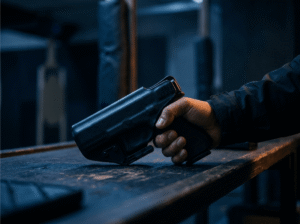
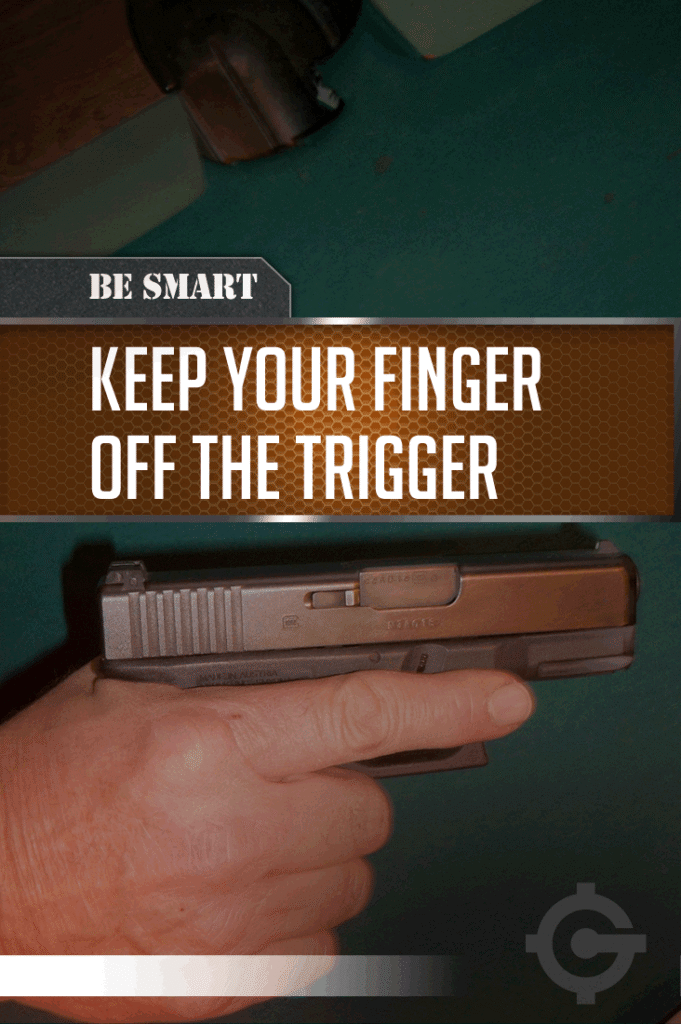
“Keep your finger off the trigger until you are ready to shoot!!”
You hear it all the time, all the talk about firearms safety. But have you actually thought about it and made a conscious effort to understand the often-repeated firearm safety mantra? Every time you go hunting, go to the range, or handle a firearm, you should verbally or mentally repeat the firearms safety rules.
- Keep your finger off the trigger until you are on target and ready to fire.
- Always point your firearm in a safe direction; never point your firearm at something that you are not willing to destroy.
- All firearms are to be considered loaded at all times.
- Always be able to identify your target and what is beyond.
(As an Amazon Associate, we earn from qualifying purchases.)

- SPECIFICATIONS:
- Fits: .22, .27, and .30 caliber rifle chambers, 12 and 20 gauge shotguns
- Material: Impact resistant polymer
Last update on 2026-09-24 / Affiliate links / Images from Amazon Product Advertising API
Constantly remind people of this. Whether they are beginners or an experienced group of shooters, repeat this lesson often. Teach every new student to index their trigger finger along the frame above the trigger guard and enforce it mercilessly. Remember, the firearm will not fire unless the trigger is manipulated.
Reinforce this habit in yourself and others. It should be a subconscious action; it should be done every time there is a change in the target, when you move, when you manipulate the firearm during reloads, or if you have to clear any malfunctions.
Whether you are a hunter, carrying a firearm in self-defense, or are required to have a firearm as part of your employment, this rule is paramount. The movement onto the trigger takes a fraction of a second if you develop muscle memory and practice safe firearms handling.
So why do we keep our fingers off the trigger? It’s a simple question, but I get asked it a lot. “I can control my fingers” is the usual response. There are a lot of ways that can cause you to lose control of your fingers subconsciously. Expecting that you can overcome your subconscious behavior is far-fetched.
Sympathetic muscular response, startle response, losing your balance, and excitement can cause you to put your trigger finger on the trigger and discharge your firearm.
Be careful to understand the difference between the sympathetic muscular response and the startle response. They are not the same response. Sympathetic muscular response is the brain’s tendency to do the same thing with both hands. When you grasp something with one hand, the other hand tends to close also. This can create an accidental discharge.
That occurs when you have a firearm in one hand and use the other hand to open a door, grab a dropped object, or use your free hand in some manner. What can occur is that when you grasp something with the free hand, your gun hand sympathetically grasps. This can cause the trigger finger to enter the trigger guard and pull the trigger.
A startle response is when you are startled by a sudden noise, bright light, or something moving close to your face. This can cause the trigger finger to enter the trigger guard and pull the trigger when startled or shocked. Training yourself to press the trigger finger against the frame harder, ensuring proper muzzle discipline by not masking yourself, your target, or others, and, if the situation dictates by re-holstering your firearm will help to avoid these involuntary responses.

- Teaches safe gun handling, thousands of dry fires without damage
- Functions just like real ammo - without the noise
- Offers versatility: training, storage, testing, practice

Last update on 2026-09-24 / Affiliate links / Images from Amazon Product Advertising API
Further Gun Safety Techniques to Practice: Moving with a Gun
Losing your balance is hilarious to others unless you stumble while holding a firearm. The complete loss of control of the muzzle direction as you instinctually attempt to correct yourself is not so funny. If you do start to fall, your instinct is to release anything in your hands and brace for the impact.
If you don’t drop your firearm at this point, your hands will grasp it in a death grip. If your finger enters the trigger guard and depresses the trigger, a discharge will occur, and the round will go whizzing off in some random direction.
To the innocent bystanders, this is no laughing matter. Whenever you move with a firearm, plan the move and be aware of your surroundings. Always go forward when you have a firearm in your hand; never walk backwards. The idea is that you can see what is in front of you; you don’t have eyes in the back of your head.
New to range protocols? Review our full Range Safety and Etiquette checklist before your next session.”
Gun Safety – Backwards Retreat
Sliding your strong side feet can give you a tactile feel for any objects behind you. If you practice sliding your strong side foot backwards, you can get fairly fast at a rearward movement.
Practice it at home without a firearm. Place some objects behind you and use your sliding foot to detect them. Be ready to fall and go slow. I will not be responsible if you trip over the family pet doing this.

- Security, Everywhere You Want It – Store and protect your handguns, passports, sensitive documents, heirlooms, media...
- Heavy Duty and Sturdy – This SnapSafe Lock Box features heavy duty 16-gauge housing and include a 1500 lb. rated cable...
- Ideal for Travel – The metal gun case provides handgun storage and security for concealed carry permit holders...
Last update on 2026-09-24 / Affiliate links / Images from Amazon Product Advertising API
Gun Safety – Lateral Movement
Never cross your feet. If you need to do a lateral movement, slide your feet to the side and bring the other one up. Shoulders wide apart at all times is required for a stable shooting platform. This is another one that needs to be practiced at home without a firearm.
Some techniques allow you to ‘walk’ sideways and pivot your torso to the target. These are fairly advanced and should only be taught once the fundamentals are solid.
Gun Safety – Movement in Haste
Excitement is a killer. It causes you to make hasty decisions, you are reactive instead of proactive, and you make mistakes in safety.
Slow down and think. Even if you are in a lethal situation, by having the right mental mindset already in place, you can overcome the excitement and complete the task at hand correctly and accurately. Everyone loves to go shooting. If you didn’t, you wouldn’t go at all. Those accelerated heart rates are great, but calm your mind.
Be proactive when you have a firearm. If you react, you are behind the power curve. Have a plan in your mind and mentally role-play every scenario you can think of. If you don’t have a plan, you are reacting.
I hope this article has opened your eyes to why we keep our fingers off the trigger until we are on target and ready to shoot. I tried to just focus on this first rule, so I omitted a lot of other safety concerns. Firearms safety is like a house. You need a solid foundation, strong supports, firm walls, and a sturdy roof to create a successful house. If any of these things fail, the house will tumble down.